The Surprising Science Behind Wastewater Treatment and TDS Control
Discover how wastewater treatment and TDS control protect health and the environment through innovative technologies, sustainable practices, and smart solutions.

 ISO 9001:2015 & QCI Approved
Learn how to choose the right STP, ETP, or RO plant for your industry in India, covering CPCB/SPCB compliance, sizing, and cost. Get expert guidance.
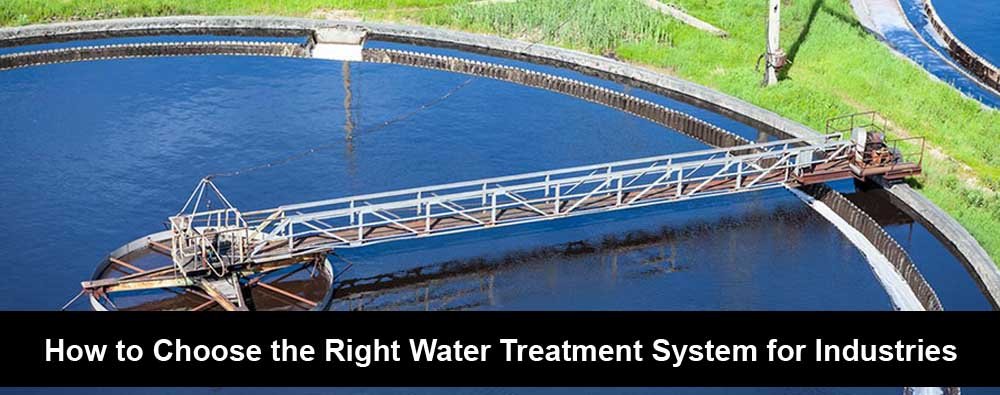
Every industrial unit in India today runs into the same wall sooner or later: the water it draws in has to go somewhere once the process is done with it, and state pollution control boards are no longer willing to look the other way on that. Whether it is a textile unit in Panipat, a pharma formulation block in Baddi, or a food processing plant near Delhi/NCR, the question is rarely whether you need a water treatment system for industries. It is which one, sized how, and built to which standard. Get that decision wrong and you end up either overpaying for capacity you will never use, or underbuilding an industrial wastewater treatment plant that fails inspection within the first year. This guide walks through the factors that actually decide the answer, the way an engineer would look at your site rather than the way a brochure would.
Before any system gets selected, the raw water and wastewater profile has to be tested. Two industries sitting next door to each other can have completely different requirements depending on what they manufacture.
Influent characteristics matter more than industry labels: A lab test showing BOD, COD, TSS, oil and grease, pH, and heavy metal content tells you far more than knowing "it's a chemical unit" or "it's a dairy." Trity Environ Solutions runs this assessment on-site before recommending any configuration, because a plant designed around assumed numbers instead of measured ones almost always underperforms once it goes live.
Source water quality decides the pre-treatment stage: If your intake is borewell water with high TDS or hardness, you are looking at a water softener or RO plant before the water even reaches production. If it is municipal supply, the pre-treatment load drops considerably. Knowing this upfront prevents redesigning the plant halfway through commissioning.
Discharge destination changes the target: Water going to a Common Effluent Treatment Plant (CETP) has a different, usually more lenient, discharge limit than water being released into a local drain or river. Zero Liquid Discharge (ZLD) mandates, now common for textile, dyeing, and pharma units in several states, push the target all the way to near-total water recovery.
Different industries generate wastewater with entirely different characteristics, and the treatment train has to be built around that reality rather than a standard catalogue model.
Textile and dyeing units produce highly coloured effluent with high COD, dissolved solids, and salt content from dyes and processing chemicals. These typically need chemical coagulation and advanced oxidation ahead of biological treatment, and in states with ZLD orders, evaporation and crystallisation systems on top of that.
Pharmaceutical and API manufacturing generates effluent carrying antibiotic residues, solvent traces, and sharply fluctuating COD between batches. Ordinary biological treatment struggles here without careful design margin, which is why pharma clusters like Baddi need plants engineered specifically for that load rather than a stock design.
Food and beverage processing typically has high BOD with oil, grease, and organic solids, but relatively low toxicity, making it well suited to biological treatment routes like MBBR or SBR once fats are separated out at source.
Auto component and metal finishing units deal with oil-laden effluent, heavy metals, and pH swings from plating and machining processes, which calls for physico-chemical treatment ahead of any biological stage.
Chemical manufacturing brings its own mix of high TDS, variable pH, and sometimes toxic constituents that need neutralisation and specific pre-treatment before the water can even enter a standard ETP.
Trity Environ Solutions designs plants around this kind of industry-specific profile rather than pushing a one-size configuration, which is the same approach behind our site-specific work across Delhi/NCR, Baddi, and Kundli.
Choosing between an STP Plant Manufacturer, an ETP Manufacturer in India, and an Industrial RO manufacturer starts with understanding what each system is actually built to treat, since a lot of first-time buyers get confused simply because the terms get used loosely in casual conversation.
Sewage Treatment Plant (STP) handles domestic-type wastewater from staff washrooms, canteens, and residential blocks attached to the facility. If your effluent is mostly human sewage rather than process water, this is your system.
Effluent Treatment Plant (ETP) treats process wastewater from manufacturing, which usually carries chemical, organic, or industrial contamination that domestic-grade treatment cannot handle. Most manufacturing units end up needing both an STP for the workforce facilities and an ETP for the production line, run as parallel systems.
Industrial RO Plant is not a wastewater treatment system at all in the traditional sense. It purifies incoming water to the quality your process actually needs, whether that is boiler feed water, pharma-grade water, or drinking water for the facility.
DM (Demineralised) Plant goes a step further than RO for applications like power plants and process industries where even trace mineral content interferes with the process.
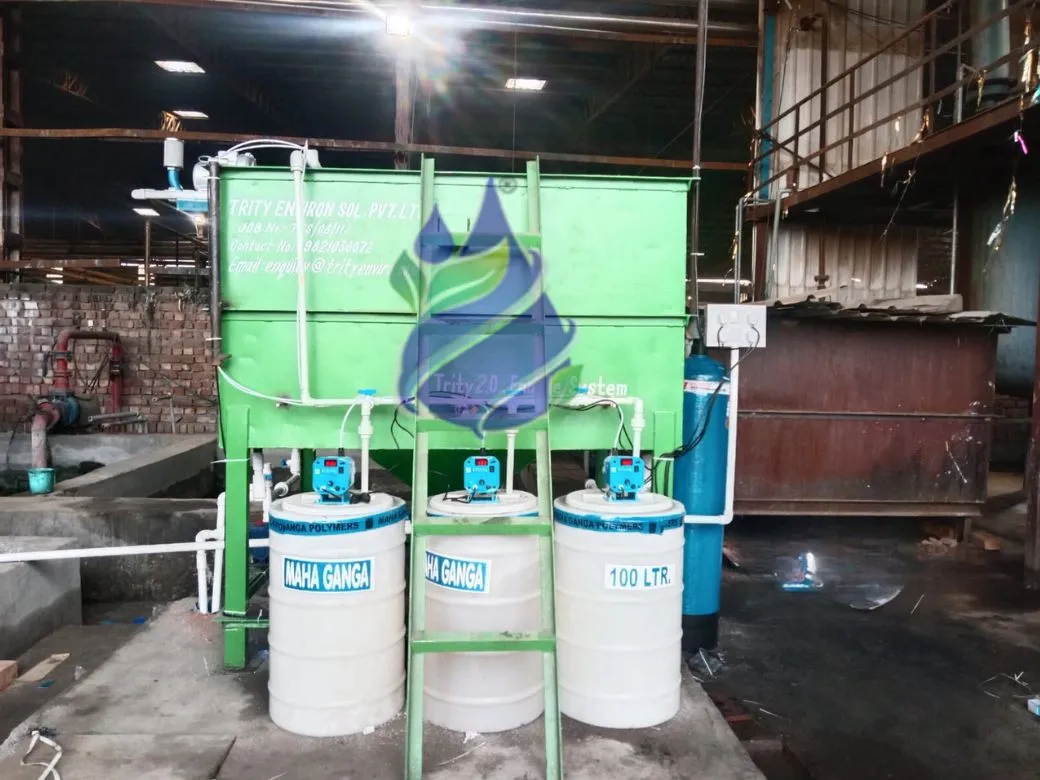
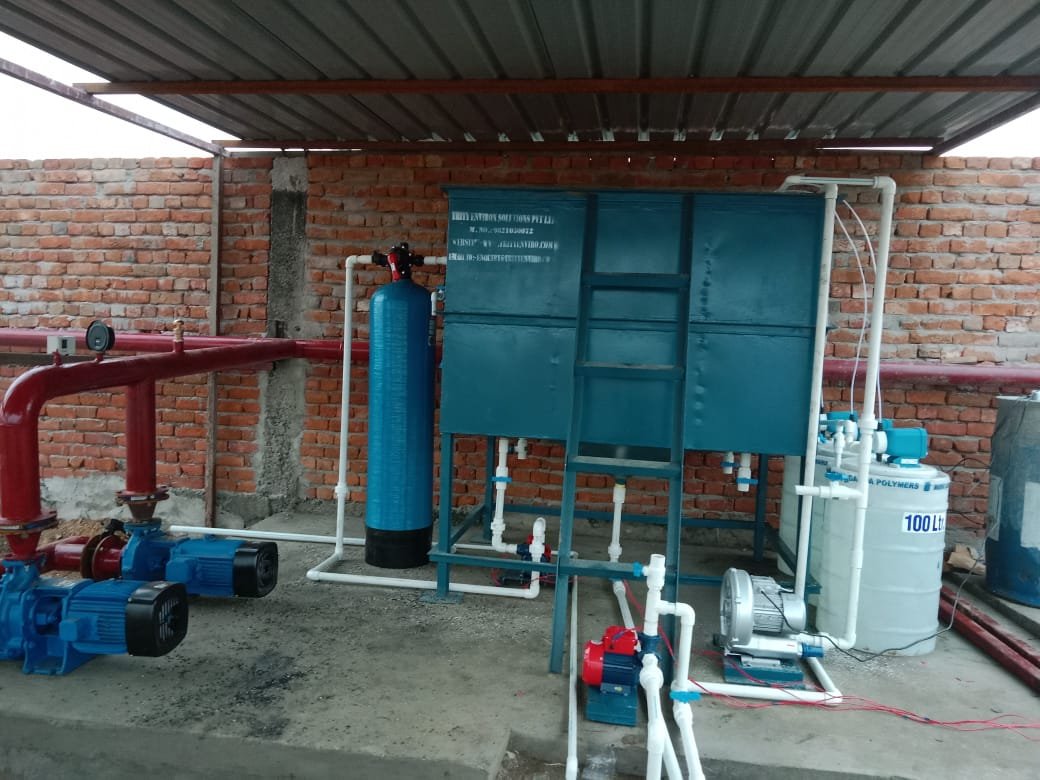
Trity Environ Solutions manufactures and supplies all four categories along with sludge dewatering and greywater recycling systems, which you can explore on our products page.
Undersizing is the single most common mistake industrial buyers make, usually because the initial capacity estimate only accounts for current headcount or current production volume.
Daily flow rate first: Capacity is measured in KLD (kilolitres per day), and this needs to reflect peak flow, not average flow. A plant sized for average daily volume will overflow the moment production runs a double shift or a new line gets added.
Build in headroom for growth: Most experienced manufacturers size the civil structure for 20 to 30 percent more capacity than the immediate requirement, since expanding a plant later is far more disruptive and expensive than building in margin at the start.
Peak load variation by industry: Warehousing and housing colony sites tend to see fairly steady flow, while food processing and pharma sites can swing sharply with batch schedules, which is why a fixed daily average figure is rarely the right number to design around.
This is where Indian industrial buyers face a layer of complexity that generic global advice rarely covers.
State Pollution Control Board (SPCB) norms apply first: Discharge standards vary by state, and boards like UPPCB, HSPCB, HPPCB, and DPCC each set their own limits and inspection cadence. A plant compliant in one state's terms may not automatically pass another state's audit.
CPCB sets the national floor: The Central Pollution Control Board (CPCB)'s discharge standards act as the baseline that state boards build on, particularly for parameters like BOD, COD, and heavy metals.
NOC and consent to operate: Before commissioning, most units need a No Objection Certificate and Consent to Establish/Operate from the relevant SPCB, and the treatment system's design has to match what was declared in that application, or the plant risks rejection at the inspection stage.
ZLD orders are expanding: States are increasingly mandating Zero Liquid Discharge for specific sectors, particularly textile, dyeing, and certain chemical categories, which changes the entire treatment train from a discharge-focused design to a recovery-and-reuse design.
Getting this wrong is not a paperwork inconvenience. It means production stoppage orders, penalties, or a plant that has to be retrofitted within months of installation.
Buyers frequently compare quotes purely on upfront price, which is exactly how underbuilt plants end up in the market.
Capacity and technology drive capital cost: A basic biological system costs less upfront than an MBR or ZLD-compliant configuration, but the cheaper option is not viable if your discharge norms or effluent characteristics require the advanced route.
Operating cost is the number people forget to ask about: Energy consumption, chemical dosing, sludge disposal, and manpower add up over the plant's lifetime, often exceeding the original capital cost within a few years. A slightly higher upfront investment in an energy-efficient design frequently works out cheaper across a five-year horizon.
AMC and service support affect total cost of ownership: A plant with poor after-sales support tends to run inefficiently or fail inspections, generating fines and downtime that dwarf whatever was saved at purchase. Trity Environ Solutions provides ongoing operation and maintenance support through our services team, so the cost conversation does not stop at commissioning.
If you want a realistic capital and operating cost estimate for your specific volume and industry type, share your requirement through our contact page and our engineers will work it out based on your actual influent data rather than a generic rate card.
The system design matters, but so does who builds and stands behind it.
Check for end-to-end capability: A manufacturer who only supplies equipment leaves you to coordinate civil work, installation, and commissioning separately, which is where timelines slip and warranty disputes start. Look for a single accountable team covering design through AMC.
Ask for compliance certification, not just claims: ISO 9001:2015 certification and a track record of SPCB-approved installations are a more reliable signal than marketing copy.
Look at their site history, not just their catalogue: A manufacturer with documented installations across varied industries, from dairy plants to plywood units to auto component estates, has already solved the edge cases your site is likely to throw up.
Trity Environ Solutions has handled this full scope for industrial and commercial clients across India, from initial water testing to design, manufacturing, installation, and long-term AMC support, backed by ISO 9001:2015 certification. You can read more about our approach on the about us page, or browse examples of how we have designed for specific industrial clusters, such as our work in Baddi's pharma and chemical belt.
A few patterns show up repeatedly across industrial sites that end up with underperforming plants, and most of them are avoidable at the decision stage.
Designing around today's volume only: Production lines expand, shifts get added, and headcount grows, but the treatment plant rarely gets revisited until it is already failing to keep up. Building in capacity margin from day one costs far less than a mid-life expansion.
Treating compliance as a one-time hurdle: Some buyers design just enough to clear the initial NOC inspection and stop there. Discharge norms get revised, SPCB inspection frequency increases in sensitive zones, and a plant built to bare minimum specification often needs retrofitting within a couple of years.
Skipping influent testing to save time: Choosing a system based on industry type alone, without actual water testing, is the single biggest reason plants underperform after commissioning. The extra week spent on proper lab analysis upfront saves months of troubleshooting later.
Choosing on price alone without checking service history: The lowest quote often excludes civil work, commissioning support, or AMC coverage that gets added as extras later, making the real cost higher than a slightly costlier all-inclusive proposal from an established manufacturer.
Ignoring sludge and byproduct handling: A treatment system that only accounts for the water stream and not the sludge generated ends up creating a second compliance problem. CPCB-compliant sludge dewatering and disposal needs to be part of the original design, not an afterthought.
An STP treats domestic sewage from washrooms and canteens, while an ETP treats industrial process wastewater carrying chemical or organic contamination specific to manufacturing. Most industrial sites need both running in parallel.
Capacity is set in KLD based on peak daily flow, not average flow, with additional headroom built in for future production growth. Actual influent testing and site assessment are what determine the correct figure, not a fixed formula based on headcount alone.
No, ZLD requirements are sector and state specific. Textile, dyeing, and select chemical categories face ZLD mandates in several states, while other industries are held to standard discharge norms set by CPCB and the respective SPCB. It is worth confirming your specific classification before finalising a system design.
Timelines vary with capacity and technology, but a typical mid-sized STP or ETP project runs from site assessment and design through manufacturing, installation, and commissioning over a period of a few months. Sharing your volume and industry type upfront helps in getting an accurate project timeline.
Often yes. Many units expand or retrofit existing systems to meet higher capacity or updated discharge norms rather than rebuilding from scratch, provided the civil structure has room and the core process can be adapted. A site visit is usually the fastest way to know which route makes sense for your plant.
If your unit needs a water treatment system for industries designed around your actual production data and compliance requirements, reach out to Trity Environ Solutions at enquiry@trityenviro.com or call +91-9821030072 for a site assessment.
Discover how wastewater treatment and TDS control protect health and the environment through innovative technologies, sustainable practices, and smart solutions.
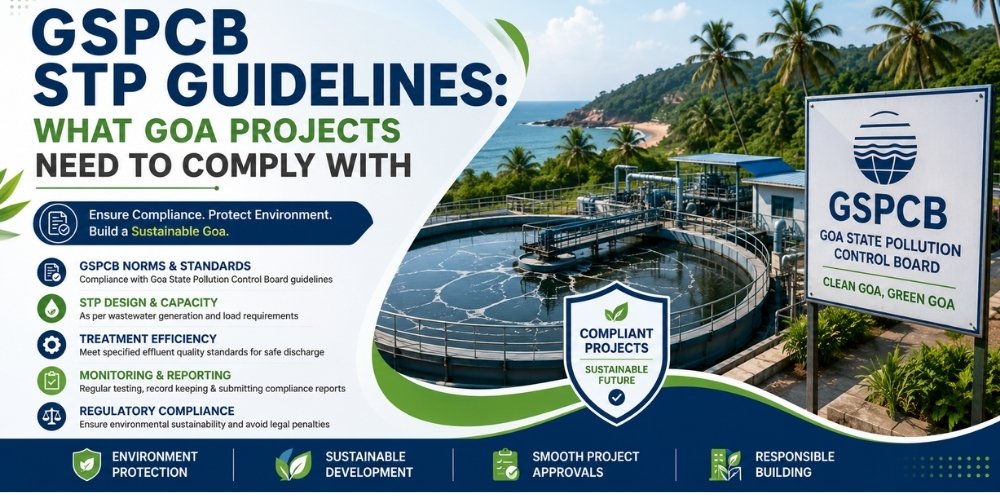
A guide to GSPCB's sewage treatment plant requirements in Goa, covering current discharge norms, CRZ considerations, and compliance steps for coastal projects.

Explore government policies, subsidies, and incentives driving sustainable water reuse for industries, agriculture, and urban infrastructure in India.



Discuss your requirements with our engineering team and get practical guidance for your project.