What Are the Pros and Cons of Biological Treatment in ETP Plants?
An honest look at biological treatment in ETP plants: real advantages, real limitations, and how activated sludge, SBR, and MBBR actually compare.

 ISO 9001:2015 & QCI Approved
Complete guide to Pharmaceutical Effluent Treatment Plants. Learn the 4-stage ETP process, treatment technologies, regulatory compliance, and environmental benefits.
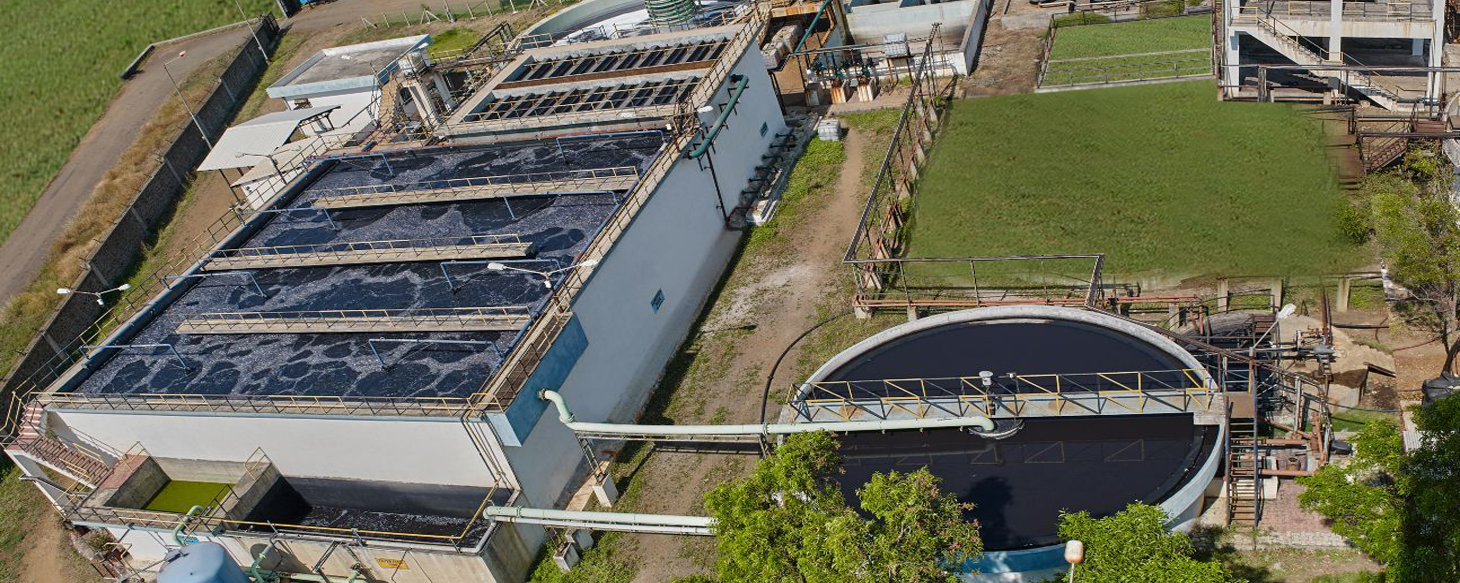
The pharmaceutical industry is one of the most critical pillars of global healthcare and economic growth. It plays a direct role in improving human life. However, along with its benefits, pharmaceutical manufacturing also generates large volumes of highly complex wastewater.
This wastewater contains active pharmaceutical ingredients (APIs), solvents, organic compounds, antibiotics, and hazardous chemical residues. If discharged without proper treatment, these effluents can severely contaminate water bodies, disrupt aquatic ecosystems, and pose long-term risks to public health. One of the most serious concerns is the development of antimicrobial resistance caused by untreated pharmaceutical discharge.
To address these challenges, Effluent Treatment Plants (ETPs) have become essential. An ETP is not just a regulatory requirement but a critical system that ensures safe wastewater management. It helps industries meet environmental standards, reduce ecological impact, and operate sustainably over the long term. Learn more at Trity Environ Solutions.
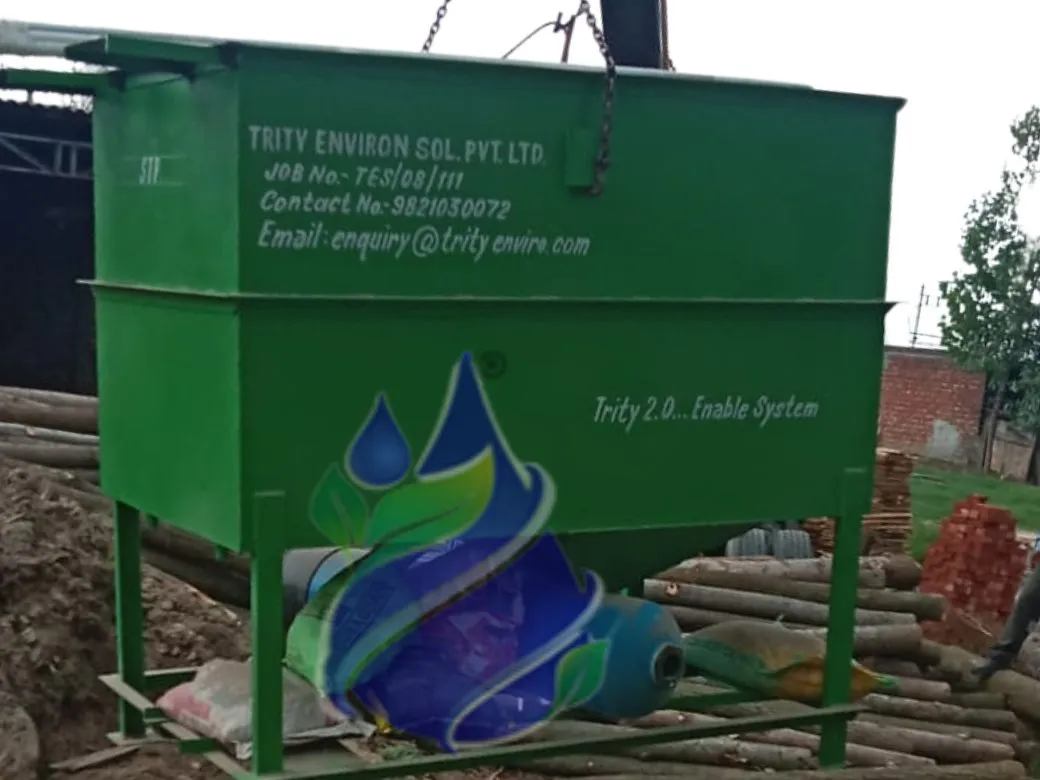
An Effluent Treatment Plant is a specialized facility designed to treat industrial wastewater through a combination of physical, chemical, and biological processes. Its primary objective is to remove harmful contaminants and make the water safe for discharge or reuse.
In pharmaceutical industries, ETPs are more advanced due to the complex nature of effluents. These systems are specifically engineered to handle high Chemical Oxygen Demand (COD), Biological Oxygen Demand (BOD), Total Suspended Solids (TSS), and non-biodegradable organic compounds.
Modern ETP systems integrate multiple technologies to ensure consistent and effective treatment. They not only help in pollution control but also enable water recovery and reuse, making them a valuable long-term investment. For advanced ETP solutions, visit https://trityenviro.com/products/.
Pharmaceutical wastewater is significantly different from other industrial effluents. Its composition varies depending on the type of drugs manufactured and the processes involved.
Some of the key characteristics include:
Because of these characteristics, conventional wastewater treatment methods are not sufficient. A multi-stage and carefully designed ETP system is necessary to ensure effective treatment. Get expert guidance from Trity Environ Solutions.
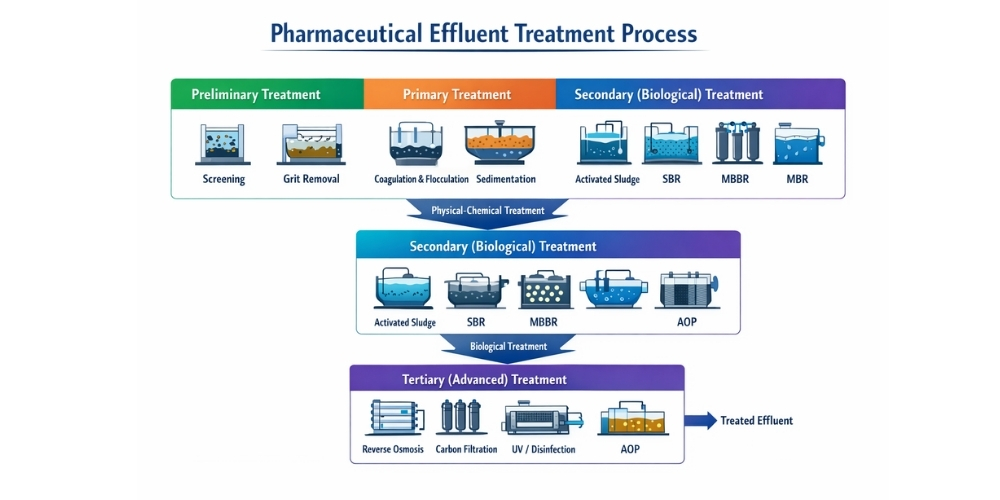
The preliminary stage forms the foundation of the entire treatment process. It focuses on removing large and visible impurities from the wastewater.
This stage protects downstream equipment from damage and clogging. It also reduces the load on subsequent treatment stages, improving overall efficiency.
Primary treatment focuses on removing suspended solids and stabilizing the wastewater composition.
This stage can remove around 60–70% of suspended solids. It prepares the wastewater for biological treatment by creating stable conditions.
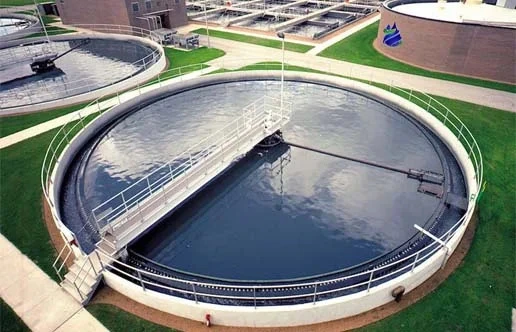
Secondary treatment is the core of the ETP process. It uses microorganisms to break down organic pollutants.
These methods significantly reduce BOD and COD levels, often achieving 75–90% removal efficiency. Advanced systems like MBR and MBBR are especially effective for treating complex pharmaceutical compounds.
Tertiary treatment is the final stage that ensures the treated water meets strict environmental standards.
After this stage, the treated water becomes safe for discharge or reuse in industrial applications.
Pharmaceutical companies must comply with strict environmental regulations set by authorities such as the Central Pollution Control Board (CPCB). ETPs ensure that wastewater meets these standards before discharge.
This helps industries avoid legal penalties, operational disruptions, and reputational damage. More importantly, it demonstrates a commitment to responsible environmental practices.
Modern ETP systems enable water recycling and reuse. Treated water can be used for cooling systems, boiler operations, and cleaning processes.
This reduces dependence on freshwater sources and lowers operational costs. In some cases, sludge generated during treatment can also be processed for energy recovery, adding further value.
Untreated pharmaceutical wastewater can cause severe health and environmental issues. It can contaminate drinking water sources and harm aquatic life.
ETPs remove harmful substances and prevent these risks. They play a vital role in protecting both human health and ecological balance.
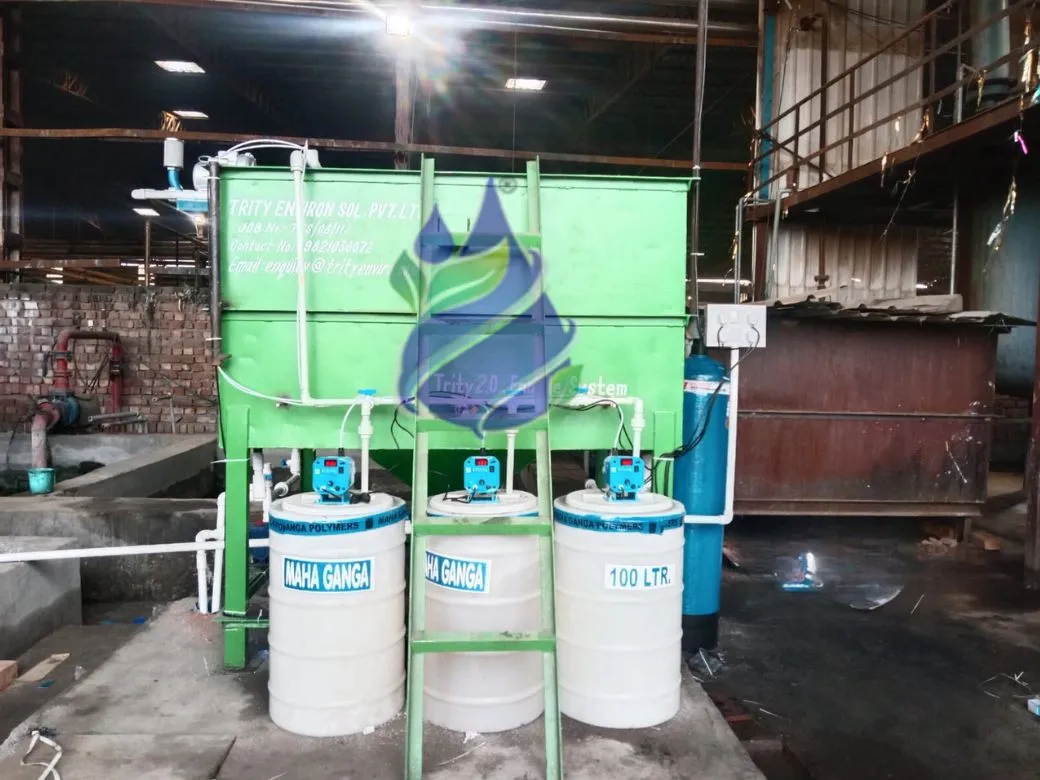
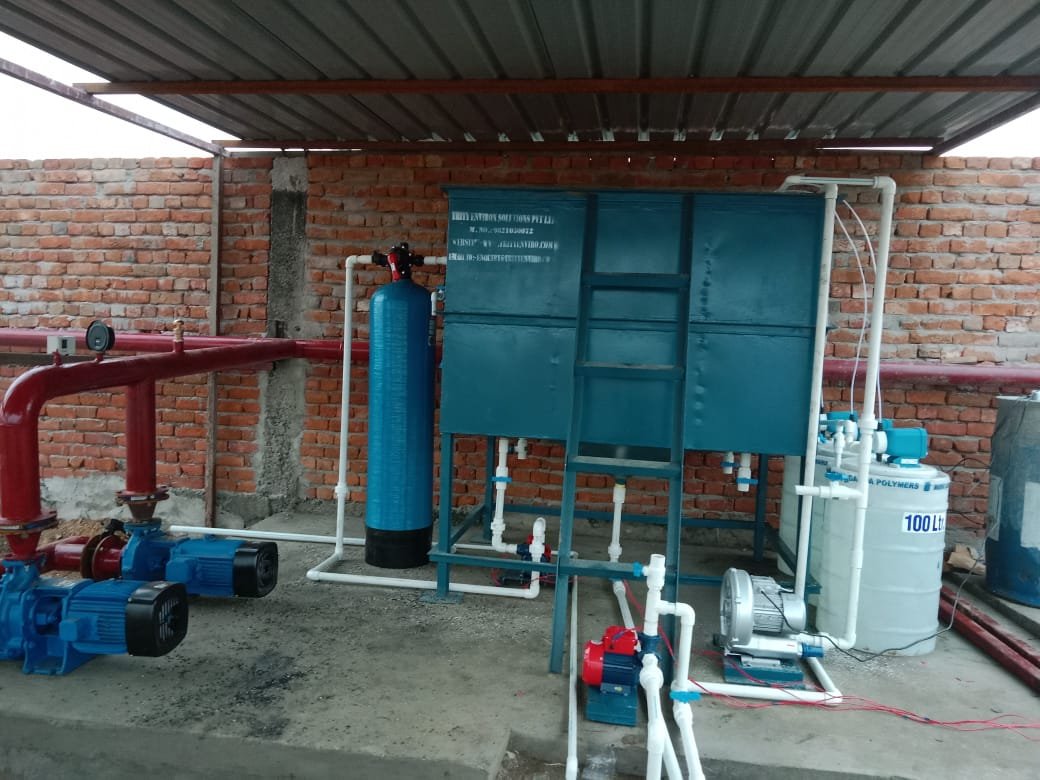
A well-designed ETP system consists of multiple interconnected components that work together efficiently:
Each component is essential for ensuring smooth operation and effective treatment.
Regular maintenance and monitoring are crucial for the efficient operation of an ETP.
Industries must continuously monitor key parameters such as BOD, COD, TSS, pH, and TDS. Any deviation from standard levels should be addressed immediately.
Preventive maintenance, periodic inspections, and proper staff training help avoid system failures. Many modern plants also use automated monitoring systems and IoT-based controls for real-time tracking.
Consistent monitoring ensures compliance, improves efficiency, and extends the lifespan of the treatment system.
Pharmaceutical wastewater contains APIs, solvents, antibiotics, organic compounds, and chemical residues that increase COD and BOD levels.
Yes, treated water can be reused for cooling, cleaning, and other non-potable applications, reducing water consumption.
ZLD is an advanced system that recovers all water from wastewater, leaving only solid waste. It eliminates liquid discharge completely.
ETPs require continuous monitoring, along with daily checks and periodic maintenance to ensure consistent performance.
Effluent Treatment Plants have evolved from basic compliance systems to essential strategic assets for pharmaceutical industries. They help manage complex wastewater, ensure regulatory compliance, and support sustainable operations.
By adopting advanced treatment technologies and maintaining proper monitoring systems, pharmaceutical companies can significantly reduce their environmental impact. At the same time, they can achieve cost savings through water reuse and resource recovery.
As environmental regulations continue to become stricter, investing in a robust ETP system is no longer optional. It is a necessary step toward responsible growth and long-term sustainability.
An honest look at biological treatment in ETP plants: real advantages, real limitations, and how activated sludge, SBR, and MBBR actually compare.
A guide to DPCC's sewage treatment plant requirements in Delhi, covering current discharge norms, mandatory installation rules, and compliance steps.
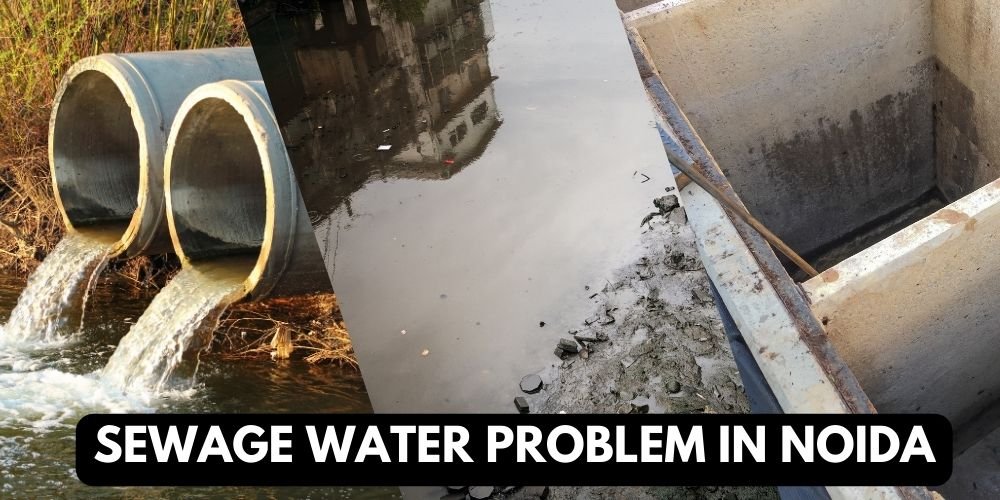
Uncover Noida's sewage challenges and the potential game-changer – STP treated wastewater. Join the journey towards a cleaner, sustainable urban future.




Discuss your requirements with our engineering team and get practical guidance for your project.