Economic Valuation of Wastewater: Turning a Liability into a Measurable Asset
Learn how economic valuation of wastewater works in India, from CPCB-driven ZLD mandates to replacement cost and shadow pricing methods for industries.

 ISO 9001:2015 & QCI Approved
Manual sampling and reactive maintenance used to be the norm at most treatment plants. In 2026, sensor networks feeding AI-driven analytics are becoming the default, and the results, in both compliance and cost, are measurable.
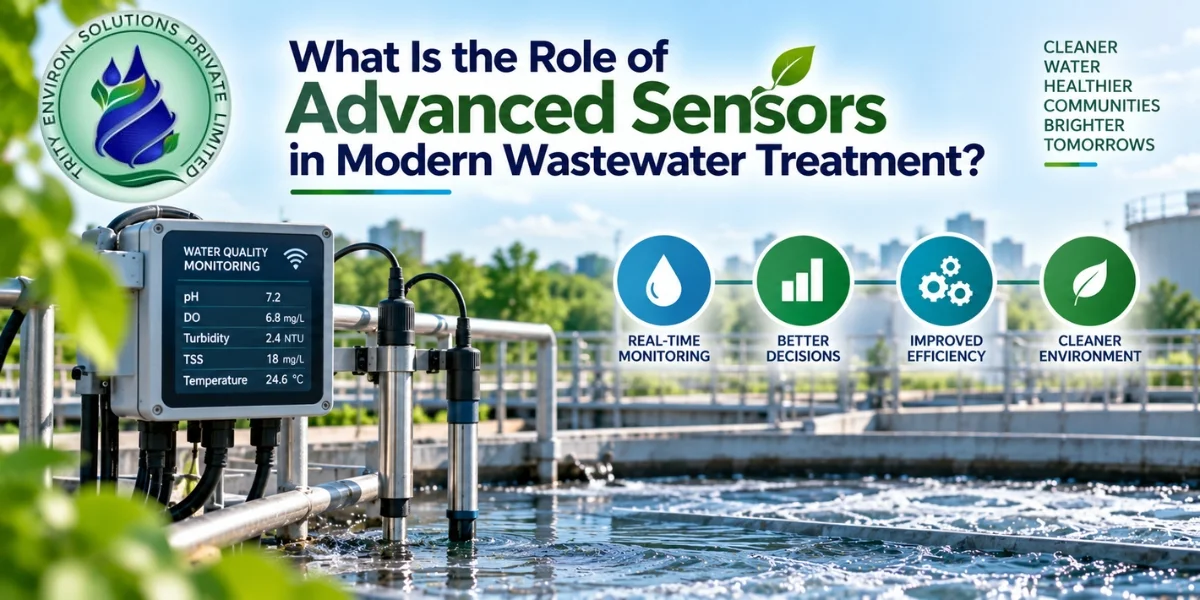
Wastewater treatment plants have historically relied on manual sampling and periodic lab testing to understand what's happening inside the treatment process, a method that works but leaves operators reacting to problems well after they start. That is changing quickly. Advanced sensors, connected through IoT networks and increasingly paired with AI-driven analytics, now give operators continuous, real-time visibility into water quality, equipment health, and process performance, shifting plants from reactive management toward genuinely predictive operation.
Advanced sensors deployed across a treatment plant continuously track pH, dissolved oxygen, turbidity, conductivity, temperature, chemical oxygen demand (COD), biological oxygen demand (BOD), and total suspended solids (TSS), among other parameters. Which specific parameters matter most depends on the source: sewage treatment facilities typically prioritize TSS and BOD, while industrial plants often focus more heavily on COD, oil and grease, total dissolved solids, total organic carbon, and nutrient levels, depending on what the incoming wastewater actually contains.
Standard sensors, however sophisticated, generally cannot detect micropollutants, the pharmaceutical residues, personal care product chemicals, and other trace contaminants that pass largely undetected through conventional monitoring. Emerging technology combining Deep-UV laser-induced Raman and fluorescence spectroscopy with AI-based analysis has shown genuine promise for closing this gap, enabling real-time detection of contaminants that standard water quality sensors were never designed to catch, a meaningful step forward given how much research now links these micropollutants to downstream ecosystem harm.
An IoT-driven monitoring system called APAH, field-tested across four industrial wastewater treatment plants in Maharashtra treating textile, dairy, and greywater effluent, illustrates what this looks like in practice. The system integrates sensors for pH, dissolved oxygen, conductivity, turbidity, and temperature, connected through low-cost IoT controllers that transmit data via GSM, GPRS, and Wi-Fi to a cloud platform. Machine learning models then provide predictive analytics, while operators monitor water quality remotely through a mobile app, with automated valve controls that close the inlet automatically when parameters cross unsafe thresholds, preventing contamination before it happens rather than flagging it after the fact.
Beyond water quality, sensor networks are increasingly applied to equipment health itself. Vibration sensors, temperature monitoring, and power-signature analytics on critical pumps and blowers feed AI models trained to catch early signs of mechanical failure. Documented industrial deployments using this approach have reported 30-35% fewer unplanned shutdowns, and broader industry analysis found AI-driven predictive maintenance achieving a 34% reduction in unplanned downtime, a meaningful improvement for plants that previously relied on a small team of expert operators to catch problems manually.
A more recent addition to the sensor-driven toolkit is the digital twin, a virtual, data-fed replica of the physical treatment plant that allows operators to test process changes, predict the impact of a capacity upgrade, or simulate an equipment failure scenario without touching the actual facility. This risk-free testing capability is becoming a meaningful part of how treatment plants plan upgrades and troubleshoot performance issues before committing to a physical change.
The scale of adoption underway is substantial. Industry analysis indicates that 87% of new municipal water treatment projects globally now include AI-powered analytics or IoT-enabled sensors as standard, not an optional add-on, with the global smart water management market projected to reach approximately $35.2 billion, growing at a 12.1% compound annual rate. Separately, 88% of surveyed water plant managers cite AI and IoT integration as their top driver for performance optimization, and 94% of industrial water plant managers who adopted these technologies reported improved regulatory compliance as a direct result.
The practical impact of combining sensor-driven AI with advanced treatment technology is well illustrated by a pharmaceutical plant project in Gujarat, where AI-driven monitoring paired with a robust Zero Liquid Discharge implementation delivered a 96% reduction in discharge alongside a 20% reduction in operating cost. This kind of result illustrates that sensor technology's value isn't just better visibility, it directly translates into measurable compliance and cost outcomes when paired with the right treatment infrastructure.
Beyond the emerging AI and IoT trends, advanced sensors continue to deliver several foundational operational benefits at any treatment facility. They enable continuous monitoring and control of key treatment parameters without relying solely on periodic manual sampling. They support process optimization, giving operators the real-time data needed to adjust flow rates and chemical dosing for cost-effective, efficient treatment. They trigger early warning alarms when parameters drift outside acceptable ranges, catching equipment malfunctions or chemical overdosing before they escalate into larger failures. They support compliance monitoring by generating the continuous data record regulators increasingly expect. And they enable remote monitoring through SCADA integration, letting facility managers oversee plant performance without needing to be physically on-site around the clock.
| Facility Type | Priority Sensor Parameters | Key Benefit |
|---|---|---|
| Municipal STPs | TSS, BOD, dissolved oxygen | Compliance monitoring, early failure detection |
| Textile, dairy, and greywater industrial units | pH, conductivity/TDS, turbidity | IoT-driven automated contamination prevention |
| Pharmaceutical and chemical plants | COD, micropollutants, discharge volume | AI-paired ZLD for discharge and cost reduction |
| Any facility with aging pump/blower infrastructure | Vibration, temperature, power signature | Predictive maintenance, reduced unplanned downtime |
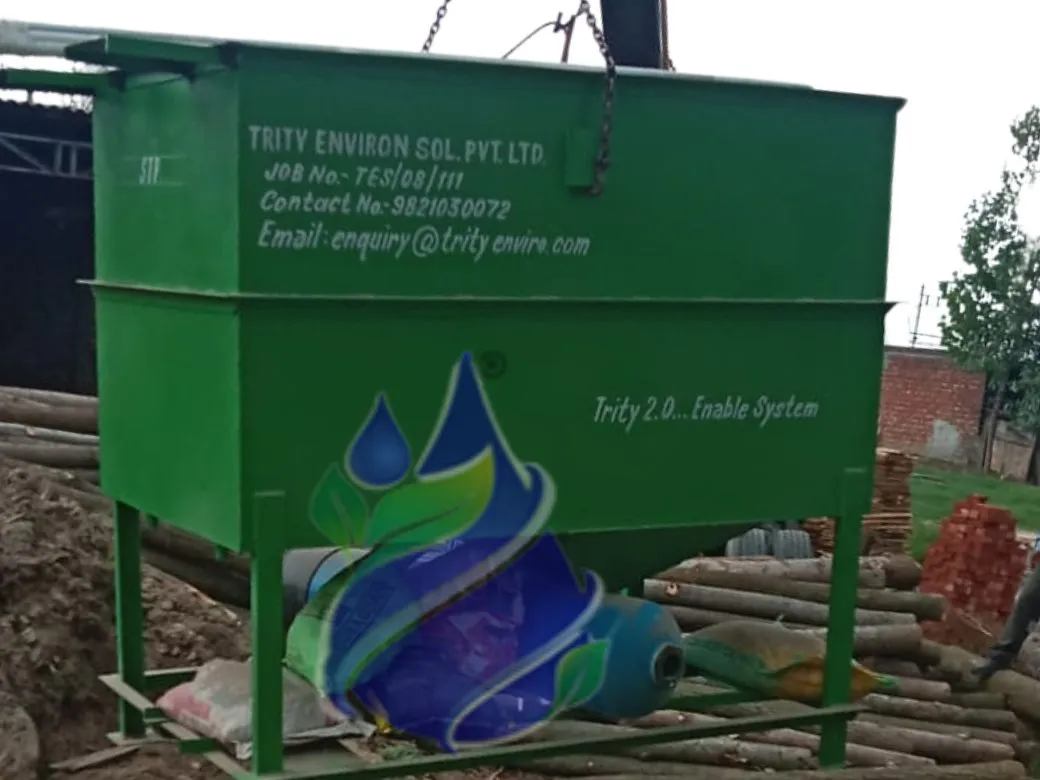
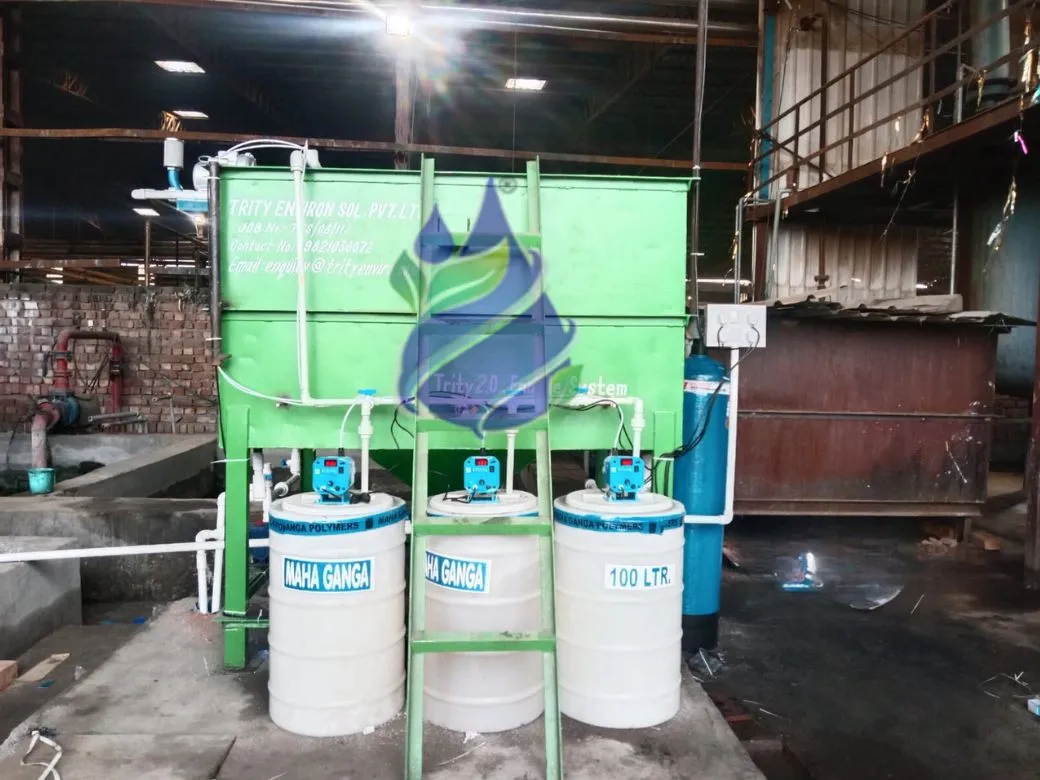
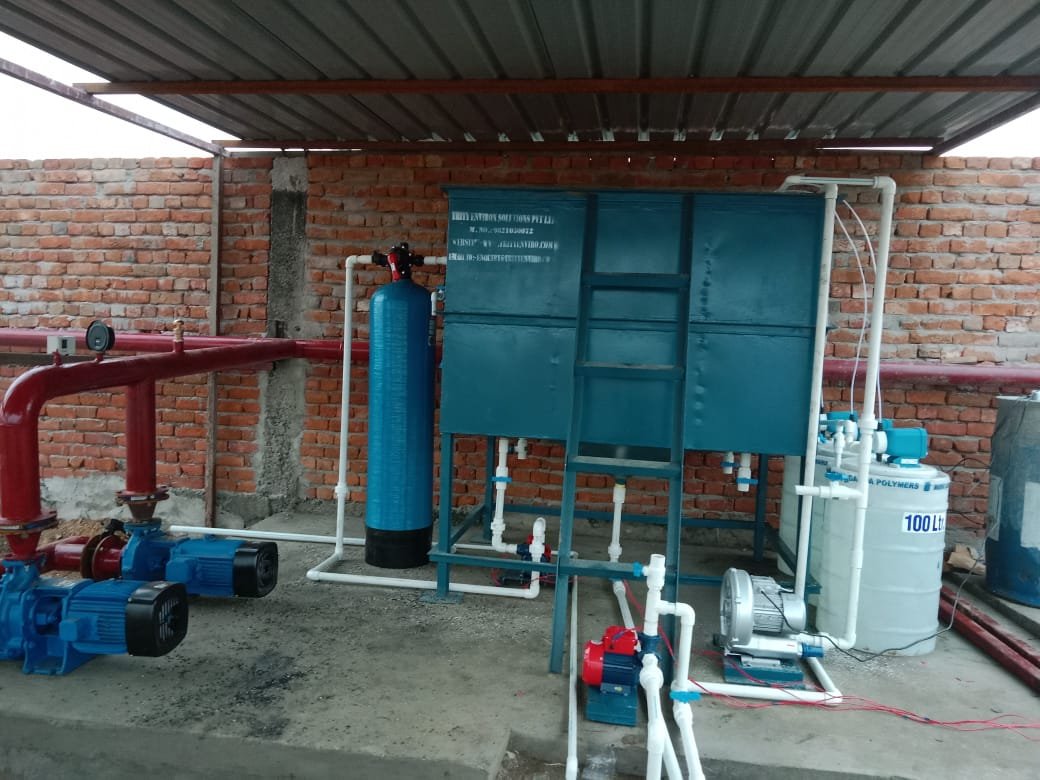
Trity Environ Solutions designs sewage treatment plants and effluent treatment plants with modern monitoring and automation capability built into the design, not bolted on afterward. As an experienced wastewater treatment plant manufacturer, our engineering team helps clients integrate the right sensor and monitoring setup for their specific process, whether that means basic SCADA-based control or a more advanced predictive maintenance and remote monitoring configuration; our related guide on the importance of data in modern wastewater treatment systems covers this in more depth. Every installation is backed by pan-India Annual Maintenance Contract and operation and maintenance support. We are ISO 9001:2015 certified, QCI approved, and deliver CPCB-compliant engineering nationwide.
Common parameters include pH, dissolved oxygen, turbidity, conductivity, temperature, COD, BOD, and TSS, with industrial plants often adding oil and grease, TDS, TOC, and nutrient measurements depending on their specific wastewater composition.
Standard sensors generally cannot, but emerging technology combining laser-induced Raman and fluorescence spectroscopy with AI analysis has shown promise for real-time micropollutant detection, addressing a genuine gap in conventional monitoring capability.
Yes. An IoT-driven monitoring system field-tested at four industrial plants in Maharashtra demonstrated effective real-time contamination prevention, and a pharmaceutical plant project in Gujarat combining AI monitoring with Zero Liquid Discharge achieved a 96% reduction in discharge and 20% lower operating costs.
Documented industrial deployments using vibration and power-signature sensors for predictive maintenance have reported 30-35% fewer unplanned shutdowns, with broader industry analysis finding a 34% reduction in unplanned downtime overall.
A digital twin is a virtual, data-fed replica of a physical treatment plant that lets operators test process changes, simulate equipment failures, or model capacity upgrades without disrupting actual plant operations, reducing the risk involved in planning changes.
Learn how economic valuation of wastewater works in India, from CPCB-driven ZLD mandates to replacement cost and shadow pricing methods for industries.
Explore the challenges cities face in scaling up wastewater treatment systems, including financial constraints, space shortages, and environmental regulations.

Discover how green bridges use eco-tech methods like biofiltration and wetlands to clean polluted rivers and lakes naturally and sustainably




Discuss your requirements with our engineering team and get practical guidance for your project.