Introduction
Wastewater generated from homes, industries, and commercial establishments contains pollutants, organic matter, and harmful microorganisms. If this sewage is discharged directly into rivers or lakes without treatment, it can cause severe environmental pollution and health risks. Sewage treatment plants are designed to treat contaminated water and remove harmful substances before releasing it back into the environment.
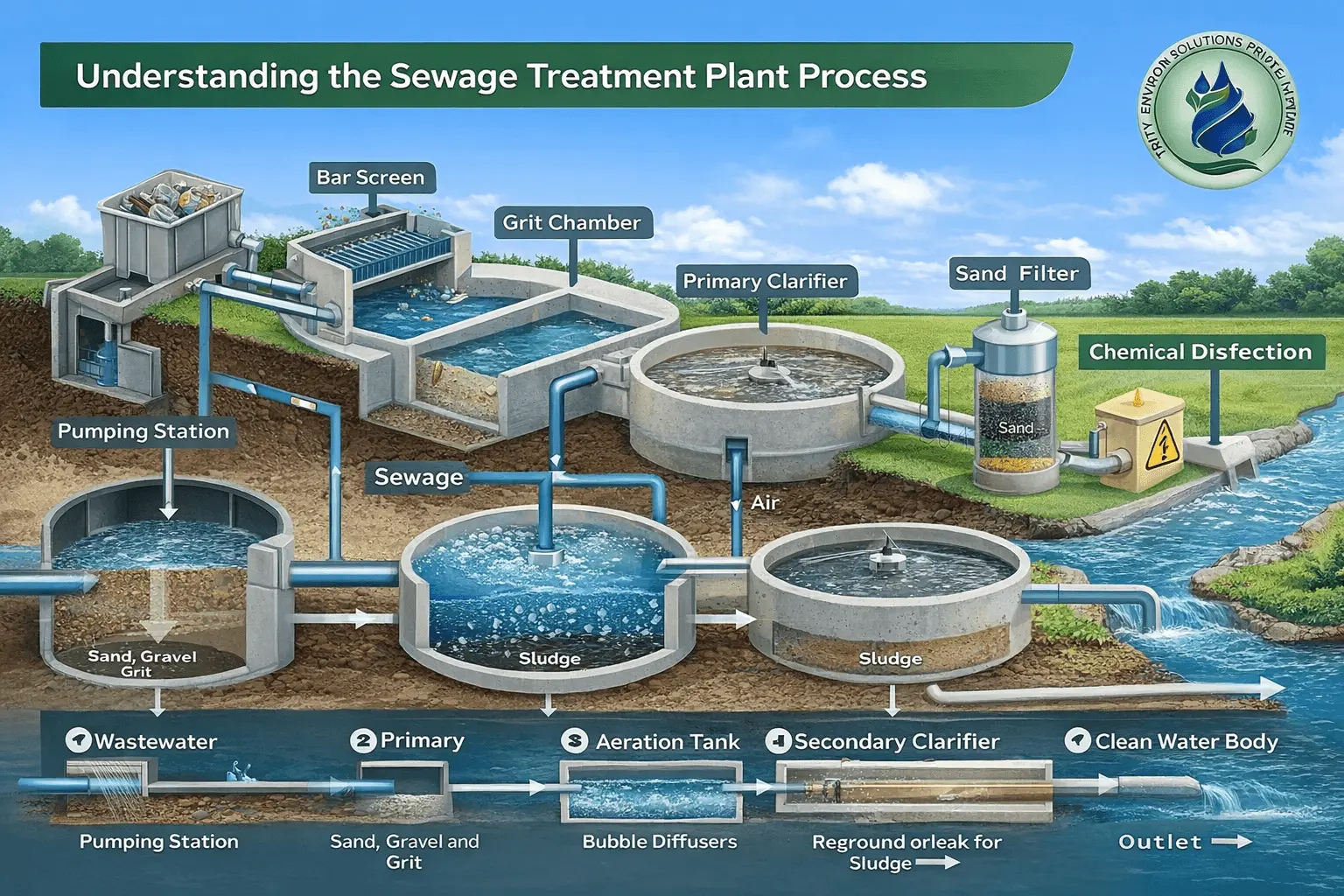
A sewage treatment plant works through several treatment stages that gradually remove solid waste, organic pollutants, and microorganisms from wastewater. These processes combine physical, biological, and chemical treatment methods to convert sewage into cleaner water that can be safely discharged or reused.
Understanding how sewage treatment plants work helps explain the importance of wastewater treatment in protecting water resources and maintaining environmental balance.
Wastewater Collection and Inlet Chamber
The treatment process begins when wastewater from residential areas, commercial buildings, and industries flows through underground sewer pipelines and reaches the sewage treatment plant. The incoming wastewater first enters the inlet chamber of the plant.
At this stage, sewage may contain a variety of materials such as plastic waste, paper, cloth pieces, and other floating objects. These materials need to be removed before the water enters the main treatment units.
Screening Process for Solid Waste Removal
The first treatment step in a sewage treatment plant is screening. Bar screens or mechanical screens are installed at the entry point to capture large floating debris present in wastewater.
These screens trap solid materials such as plastic bags, leaves, paper waste, and other objects while allowing water to pass through. Removing these materials protects pumps and treatment equipment from damage and ensures smooth operation of the plant.
Grit Chamber for Sand and Heavy Particles
After screening, wastewater flows into a grit chamber where heavy inorganic particles such as sand, gravel, and small stones are removed. These particles settle at the bottom of the chamber because of their weight.
Removing grit is necessary because these abrasive materials can damage pumps, pipelines, and other mechanical equipment used in the treatment plant.
Primary Sedimentation Tank
The next stage of treatment takes place in the primary clarifier or sedimentation tank. Here the wastewater is allowed to remain undisturbed for a certain period of time.
During this process, heavier organic solids settle at the bottom of the tank forming sludge, while lighter materials such as oils and grease float on the surface. The floating materials are skimmed off, and the settled sludge is removed for further treatment.
The partially treated water then moves to the biological treatment stage.
Aeration and Biological Treatment
One of the most important stages in the sewage treatment process is biological treatment. In this stage, wastewater enters the aeration tank where air is supplied through diffusers.
The oxygen provided in the tank helps microorganisms grow and multiply. These microorganisms feed on organic pollutants present in wastewater and break them down into simpler compounds.
This process significantly reduces the biological oxygen demand (BOD) and improves the quality of the treated water.
Secondary Clarification Process
After biological treatment, the mixture of water and microorganisms moves into a secondary clarifier. In this tank, biological solids settle at the bottom due to gravity.
The settled sludge is separated from the treated water. Some of this sludge is recycled back to the aeration tank to maintain microbial activity, while the excess sludge is removed for sludge treatment.
The clarified water collected at the top of the tank is now much cleaner.
Filtration and Disinfection
In many sewage treatment plants, treated water undergoes an additional filtration process to remove fine particles that may still be present. Sand filters or activated carbon filters are often used for this purpose.
After filtration, the water may be disinfected using chlorine, ultraviolet light, or ozone treatment. Disinfection ensures that harmful bacteria and pathogens are eliminated before the water is released.
Final Treated Water Discharge
Once all treatment stages are completed, the treated water can be safely discharged into rivers, lakes, or other natural water bodies. In many facilities, treated wastewater is also reused for irrigation, landscaping, industrial cooling, or cleaning purposes.
Water reuse helps reduce the demand for freshwater and supports sustainable water management.
Importance of Sewage Treatment Plants
Sewage treatment plants play a crucial role in protecting the environment and public health. By treating wastewater before discharge, these plants prevent pollution of natural water bodies and reduce the spread of waterborne diseases.
Modern sewage treatment systems also support water recycling and help conserve valuable water resources.
Contact Us
Looking for an efficient Sewage Treatment Plant for your facility?
Contact Trity Environ Solutions to get customized STP solutions designed for reliable wastewater treatment and sustainable water management.