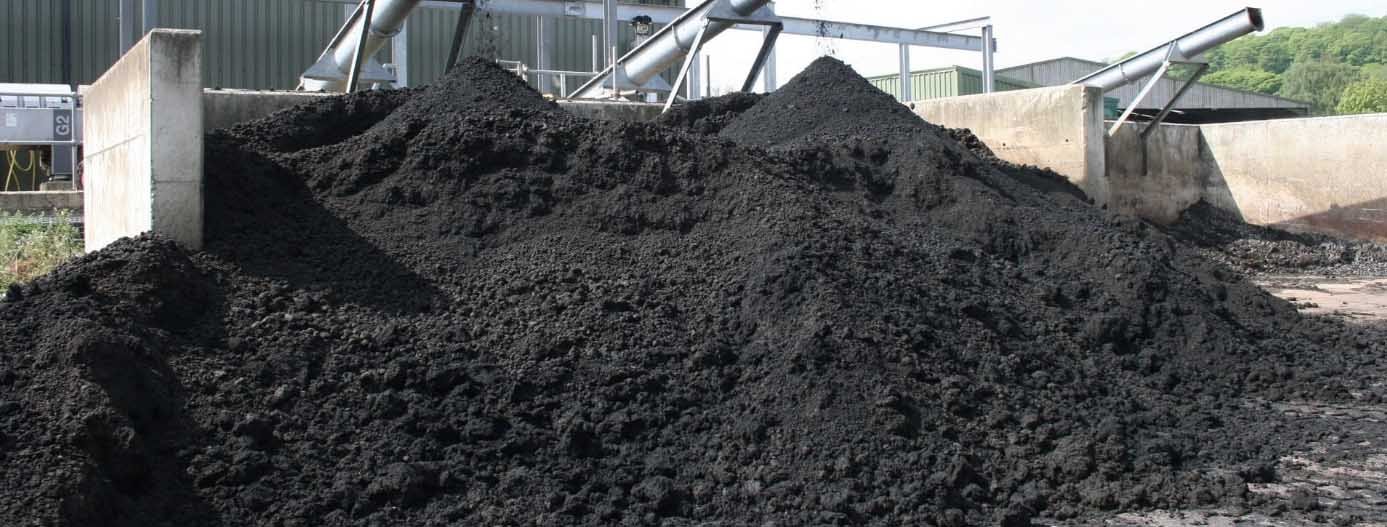
Sewage Sludge and Its Environmental Impact
Discover how sludge and untreated sewage affect the environment, water bodies, and marine life. Learn about sludge management, wastewater treatment, and sustainable disposal practices in India.

 ISO 9001:2015 & QCI Approved
Most wastewater treatment plant efficiency problems are not visible until they show up as a higher power bill, a compliance flag, or a plant that just cannot keep up with demand anymore. This guide covers the practical, engineering-backed steps that actually improve efficiency, not just generic advice to "maintain your equipment."
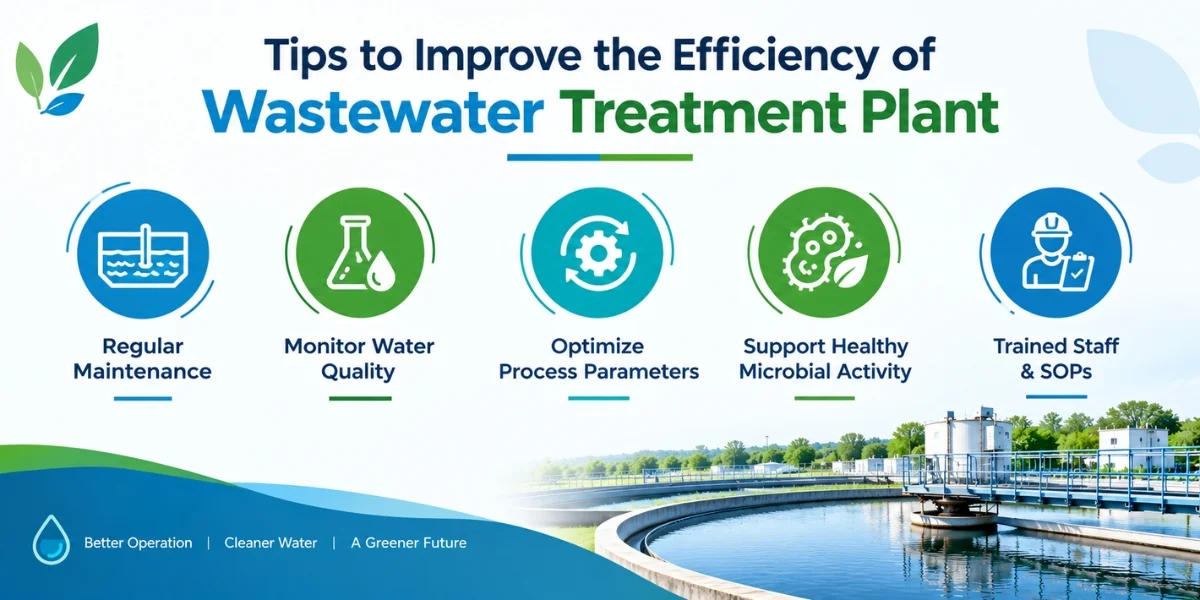
A wastewater treatment plant plays a critical role in keeping the environment clean by treating wastewater before it is released back into water bodies or reused, and getting one built is only step one. The real, ongoing work is keeping it running efficiently for years, since an inefficient plant costs more to operate, struggles to keep up with growing demand, and runs a real risk of falling out of compliance. This guide covers the practical steps that genuinely move the needle on wastewater treatment plant efficiency, starting with how to actually identify where inefficiency is coming from, before moving into infrastructure, process control, sludge management, and staffing improvements that make a measurable difference.
Before implementing any specific tip, the most valuable first step is a comprehensive efficiency audit of the existing plant. Generic advice to "maintain equipment better" or "reduce chemical usage" only helps once you know exactly where your plant is losing efficiency, whether that is an oversized pump running well below its designed flow, a sludge thickening process producing far wetter sludge than it should, or a biological stage that has quietly fallen behind rising influent load. An audit identifies inefficiencies, bottlenecks, and specific areas for improvement, giving every subsequent tip in this guide a concrete target rather than a vague direction.
Well-maintained equipment prevents breakdowns and unplanned downtime far more reliably than reactive repairs. A documented maintenance schedule for pumps, blowers, and mechanical components, followed diligently rather than only when something fails, catches efficiency losses before they compound into bigger, costlier problems.
A detail many plants overlook, particularly those over 10 years old, is that pumps are frequently sized for peak flow conditions even though they operate at a fraction of that peak most of the time. Installing variable frequency drives (VFDs) allows pumps and blowers to match actual real-time demand instead of running at a fixed speed calibrated for worst-case flow, cutting energy waste significantly during normal operating hours.
Advanced process control systems that monitor and automatically adjust treatment parameters help maintain optimal conditions while reducing both energy and chemical consumption. Rather than operators making manual adjustments based on periodic checks, automated control responds continuously to actual conditions in the plant.
Storm water and groundwater entering the wastewater collection system through cracked pipes and faulty manholes adds unnecessary hydraulic load to the treatment plant, sometimes overwhelming capacity during heavy rain. Regular inspection and repair of sewer lines and manholes keeps this extraneous flow out of the system, protecting both plant capacity and treatment consistency.
An equalization basin smooths out flow spikes before they reach the main treatment process, preventing the shock loading that can disrupt biological treatment and reduce overall plant efficiency. This is particularly valuable for facilities with highly variable inflow, such as institutional or hospitality properties with sharp peak-hour usage.
Coagulant and flocculant usage is one of the easier costs to reduce without sacrificing treatment quality. Automatic dosing systems that adjust chemical input based on real-time water quality data, rather than a fixed daily dose, cut chemical cost while often improving treatment consistency at the same time.
Continuous monitoring of effluent quality and key process parameters, BOD, COD, dissolved oxygen, and turbidity, gives operators the data needed to catch drift before it becomes a compliance issue, rather than discovering a problem only during periodic manual testing.
Data collected from real-time monitoring becomes genuinely useful when it is analyzed for trends rather than just logged. Reviewing patterns in influent load, seasonal variation, and process performance over time helps predict when a plant is approaching a capacity or efficiency limit, well before it actually gets there.
Sludge management deserves particular attention, since conventional sludge thickening processes often operate at only 0.5-3% solids concentration, while upgraded high-density sludge thickening technology can push this well above 6%. That difference translates directly into lower disposal volume and cost, since sludge disposal is typically charged by volume or weight, not by treatment effort. Optimizing sludge dewatering with a properly specified filter press or sludge dewatering system reduces both ongoing disposal cost and environmental impact.
Operator training is one of the most consistently underrated factors in plant efficiency. A well-trained operator directly affects treatment consistency, energy usage, and how quickly small process deviations get caught and corrected, often more than any single piece of equipment. Facilities without adequately trained staff should invest in structured training programs or consider outsourcing to an experienced operation and maintenance provider.
For plants where influent load has grown beyond original design capacity, a full civil rebuild is rarely the only option. Adding bio-carrier media to an existing activated sludge tank, the principle behind MBBR technology, increases the biologically active surface area available for treatment without expanding the tank's physical footprint. This approach allows an existing plant to handle higher organic loading and improve effluent quality using largely the same civil structure, which is significantly less disruptive and less expensive than a ground-up expansion. Facilities considering this upgrade path should work with an experienced STP manufacturer who can properly size the bio-carrier media and confirm the existing tank's hydraulic and aeration capacity can support the added biological load.
Power consumption affects both a plant's operating budget and its overall environmental footprint, and energy-efficient technology upgrades typically deliver the fastest payback of any efficiency investment. High-efficiency motors and variable frequency drives on pumps and blowers reduce electricity consumption directly, often by a meaningful percentage on equipment that previously ran at a fixed speed regardless of actual load. Fine bubble aeration diffusers, which improve oxygen transfer efficiency compared to older coarse bubble systems, cut blower energy demand specifically in the biological treatment stage, typically the single largest energy consumer in the entire plant.
| Facility Type | Common Efficiency Bottleneck | Priority Fix |
|---|---|---|
| Municipal STP with rising population load | Biological capacity exceeded | Bio-carrier media upgrade (MBBR retrofit) |
| Industrial ETP with variable effluent | Chemical over-dosing | Automated dosing linked to real-time monitoring |
| Hotels and institutional campuses | Sharp peak-hour flow spikes | Equalization basin, VFD-based pumping |
| Older plants (10+ years) | Oversized pumps running inefficiently | VFD retrofit sized to actual average flow |
Trity Environ Solutions is a trusted wastewater treatment plant manufacturer based in Ghaziabad, and beyond building new sewage treatment plants and effluent treatment plants, our engineering team also helps existing facility owners diagnose exactly where their plant is losing efficiency and design the right fix, whether that is an MBBR retrofit, better sludge dewatering, or an automation upgrade. As an experienced STP and ETP manufacturer and supplier, every recommendation is backed by pan-India Annual Maintenance Contract and operation and maintenance support, so efficiency gains are sustained long after the upgrade is commissioned, not just achieved briefly and lost again. We are ISO 9001:2015 certified, QCI approved, and CPCB-compliant across every project we deliver.
Ans: A comprehensive efficiency audit should always come first. It identifies specific inefficiencies, whether in pumping, sludge handling, or biological treatment, so improvement efforts target the actual bottleneck rather than following generic advice.
Ans: Variable frequency drives (VFDs) on pumps and blowers, high-efficiency motors, and fine bubble aeration diffusers are among the most effective energy efficiency upgrades, since aeration and pumping typically account for the largest share of a plant's total energy use.
Ans: Yes, adding bio-carrier media to an existing activated sludge tank, the principle behind MBBR technology, increases biological treatment capacity within the same tank footprint, avoiding the cost and disruption of a complete civil rebuild.
Ans: Conventional sludge thickening often produces sludge at only 0.5-3% solids, while upgraded high-density thickening technology can achieve 6% or higher. Since disposal cost is tied to sludge volume, this difference can meaningfully reduce ongoing disposal expense.
Ans: A well-trained operator directly influences treatment consistency, energy usage, and how quickly small process deviations are caught and corrected, often having as much impact on overall plant efficiency as the equipment itself.
Ans: Look for an experienced STP and ETP manufacturer that offers both new plant design and retrofit expertise, such as MBBR bio-carrier upgrades and sludge dewatering improvements, backed by ongoing AMC and O&M support. Trity Environ Solutions is an ISO 9001:2015 certified manufacturer offering exactly this combination pan-India.
Discover how sludge and untreated sewage affect the environment, water bodies, and marine life. Learn about sludge management, wastewater treatment, and sustainable disposal practices in India.
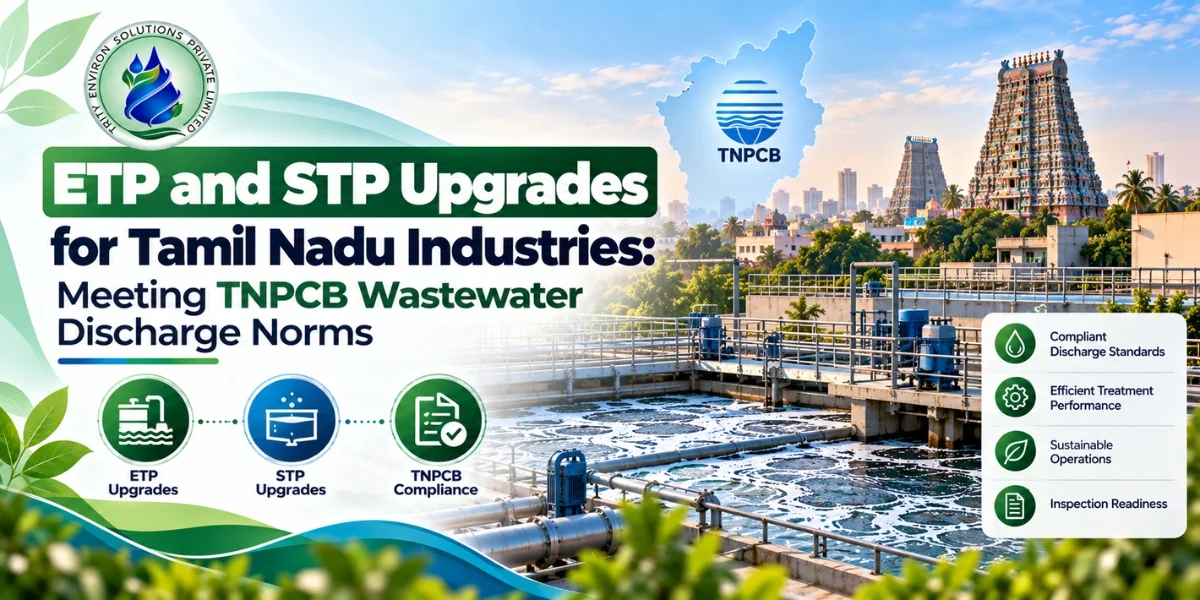
Upgrade your ETP or STP to meet TNPCB norms in Tamil Nadu. Learn the warning signs, textile cluster challenges, reuse and ZLD options and upgrade costs.
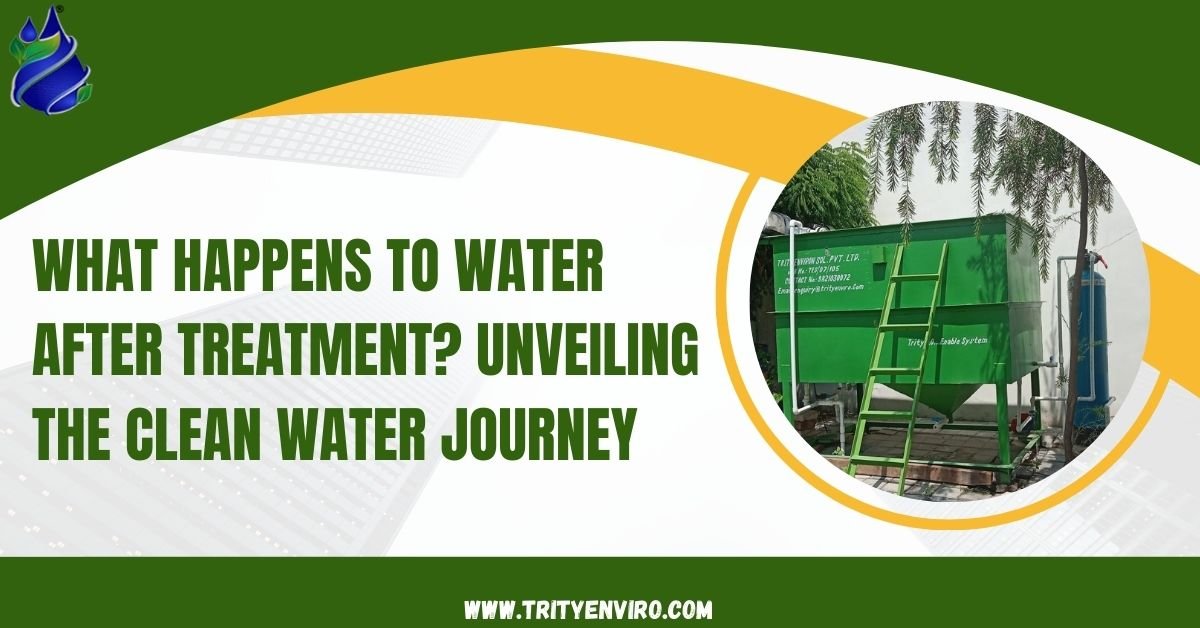
Discover the steps water takes after treatment, from removal of impurities to disinfection, ensuring safe, clean water for homes, businesses, and the environment.











Discuss your requirements with our engineering team and get practical guidance for your project.

