
 ISO 9001:2015 & QCI Approved
Sewage Treatment Plant for Hospital
Trity Environ Solutions manufactures Sewage Treatment Plants for hospitals, engineered for pharmaceutical residues, disinfectant loads, and pathogen removal. CPCB-compliant. Get a free quote.
SPCB / CPCB Norm Compliant
Heavy Fabrication
STP Plant for Hospitals, Built Around What Actually Makes Hospital Sewage Different
Hospital wastewater isn't just sewage with a hygiene problem attached. It carries active pharmaceutical ingredients, antibiotics, analgesics, hormones, antifungals, and in oncology units, cytotoxic chemotherapy residues, that pass through patients metabolically and enter the drainage system. Standard biological treatment doesn't reliably break these compounds down, which means a conventional STP can pass every routine BOD and COD check while still discharging pharmaceutical residues the test wasn't designed to catch. The World Health Organization has flagged antimicrobial resistance as one of the biggest global public health threats, and hospital wastewater is one of the pathways researchers study closely, though the picture is more nuanced than headlines suggest. A 2021 metagenomic study across four wastewater treatment plants in Jaipur actually found lower antibiotic resistance gene diversity in wastewater from a facility receiving only hospital effluent compared to plants handling mixed municipal sewage, a reminder that proper segregation and dedicated treatment design matter more than the source alone.
Trity Environ Solutions manufactures Sewage Treatment Plant for Hospital systems engineered specifically around this effluent profile. As a trusted STP Plant Manufacturer for Hospitals and Sewage Treatment Plant Manufacturer, we also serve as a reliable Water Treatment Plant Manufacturer for healthcare facilities that need a system built for pharmaceutical residues and pathogen loads, not a residential design adapted after the fact.
What Makes Hospital Sewage Different From Standard Wastewater
Beyond the organic load typical of domestic sewage, hospital wastewater carries several things a standard STP wasn't designed to handle:
- Pharmaceutical residues: antibiotics, analgesics, hormones, antifungals, and cytotoxic agents that pass through patients and enter drainage, largely unaffected by standard biological treatment
- Disinfectant and chemical shock loads: chlorine compounds and quaternary ammonium compounds from cleaning cycles and operation theatre turnover, released in concentrated bursts rather than a steady stream
- Elevated pathogen content: bacteria and viruses at concentrations well above typical domestic sewage, requiring more robust disinfection than a standard tertiary stage provides
- Fluctuating strength and volume: emergency admissions, disease outbreaks, and seasonal infection spikes can suddenly increase both the volume and strength of wastewater a facility generates
A plant that treats this the same way it would treat apartment sewage will likely pass a basic BOD test while still releasing pharmaceutical residues and resistant pathogens the test never checks for.
STP Plant Solutions for Hospitals of Every Scale
As a leading Sewage Treatment Plant Manufacturer, our hospital-specific systems run through the standard three stages, adapted for this effluent profile. Preliminary treatment removes physical solids and debris. Secondary treatment uses biological processes such as MBBR or SBR to break down organic load, with equalisation tanks sized larger than a standard design to buffer the disinfectant shock loads that come from cleaning and OT cycles. Tertiary treatment goes further than a standard system, since pathogen removal and, where the facility handles significant pharmaceutical volumes or an oncology department, an additional polishing stage using activated carbon adsorption or advanced oxidation to address active pharmaceutical ingredients that biological treatment alone can't remove.
For smaller clinics and nursing homes, compact MBBR-based systems fit tight urban plots without compromising treatment quality. For larger hospitals with significant fluctuation in patient load, SBR technology handles batch-style variability better than a continuous-flow design.
Regulatory Framework for Hospital Wastewater
Hospital wastewater management in India sits across several overlapping regulations, and it's worth being clear about which governs what:
- Sewage and liquid effluent treatment falls under the Water (Prevention and Control of Pollution) Act, 1974, the Environment (Protection) Act, 1986, and CPCB and SPCB discharge norms, the same framework that governs any STP
- Solid and infectious biomedical waste (syringes, dressings, tissue, and similar material) is governed separately under the Biomedical Waste Management Rules, 2016, which requires segregation and disposal through a Common Biomedical Waste Treatment Facility (CBWTF), typically involving incineration or autoclaving, not an STP
- Many hospitals and clinics conflate these two systems. An STP handles liquid sewage discharge; it doesn't replace proper biomedical waste segregation, and a facility needs both to be genuinely compliant
CPCB and state pollution boards generally require healthcare facilities above a certain bed count to have a functioning STP, with the specific threshold varying by state, and non-compliance can carry financial penalties along with the risk of closure notices.
Turnkey Execution: Design to Commissioning
Our scope on hospital projects typically covers:
- Site assessment and effluent characterisation specific to your facility's departments and bed count
- Process design with equalisation sized for disinfectant and OT shock loads
- Civil and structural coordination adapted to hospital campus layouts and space constraints
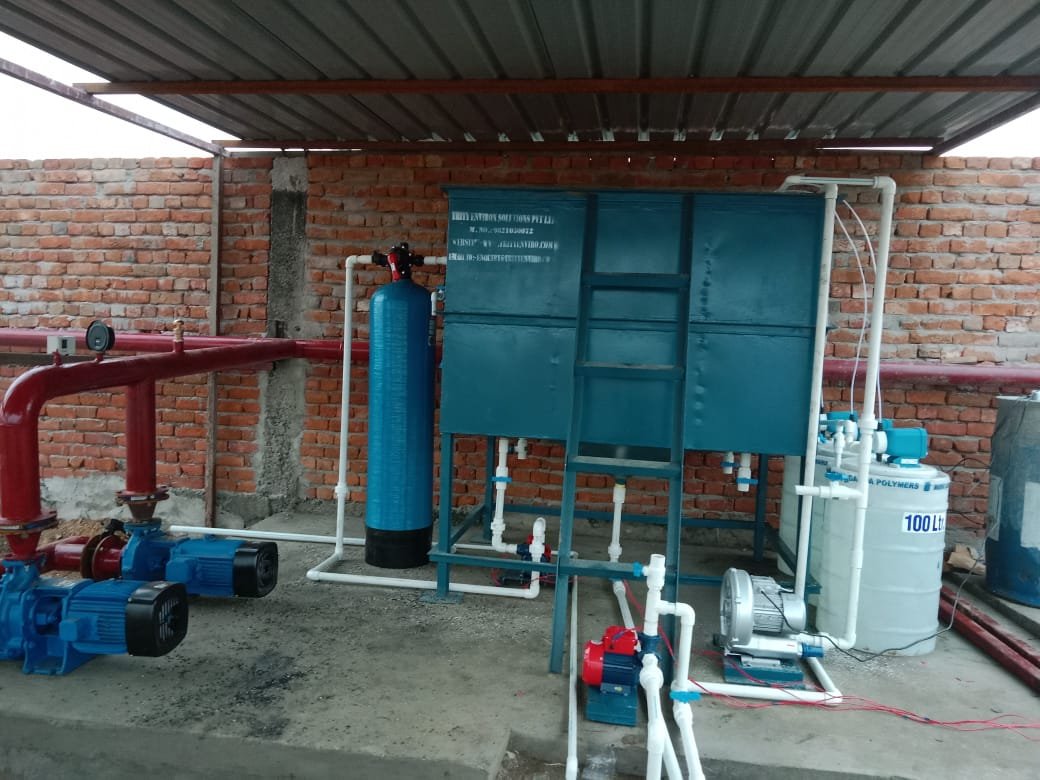
- Equipment manufacturing at our own facility
- Installation, piping, and electrical integration
- Trial runs, commissioning, and CPCB and SPCB documentation support
- Annual Maintenance Contracts (AMC) after commissioning, with monitoring calibrated to hospital-grade reliability requirements
Given how directly a hospital's wastewater treatment ties to public health, we build redundancy into critical components rather than treating backup capacity as optional, since downtime here carries different stakes than a typical commercial building.
Capacity Options We Manufacture
| Facility Type | Capacity Range | Typical Configuration |
|---|---|---|
| Small clinics and nursing homes | 1 KLD to 20 KLD | Compact MBBR, minimal footprint |
| Mid-sized hospitals | 20 KLD to 200 KLD | MBBR or SBR with enhanced tertiary disinfection |
| Large hospitals with oncology or specialised units | 50 KLD to 1 MLD+ | SBR or MBR with activated carbon or advanced oxidation polishing |
Treatment Technologies We Deploy
- MBBR (Moving Bed Biofilm Reactor): compact footprint, well suited to urban hospitals and clinics with limited plot space
- SBR (Sequencing Batch Reactor): handles the batch-style variability common in hospital wastewater better than continuous-flow systems, useful where patient load fluctuates
- MBR (Membrane Bioreactor): higher-quality output suited to facilities prioritising treated water reuse, at a higher cost than MBBR or SBR
- Activated carbon and advanced oxidation: tertiary polishing stages specifically for pharmaceutical residue removal, recommended for hospitals with significant oncology or high-antibiotic-use departments
Automation and sensor-based monitoring for BOD and pH are increasingly standard on hospital systems, since consistent performance matters more here than in a facility where an occasional off-spec discharge has lower stakes.
Uses of a Hospital STP Beyond Basic Compliance
- Pathogen control: treating and disinfecting sewage to remove disease-causing organisms before discharge, limiting the spread of illness beyond the facility
- Protection of water resources: removing contaminants and pathogens before discharge protects groundwater and nearby water bodies from hospital-specific pollution loads
- Pharmaceutical residue management: dedicated tertiary treatment addresses antibiotics and other active compounds that standard treatment misses
- Water reuse: treated water can supply flushing, gardening, or cooling needs, reducing freshwater dependency, particularly valuable for hospitals in water-stressed regions
- Regulatory and reputational standing: a properly functioning STP supports compliance during CPCB inspection and reflects the facility's broader commitment to environmental and public health responsibility
Engineering Considerations Specific to Hospital STPs
Equalisation needs to handle shock loads, not just average flow. Disinfectant discharge from cleaning cycles and OT turnover arrives in concentrated bursts rather than a steady stream. Undersized equalisation is one of the most common design mistakes in hospital STPs, and it shows up as inconsistent treatment performance rather than an obvious failure.
Standard biological treatment doesn't remove pharmaceutical residues. For any facility with meaningful antibiotic use or an oncology department, tertiary polishing with activated carbon or advanced oxidation isn't optional if you want the discharge to actually address the pharmaceutical load, not just the organic load.
Patient volume fluctuates in ways commercial buildings don't. A disease outbreak or a sudden surge in admissions can spike both volume and strength quickly. Systems designed only for average daily load can fall behind during exactly the periods when treatment reliability matters most.
Redundancy matters more here than in most sectors. A treatment failure at a hospital carries different consequences than one at an office building. We build in backup capacity for critical stages rather than treating it as an upgrade.
Why Hospitals Choose Trity Environ Solutions
Most STP suppliers apply a residential or commercial design to hospitals with minimal adaptation, which handles the organic load reasonably well but ignores the pharmaceutical residues, disinfectant shock loads, and pathogen concentrations that actually distinguish hospital wastewater. We size equalisation for shock loads by default, and we recommend tertiary polishing for pharmaceutical removal wherever a facility's department mix genuinely calls for it, rather than only offering it as an expensive upsell.
We manufacture at our own facility, handle design through commissioning ourselves, and provide AMC support built around the reliability standard a healthcare facility actually needs.
Quality, Certification, and After-Sales Support
Trity Environ Solutions is ISO 9001:2015 certified, and every plant we manufacture goes through in-house quality inspection before dispatch. After installation, we provide AMC support, spare parts availability, and remote troubleshooting, with response times calibrated to the higher stakes a healthcare facility's wastewater system carries. You can review our project history on our Achievement page, or explore our full product range.
Frequently Asked Questions
1. Why is an STP necessary for hospitals specifically?
Hospital wastewater carries pharmaceutical residues, disinfectant chemicals, and pathogen loads that standard biological treatment doesn't fully address. An STP designed for this profile is necessary both for CPCB and SPCB compliance and to prevent pharmaceutical and pathogen contamination from reaching local water bodies and groundwater.
2. Does a hospital STP also handle biomedical waste like syringes and dressings?
No. Solid and infectious biomedical waste is governed separately under the Biomedical Waste Management Rules, 2016, and is disposed of through a Common Biomedical Waste Treatment Facility, typically via incineration or autoclaving. An STP treats liquid sewage discharge only. A compliant facility needs both systems working correctly, not one substituting for the other.
3. What size hospital needs a dedicated STP?
CPCB and state pollution boards generally require healthcare facilities above a certain bed count to install a functioning STP, though the exact threshold varies by state. We recommend checking your specific SPCB's current requirement, and can help clarify this during site evaluation.
4. Do all hospital STPs need advanced tertiary treatment for pharmaceutical residues?
Not universally, but any facility with significant antibiotic use, an oncology department, or other high-pharmaceutical-load departments should include activated carbon or advanced oxidation polishing, since standard biological treatment alone doesn't reliably remove these compounds.
5. Can an existing hospital STP be upgraded to address pharmaceutical residue removal instead of being replaced?
In many cases, yes. Adding an activated carbon or advanced oxidation polishing stage to an existing plant can significantly improve pharmaceutical residue removal without a full system rebuild. We assess this during site evaluation.
6. How do you size an STP for a hospital with fluctuating patient volume?
We size systems against realistic peak scenarios, including disease outbreak surges, rather than average daily load, and SBR technology in particular handles this kind of batch variability better than a continuous-flow design.
7. What is the typical capacity range for a hospital STP?
This depends heavily on bed count and department mix. Small clinics typically need 1 to 20 KLD, mid-sized hospitals 20 to 200 KLD, and larger hospitals with specialised units like oncology can require 50 KLD to 1 MLD or more. We provide a site-specific recommendation after reviewing your facility's actual flow data.
Ready to discuss your hospital's wastewater treatment project? Get a free quote or explore our full product range for STP, ETP, and related water treatment systems.
WHY THIS SYSTEM?
Key Benefits of Sewage Treatment Plant for Hospital
Engineered for high biological efficiency, full environmental compliance, and low lifecycle operational costs.
100% CPCB / SPCB Compliance
Strict adherence to national and state pollution control board parameters for BOD, COD, TSS, and heavy metals discharge.
Low Power & Operational Cost
Optimized hydraulic design and energy-efficient aeration reduce kilowatt consumption per cubic meter of treated water.
Compact & Modular Footprint
Skid-mounted and modular civil layouts save valuable industrial floor space and allow seamless capacity expansion.
Automated PLC / SCADA Control
Real-time water quality monitoring, automated dosing systems, and remote telemetry for hassle-free plant operation.
Zero Liquid Discharge (ZLD) Ready
Seamless integration with downstream RO and evaporator systems for maximum water recycling and recovery.
Robust Engineering & Longevity
Heavy-gauge anti-corrosive construction ensures 15+ years of reliable, uninterrupted service life.
SYSTEM CONFIGURATIONS
Types of Sewage Treatment Plant for Hospital Configurations
Tailored industrial configurations matched to specific effluent composition, flow rates, and space constraints.
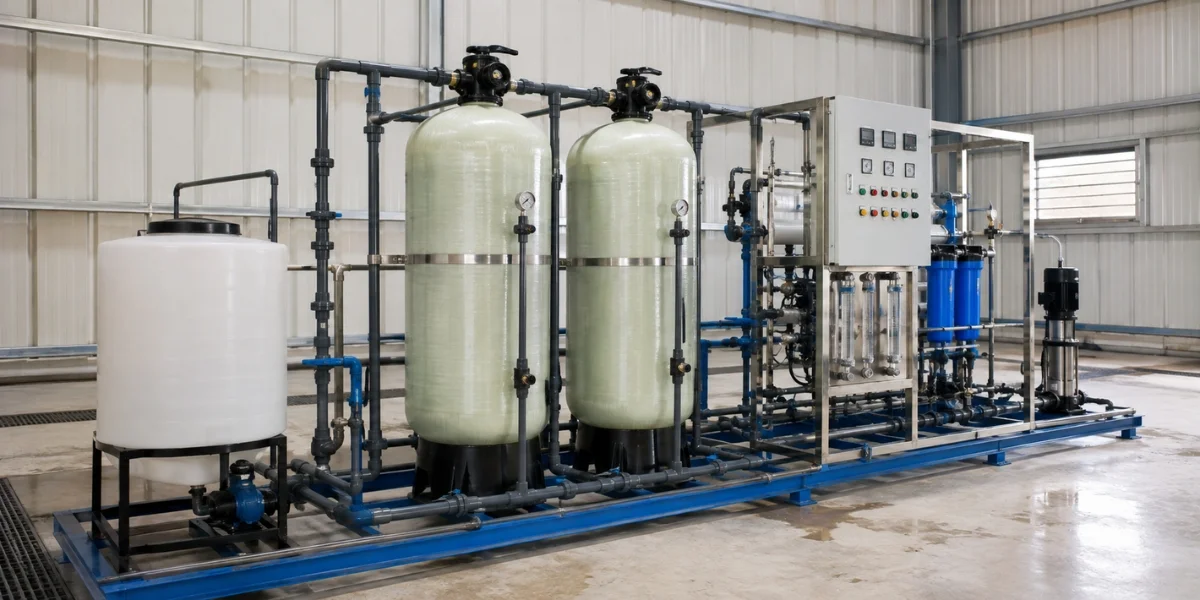
RO & Water Recycling Plant Manufacturer in India
Trity Environ Solutions manufactures RO and water recycling systems for industries and commercial facilities, engineered for reliable purity and reuse.
Explore Configuration
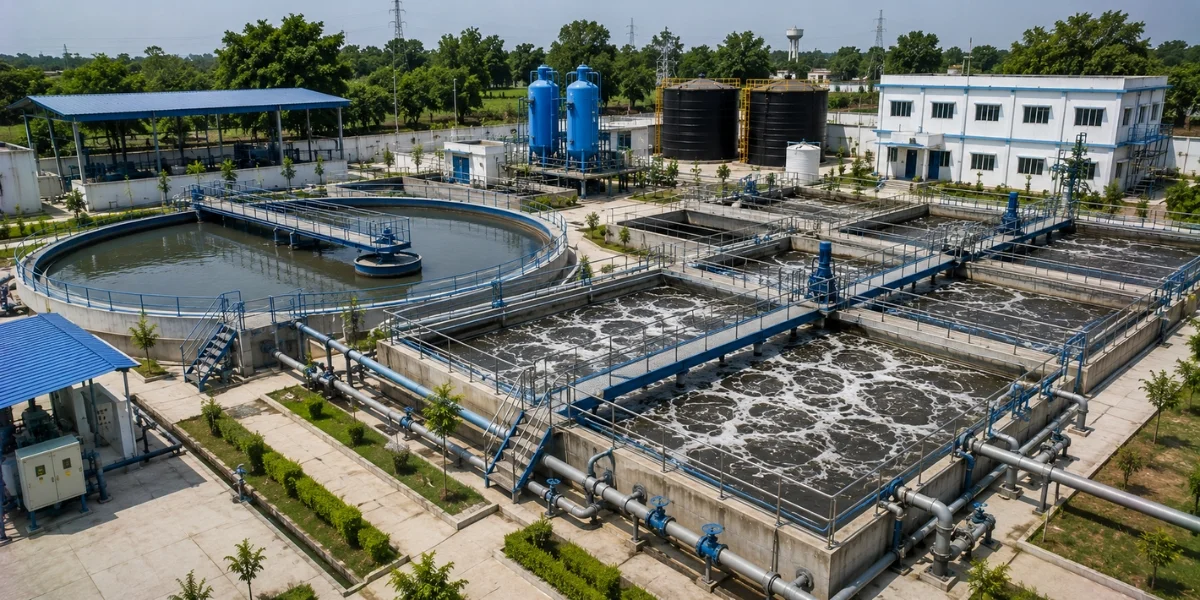
Tertiary Treatment Plant Manufacturer in India
Trity Environ Solutions manufactures tertiary treatment plants that polish treated water beyond secondary treatment, enabling genuine reuse and stricter discharge compliance.
Explore Configuration
Wastewater Recycling System Manufacturer in India
Trity Environ Solutions manufactures wastewater recycling systems using UF and RO technology, turning treated wastewater into reuse-grade water for cooling, flushing, and gardening.
Explore Configuration
STEP-BY-STEP WORKFLOW
How the Sewage Treatment Plant for Hospital Process Works
A sequential, multi-stage treatment methodology engineered for maximum contaminant removal and water recovery.
01
Primary Collection & Screening
Raw effluent equalization, coarse bar screening, and pH neutralization to stabilize influent parameters.
02
Physico-Chemical Coagulation
Flash mixing of coagulants and flocculants followed by primary clarifier separation for heavy suspended solids.
03
Advanced Biological Digestion
Aerobic/anaerobic microbial digestion (MBBR / SBR / ASP) for drastic reduction of dissolved BOD & COD.
04
Tertiary Polishing & Disinfection
Dual media sand and activated carbon filtration with UV/ozonation for clean, reusable output water.
CATALOGUE
Related Engineering Products
RO & Water Recycling Plant Manufacturer in India
Trity Environ Solutions manufactures RO and water recycling systems for industries and commercial facilities, engineered for reliable purity and reuse.
Tertiary Treatment Plant Manufacturer in India
Trity Environ Solutions manufactures tertiary treatment plants that polish treated water beyond secondary treatment, enabling genuine reuse and stricter discharge compliance.
Wastewater Recycling System Manufacturer in India
Trity Environ Solutions manufactures wastewater recycling systems using UF and RO technology, turning treated wastewater into reuse-grade water for cooling, flushing, and gardening.
PAN-INDIA CAPABILITIES
Regional Solutions & State Coverage
TECHNICAL KNOWLEDGE
Related Insights & Engineering Guides
PROVEN EXCELLENCE
Featured Turnkey Installations




Need a Custom Water or Wastewater Treatment Solution?
Our engineering team can help design the right system for your capacity, industry, and compliance requirements.