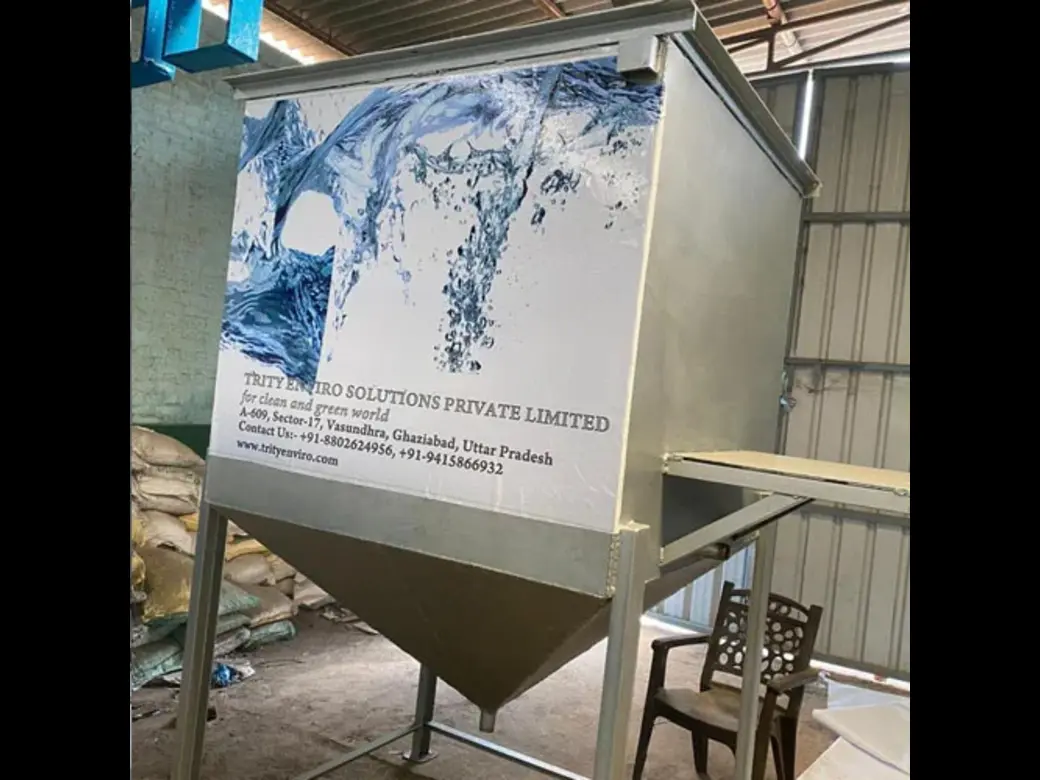
Trity Environ Solutions is India's best manufacturer and supplier of Sewage Water Equalization Tanks...
| Minimum Order Quantity | : 5 Cubic Meter |
| Country of Origin | : Made in India |
| Model Type | : Bio Pac Media |
| Filter Type | : MBBR MEDIA |
| Usage/Application | : Media For Biological System |
Most industrial ETP failures we have seen share one root cause: the inlet tank was either undersized, absent, or treated as an afterthought. When raw effluent enters a treatment system without hydraulic conditioning, the entire plant runs reactively rather than by design.
A properly engineered wastewater balancing system changes that completely.
Trity Enviro Solutions manufactures and supplies industrial buffer tanks for effluent and sewage treatment applications across India. Every unit is custom-fabricated to match your actual flow data, effluent chemistry, and site conditions. We serve pharmaceutical plants, chemical industries, textile mills, food processing units, dairy facilities, hospitals, and municipal projects from our manufacturing facility in Ghaziabad.
Setting up a new effluent treatment plant, upgrading an STP system, or revamping an underperforming inlet stage? Our engineering team handles sizing, material selection, fabrication, and commissioning support end to end.
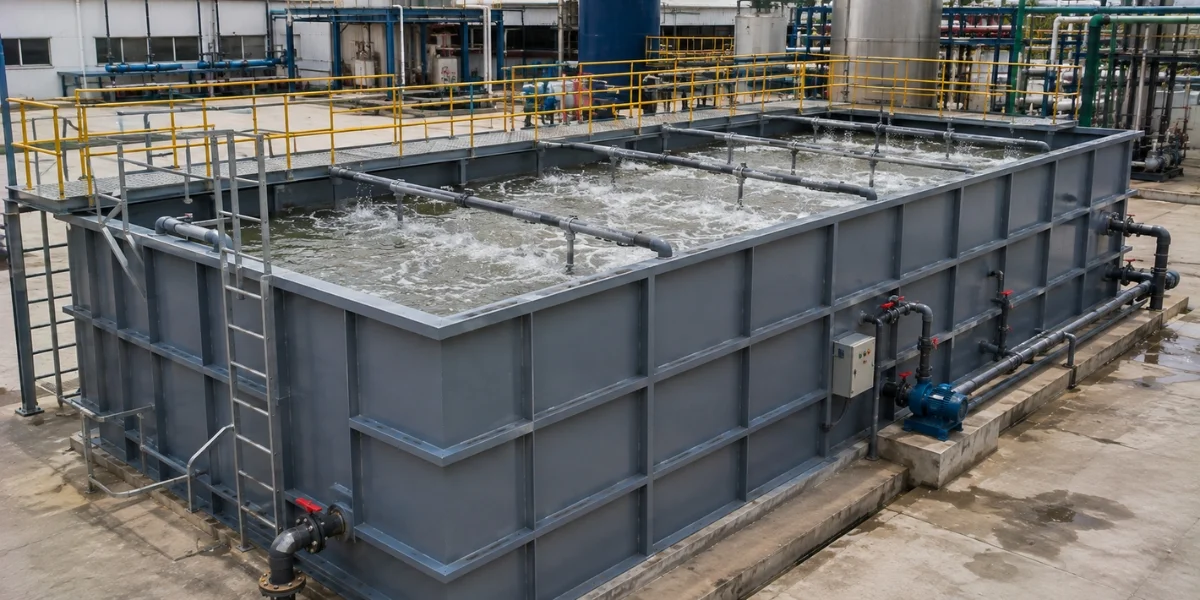
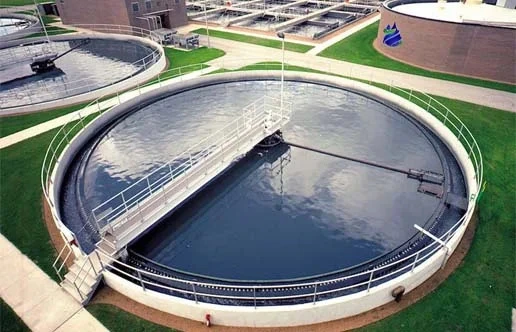
An equalization tank is a hydraulic balancing vessel positioned before the primary treatment stage in an ETP or STP. It receives raw wastewater, holds it for a defined retention period, and releases a steady, controlled flow to the treatment units downstream.
Here is the real-world problem it solves.
Industrial wastewater almost never flows at a constant rate. A textile dyehouse discharges a concentrated rinse batch at shift change. A pharmaceutical plant dumps solvent-wash effluent at irregular intervals. A food unit generates its heaviest organic load during cleaning cycles at the end of a production run. If that variable, high-strength wastewater hits a biological reactor directly, the microbial population crashes. Recovery takes days. Compliance suffers.
A process stabilization tank absorbs these surges. It averages out peak flows, blends concentration spikes, and delivers a predictable feed to biological, chemical, and physical treatment units. The result is better treatment performance, lower chemical consumption, and a much more stable plant operation overall.
Core functions this unit performs:
One practical observation worth noting: many older ETP designs in industrial zones across Noida, Haryana, and the Delhi NCR corridor were built without adequate inlet buffering. Plants running on short retention times of two to three hours experience consistent compliance failures. Retrofitting a properly sized wastewater holding tank is often the single most cost-effective upgrade available.
Effluent from API synthesis and solvent recovery operations is among the most variable we encounter. pH can swing from below 3 to above 10 within a single production day. COD can spike tenfold between batches. Without a dedicated inlet buffer, biological treatment is nearly impossible to stabilize. The process stabilization tank here is not optional.
Batch-process chemical plants discharge effluent in discrete slugs rather than continuous streams. Each batch carries a different pollutant signature. A hydraulic balancing tank blends these batches into a homogeneous feed, protecting the downstream wastewater treatment system from composition-driven upsets.
High color, high temperature, and pH swings are defining characteristics of textile effluent. Equalization ahead of the treatment train reduces chemical neutralization requirements and significantly improves the consistency of color removal in subsequent stages.
Food effluent BOD can reach 2,000 to 5,000 mg/L during heavy production days. The surge in organic load during cleaning-in-place cycles is a common cause of biological reactor failure in food ETPs. A correctly sized industrial buffer tank absorbs these pulses before they reach the aeration tank.
Fat emulsions and dissolved proteins make dairy effluent particularly sensitive to temperature variation and irregular loading. Retaining this wastewater for six to eight hours before treatment allows temperature and composition to stabilize, which improves dissolved air flotation and biological treatment efficiency.
Healthcare effluent carries disinfectants, pharmaceuticals, and intermittent pathogen loads. Consistent hydraulic retention ensures that disinfection contact time remains within design parameters regardless of daily flow variation.
Peak morning and evening sewage flows in large commercial facilities can be four times the daily average. A properly sized wastewater flow management system allows the downstream STP to be designed for average flow rather than peak, reducing both equipment cost and energy consumption.
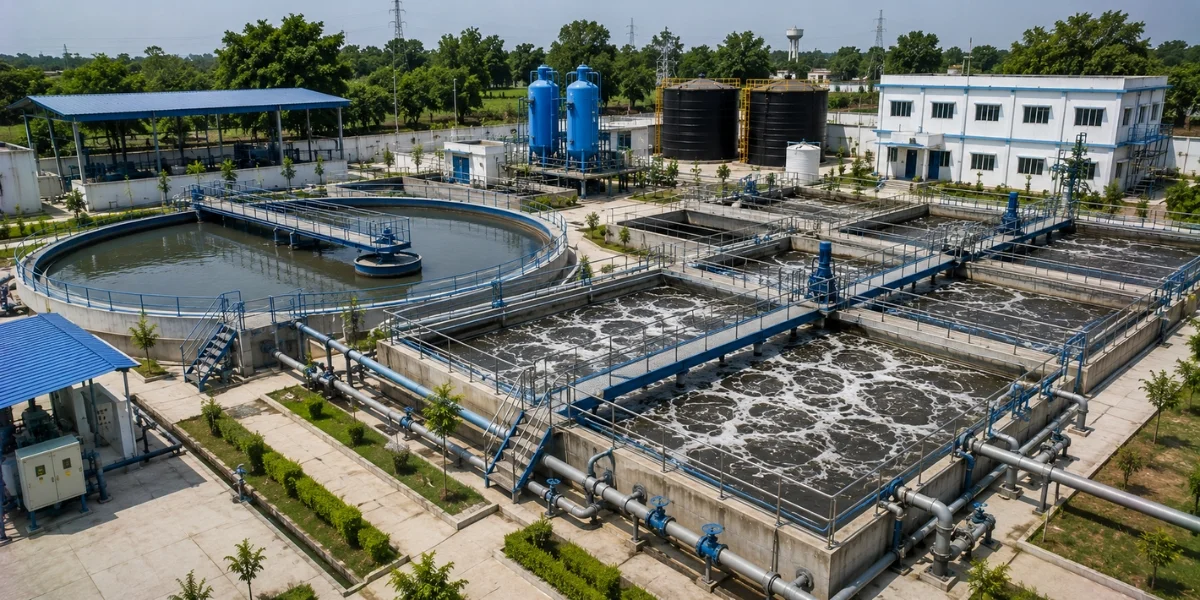
Municipal sewage treatment plants deal with the most extreme flow variation of any application. Diurnal peaks, storm events, and industrial discharge surges all arrive at the inlet. Inlet equalization is a standard design requirement for any STP above 100 KLD capacity.
For project consultants specifying wastewater systems across industrial estates and integrated projects, this is one of the most frequently undersized units in preliminary designs. Getting the flow equalization volume right at the design stage avoids expensive civil modifications later.
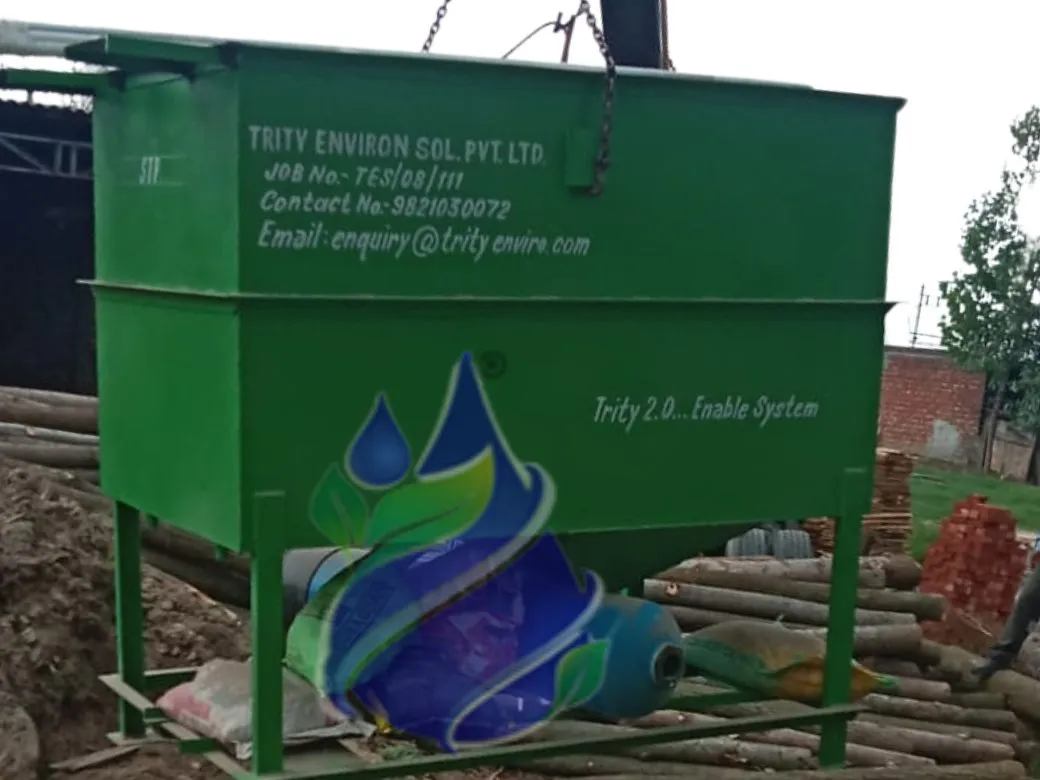
FRP is the material of choice for corrosive effluent streams involving acids, alkalis, solvents, or chlorinated compounds. It offers excellent chemical resistance, requires no internal lining, and is significantly lighter than MS, which simplifies transportation and installation on upper-floor or elevated plinths. We manufacture FRP process stabilization tanks in custom winding configurations, with filament-wound construction for higher pressure ratings where required.
Heavy-duty MS fabrication suits high-volume applications where structural strength takes priority. We use IS-grade mild steel plate with full-penetration butt welds at structural joints. Internal corrosion protection is applied through epoxy lining, rubber lining, or coal tar epoxy depending on effluent aggressiveness. MS industrial balancing vessels in the range of 50 KL to 500 KL are among our most frequently supplied products.
For large municipal projects and industrial plants with space constraints, underground RCC construction is the practical solution. Properly designed RCC wastewater holding tanks offer 30-plus years of structural service life, no corrosion concerns, and minimal above-ground footprint. We provide civil design drawings and technical specifications in coordination with your structural contractor.
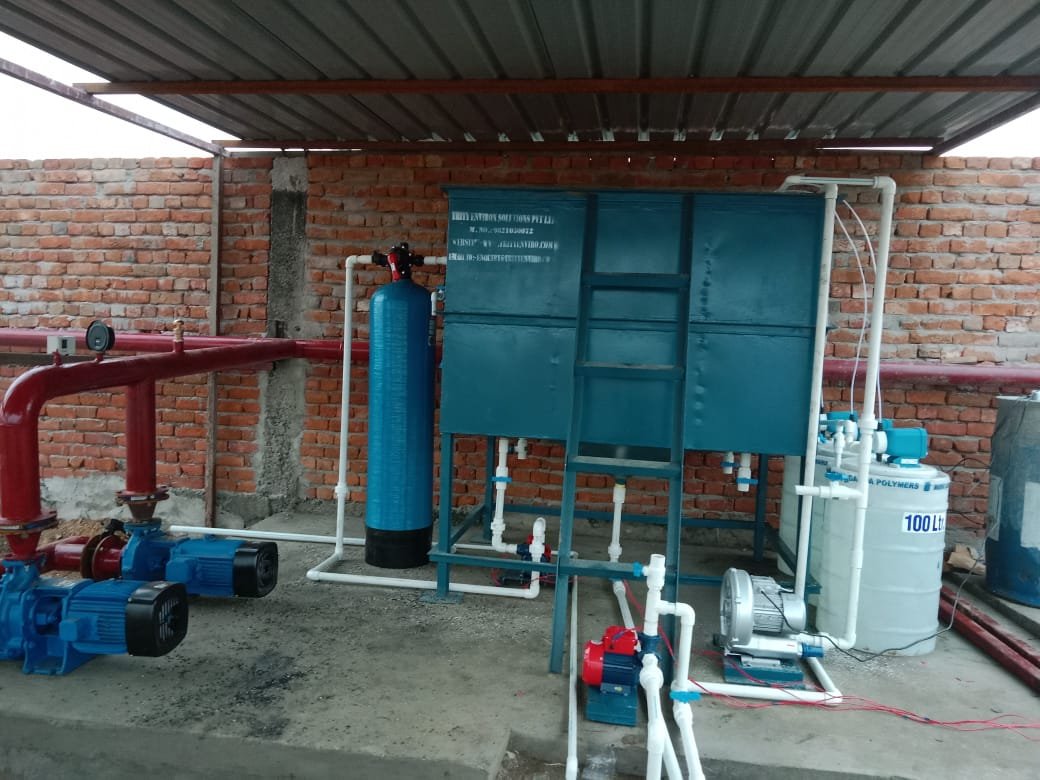
Prefabricated underground tanks in FRP or MS suit smaller industrial and commercial projects where civil construction is not feasible. These units ship as complete assemblies with manholes, inlet and outlet connections, and overflow arrangements ready for installation.
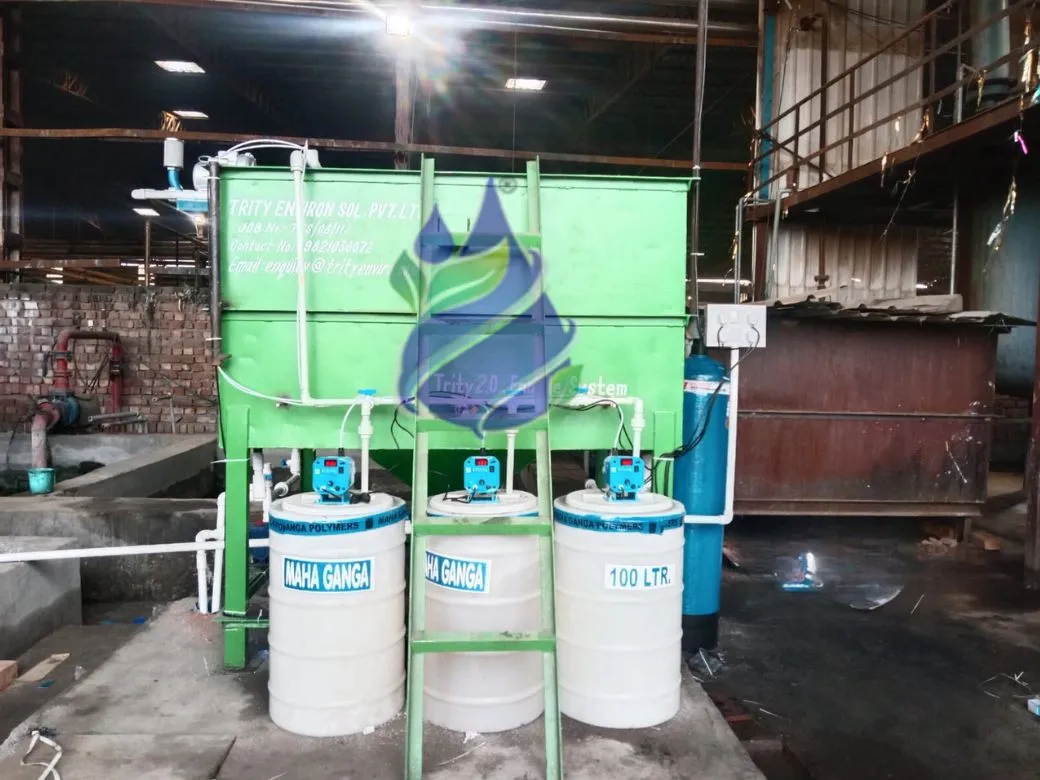
Above-ground installation remains the most common configuration for industrial ETPs. It provides easy access for inspection, sludge removal, and aeration system maintenance. We supply these in FRP and MS with optional walkway platforms, access ladders, and instrumentation nozzles.
All units are manufactured to custom specifications. Retention volume, working dimensions, nozzle schedule, internal baffling, and surface treatment are engineered specifically for your application.
Stable Treatment Performance Downstream biological, chemical, and physical units receive a consistent flow and load. This is the single most important condition for reliable ETP performance. Variable loading is responsible for the majority of treatment plant failures in Indian industrial ETPs.
Better Biological Reactor Health Aerobic and anaerobic systems thrive on steady organic input. Sudden BOD and COD spikes are a primary cause of sludge bulking and microbial population crashes. Understanding BOD and COD treatment dynamics makes it clear why inlet stabilization is foundational rather than supplementary.
Reduced Chemical Consumption When acidic and alkaline effluent streams blend during retention, natural pH correction occurs. This reduces the volume of acid or alkali required at the neutralization stage. pH control in ETP systems becomes significantly more manageable when inlet pH variation is already reduced by 40 to 60 percent through blending.
Right-Sized Downstream Equipment Designing for average flow rather than peak flow reduces pump sizes, aeration tank volumes, clarifier diameters, and filter capacities. The capital saving on downstream equipment often exceeds the cost of the inlet buffer tank itself.
Longer Equipment Life Pumps, blowers, aerators, and instrumentation deteriorate faster under variable loading. Consistent inlet conditions extend mean time between maintenance interventions on every piece of downstream equipment.
Simpler Sludge Management Consistent organic loading produces sludge with predictable settleability and dewatering characteristics. Plants with proper inlet equalization typically generate 15 to 25 percent less excess sludge than those without.
Step 1: Effluent Characterization and Flow Analysis We start with your actual effluent data, not industry averages. Daily flow volume, peak-to-average ratio, pH range, temperature, COD, suspended solids, and industry-specific parameters are all reviewed before we size the tank. If you have an existing plant with problems, we look at the operating history to identify what the inlet variation actually looks like.
Step 2: Retention Volume Calculation Tank sizing is based on hydraulic retention time analysis. We model the diurnal flow curve and calculate the volume needed to reduce peak-to-average ratio to within acceptable limits for your downstream units. For most industrial ETPs, this lands between 6 and 10 hours. Batch-process plants often need 12 hours or more.
Step 3: Material Specification FRP for corrosive or lightweight applications. MS with lining for high-volume, structurally demanding conditions. RCC for permanent underground installations. We explain the trade-offs clearly and recommend based on your effluent, site, and budget.
Step 4: Fabrication All fabrication takes place at our manufacturing facility in Ghaziabad. We use IS-grade plates, CNC-cut nozzle openings, and certified welding procedures. Weld joints on structural seams are subject to visual inspection and dye penetrant or radiographic testing where specified.
Step 5: Lining, Coating, and Surface Finish MS tanks undergo abrasive blasting to Sa 2.5 standard before lining application. Rubber lining, epoxy coating, or coal tar epoxy is applied in specified thicknesses and cured before the hydraulic test. FRP tanks receive external gel coat and UV stabilizer.
Step 6: Leak Test and Final Inspection Every tank is hydraulically tested at full working volume before dispatch. Nozzle orientations, dimensions, and weld quality are verified against approved drawings. Inspection records are documented.
Step 7: Dispatch and Site Support Our project execution team coordinates transport, provides foundation drawings, and offers on-site installation support. We do not hand over a tank and disappear. We stay engaged through commissioning.
Engineering Depth, Not Just Fabrication We do not simply manufacture to dimensions you provide. Our engineers review your entire treatment train, identify sizing risks, and recommend tank configurations that actually solve the problem. Learn more about our capabilities and project history.
Pan India Project Reach Our supplied units are operational in industrial zones across Delhi NCR, Noida, Ghaziabad, Faridabad, Gurgaon, Haryana, Rajasthan, Maharashtra, Tamil Nadu, Karnataka, and Uttar Pradesh. For projects in the NCR region, our ETP and STP services in Delhi NCR include full project execution from civil drawings to startup.
Fully Customized Manufacturing No standard models. Every tank is designed and fabricated to your process requirements. This matters because a pharmaceutical plant and a food processing unit may both need 200 KL of inlet buffering, but the material specification, nozzle layout, and aeration configuration will be completely different.
Transparent Pricing and Fast Turnaround Quotations are itemized. You see exactly what you are paying for. Lead times are confirmed at the time of order, and our production team communicates proactively on fabrication milestones.
Turnkey and Post-Commissioning Support For clients who need complete plant solutions, we offer turnkey project execution covering all civil, mechanical, and electrical components. After commissioning, our operation and maintenance services and annual maintenance contracts keep the plant running to specification year-round.
| Industry | Wastewater Challenge Addressed |
|---|---|
| Pharmaceuticals | COD spikes, pH swings, toxic compound variability |
| Chemicals | Batch discharge composition variation |
| Textiles | Color, temperature, and pH fluctuation |
| Food and Beverage | High-BOD surge during cleaning cycles |
| Dairy | Fat, protein, and lactose load variation |
| Distilleries | High-strength spent wash pre-treatment |
| Paper and Pulp Mills | Variable flow and fiber loading |
| Electroplating | Heavy metal concentration variation |
| Hospitals | Pathogen and pharmaceutical load management |
| Commercial and Hospitality | Peak STP flow reduction |
| Municipal Projects | Diurnal and storm flow equalization |
Our work in these sectors forms part of a broader industrial wastewater treatment portfolio covering complete ETP and STP system supply.
A well-fabricated wastewater balancing system requires modest but consistent maintenance. Here is what operational experience tells us.
Monthly Visual Inspection Check tank walls, nozzle flanges, manholes, and the base slab for signs of corrosion, cracking, or scaling. Catching a small leak at a pipe penetration costs a fraction of what a structural failure costs.
Quarterly Sludge Removal Grit and heavy solids accumulate at the base regardless of aeration. Budget for periodic desilting. Plants that skip this step lose effective retention volume over time and then wonder why treatment performance drops.
Diffuser and Aerator Inspection Clogged fine-bubble diffusers are one of the most common causes of septicity in inlet tanks. Inspect membrane condition and blower performance every three months. Odor complaints from plant neighbors are almost always an aeration maintenance issue.
Annual Lining Inspection for MS Tanks Internal lining condition should be assessed every 12 months. Spot repair of thin or lifted areas costs very little. Waiting until a tank needs full relining is expensive and causes extended downtime.
Documentation Maintain a maintenance log with dates, observations, and actions taken. This record supports regulatory compliance audits and helps identify recurring issues before they become failures.
For plants requiring structured support, our O&M services and annual maintenance contracts cover all of the above with scheduled visits, emergency response, and compliance reporting.
Getting the inlet buffering wrong creates problems that compound for the life of the plant. Too small, and the treatment system runs at the mercy of every production shift change. Too large, and capital is buried in unnecessary civil volume. The right answer comes from actual flow data and engineering judgment, not a rule of thumb.
Trity Enviro Solutions brings both.
We manufacture process stabilization tanks for industrial ETPs and STPs across India, from our facility in Ghaziabad to project sites in Delhi NCR, Noida, Haryana, Maharashtra, Gujarat, and beyond.
Reach our engineering team to:
We respond to all project inquiries within one working day.
Contact Trity Enviro Solutions now. Talk to our engineers, share your flow data, and get a quotation built around your actual requirements.
Trity Environ Solutions manufacturers and suppliers of STP and ETP Plants in Delhi/NCR. Sewage Treatment...
Trity Environ Solutions is a trusted Bubble Air Diffuser manufacturer in India. We supply fine bubble disc diffusers, tube diffusers, and EPDM membrane diffusers for STP, ETP, MBBR, and SBR systems. PAN India supply and installation support available.
STP and ETP Plant Manufacturer in Champawat
Trity Environ Solutions manufacturers and suppliers of STP and ETP Plant in Haridwar. Sewage Treatment...
No.1 Sewage Treatment Plant Manufacturer & Supplier in India, Trity Environ Solutions manuf....
Trity Environ Solutions manufacturers and suppliers of STP and ETP Plant in Jodhpur. Sewage Treatment...
Trity Environ Solutions manufacturers and suppliers of STP and ETP Plant in Gurgaon. Sewage Treatment...
Trity Enviro Solutions is one of the best Sewage Treatment Plant and Effluent Treatment Plant manufac...
Ultra filtration systems use advanced membrane technology to remove suspended solids, bacteria, and fine particles from water. These systems help improve water quality for treatment plants, commercial facilities, and process applications.
Trity Environ Solutions manufacturers and suppliers of STP and ETP Plant in Kanpur. Sewage Treatment...