What BOD and COD Mean in Wastewater Treatment
In wastewater treatment, BOD and COD are two important parameters used to measure the level of organic pollution present in water. BOD stands for Biological Oxygen Demand, which indicates the amount of oxygen required by microorganisms to break down organic matter in wastewater. COD, or Chemical Oxygen Demand, represents the amount of oxygen required to chemically oxidize both organic and inorganic pollutants present in water.
High BOD and COD levels indicate a large amount of organic contaminants in wastewater. If such water is discharged without treatment, it can deplete oxygen levels in natural water bodies and harm aquatic life. For this reason, industries and municipalities install BOD and COD treatment systems to reduce pollutant levels before wastewater is released into the environment.
Sources of High BOD and COD in Wastewater
Wastewater generated from various industrial and commercial activities often contains organic compounds that contribute to high BOD and COD levels. Food processing plants, chemical manufacturing units, pharmaceutical industries, textile processing facilities, and municipal sewage systems commonly produce wastewater with elevated organic load.
Organic substances such as oils, grease, proteins, carbohydrates, and chemical compounds increase oxygen demand in water. When these pollutants enter natural water bodies, microorganisms begin consuming oxygen to decompose the organic matter, which reduces the oxygen available for aquatic organisms. Proper treatment systems are therefore required to reduce these pollutants.
Treatment Methods Used for BOD and COD Reduction
BOD and COD treatment systems typically use a combination of physical, biological, and chemical treatment processes. The choice of treatment method depends on the characteristics of the wastewater and the level of contamination.
Physical treatment methods may include screening, sedimentation, and filtration to remove suspended solids and larger particles. These processes help reduce the load on the biological treatment units that follow.
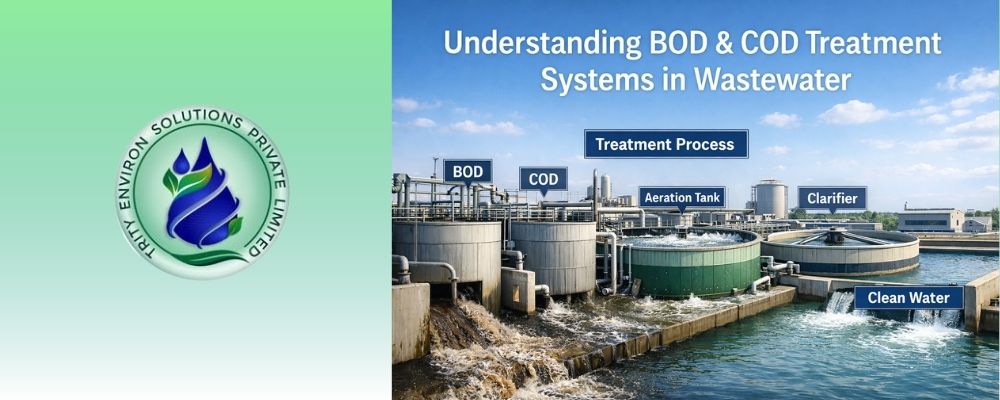
Biological treatment methods are commonly used to reduce BOD levels. In this process, microorganisms break down organic pollutants in wastewater and convert them into simpler compounds such as carbon dioxide and water. Aeration tanks and biological reactors are often used for this purpose.
Chemical treatment processes may also be used when wastewater contains complex organic compounds that are difficult to break down biologically. Chemical oxidation and coagulation methods help remove remaining pollutants and reduce COD levels.
Biological Treatment in BOD Reduction
Biological treatment plays a key role in reducing BOD levels in wastewater. During this process, microorganisms consume organic matter as a food source. Aeration systems supply oxygen to the treatment tank, allowing bacteria to break down pollutants effectively.
As microorganisms digest organic compounds, they convert them into biomass and harmless byproducts. This process significantly lowers the biological oxygen demand in the treated water.
Different biological treatment technologies such as activated sludge systems, moving bed biofilm reactors, and sequencing batch reactors are commonly used in wastewater treatment plants for BOD removal.
Chemical Treatment for COD Removal
While biological processes are effective for many organic pollutants, certain industrial wastewater streams contain chemicals that are difficult for microorganisms to break down. In such cases, chemical treatment methods are used to reduce COD levels.
Chemical oxidation processes introduce oxidizing agents that react with organic pollutants and convert them into less harmful substances. Coagulation and flocculation methods may also be applied to remove dissolved organic compounds.
Combining biological and chemical treatment processes ensures more efficient removal of both BOD and COD from wastewater.
Importance of BOD and COD Control
Controlling BOD and COD levels is essential for protecting natural water bodies and maintaining environmental balance. Discharging untreated wastewater with high organic load can severely affect aquatic ecosystems and lead to oxygen depletion in rivers and lakes.
Regulatory authorities establish discharge limits for BOD and COD to ensure that wastewater released into the environment meets acceptable quality standards. Treatment systems help industries comply with these environmental regulations while reducing pollution.
Applications of BOD and COD Treatment Systems
BOD and COD treatment systems are widely used in various industries and municipal wastewater treatment plants. Facilities that generate organic-rich wastewater require these treatment processes to manage pollution effectively.
Common applications include food and beverage processing plants, chemical manufacturing industries, pharmaceutical production units, textile processing facilities, and municipal sewage treatment plants.
By reducing organic pollution in wastewater, these systems support sustainable water management and environmental protection.
Conclusion
BOD and COD treatment systems play a vital role in modern wastewater treatment. By reducing organic pollutants and improving water quality, these systems help protect natural water resources and maintain environmental safety.
Industries and municipalities that generate wastewater must implement effective treatment processes to ensure that discharged water meets regulatory standards. Proper wastewater treatment not only prevents pollution but also supports responsible and sustainable water use.
Looking for efficient solutions to reduce BOD and COD levels in wastewater?
Trity Environ Solutions provides customized wastewater treatment systems designed to improve water quality and support reliable treatment infrastructure including ETP and STP systems.
- By Admin
- Waste Water Treatment
- Published: