
 ISO 9001:2015 & QCI Approved
Sewage Treatment Plant in Dubai
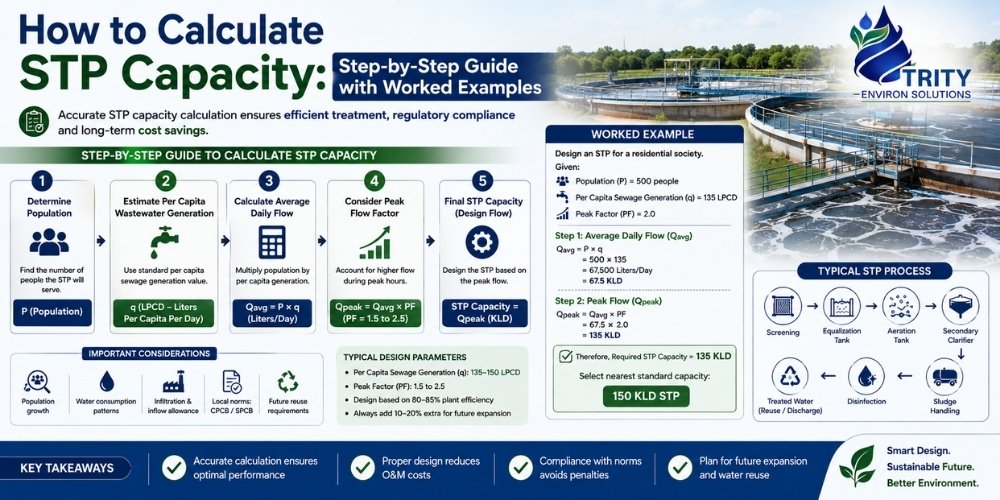
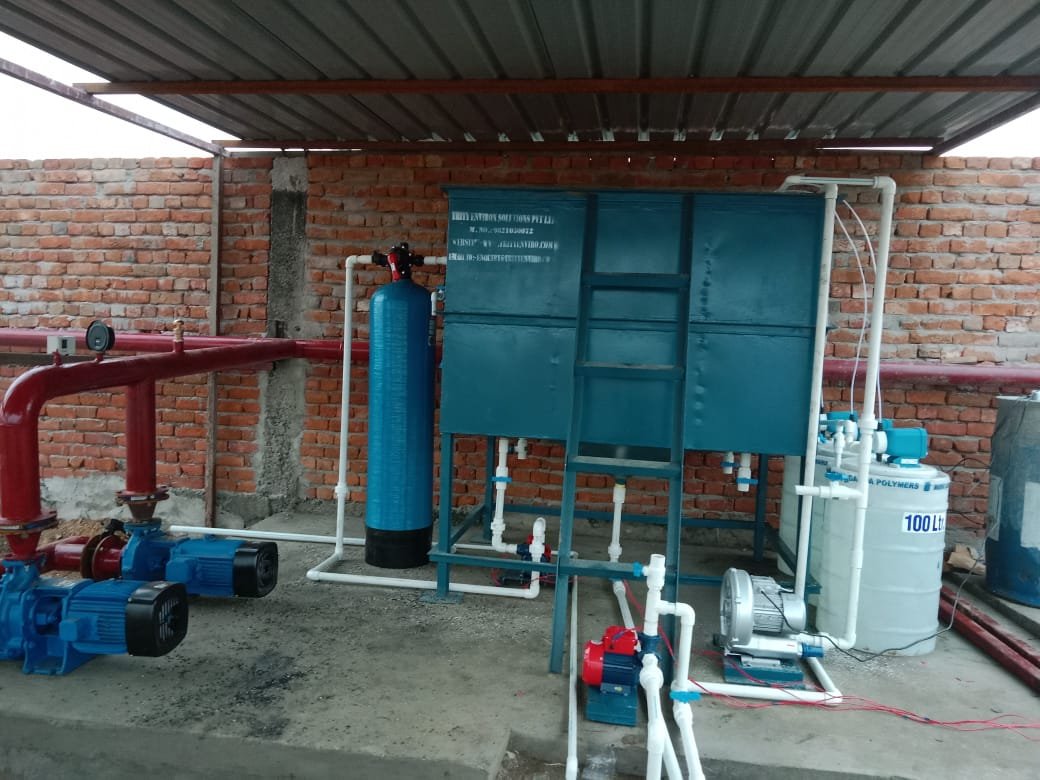
Trity Environ Solutions supplies STP plants for Dubai's villas, labour camps, hotels, and industrial units, engineered for Dubai Municipality standards and UAE water reuse targets. Get a free quote.
SPCB / CPCB Norm Compliant
Heavy Fabrication
STP Plant Supplier in Dubai, Built Around a Reuse-First Regulatory Standard
Dubai treats sewage differently than most cities, not as waste to dispose of, but as a resource to recover. Under the UAE Water Security Strategy 2036, the country has set a target of reusing 95 percent of treated wastewater, up from roughly 73 percent today, and Dubai's own reuse rate already exceeds 90 percent for irrigation, landscaping, and district cooling. The output of a Dubai STP even has its own regulatory category, Treated Sewage Effluent (TSE), distinct from potable sweet water and construction-grade salt water, with its own quality standards set by Dubai Municipality and the Dubai Electricity and Water Authority (DEWA). While centralised plants like Al Awir and Jebel Ali handle the bulk of the emirate's sewage, large parts of Dubai, particularly villa communities and standalone developments in areas like Al Khawaneej, Hatta, and the outer zones of International City, still rely on decentralised, privately operated STPs because the central network hasn't reached them yet.
Trity Environ Solutions manufactures and supplies Sewage Treatment Plant Manufacturer in Dubai systems built for exactly this landscape. As a trusted STP Plant Manufacturer in Dubai and STP Plant Supplier in Dubai, we design every system around Dubai Municipality's compliance requirements and the UAE's reuse-first water strategy, not a generic discharge-only template.
Where a Private STP Matters Most in Dubai
- Villa communities and standalone developments: areas not yet connected to Dubai's centralised sewerage network, including parts of Al Khawaneej, Hatta, and outer International City, depend on decentralised STPs for both compliance and non-potable water reuse
- Labour camps and staff accommodation: construction and industrial projects widely use dedicated STPs for worker housing, where hygiene standards and consistent operation matter as much as capacity
- Hotels and hospitality: treated water reuse for irrigation and landscaping reduces freshwater dependency in a market where water costs and sustainability credentials both matter commercially
- Industrial and commercial facilities: custom-sized systems for effluent from steel, chemical, food processing, and other industrial operations, alongside standard commercial-building sewage
- Construction sites: STPs for labour camp sewage during the construction phase, distinct from the dewatering and RO systems used for groundwater and tanker water treatment on the same sites
How Dubai's STP Standards Shape Our Design
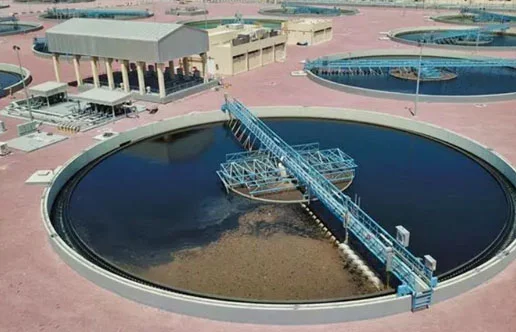
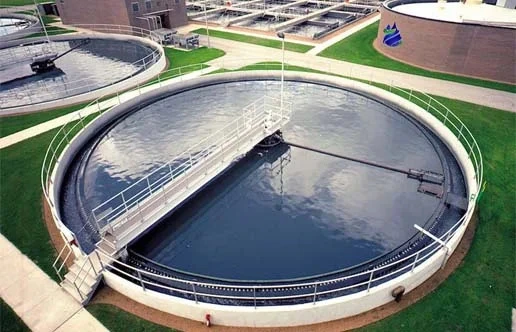
Dubai Municipality, together with Trakhees for free zone developments and Environment, Health and Safety (EHS) requirements, sets discharge and reuse standards covering BOD, COD, TSS, and pathogen removal. Meeting these consistently matters for more than routine compliance, since properties pursuing green certifications like LEED or Estidama, Dubai's own sustainability rating system, need documented, reliable treated water quality to qualify. Our Sewage Treatment Plant systems run through the standard three stages, preliminary treatment to remove solids and debris, secondary treatment using biological processes such as MBBR or SBR to break down organic load, and tertiary treatment with filtration and disinfection, engineered to consistently produce TSE-grade water suitable for irrigation, landscaping, flushing, or cooling reuse, not just water that clears a discharge threshold.
Turnkey Execution: Design to Commissioning
Our scope on Dubai projects typically covers:
- Site assessment and effluent characterisation for your specific application, whether villa community, labour camp, hotel, or industrial facility
- Process design built around TSE-grade reuse output as the standard target, not an upgrade option
- Civil and structural coordination adapted to compact urban plots or remote off-grid sites
- Equipment manufacturing at our own facility in India, with export logistics handled for UAE delivery
- Installation, piping, and electrical integration
- Trial runs, commissioning, and documentation support for Dubai Municipality, Trakhees, or EHS approval as applicable
- Ongoing maintenance support after commissioning
For sites in areas like Hatta or outer International City where the central sewerage network hasn't yet reached, we design systems to operate reliably as a long-term standalone solution, not a stopgap awaiting network connection that may still be years away.
Capacity Options We Supply
| Application | Capacity Range | Typical Technology |
|---|---|---|
| Villa communities and standalone developments | 50 KLD to 500 KLD | SBR or MBBR |
| Labour camps and staff accommodation | 50 KLD to 500 KLD | Compact MBBR, odour-controlled design |
| Hotels and commercial buildings | 50 KLD to 1 MLD | MBBR or SBR with reuse-grade tertiary treatment |
| Industrial facilities | Custom-engineered | MBBR, SBR, or MBR depending on effluent profile |
Treatment Technologies We Deploy
- MBBR (Moving Bed Biofilm Reactor): compact footprint, well suited to villa communities and hotels with limited plot space
- SBR (Sequencing Batch Reactor): effective for larger developments and facilities with substantial daily sewage volume
- MBR (Membrane Bioreactor): higher-quality output for facilities prioritising maximum reuse potential, particularly relevant given Dubai's reuse-focused regulatory environment
- 1.5 KW pump systems and standard automation for consistent operation across capacity ranges from 50 to 500 KLD
Given how central reuse is to Dubai's water strategy, tertiary treatment quality matters more here than in markets where discharge alone is the compliance bar.
Why a Reuse-Grade STP Matters Commercially, Not Just Environmentally
Cost savings: on-site treatment and reuse is significantly cheaper than off-site waste disposal, and it avoids the fines Dubai Municipality can impose for improper discharge.
Green certification support: LEED and Estidama certification processes require documented water reuse performance. A properly designed and consistently monitored STP supports this directly rather than being a separate compliance exercise.
Reduced freshwater dependency: in a market where water resources are genuinely scarce, treated water reuse for irrigation, flushing, and cooling reduces a property's draw on municipal freshwater supply.
Data and compliance tracking: many facilities in Dubai are required to report wastewater data to authorities. Systems equipped with monitoring technology make this tracking straightforward rather than a manual burden.
Engineering Considerations Specific to Dubai
A few conditions shape how we design differently for Dubai compared to markets where reuse isn't the central design goal.
Reuse quality is the design target, not an upgrade. In most markets, tertiary treatment is optional beyond basic disinfection. In Dubai, given how much of the emirate's water strategy depends on treated water reuse, we design tertiary treatment to consistently produce TSE-grade output as standard practice, since a system that only clears discharge minimums doesn't meet what the market actually expects.
Extreme heat affects biological treatment stability. Dubai's summer temperatures put real stress on biological treatment stages, which need to maintain stable microbial activity even as ambient and wastewater temperatures climb well above what systems in temperate climates are designed around. We factor this into aeration and process design rather than assuming standard conditions.
Decentralised sites need to operate as permanent solutions, not stopgaps. Villa communities and developments in areas like Hatta or outer International City may wait years for centralised network connection. We design standalone systems built for genuine long-term operation, with maintenance access planned for sites that may be some distance from established service routes.
Labour camp systems need to handle high-density, consistent loads reliably. Worker accommodation facilities generate steady, predictable sewage volume tied to occupancy, but hygiene standards and odour control matter more here than in a typical commercial application, given the close living quarters involved.
Areas We Supply Across Dubai
We supply STP systems for projects across Dubai, including villa communities and standalone developments in Al Khawaneej, Hatta, and outer International City not yet connected to the centralised network, alongside hotels, labour accommodations, and industrial facilities across the wider emirate.
Why Dubai Projects Choose Trity Environ Solutions
The Dubai STP market includes several established local suppliers with UAE-based operations, and our position is different. We manufacture at our own facility in India, with the cost efficiency that comes with it, and handle export logistics so Dubai-based developers, hotel operators, and industrial clients get the same design-through-commissioning support without a UAE manufacturing premium built into the price.
We design every system around TSE-grade reuse output from the start, matching the standard Dubai Municipality and the UAE's broader water strategy actually expect, rather than a discharge-only design that technically passes but doesn't support the reuse credentials many projects here now need.
Frequently Asked Questions
1. Is an STP mandatory for projects in Dubai?
Yes, for projects above specified wastewater thresholds, Dubai Municipality requires a functioning STP to meet environmental and reuse standards. The exact threshold depends on project type and scale.
2. What is TSE water, and how is it different from regular treated water?
TSE, or Treated Sewage Effluent, is the specific regulatory category for non-potable water produced by an STP in Dubai, governed by its own quality standards under Dubai Municipality and DEWA. It's distinct from potable sweet water and from salt water used in construction.
3. Do villa communities in areas like Al Khawaneej or Hatta need their own STP?
Many do, since parts of these areas aren't yet connected to Dubai's centralised sewerage network. A decentralised STP handles sewage treatment and enables non-potable water reuse for these standalone developments.
4. Can treated water from a Dubai STP be reused for irrigation and landscaping?
Yes. Properly treated TSE-grade water is commonly reused for irrigation, landscaping, flushing, and cooling applications, which is central to how Dubai manages water resources given its desert climate and limited freshwater supply.
5. Does an STP installation support green building certifications like LEED or Estidama?
Yes. Both certification systems value documented water reuse performance, and a reliably operating STP producing consistent TSE-grade output supports this requirement directly.
6. What capacity range do you supply for Dubai projects?
Our standard range runs from 50 KLD to 500 KLD, covering villa communities, labour camps, hotels, and commercial facilities, with custom-engineered options for larger industrial applications.
7. How does manufacturing in India affect delivery timelines for Dubai projects?
We handle export logistics as part of the project scope, and factor delivery timelines into the overall project schedule from the design stage, so this is planned for upfront rather than becoming a surprise delay later.
8. Does Dubai's heat affect how an STP needs to be designed compared to other markets?
Yes. Extreme summer temperatures put real stress on the biological treatment stage's microbial activity, and we factor this into aeration design and process sizing rather than assuming the conditions found in temperate-climate installations.
Ready to discuss your Dubai project? Get a free quote or explore our full product range for STP and related water treatment systems.
WHY THIS SYSTEM?
Key Benefits of Sewage Treatment Plant in Dubai
Engineered for high biological efficiency, full environmental compliance, and low lifecycle operational costs.
100% CPCB / SPCB Compliance
Strict adherence to national and state pollution control board parameters for BOD, COD, TSS, and heavy metals discharge.
Low Power & Operational Cost
Optimized hydraulic design and energy-efficient aeration reduce kilowatt consumption per cubic meter of treated water.
Compact & Modular Footprint
Skid-mounted and modular civil layouts save valuable industrial floor space and allow seamless capacity expansion.
Automated PLC / SCADA Control
Real-time water quality monitoring, automated dosing systems, and remote telemetry for hassle-free plant operation.
Zero Liquid Discharge (ZLD) Ready
Seamless integration with downstream RO and evaporator systems for maximum water recycling and recovery.
Robust Engineering & Longevity
Heavy-gauge anti-corrosive construction ensures 15+ years of reliable, uninterrupted service life.
SYSTEM CONFIGURATIONS
Types of Sewage Treatment Plant in Dubai Configurations
Tailored industrial configurations matched to specific effluent composition, flow rates, and space constraints.
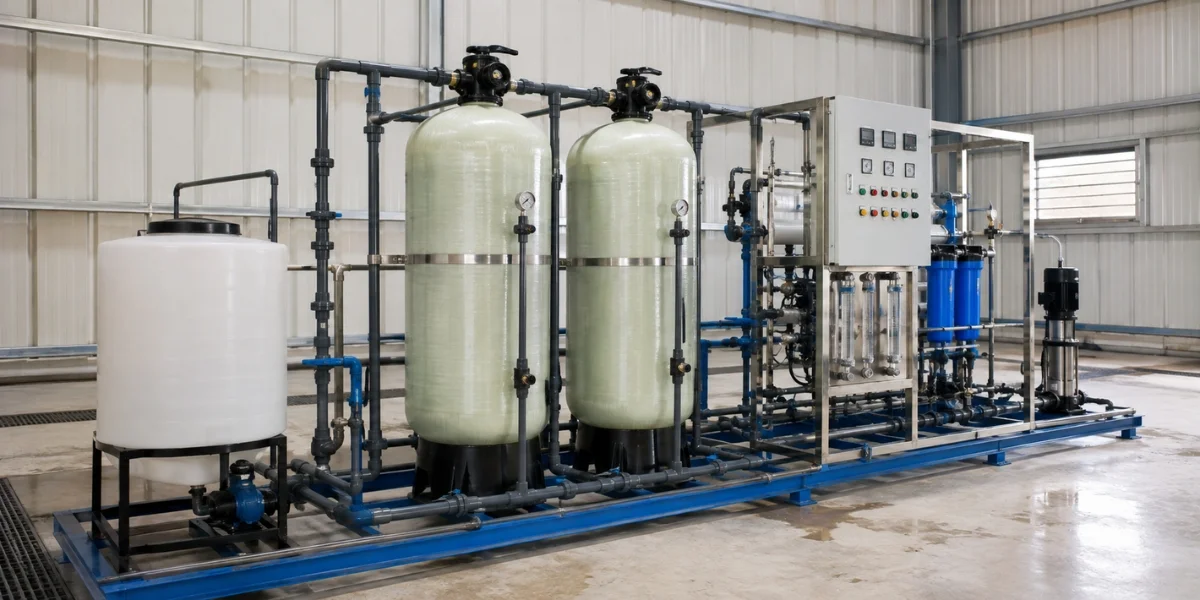
RO & Water Recycling Plant Manufacturer in India
Trity Environ Solutions manufactures RO and water recycling systems for industries and commercial facilities, engineered for reliable purity and reuse.
Explore Configuration
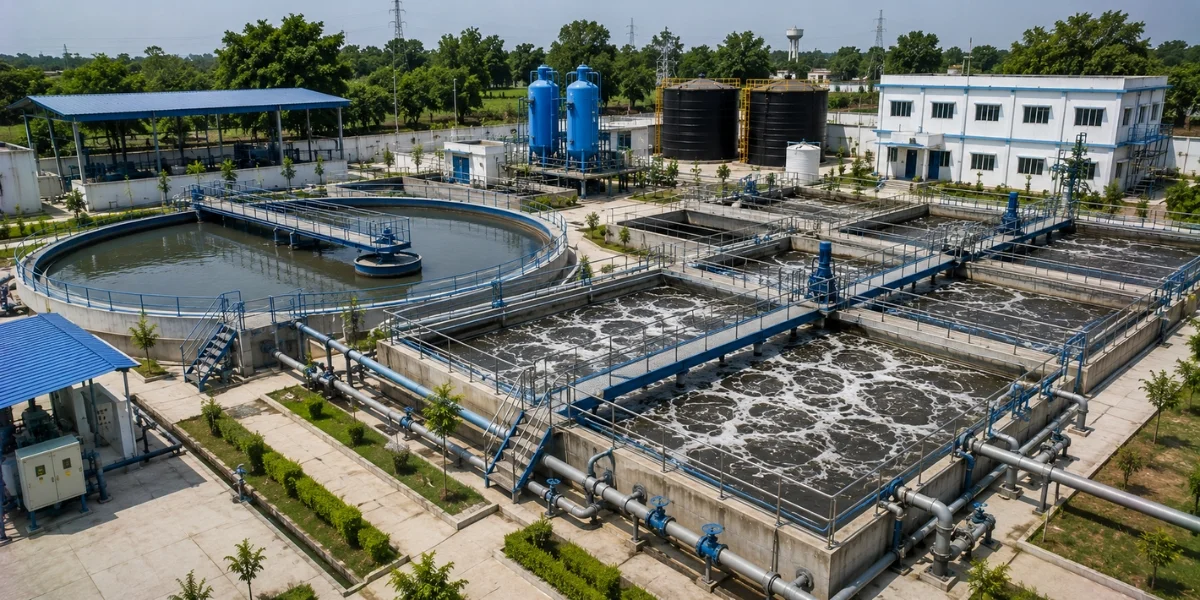
Tertiary Treatment Plant Manufacturer in India
Trity Environ Solutions manufactures tertiary treatment plants that polish treated water beyond secondary treatment, enabling genuine reuse and stricter discharge compliance.
Explore Configuration
Wastewater Recycling System Manufacturer in India
Trity Environ Solutions manufactures wastewater recycling systems using UF and RO technology, turning treated wastewater into reuse-grade water for cooling, flushing, and gardening.
Explore Configuration
STEP-BY-STEP WORKFLOW
How the Sewage Treatment Plant in Dubai Process Works
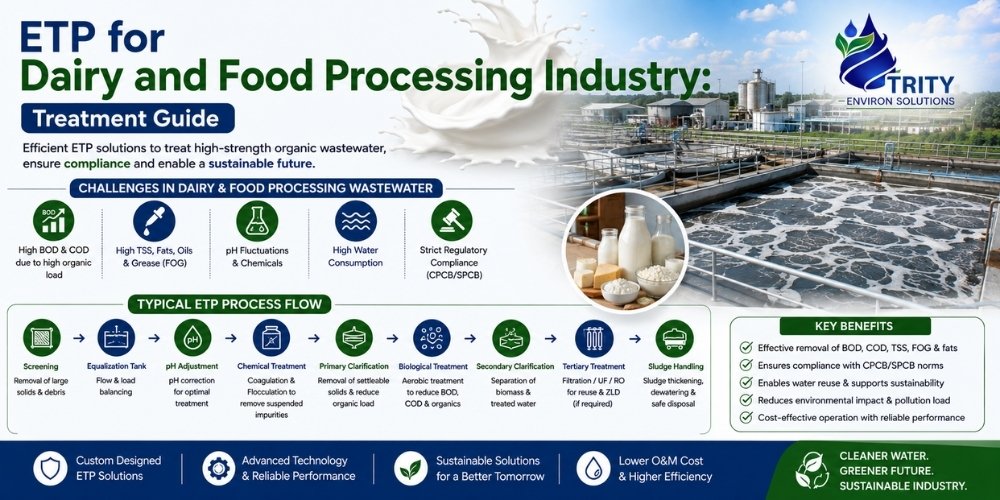
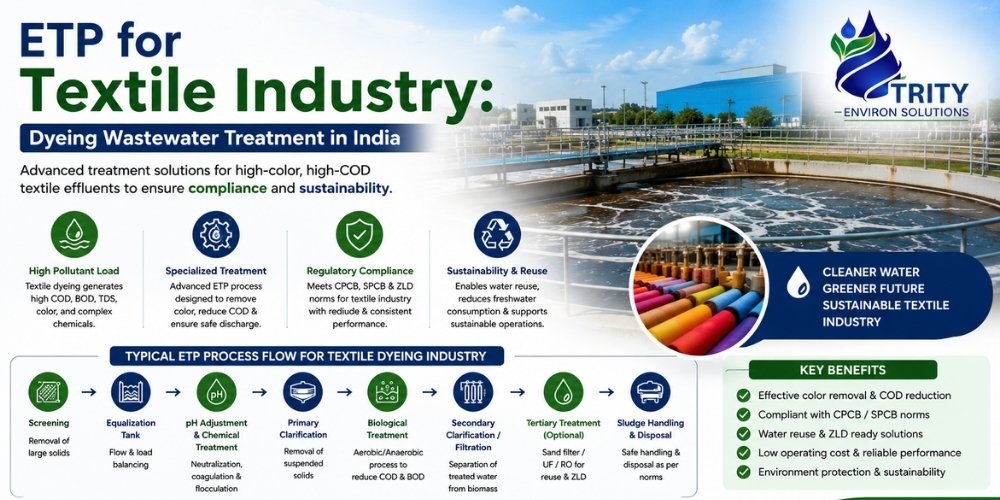
A sequential, multi-stage treatment methodology engineered for maximum contaminant removal and water recovery.
01
Primary Collection & Screening
Raw effluent equalization, coarse bar screening, and pH neutralization to stabilize influent parameters.
02
Physico-Chemical Coagulation
Flash mixing of coagulants and flocculants followed by primary clarifier separation for heavy suspended solids.
03
Advanced Biological Digestion
Aerobic/anaerobic microbial digestion (MBBR / SBR / ASP) for drastic reduction of dissolved BOD & COD.
04
Tertiary Polishing & Disinfection
Dual media sand and activated carbon filtration with UV/ozonation for clean, reusable output water.
CATALOGUE
Related Engineering Products
RO & Water Recycling Plant Manufacturer in India
Trity Environ Solutions manufactures RO and water recycling systems for industries and commercial facilities, engineered for reliable purity and reuse.
Tertiary Treatment Plant Manufacturer in India
Trity Environ Solutions manufactures tertiary treatment plants that polish treated water beyond secondary treatment, enabling genuine reuse and stricter discharge compliance.
Wastewater Recycling System Manufacturer in India
Trity Environ Solutions manufactures wastewater recycling systems using UF and RO technology, turning treated wastewater into reuse-grade water for cooling, flushing, and gardening.
PAN-INDIA CAPABILITIES
Regional Solutions & State Coverage
TECHNICAL KNOWLEDGE
Related Insights & Engineering Guides
PROVEN EXCELLENCE
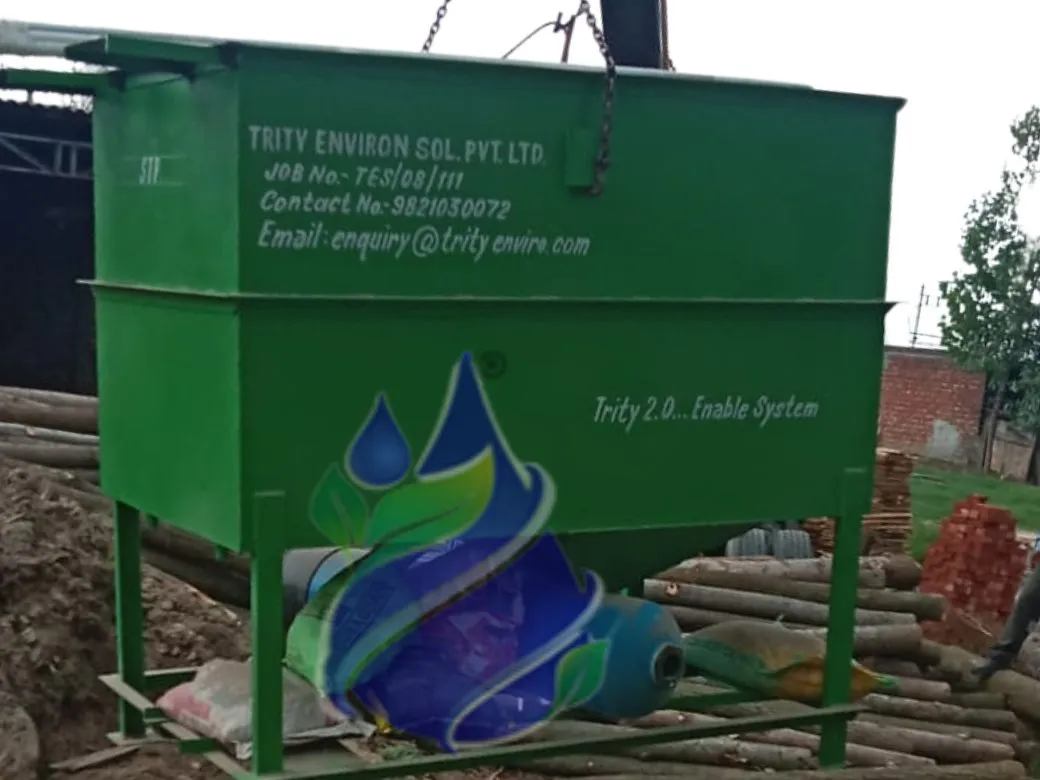
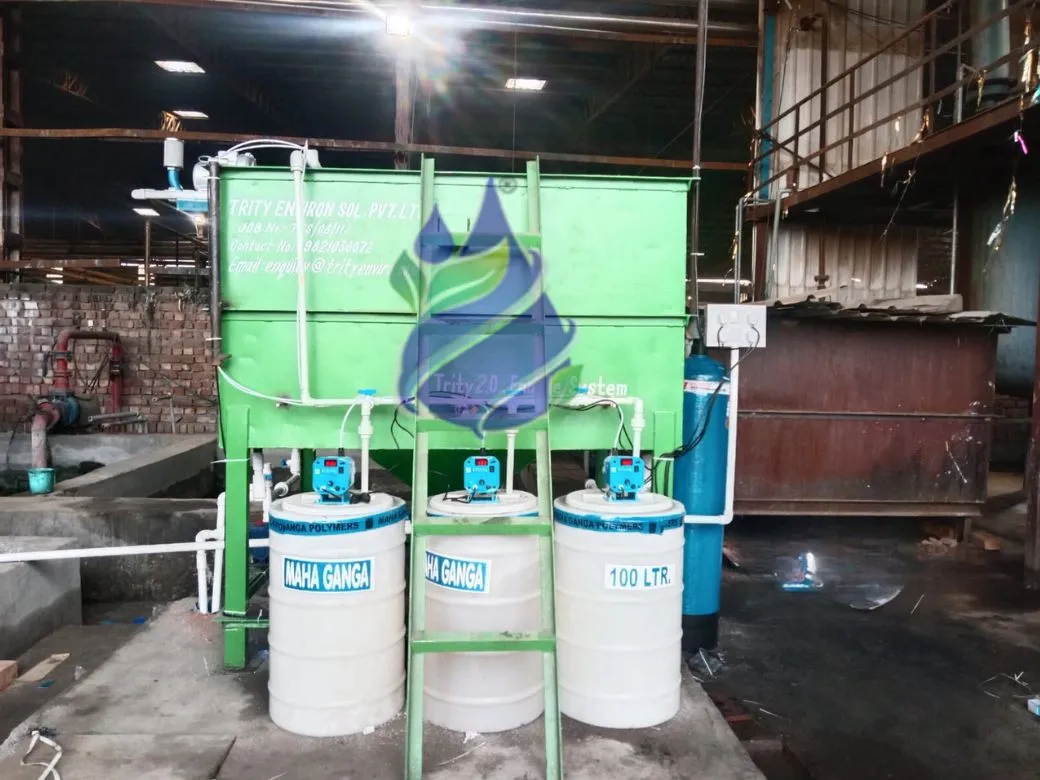
Featured Turnkey Installations



Need a Custom Water or Wastewater Treatment Solution?
Our engineering team can help design the right system for your capacity, industry, and compliance requirements.