Introduction
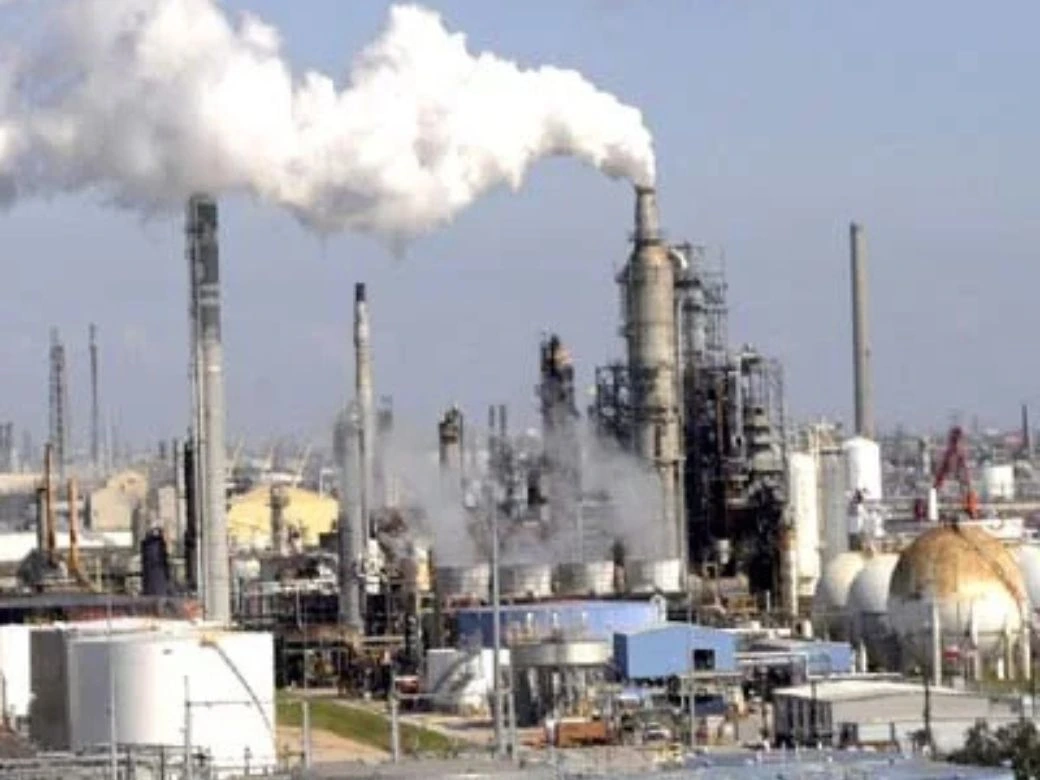
Walk through any industrial estate in India and you will find water sitting quietly behind almost every process, cooling a machine, feeding a boiler, rinsing a product line, or going into the final formulation itself. Raw water straight from a borewell or municipal line rarely meets the purity an industrial process actually needs, and that gap is exactly where reverse osmosis (RO) technology has become close to unavoidable for industrial areas across the country. What used to be treated as an optional upgrade for larger or more sensitive operations is increasingly standard practice across units of every size, driven as much by cost and reliability concerns as by regulation.
What an RO Plant Actually Does
Before looking at where RO fits into an industrial site, it helps to be clear about what the technology is actually doing to the water.
Reverse osmosis forces water through a semi-permeable membrane: Under applied pressure, water molecules pass through the membrane while dissolved salts, heavy metals, bacteria, and most other contaminants are held back and flushed out as reject water. What comes out the other side is water with dissolved solids reduced to a fraction of the intake level.
It targets what filtration alone cannot remove: Sediment filters and activated carbon handle particulates, chlorine, and organic compounds well, but dissolved salts and minerals pass straight through them. RO is the stage that actually brings Total Dissolved Solids (TDS) down to levels most industrial processes require.
Output quality is tunable to the application: A single-pass RO system suits many general industrial uses, while double-pass configurations push purity further for applications like pharmaceutical processing or high-pressure boiler feed water, where even trace mineral content causes problems downstream.
Why Raw Water Alone Falls Short in Industrial Areas
Industrial zones in India draw water from a mix of sources, and almost none of them are consistent enough to use directly across sensitive processes.
Borewell water carries high and variable TDS: Groundwater quality shifts significantly between sites and seasons, and an industrial process calibrated for one TDS level can behave unpredictably when the source water changes without warning.
Municipal supply is not designed for industrial-grade purity: Water treated to safe drinking standards still carries dissolved minerals well above what boilers, pharmaceutical lines, or electronics manufacturing require.
Industrial clusters concentrate demand on already-stressed sources: Estates housing dozens or hundreds of units draw heavily on shared groundwater and municipal infrastructure, and water quality tends to degrade further as that demand grows without matching investment in source protection.
Where RO Plants Matter Most Across an Industrial Site
RO technology touches several distinct functions within a typical industrial facility, and each one has slightly different quality requirements.
Boiler feed water: Scale-forming minerals in untreated water accumulate inside boilers over time, reducing heat transfer efficiency and eventually causing equipment failure. RO-treated feed water, often paired with a DM plant for high-pressure boilers, protects this investment directly.
Cooling towers: Left untreated, cooling water deposits scale and encourages corrosion inside heat exchange equipment, cutting both efficiency and equipment life. RO-treated makeup water reduces this fouling considerably.
Process and product-contact water: Pharmaceuticals, food and beverage manufacturing, and electronics all depend on water free of dissolved contaminants to protect product quality and meet regulatory expectations, since even trace mineral content can affect formulation stability or product consistency.
Wastewater recovery and reuse: RO is also used on the discharge side, recovering usable water from treated effluent rather than drawing fresh water for every cycle, which cuts both freshwater withdrawal and disposal volume at once.
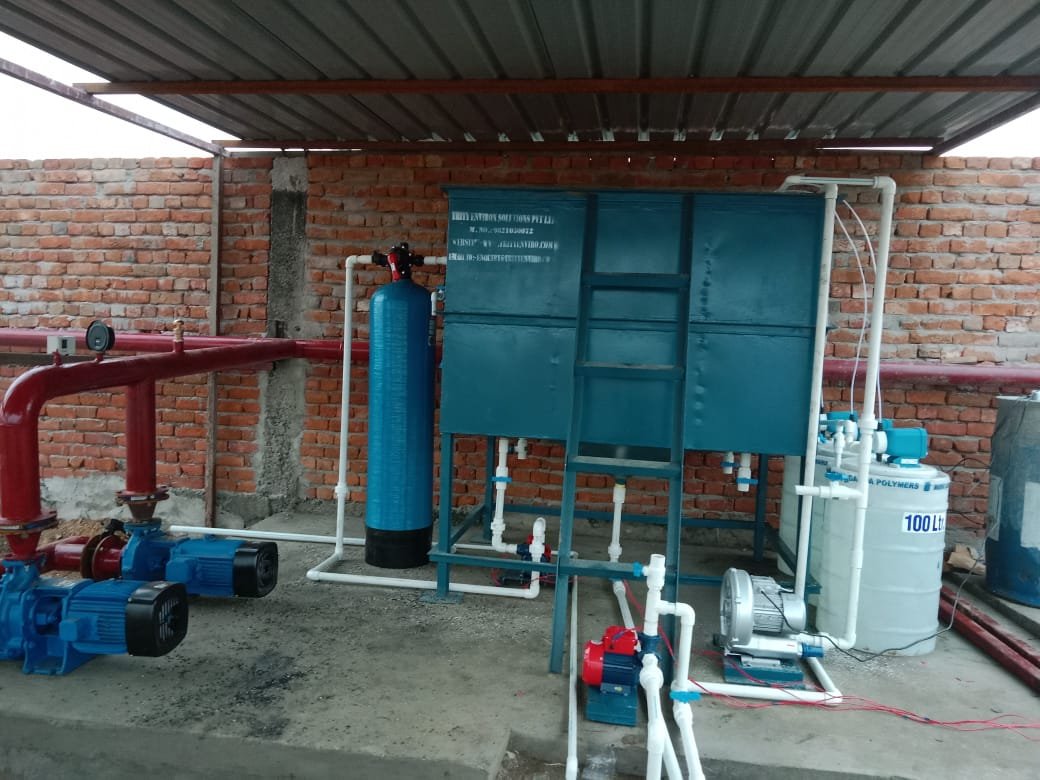
Our commercial RO plant range covers configurations for each of these use cases, sized to the actual flow rate and purity target a facility needs rather than a generic template.
Compliance and Cost: The Two Pressures Pushing Adoption
Two separate forces are pushing industrial water treatment from optional to expected, and it helps to understand both.
Discharge and water-use norms are tightening: State Pollution Control Boards (SPCB) increasingly expect industrial units to demonstrate responsible water use and treated discharge, not just at the point of effluent release but across how water is sourced and consumed in the first place.
Freshwater cost and availability keep rising: Industrial clusters drawing heavily on limited groundwater or municipal supply face growing pressure on both price and reliability, making water reuse and treatment less of an environmental gesture and more of a straightforward cost control measure.
Together, these pressures mean an industrial unit skipping proper water treatment today is likely to face a harder, more expensive retrofit later rather than avoiding the cost altogether.
Industries That Depend Most on RO-Treated Water
Some sectors within an industrial area lean on RO technology more heavily than others, simply because their processes are less forgiving of impure water.
Pharmaceutical manufacturing: Formulation, cleaning, and dialysis-grade applications all demand water purity levels far beyond what any other treatment stage can deliver on its own, and RO typically forms the backbone of a multi-stage purification train feeding these processes.
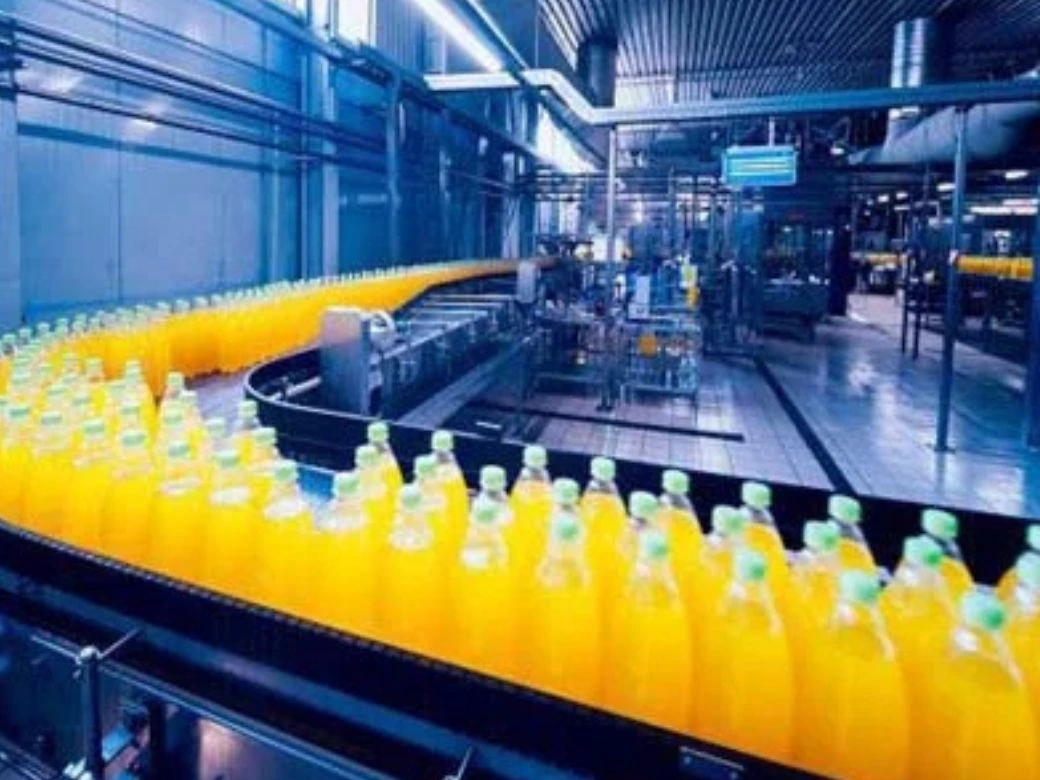
Food and beverage processing: Packaged drinking water, beverage production, and food processing lines all require consistent, contaminant-free water not just for safety but for product taste and shelf stability, both of which suffer when mineral content varies batch to batch.
Textile and dyeing units: Dye uptake and colour consistency are sensitive to water hardness and mineral content, and RO-treated process water helps textile units achieve more predictable dyeing results while reducing chemical dosing needed to compensate for poor source water.
Power and thermal plants: Boiler feed water at the pressures and temperatures these facilities operate at cannot tolerate scale-forming minerals, making RO, often paired with demineralisation, a non-negotiable part of the water treatment train.
Electronics and semiconductor-adjacent manufacturing: Even trace ionic contamination can affect sensitive manufacturing processes, pushing these facilities toward the highest purity RO and post-treatment configurations available.
Hospitals and healthcare facilities: Dialysis water and certain laboratory applications require RO-treated water meeting specific purity benchmarks, making this one of the more tightly regulated RO applications outside pure industrial manufacturing.
Common Mistakes When Installing RO in Industrial Settings
A few recurring issues show up across industrial RO installations, and most of them trace back to decisions made before the plant was ever commissioned.
Skipping a proper source water analysis: Sizing and configuring an RO system without testing the actual intake water first is one of the most common reasons plants underperform once operational. Seasonal variation in borewell water, in particular, catches many first-time buyers off guard.
Underestimating pre-treatment needs: High iron, turbidity, or organic content in source water demands adequate pre-filtration ahead of the membranes. Skipping this step to save on upfront cost typically results in far more expensive membrane replacement within a much shorter timeframe.
Choosing capacity based on nameplate production figures rather than actual water demand: Production capacity and water consumption do not scale in a perfectly linear way across every process, and sizing an RO plant purely off production targets without measuring actual water draw often leads to mismatched capacity in either direction.
Neglecting reject water management: RO systems generate a concentrated reject stream that needs proper disposal or further treatment, and facilities that overlook this at the design stage sometimes find themselves facing a compliance issue that could have been addressed as part of the original scope.
Deferring maintenance planning until after commissioning: An AMC or maintenance plan bolted on as an afterthought tends to be less effective than one designed alongside the plant itself, since maintenance access, spare part availability, and monitoring points are all easier to plan for during initial design.
How RO Fits Alongside Other Treatment Technologies
RO rarely operates in isolation on an industrial site. It is usually one stage within a broader water and wastewater treatment setup.
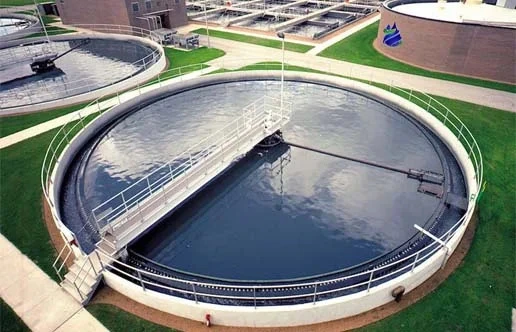
RO complements STP and ETP infrastructure rather than replacing it: A facility's sewage treatment plant (STP) and effluent treatment plant (ETP) handle the biological and chemical treatment of wastewater, while RO typically sits downstream as a polishing stage when treated water needs to be brought to a higher purity standard for reuse.
Softening and DM plants often precede RO in high-purity applications: For boiler feed water at very high pressures, an RO stage is frequently paired with ion-exchange demineralisation to strip out the last traces of dissolved minerals that RO alone cannot fully remove.
Multi Grade Filters and Activated Carbon Filters protect the RO membrane: These upstream filtration stages remove suspended solids, chlorine, and organic compounds before water reaches the membrane, extending membrane life and reducing the frequency of chemical cleaning cycles.
Zero Liquid Discharge systems often use RO as a core recovery stage: Facilities working toward Zero Liquid Discharge (ZLD) compliance typically use RO to recover the bulk of reusable water from effluent, with evaporation and crystallisation handling the smaller, more concentrated remaining stream.
Thinking of RO as one component within this larger treatment architecture, rather than a standalone fix, tends to produce better outcomes than treating it as an isolated purchase decision.
The Broader Water Security Angle
Beyond individual plant operations, RO adoption across an industrial area has implications that extend past any single facility's balance sheet.
Reduced groundwater extraction pressure: Industrial clusters that combine RO-based reuse with responsible sourcing draw less continuously on shared groundwater resources, which benefits every unit operating in that same area over the long run. This matters most in clusters where multiple units draw from the same aquifer, since one facility's excessive draw can directly affect water availability and quality for its neighbours.
Lower vulnerability to source water disruption: A facility with RO-based treatment and reuse capacity built in has more flexibility to manage a period of source water disruption, whether from a dry season, a supply interruption, or a quality issue upstream, than one entirely dependent on a single untreated source.
Alignment with sustainability expectations from buyers and regulators: Increasingly, both export customers and domestic regulators expect documented evidence of responsible water management, and RO-based treatment and reuse infrastructure is one of the more visible, verifiable ways an industrial unit can demonstrate this. Units that can point to measurable water reuse figures, rather than general statements of intent, tend to fare better in both audits and buyer sustainability assessments.
Choosing the Right RO Configuration for an Industrial Site
Not every industrial application needs the same RO setup, and getting this wrong in either direction costs money.
Match capacity to actual peak demand, not average use: A system undersized for peak shift operation creates bottlenecks exactly when production needs water most, while oversizing wastes capital on capacity that sits idle most of the time.
Match purity level to the process, not a blanket standard: Boiler feed water and pharmaceutical process water have very different purity requirements, and specifying double-pass RO everywhere adds cost without adding value where single-pass would do the job.
Plan for pre-treatment based on source water quality: High-turbidity or high-iron source water needs appropriate pre-filtration ahead of the RO membranes, or membrane life and performance both suffer well before the expected replacement cycle.
Factor in energy efficiency over the plant's lifetime: RO systems run continuously in most industrial settings, and energy-efficient pump and membrane configurations pay for any additional upfront cost many times over across a multi-year operating life.
Maintenance: The Difference Between a Reliable Plant and a Failing One
An RO plant's performance depends heavily on how consistently it is maintained after commissioning, not just how well it was designed.
Membrane fouling is the most common failure point: Scale, biological growth, and particulate buildup on membrane surfaces gradually reduce both output quality and flow rate, and regular cleaning cycles are what keep this from becoming a full membrane replacement.
Pre-filter replacement schedules matter more than they seem: Skipping scheduled sediment or carbon filter changes puts extra load directly on the RO membranes, shortening their working life considerably.
Reject water ratio should be monitored, not assumed constant: A system producing more reject water than expected for its rated recovery rate is usually signalling a developing membrane or pressure issue worth investigating before it becomes a bigger repair.
Annual Maintenance Contracts reduce unplanned downtime: A facility relying on ad-hoc repair calls typically experiences more unplanned downtime than one on a scheduled AMC with preventive maintenance, consumable supply, and priority breakdown response built in.
If your industrial unit needs an RO system designed around your actual source water and process requirements, reach out through our services page or contact us at enquiry@trityenviro.com or +91-9821030072 for a site assessment.
Frequently Asked Questions
What is the difference between single-pass and double-pass RO systems?
A single-pass system runs water through the membrane once and suits most general industrial applications. A double-pass system runs the permeate through a second membrane stage for significantly higher purity, typically used for pharmaceutical, electronics, or high-pressure boiler feed water applications where trace mineral content matters.
How often do RO membranes need to be replaced in an industrial setting?
This depends heavily on source water quality and maintenance discipline, but membranes operating with proper pre-treatment and regular cleaning typically last several years before replacement becomes necessary, while poorly maintained systems can see membrane life cut down substantially.
Can RO-treated wastewater be reused within the same facility?
Yes, in many cases. Treated wastewater brought to an appropriate purity standard can often be redirected to cooling towers, non-product-contact processes, or general utility use, reducing both freshwater withdrawal and the volume of effluent requiring disposal.
Is an RO plant necessary if municipal water supply is already reasonably clean?
Municipal supply is treated to drinking water standards, not industrial process standards, and most industrial applications, particularly boiler feed water, pharmaceutical processing, and product-contact water, require dissolved solids levels well below what municipal supply typically delivers.
What size RO plant does a typical industrial unit need?
This depends entirely on daily water consumption, the number of processes drawing treated water, and peak versus average demand across shifts. A site assessment measuring actual flow requirements is the only reliable way to size a system correctly, since generic capacity estimates tend to result in either bottlenecks or wasted capital.
Does an industrial RO plant need a separate pre-treatment system?
In most cases, yes. Source water carrying turbidity, iron, or organic load needs sediment filtration and often activated carbon filtration ahead of the RO membranes to prevent premature fouling. The exact pre-treatment requirement depends on the specific source water profile, which is why testing intake water before finalising a system design matters as much as sizing the RO stage itself.