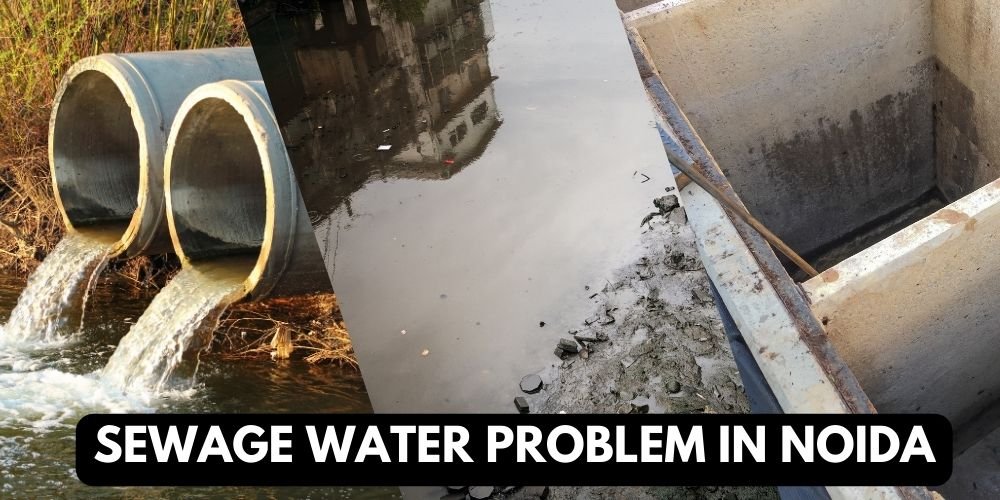
Solving Noida's Sewage Woes: Unveiling Strategies for a Cleaner Tomorrow
Uncover Noida's sewage challenges and the potential game-changer – STP treated wastewater. Join the journey towards a cleaner, sustainable urban future.

 ISO 9001:2015 & QCI Approved
RO is often marketed as an unqualified green solution, but a genuinely useful answer means looking at both sides: where it clearly reduces environmental impact, and where it comes with real costs that good design needs to address.
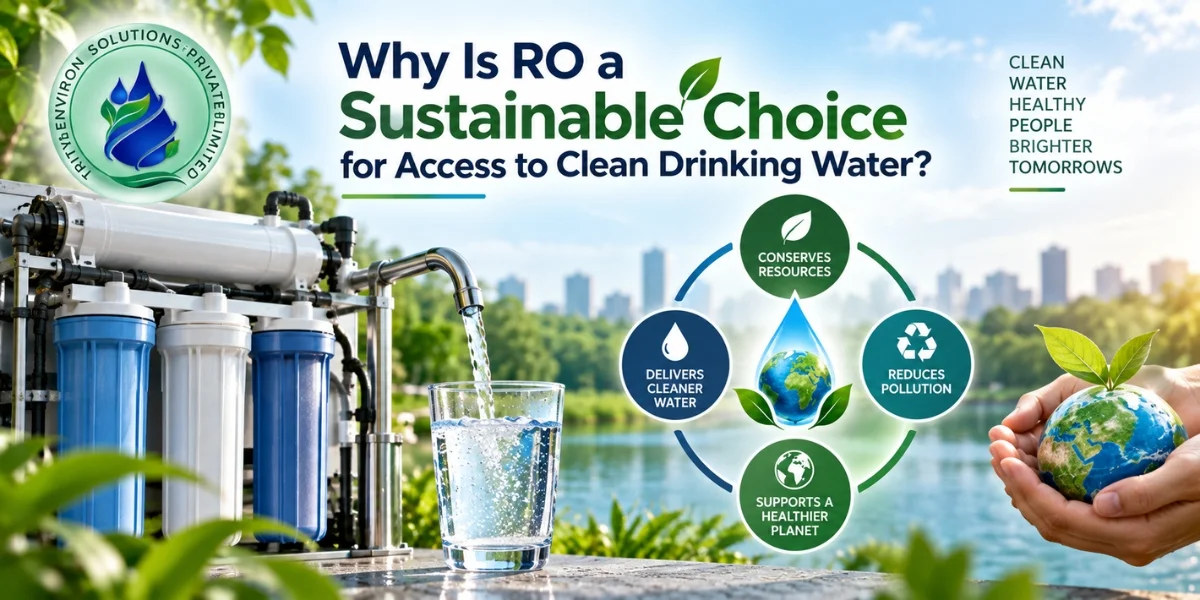
Reverse osmosis is frequently described as an eco-friendly, sustainable answer to clean drinking water access, and in several genuine respects it is. But a fair answer to whether RO is sustainable needs to look at the whole picture, not just the parts that make for a clean marketing message. RO reduces some environmental burdens significantly while introducing others, water wasted during the purification process itself, and energy consumption that varies enormously depending on the source water and system design. Understanding both sides is what actually helps a facility or household make a genuinely sustainable choice, rather than assuming RO is either flawless or wasteful based on partial information.
One of RO's clearest sustainability wins has nothing to do with the membrane itself: it displaces bottled water. Bottled water carries a substantial environmental footprint, plastic production, transportation emissions, and disposal, all for a product that a properly maintained RO system can replace at a fraction of the lifecycle cost. Facilities and households switching from bottled water to RO-purified tap water make a measurable dent in single-use plastic consumption, an impact that is often larger than any other single factor in RO's sustainability case.
RO is one of the few technologies capable of treating wastewater to a quality high enough for genuine reuse, in industrial processes, irrigation, or non-potable applications, rather than water being used once and discharged. This directly reduces a facility's dependence on fresh water intake, supporting what water engineers describe as a circular water economy, where the same water resource is treated and reused multiple times rather than continuously drawn from increasingly stressed natural sources.
Compared to certain conventional treatment approaches that rely more heavily on chemical dosing to achieve equivalent contaminant removal, RO accomplishes much of its purification through physical membrane separation, reducing the volume of treatment chemicals needed and, by extension, the chemical byproducts requiring disposal downstream.
RO does not convert 100% of feed water into purified output. A meaningful share is rejected as concentrate, and in simpler, unoptimized systems this reject ratio can run as high as four litres wasted for every one litre of purified water produced, an efficiency of roughly 25%. This is a legitimate sustainability concern, and pretending otherwise does not serve anyone evaluating RO honestly. The more useful framing, however, is that this ratio is not fixed. It depends heavily on feed water quality, membrane configuration, and whether reject recovery technology is incorporated into the system design, not an inherent, unavoidable property of RO itself.
RO's energy footprint varies dramatically depending on the water source being treated. Conventional treatment of surface or groundwater typically consumes around 0.37-0.48 kWh per cubic metre, while seawater RO desalination requires considerably more, often around 2.5 kWh per cubic metre or more, because of the higher pressure needed to overcome seawater's osmotic pressure. This is a genuine trade-off worth acknowledging directly: seawater desalination via RO is meaningfully more energy-intensive than treating fresh or brackish water, which matters when evaluating its sustainability case relative to other water sources.
Modern RO system design has moved well beyond the simple 4:1 reject ratio often quoted in outdated comparisons. Reject recovery configurations can reduce water waste by up to 80% compared to a basic system, either by staging additional membrane passes to recover more permeate from the initial reject stream, or by routing reject water toward secondary, lower-purity uses like irrigation or cleaning rather than discharging it as waste.
For seawater and high-pressure applications specifically, energy recovery devices capture pressure energy from the reject brine stream as it exits the system and reuse it to help pressurize incoming feed water, meaningfully reducing net energy demand compared to systems without this technology. This single design choice accounts for a significant share of the efficiency gap between older desalination plants and modern installations.
Some RO installations, particularly larger desalination projects, are increasingly paired with renewable energy sources directly. Documented projects have achieved a meaningful share of total plant energy demand, in some cases upward of 15%, from on-site renewable generation like wind power, directly offsetting the energy intensity that remains RO's most legitimate sustainability critique.
The honest conclusion is that RO's sustainability profile depends heavily on how the system is specified, not on the technology in the abstract. A properly designed commercial RO plant or industrial RO plant with reject recovery and appropriately sized energy recovery components delivers a genuinely different sustainability outcome than an older, unoptimized system treated as a like-for-like comparison. Facilities evaluating RO purely on outdated efficiency figures, or dismissing it purely on the reject water concern, are working from an incomplete picture either way.
| Application | Sustainability Consideration | Design Response |
|---|---|---|
| Municipal drinking water RO | Bottled water displacement | Standard configuration, moderate energy use |
| Coastal seawater desalination | Higher energy intensity | Energy recovery devices, renewable integration |
| Industrial water reuse | Circular water economy | High-recovery membrane staging |
| Facilities with variable feed quality | Reject water ratio | Reject recovery systems, secondary reject use |
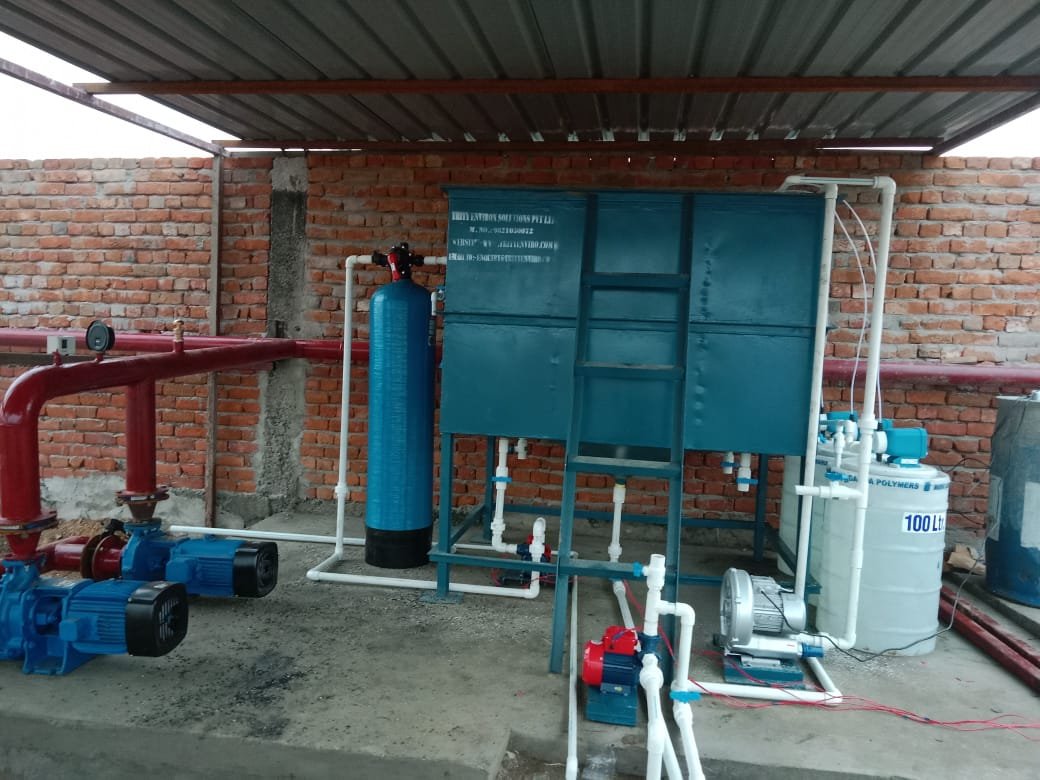
Trity Environ Solutions is an experienced commercial RO plant manufacturer and industrial RO plant manufacturer in India, designing systems that address RO's real trade-offs directly, through reject recovery configurations and energy-efficient design, rather than glossing over them. As a trusted RO manufacturer and supplier, our engineering team helps clients understand the genuine sustainability profile of their specific system before installation, informed by feed water quality and intended use, whether that is drinking water supply, coastal desalination, or industrial reuse. Every installation is backed by pan-India Annual Maintenance Contract and operation and maintenance support, keeping efficiency consistent over the system's operating life. We are ISO 9001:2015 certified, QCI approved, and deliver CPCB-compliant engineering nationwide.
Basic, unoptimized RO systems can waste up to 4 litres for every 1 litre of purified water produced, but this ratio is not fixed. Modern reject recovery configurations can reduce this water waste by up to 80% compared to a basic system.
It depends heavily on the water source. Treating fresh or brackish water typically consumes 0.37-0.48 kWh per cubic metre, while seawater RO desalination requires considerably more, often around 2.5 kWh per cubic metre, due to the higher pressure needed to overcome seawater's osmotic pressure.
RO displaces the need for bottled water, which carries a substantial environmental footprint from plastic production, transportation, and disposal. This is one of RO's clearest and most significant sustainability benefits.
Reject recovery systems reduce wasted water by recovering additional permeate from the reject stream, while energy recovery devices capture pressure energy from reject brine to help pressurize incoming feed water, both meaningfully improving RO's overall efficiency and sustainability profile.
Yes, some RO installations, particularly larger desalination projects, are paired with renewable energy sources like wind power, with documented projects sourcing upward of 15% of total plant energy demand from on-site renewable generation.
Uncover Noida's sewage challenges and the potential game-changer – STP treated wastewater. Join the journey towards a cleaner, sustainable urban future.

STPs and ETPs help companies achieve CSR goals, reduce pollution, conserve water, and comply with regulations, contributing to a sustainable future and better brand image.

Empower communities with sustainable wastewater solutions. Learn how local participation boosts efficiency, education, and environmental care




Discuss your requirements with our engineering team and get practical guidance for your project.