Introduction
With increasing industrialization and strict environmental regulations, industries are now required to manage wastewater more efficiently than ever before. One of the most advanced and sustainable solutions for wastewater treatment is Zero Liquid Discharge (ZLD).
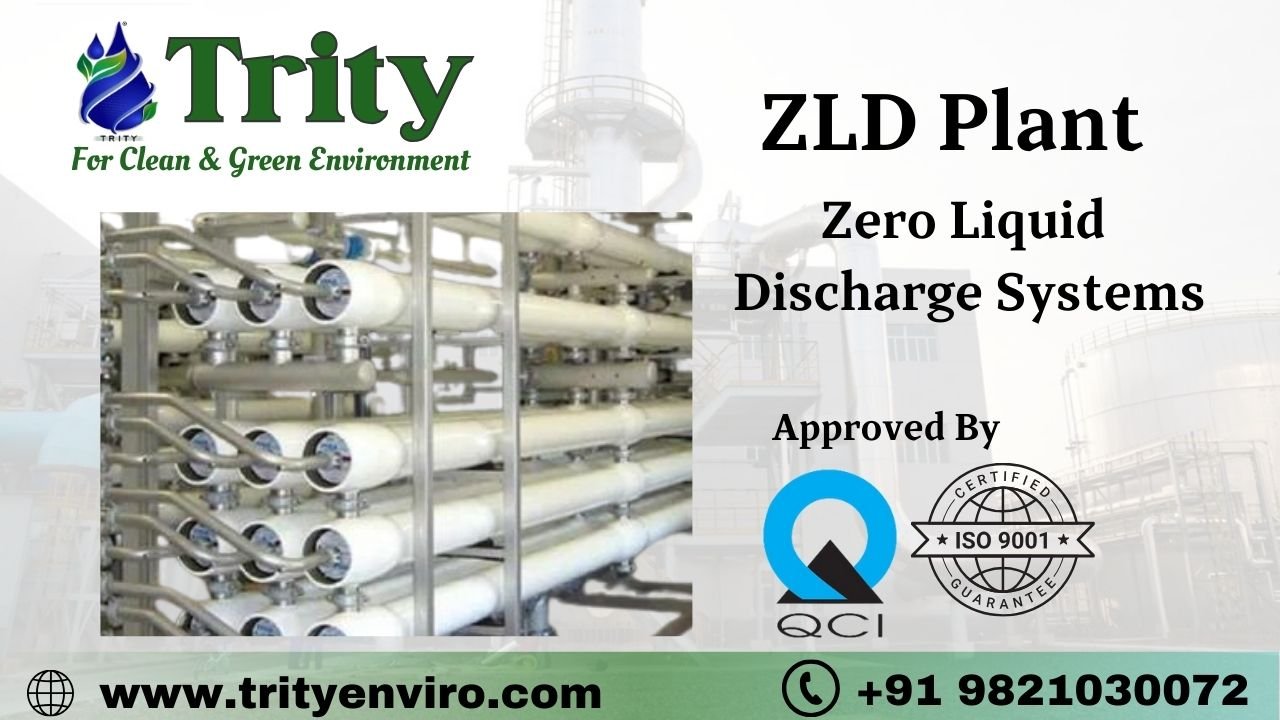
ZLD is a process that ensures no liquid waste leaves the industrial facility. Instead, all wastewater is treated, recycled, and reused within the system. This not only helps industries comply with environmental norms but also reduces water consumption and operational costs.
In this blog, we will understand the concept of Zero Liquid Discharge, its process, benefits, applications, and why it is becoming essential for modern industries.
What is Zero Liquid Discharge (ZLD)?
Zero Liquid Discharge (ZLD) is an advanced wastewater treatment process designed to eliminate liquid waste discharge from an industrial facility. The primary goal of ZLD is to recover and reuse maximum water while converting dissolved solids into solid waste.
In a ZLD system, wastewater goes through multiple stages of treatment such as filtration, evaporation, and crystallization. At the end of the process, clean water is recovered and reused, while the remaining waste is converted into solid form for safe disposal.
Why is ZLD Important for Industries?
Industries generate large volumes of wastewater containing harmful chemicals and pollutants. If discharged untreated, this water can cause serious environmental damage and legal issues.
To address these challenges, ZLD systems are becoming increasingly important. They help industries reduce pollution, conserve water, and meet regulatory compliance requirements.
Key reasons why industries adopt ZLD:
Before implementing ZLD, industries often face issues like water scarcity, high disposal costs, and strict environmental penalties. A ZLD system provides a long-term solution to these challenges by improving water management and sustainability.
-
Ensures zero discharge of wastewater
-
Helps meet environmental regulations
-
Reduces freshwater consumption
-
Minimizes pollution and environmental impact
-
Enables reuse of treated water
ZLD Process Explained
The Zero Liquid Discharge system involves multiple stages of treatment to completely eliminate liquid waste. Each stage plays a crucial role in purifying water and separating contaminants.
Before going into the steps, it’s important to understand that ZLD is not a single machine but a combination of technologies working together to achieve complete water recovery.
Main stages of ZLD process:
-
Pre-Treatment: Removal of suspended solids, oil, and grease using filtration systems
-
Primary Treatment: Chemical treatment to remove dissolved impurities
-
Membrane Filtration: Use of RO (Reverse Osmosis) to separate clean water
-
Evaporation: Concentration of remaining wastewater using evaporators
-
Crystallization: Conversion of dissolved solids into solid crystals
Components of a ZLD System
A complete ZLD setup consists of several integrated systems that work together efficiently. Each component is designed to handle specific types of contaminants and treatment stages.
Before selecting a ZLD system, it is important to understand these components as they directly affect performance, cost, and efficiency.
Key components include:
-
Reverse Osmosis (RO) system
-
Multiple Effect Evaporator (MEE)
-
Crystallizer
-
Filter Press for sludge handling
-
Storage tanks and pipelines
You can also explore related solutions like Sewage Treatment Plants (STP), Effluent Treatment Plants (ETP), and Industrial RO Plants for complete wastewater management.
Benefits of Zero Liquid Discharge
ZLD systems offer multiple advantages for industries, especially those dealing with high wastewater generation.
Before investing in a ZLD system, businesses should understand the long-term benefits it provides in terms of cost savings, sustainability, and compliance.
Major benefits include:
-
Complete elimination of liquid waste discharge
-
Significant reduction in water consumption
-
Recovery and reuse of valuable resources
-
Compliance with government regulations
-
Reduced environmental impact
-
Improved brand image and sustainability
Applications of ZLD Systems
ZLD technology is widely used in industries where wastewater discharge is a major concern. It is especially important for sectors that generate hazardous or high-volume effluents.
Before implementing ZLD, industries evaluate their water usage and discharge requirements to determine system size and capacity.
Common applications:
-
Textile industries
-
Pharmaceutical industries
-
Chemical manufacturing
-
Power plants
-
Food and beverage industries
Challenges of ZLD Systems
While ZLD offers numerous benefits, it also comes with certain challenges that industries should consider before implementation.
Understanding these challenges helps in better planning and ensures smooth operation of the system.
Key challenges:
-
High initial investment cost
-
Energy-intensive process
-
Requires skilled operation and maintenance
-
Complex system design
FAQs
Q1. What is Zero Liquid Discharge (ZLD)?
ZLD is a wastewater treatment process where no liquid waste is discharged, and all water is recovered and reused.
Q2. Which industries require ZLD systems?
Industries like textiles, pharmaceuticals, chemicals, and power plants commonly use ZLD systems.
Q3. Is ZLD expensive?
Yes, ZLD systems have a high initial cost but offer long-term savings through water reuse.
Q4. What is the main goal of ZLD?
The main goal is to eliminate liquid discharge and maximize water recovery.
Q5. How does ZLD help the environment?
It reduces pollution, conserves water, and prevents harmful wastewater discharge.
Conclusion
Zero Liquid Discharge is a powerful and sustainable solution for industries looking to manage wastewater effectively. With increasing environmental regulations and water scarcity, adopting ZLD is no longer an option but a necessity.
By investing in a well-designed ZLD system, industries can achieve compliance, reduce operational costs, and contribute to environmental protection.
For customized ZLD solutions and expert guidance, you can connect with Trity Environ Solutions for reliable wastewater treatment systems.
- By Admin
- Environ Solutions
- Published: