The Scale of Noida's Sewage Problem
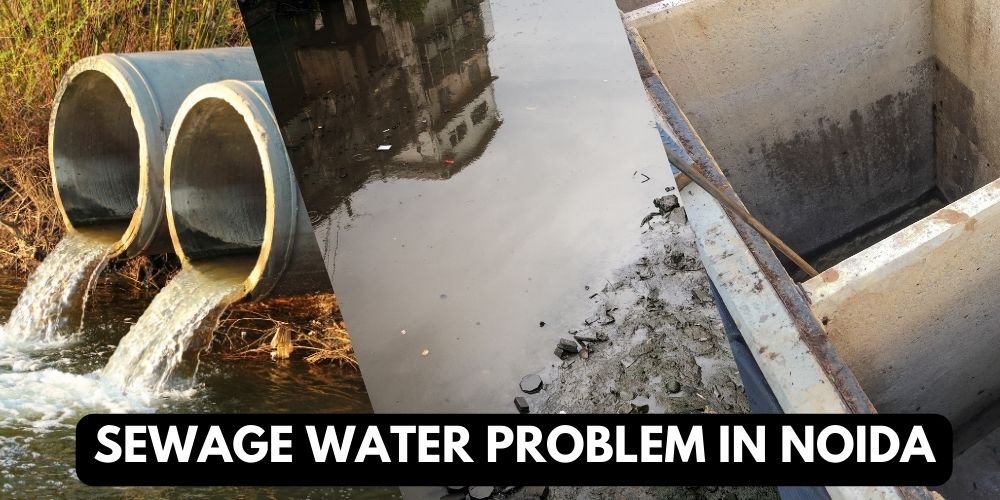
Noida and Greater Noida's sewage infrastructure has not kept pace with the region's rapid growth, and both the Noida/Greater Noida Authority and the UP Pollution Control Board have acknowledged this directly: government STPs are not operating properly and cannot handle the city's full sewage load.
This isn't a minor capacity shortfall. It has led to a direct policy shift: new developments are now effectively required to install their own on-site sewage treatment, since relying on government infrastructure alone is no longer treated as viable.
Key Highlights / Table of Contents
- The Hindon River: a river officially "dead"
- Real water quality data
- Where the pollution comes from
- Why government STPs alone aren't solving this
- The Authority's own solution: mandatory on-site STPs
- Technology and area requirements
- What genuine progress would require
- What this means for anyone building in the region
The Hindon River: A River Officially "Dead"
Real Water Quality Data
The Hindon River, which receives much of the region's sewage overflow, shows some of the most severe pollution data recorded for any river stretch in India:
- Dissolved oxygen: consistently zero throughout most of its length for the entire year, according to UP Pollution Control Board monitoring
- BOD levels of 54 mg/L recorded near Noida, roughly 18 times the permissible limit
- Faecal coliform counts far exceeding safe limits, at times reaching over a million MPN/100mL against a maximum permissible limit of 2,500 MPN/100mL
- The river is officially rated Category E, meaning it is unfit for bathing or supporting aquatic life
The National Green Tribunal has repeatedly intervened on this river specifically, issuing notices to the UP Chief Secretary as recently as December 2024, and directing coordinated action after finding "no meaningful action" had been taken toward its rejuvenation.
Where the Pollution Comes From
The Hindon's contamination comes from a combination of concentrated and diffuse sources:
- Ten major drains in the wider Ghaziabad-Noida corridor dump raw sewage and, in some cases, electronic waste directly into the river system
- Over 300 industries discharge toxic effluent into the same drainage network, with dyeing units, tanneries, and pulp processing among the major polluters
- Poor sewage line connectivity and clogged sewers across the city mean even treatable sewage frequently bypasses existing STP infrastructure entirely rather than reaching it
Why Government STPs Alone Aren't Solving This
Several structural issues explain why building more government STP capacity hasn't closed the gap on its own:
- Functional capacity often runs well below installed capacity, due to poor sewer network connectivity and clogged lines feeding the plants inconsistently
- Treated and untreated sewage frequently mix downstream before reaching a river, undermining the treatment that did happen upstream
- New STP projects face chronic delays, with the NGT specifically noting zero physical progress on multiple proposed plants over a full year in the broader Hindon basin
- Residents in poorly connected colonies rely on private tanker services to clear choked sewers, a workaround that frequently ends in illegal dumping rather than proper treatment
The Authority's Own Solution: Mandatory On-Site STPs
Given these systemic gaps, the Noida/Greater Noida Authority and UP Pollution Control Board have directly advised developments to install their own sewage treatment plants and discharge treated water from their own campus, rather than depending on government infrastructure to handle their load.
Technology and Area Requirements
For developments wanting to reuse treated water for flushing specifically, not just gardening, the technology choice matters:
- Most STP technologies produce water suitable for gardening use only
- MBR (Membrane Bio Reactor) technology, or MBBR/SBR followed by ultrafiltration, is needed for flushing-grade reuse, since MBR membrane pore size (0.31-0.57 microns) provides the filtration quality flushing reuse requires
- Area requirements scale with plant size: roughly 1 square metre per KLD for mid-sized plants using MBBR, SBR, or MBR technology
- A 10 KLD plant needs approximately 14-15 square metres; a 300 KLD plant needs around 250 square metres; a 500 KLD plant needs around 400 square metres
Modern compact technology means finding space for an on-site STP is far easier than it once was, and installing the plant in a building's basement or back area is a commonly recommended approach that doesn't disrupt usable frontage.
What Genuine Progress Would Require
Fixing Noida's sewage crisis at a city-wide level would need several things happening together, not any single fix in isolation:
- Sewer network rehabilitation, so existing and new STP capacity actually receives the flow it was built to treat, rather than losing sewage to clogged or disconnected lines
- Consistent enforcement against the 300+ industries discharging into the same drainage network the Hindon depends on
- Faster execution of already-proposed STP projects, addressing the specific delays the NGT has flagged
- Continued expansion of mandatory on-site treatment for new residential and commercial developments, reducing the load reaching an already-overwhelmed public system
None of these measures alone would close the gap. A city that rehabilitates its sewer network but keeps allowing untreated industrial discharge into the same drains gains little, and a city that mandates on-site STPs for new buildings while leaving decades of existing, unconnected development untouched only slows the rate of decline rather than reversing it. The pattern seen in the Hindon basin, where the NGT found zero progress on proposed plants over a full year despite repeated directives, suggests that political and administrative follow-through, not just engineering capability, is the piece most consistently missing from the equation.
What This Means for Anyone Building in the Region
For developers, housing societies, and commercial facility owners in Noida and Greater Noida specifically, the practical takeaway is straightforward regardless of how the broader city-level crisis eventually resolves: an on-site STP is no longer a nice-to-have sustainability feature, it is the Authority's stated expectation for new development, and the region's water quality data explains exactly why. Facilities that build this into their planning budget from day one, rather than treating it as an afterthought bolted on to satisfy an approval requirement, tend to end up with a system genuinely sized for their occupancy and reuse goals rather than the smallest plant that technically clears a compliance checkbox.
Industry Applications / Use Cases
| Stakeholder |
Current Challenge |
Recommended Action |
| New residential/commercial developments |
Authority mandate for self-sufficiency |
Install a properly sized on-site STP from the planning stage |
| Developments wanting flushing-grade reuse |
Standard STP output insufficient |
MBR or MBBR/SBR plus UF technology |
| Industries near Hindon drainage |
Contributing to river's Category E status |
Compliant, functioning ETP with consistent monitoring |
| Existing societies without an STP |
Non-compliance risk, overloaded public system |
Retrofit an appropriately sized STP |
Why Choose Trity Enviro
Trity Environ Solutions is a sewage treatment plant manufacturer based in the National Capital Region, with direct, on-the-ground experience designing STPs for Noida and Greater Noida developments navigating exactly this Authority mandate. As a trusted STP manufacturer and supplier, we help clients choose the right technology, MBR for flushing-grade reuse or MBBR/SBR for standard compliance, sized correctly for their available space and occupancy.
Every installation is backed by pan-India Annual Maintenance Contract and operation and maintenance support. We are ISO 9001:2015 certified, QCI approved, and deliver CPCB-compliant engineering nationwide.
Planning a development in Noida or Greater Noida that needs a compliant on-site STP?
Call +91-9821030072 or email enquiry@trityenviro.com, or request a free site assessment from our engineering team.
Request Free Technical Assessment →