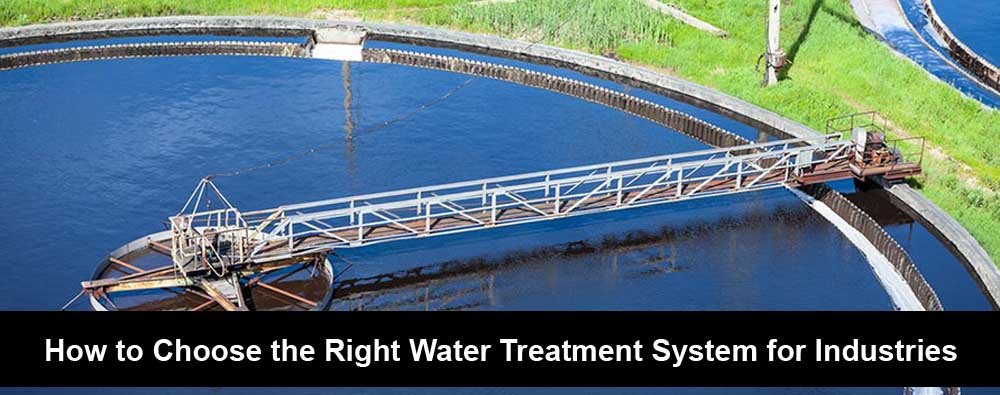
How to Choose the Right Water Treatment System for Industries in India
Learn how to choose the right STP, ETP, or RO plant for your industry in India, covering CPCB/SPCB compliance, sizing, and cost. Get expert guidance.

 ISO 9001:2015 & QCI Approved
The foam on the Yamuna comes back every winter. Here is how STPs and ETPs can cut phosphate and detergent load at the source.
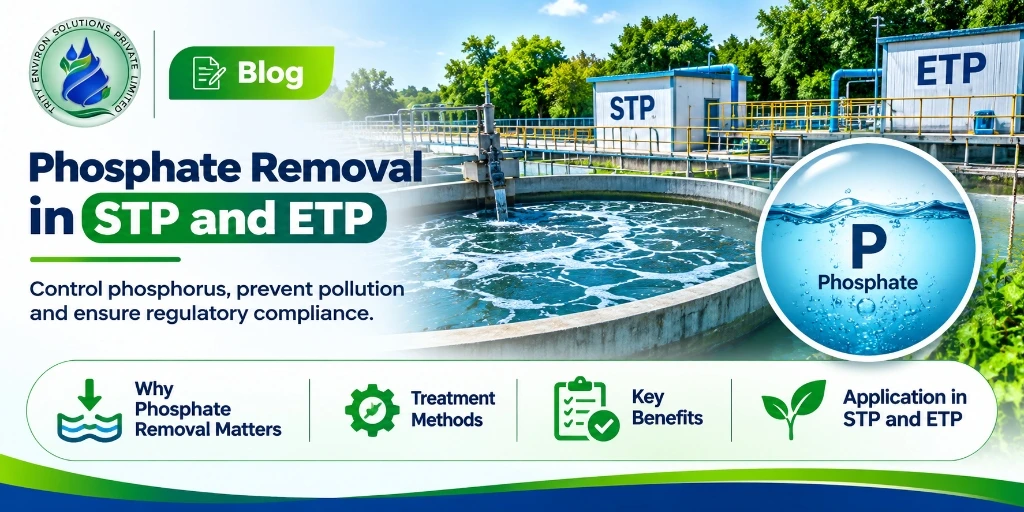
Every year, around the time of Chhath Puja, pictures of white foam covering the Yamuna near Kalindi Kunj make the news. This year was no different. Reports on 2 November 2026 described toxic foam resurfacing at the Kalindi Kunj barrage and a cleaning drive under way, and Chhath was expected between 13 and 16 November. The Central Pollution Control Board has asked the Delhi Jal Board to ensure full collection and treatment of domestic sewage in the city, noting that untreated wastewater from 22 drains led to frothing in the river.
The cause of the foam is well known. Detergents carry surfactants, which trap air and create foam, and phosphates, which feed algae and bacteria and help the foam persist. They come from households, dhobi ghats, laundries and dyeing and washing units in Delhi, Haryana and Uttar Pradesh. Seasonal chemical defoaming, as officials themselves acknowledge, hides the foam but does not remove the pollution.
For a plant owner, the lesson is practical. Phosphate is a pollutant that conventional STPs and ETPs do not always remove. A plant can have good BOD and TSS results and still discharge phosphate at several mg/L. As consents tighten, phosphate is appearing as a limit. Delhi's DPCC, for example, has set a phosphate limit of 2 mg/L as PO4-P in its consent norms for STPs, in addition to BOD, TSS and nitrogen limits.
This guide explains where phosphate comes from, what the norms say, how to remove it with chemicals or biology, how to size a dose with a worked example and what to ask a supplier. It is written for operators and owners of STPs, hotels, hospitals, laundries and industries. Trity Enviro designs STPs and ETPs with phosphate polishing where consents require it.
Phosphorus enters sewage from human waste and, in a large share, from detergents and cleaning products. Typical raw domestic sewage carries total phosphorus in the range of a few mg/L up to around ten mg/L as P, depending on water use and detergent habits. Commercial laundries, hotels, hospital laundries, car wash and service stations, dyeing units and food processors add more. Fertilisers and industrial chemicals contribute in some catchments.
In the environment, phosphorus is the nutrient that limits algae growth in many water bodies. Too much of it causes algal blooms, oxygen depletion and fish kills, a process called eutrophication. In rivers like the Yamuna, it adds to the foam load and to the ecological stress that follows.
There is no single national phosphate limit for all STPs. The NGT order of April 2019 on STP standards, as described by commentators, set phosphate limits for discharge to ponds and lakes rather than rivers. Some SPCBs and authorities add phosphate to consents. DPCC's consent norms for Delhi STPs include phosphate of 2 mg/L as PO4-P alongside BOD 10, TSS 10, COD 50 and total nitrogen 10 mg/L, and CPCB inspection reports have found STPs falling short of the phosphate limit. Competitor and consultancy pages often quote 5 mg/L as a general figure. Your consent decides which number binds you, so read it, and design to the stricter one if you are unsure.
The simplest and most dependable method is chemical precipitation. A metal salt added to the water reacts with dissolved phosphate to form an insoluble precipitate, which is then removed with the sludge in the clarifier or a filter. The common chemicals are:
Our guide on alum vs PAC vs ferric chloride compares them in detail. The chemical can be dosed at three points: before the primary settler, directly into the aeration tank (simultaneous precipitation) or after the biological stage ahead of a clarifier or filter. Dosing after biology, with filtration, gives the lowest residual phosphate but the highest chemical cost.
Chemical removal needs more than stoichiometry. Because other compounds in the water compete for the metal, plants usually dose well above the theoretical ratio, often at a metal to phosphorus molar ratio of about 1.5 to 2.5 for modest removal and higher for very low limits.
Consider a 200 KLD STP with raw total phosphorus of about 8 mg/L as P and a target outlet of 1 mg/L. The biology removes some phosphorus into the sludge, so assume about 8 mg/L reaches the dosing point and 1 mg/L must remain.
This is a design estimate. Run a jar test to find the actual dose, and fit pH monitoring and dosing control so the dose tracks the load.
Some bacteria, called phosphorus accumulating organisms, take up more phosphorus than they need if they are first stressed in an oxygen-free, nitrate-free zone with easy food in the form of volatile fatty acids, and then moved into an aerobic zone. They store the phosphorus inside their cells, and when excess sludge is wasted, the phosphorus leaves with it. This is enhanced biological phosphorus removal, or EBPR.
EBPR needs an anaerobic zone at the start of the plant, enough readily degradable BOD, careful control of nitrate and dissolved oxygen and sludge handling that does not release the phosphorus again. It saves chemicals but is more sensitive and harder to operate, and it rarely achieves very low limits on its own. Many plants combine EBPR with a small chemical dose as a safety net. It fits SBR and MBBR designs when planned from the start, and it is easier in new plants than in retrofits.
Phosphate precipitates are fine, so low outlet limits need solids removal. Pressure sand filters, tube settlers, ultrafiltration and membrane bioreactors capture them. Our tertiary treatment plant page describes filtration and disinfection stages, and our guide to tertiary water treatment for industrial reuse explains when more than filtration is needed. For very low limits, adsorption media and polishing precipitation can follow.
Cutting phosphate at the source is cheaper than removing it at the end of the pipe. Industrial laundries, hospital laundries, denim and dyeing units and car wash stations should have pre-treatment before discharging to a sewer or STP. A typical train includes screening for lint and fibres, equalization, pH correction, coagulation with a metal salt, flotation or settling and filtration. Dissolved air flotation works well on detergent and fibre loaded water, as covered in our DAF system selection guide. Our guide to industrial wastewater pre-treatment before the ETP lists the stages.
Units can also reduce phosphate by switching to low-phosphate or phosphate-free detergents, controlling dosing and reusing rinse water. Societies and hotels can choose products carefully, and educate staff and residents.
Foam inside a plant is a related problem. Detergent-laden sewage can foam in the aeration tank, as explained in our guide to STP problems and solutions, and good grease and surfactant management upstream reduces it.
Chemical dosing is the lowest capital cost route, but it adds running cost and sludge. EBPR lowers chemical use but needs design changes and skilled operation. Tertiary filtration or UF adds capital cost but gives the lowest and most reliable outlet values. The right mix depends on your outlet limit, plant type and budget.
Start with data. Test inlet and outlet total phosphorus and orthophosphate for a few weeks, along with alkalinity, BOD and TSS, so that the design fits your plant. If your consent has no phosphate limit today, ask your SPCB whether one is likely, and leave space for dosing and filtration in the layout.
Trity Enviro's sewage treatment plant and effluent treatment plant designs include chemical dosing, clarification and filtration, and an annual maintenance contract keeps dosing pumps, probes and filters in order.
| Parameter / Stage | Target Optimal Range | Failure Impact / Risk | Corrective Engineering Action |
|---|---|---|---|
| Outlet phosphate (PO4-P) | At or below the consent limit, such as 2 mg/L in Delhi STP consents, or as set by your SPCB | Failed sample, notice, algal growth downstream | Add chemical dosing, filtration or EBPR, test weekly |
| Metal to phosphorus dose | Commonly molar ratio about 1.5 to 2.5, set by jar test | Wasted chemical if high, high phosphate if low | Run jar tests, add dose control and pH monitoring |
| Alkalinity and pH after dosing | pH about 7 or higher after chemical addition | Nitrification stalls, corrosion | Dose alkali if needed, review combined demand |
| Solids carryover after precipitation | Low TSS in outlet, with settling or filtration | Phosphorus carried out with fine floc | Add tube settlers, sand filter or UF |
Trity Environ Solutions is an ISO 9001:2015 certified and QCI-approved sewage treatment plant and effluent treatment plant manufacturer and supplier in India, delivering robust, high-efficiency systems engineered for CPCB and SPCB regulatory compliance.
Every installation is supported by pan-India Annual Maintenance Contract and Operation and Maintenance services.
Looking to design or upgrade a high-performance STP or ETP with phosphate removal from Trity Enviro? Call +91-9821030072 or email enquiry@trityenviro.com, or request a free engineering consultation from our technical team.
Learn how to choose the right STP, ETP, or RO plant for your industry in India, covering CPCB/SPCB compliance, sizing, and cost. Get expert guidance.
Zero liquid discharge explained: which Indian sectors face ZLD mandates, how RO, MEE and ATFD work, mass balance example, cost drivers and when to avoid it.
An honest comparison of water softener types in India: salt-based, salt-free, and electronic descalers, and which actually removes hardness.











Discuss your requirements with our engineering team and get practical guidance for your project.

