
 ISO 9001:2015 & QCI Approved
Ultra Filtration System Manufacturer in India
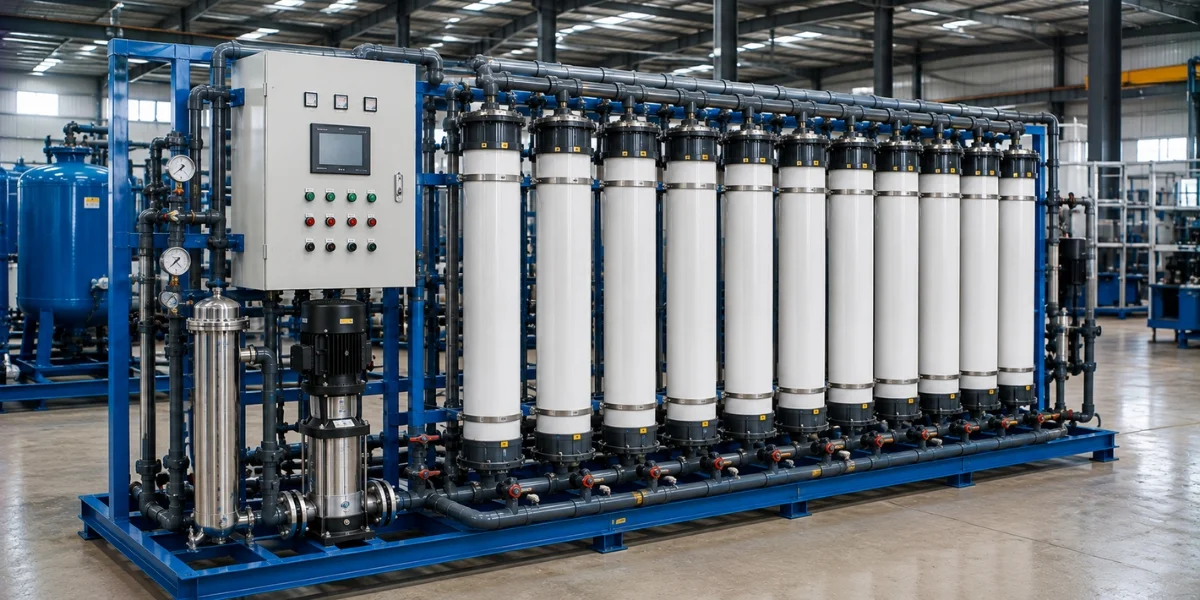
Trity Environ Solutions is a trusted ultra filtration system manufacturer in India, engineering hollow fibre UF plants from 500 LPH to 5,00,000 LPH that remove bacteria, viruses, and colloidal particles at 0.01 to 0.1 micron pore size. Our UF systems run without chemical dosing for routine operation, with pan India turnkey delivery and installation.
SPCB / CPCB Norm Compliant
Heavy Fabrication
A Membrane Barrier That Doesn't Need Chemicals to Work
Conventional clarification relies on coagulants and flocculants to pull out suspended solids, but an ultra filtration system does the same job through physical membrane separation alone, using hollow fibre membranes with 0.01 to 0.1 micron pores that exclude bacteria at 99.99 percent efficiency and viruses at 99 to 99.9 percent. This makes UF one of the most reliable pre-treatment stages available ahead of a purification membrane system, since bringing feed SDI below 3 substantially extends whatever high-purity stage follows. Trity Environ Solutions manufactures every skid in-house at our Ghaziabad facility, pressure-tested before dispatch.
Dealing with SDI or fouling issues in your existing purification setup? Request a free technical assessment and our engineering team will size the right UF configuration for your feed water.
WHY THIS SYSTEM?
Key Benefits of Ultra Filtration System Manufacturer in India
Engineered for reliable pathogen removal, a compact footprint, and consistent permeate quality.
99.99% Bacteria and 99% Virus Removal
Removes bacteria at 99.99 percent and viruses at 99 to 99.9 percent efficiency through 0.01 to 0.1 micron hollow fibre membranes, without any chemical dosing.
40 to 60% Smaller Civil Footprint
Cuts civil footprint by 40 to 60 percent compared to conventional sand and gravel filtration trains, since the compact skid design needs far less floor space.
High 90 to 95% Recovery Rate
Achieves 90 to 95 percent recovery rate, minimizing reject water volume compared to conventional clarification processes that generate higher wastewater loss.
Stable Permeate Quality
Delivers stable permeate turbidity below 0.1 NTU even when source water quality fluctuates seasonally, unlike conventional filters that vary with feed conditions.
Protects Downstream Membranes
Reduces downstream membrane fouling risk significantly by bringing feed SDI below 3, extending service life for whatever purification stage follows.
Membrane Material Choice Depends on What's Actually in Your Feed Water
PVDF, PES, and PAN membranes each behave differently under chemical exposure, flux demand, and temperature, and specifying the wrong one leads to premature fouling or reduced flux long before the rated membrane lifespan is reached. Trity Environ Solutions reviews your feed water analysis before recommending membrane material, rather than defaulting to whichever type happens to be in stock.
CIP Discipline Is What Actually Determines Membrane Lifespan
PVDF hollow fibre membranes typically last 5 to 10 years, but that range depends heavily on consistent Clean-In-Place practice, since skipped or delayed CIP cycles let irreversible fouling accumulate faster than backwash alone can manage. Trity Environ Solutions backs every UF installation with a documented CIP schedule, operator training, and an Annual Maintenance Contract. Talk to our team about AMC coverage for your system.
UF Rarely Stands Alone in a Real Treatment Train
Most UF installations sit between two other stages: upstream, a sand and anthracite depth filter protects the membranes from coarse suspended solids, while downstream, UF permeate commonly feeds into a bulk process water membrane plant, a point-of-use purification unit, or a boiler feed demineralizer depending on the target water quality. UF removes particulates and pathogens; it does not touch dissolved salts, which is where these downstream stages take over.
SYSTEM CONFIGURATIONS
Types of Ultra Filtration System Manufacturer in India Configurations
Configurations selected to match your feed water chemistry, flux requirements, and capacity.
PVDF Membrane UF System
PVDF hollow fibre membranes offering strong chemical resistance and long service life, the standard choice for most industrial and municipal applications.
PES Membrane UF System
PES membranes deliver higher flux rates for facilities prioritizing throughput per unit membrane area over maximum chemical resistance.
PAN Membrane UF System
PAN membranes suited to temperature-critical applications where feed water conditions exceed the operating range of standard membrane materials.
Capacity Range From 500 LPH to 5,00,000 LPH
Skid-mounted compact units from 500 LPH ranging up to large multi-train configurations exceeding 5,00,000 LPH for municipal-scale projects.
STEP-BY-STEP WORKFLOW
How the Ultra Filtration System Manufacturer in India Process Works
A membrane separation process engineered for consistent pathogen and particulate removal.
01
Feed Water Intake
Raw or pre-filtered water enters the UF skid at controlled pressure, typically between 0.5 and 3.0 bar operating range.
02
Hollow Fibre Filtration
Water passes through the hollow fibre membrane wall, with pores of 0.01 to 0.1 micron blocking bacteria, viruses, and suspended particles.
03
Permeate Collection
Clarified permeate exits the membrane module at turbidity below 0.1 NTU, ready for further treatment or direct use.
04
Automated Backwash & CIP
Programmable backwash cycles clear accumulated fouling from the membrane surface, with periodic CIP restoring flux when needed.
COMMON INQUIRIES
Frequently Asked Questions
Q1. What size range of UF systems do you manufacture?
We manufacture ultra filtration systems from 500 LPH for small commercial or lab applications up to 5,00,000 LPH for large municipal and industrial projects, with multi-train configurations available beyond that.
Q2. Does a UF system remove dissolved salts or TDS?
No, ultra filtration removes suspended solids, bacteria, viruses, and colloidal particles, but does not remove dissolved salts. For TDS reduction, UF permeate typically feeds into an RO or DM system afterward.
Q3. Can a UF system replace an RO plant?
No, UF and RO serve different purposes. UF handles particulate and pathogen removal, while RO removes dissolved salts. Most projects use UF as pre-treatment ahead of RO, not as a replacement for it.
Q4. How long do UF membranes typically last?
With proper operation and regular CIP, PVDF hollow fibre membranes in industrial UF systems typically last 5 to 10 years, with actual lifespan depending on feed water quality and CIP discipline.
Q5. What is the typical recovery rate of a UF system?
UF systems typically achieve 90 to 95 percent recovery, meaning only 5 to 10 percent of feed water is lost as reject or backwash waste.
Q6. Can a UF system be integrated with an existing ETP or STP?
Yes, UF is commonly installed as a tertiary polishing stage in existing effluent or sewage treatment plants to bring treated water up to reuse-grade quality.
CATALOGUE
Related Engineering Products
RO & Water Recycling Plant Manufacturer in India
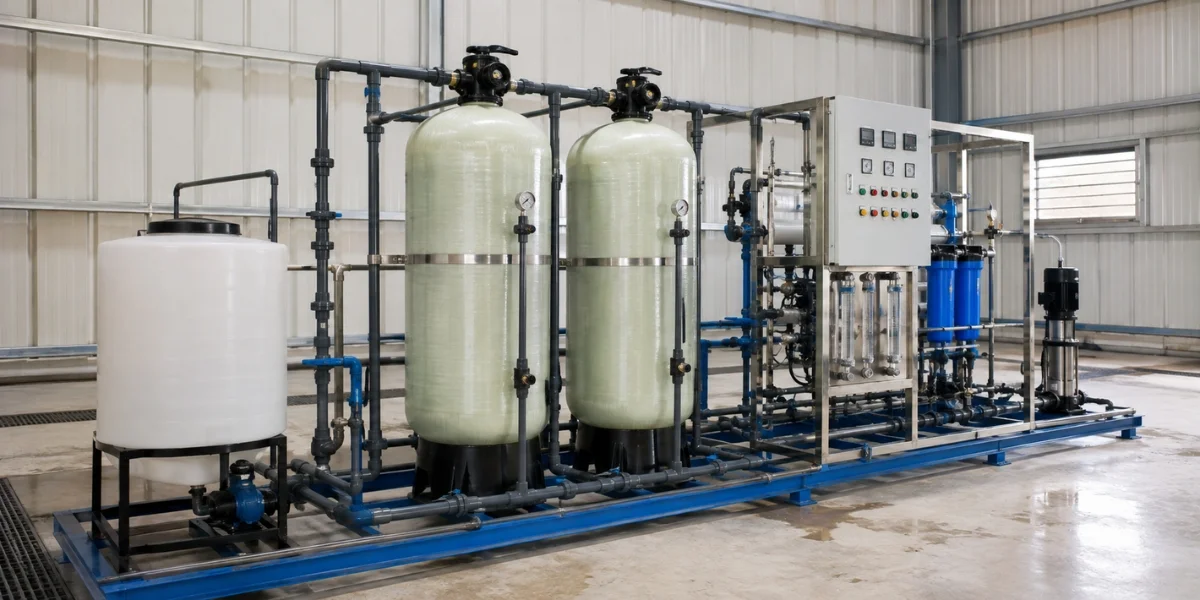
Trity Environ Solutions manufactures RO and water recycling systems for industries and commercial facilities, engineered for reliable purity and reuse.
Tertiary Treatment Plant Manufacturer in India
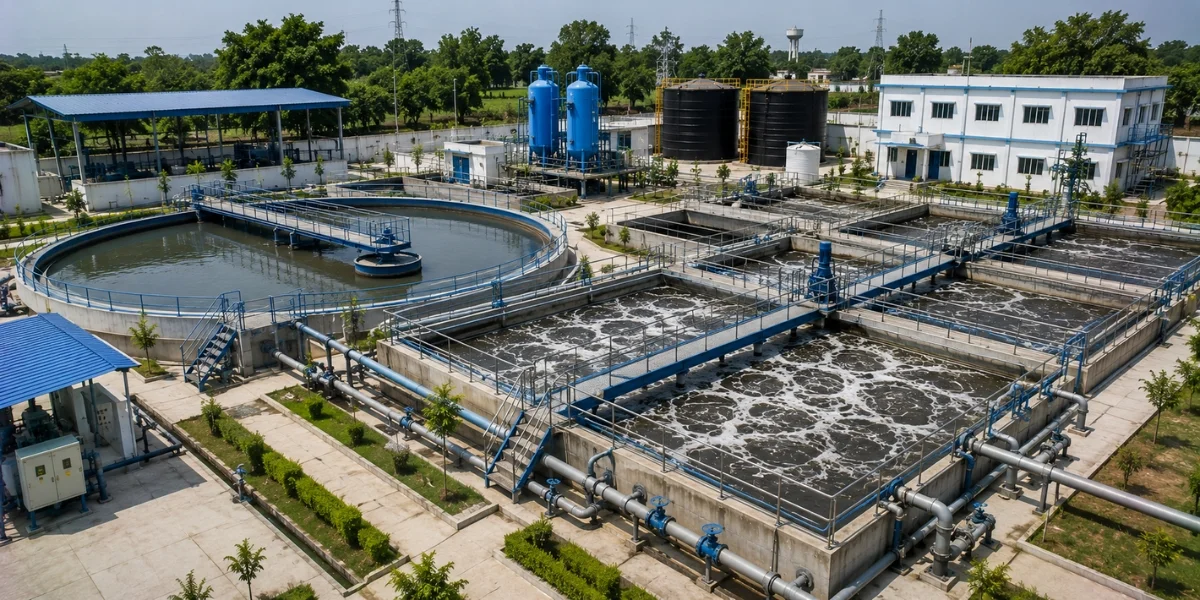
Trity Environ Solutions manufactures tertiary treatment plants that polish treated water beyond secondary treatment, enabling genuine reuse and stricter discharge compliance.
Wastewater Recycling System Manufacturer in India
Trity Environ Solutions manufactures wastewater recycling systems using UF and RO technology, turning treated wastewater into reuse-grade water for cooling, flushing, and gardening.
PAN-INDIA CAPABILITIES
Regional Solutions & State Coverage
TECHNICAL KNOWLEDGE
Related Insights & Engineering Guides
PROVEN EXCELLENCE
Featured Turnkey Installations











Need a Custom Water or Wastewater Treatment Solution?
Our engineering team can help design the right system for your capacity, industry, and compliance requirements.

