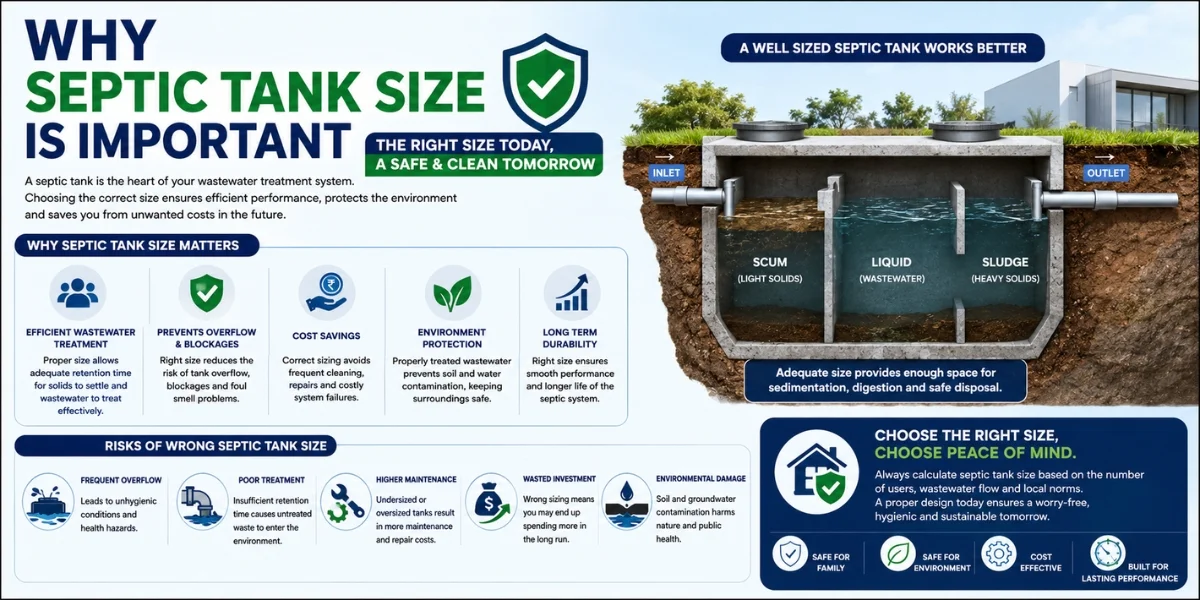
Why Septic Tank Size Matters: Standard Sizes, Formula & Sizing Guide for India
Learn the correct septic tank size for your property, IS 2470 based sizing formula, standard capacities per person, and when to upgrade to an STP.

 ISO 9001:2015 & QCI Approved
Is your ETP sludge hazardous? The answer decides storage, transport, disposal route and cost. Here is how to find out and what to do next.
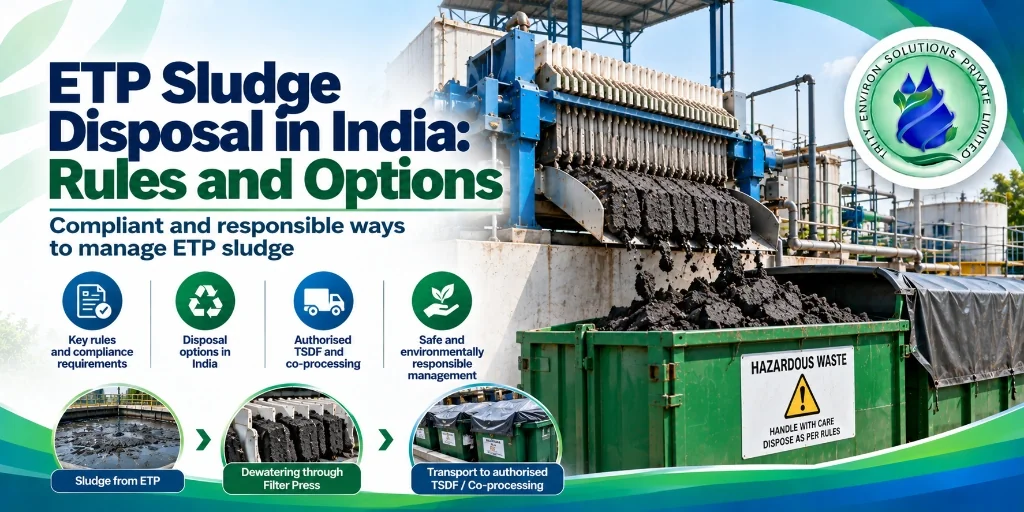
A well run effluent treatment plant produces clean water, and it also produces something nobody wants: sludge. It comes from the chemical precipitation tanks, the clarifiers, the flotation units and the biological stage. It carries the pollutants removed from the water, concentrated into a wet, heavy mass. Every tonne of it has to be stored, moved and disposed of legally.
Sludge is where many ETP budgets quietly break. Plants that spent months choosing equipment often discover, after commissioning, that disposal costs more each month than they expected, that the storage area is too small or that an inspector has questions about the paperwork. The central question is simple and often unanswered: is this sludge hazardous or not?
The question matters because the classification changes everything. Hazardous waste needs authorisation, labelled storage, a manifest for every transport, an authorised destination and an annual return. Non-hazardous sludge can follow simpler routes. And classification is not static. In July 2026, the Environment Ministry amended the Hazardous and Other Wastes Rules and removed brine sludge from caustic soda and chlorine production from the list of hazardous process wastes, effective 20 July 2026, a reminder that rules and entries change.
This guide explains how to classify ETP sludge, what the Hazardous and Other Wastes (Management and Transboundary Movement) Rules, 2016 require in broad terms, which disposal routes exist, and how dewatering and process choices reduce cost. It is written for plant heads, EHS officers and project teams in industries that run an ETP. Treat it as a practical map, and confirm details with your State Pollution Control Board.
The 2016 Rules list hazardous wastes in schedules. One schedule lists industrial processes whose waste is treated as hazardous, and ETP sludge generated by some of those processes appears in it. Another schedule gives waste constituents and concentration limits above which a waste is treated as hazardous. A waste can be hazardous because its process is listed, or because laboratory testing shows constituents above the limits.
This means classification is a two step exercise: check whether your process or waste stream is listed, then, if it is not clear, test the sludge at an accredited laboratory and discuss the result with your SPCB. The SPCB's consent and authorisation list the wastes you are permitted to generate and how you should manage them. If your sludge has been reclassified, the consent conditions may need amendment, which the SPCB handles. The July 2026 brine sludge change is an example, since affected plants need their consents updated to reflect it.
These are tendencies, not rulings. Your own process, chemicals and test results decide.
If your sludge is hazardous, you generally need authorisation from the SPCB to generate, store and dispose of it, usually as part of your consent. Key points in broad terms:
Maintain a register of waste generated, stored, dispatched and disposed of. Keep manifest copies and receipts from the destination. File the annual return, which is normally due by 30 June for the previous financial year, and keep the supporting documents. Inspectors usually cross-check these records against production and effluent quantities, so a big gap between sludge generated and sludge disposed of invites questions.
For hazardous sludge, the main routes are:
Non-hazardous sludge, such as food processing biological sludge or sewage sludge, can sometimes be composted, used as soil conditioner after stabilisation and testing, co-processed or sent to a sanitary landfill, subject to local rules and quality standards. Anaerobic digestion can extract energy from organic sludge, as described on our anaerobic digester page. For plant scale solid waste planning, see our guide on the solid waste management plant for industries.
Do not treat non-hazardous as unregulated. Local bodies and SPCBs still expect safe handling, and mixing hazardous and non-hazardous sludge turns the whole lot into hazardous waste.
The cheapest tonne of sludge is the one you do not make, and the next cheapest is the one with the least water in it.
An ETP produces 500 kg of dry solids a day. Straight from the clarifier at 3 percent solids, that is about 16.7 tonnes of wet sludge a day. After a filter press at 30 percent solids, the same dry solids weigh about 1.67 tonnes. Dewatering reduces the mass by about 90 percent.
If disposal costs Rs 4,000 per tonne, as an assumption for illustration only, the undewatered sludge would cost about Rs 66,700 a day to dispose of, while the dewatered cake costs about Rs 6,700. Over a year, that is a difference of roughly Rs 2.2 crore on these assumptions, which is far more than the cost of a filter press. Use your own disposal rate and sludge quantity to repeat the calculation. The point is that dewatering pays for itself quickly wherever disposal is charged by weight.
Plan sludge handling at the design stage of the ETP. Provide a sludge holding tank, a dewatering system, a covered and bunded storage area with drainage, safe loading access and space for several weeks of storage. Check the capacity and distance of the authorised destination, and sign agreements with registered transporters and facilities before commissioning. Add the cost of testing, packing, transport and disposal to your operating budget.
If your plant already runs, review whether the current sludge classification, authorisation and disposal route still suit it, especially after rule changes. Ask your consultant to confirm the status in writing.
Trity Enviro's effluent treatment plant designs include sludge handling from the start, and an annual maintenance contract keeps dewatering equipment running.
Use a roofed shed with an impermeable floor and a kerb, a sump for leachate, clear labels on every bin, separation of different wastes, fire safety equipment and a register at the door. Keep the area away from drains, and make sure trucks can reach it safely. A tidy, labelled store is the first thing an inspector notices.
| Parameter / Stage | Target Optimal Range | Failure Impact / Risk | Corrective Engineering Action |
|---|---|---|---|
| Sludge classification | Confirmed by process listing and laboratory test, with SPCB agreement | Wrong storage and disposal, penalty | Test sludge, check schedules, update consent when rules change |
| Storage of hazardous sludge | Covered, impermeable, labelled, within the permitted period (commonly 90 days) | Leachate, notice, environmental compensation | Build compliant storage, dispatch on schedule |
| Cake dryness after dewatering | Often about 25 to 35 percent dry solids, higher for some chemical sludges | High disposal weight and cost | Optimise conditioning, check press and cloth, add membrane plates |
| Records and returns | Complete register, manifests and annual return on time | Findings of false or missing reporting | Keep logs, reconcile with production, file returns by the due date |
Trity Environ Solutions is an ISO 9001:2015 certified and QCI-approved filter press and sludge dewatering system and effluent treatment plant manufacturer and supplier in India, delivering robust, high-efficiency systems engineered for CPCB and SPCB regulatory compliance.
Every installation is supported by pan-India Annual Maintenance Contract and Operation and Maintenance services.
Learn the correct septic tank size for your property, IS 2470 based sizing formula, standard capacities per person, and when to upgrade to an STP.
The real innovations improving ETP plant efficiency in 2026: vibrating MBR, electrocoagulation, nutrient recovery, and digital process control.
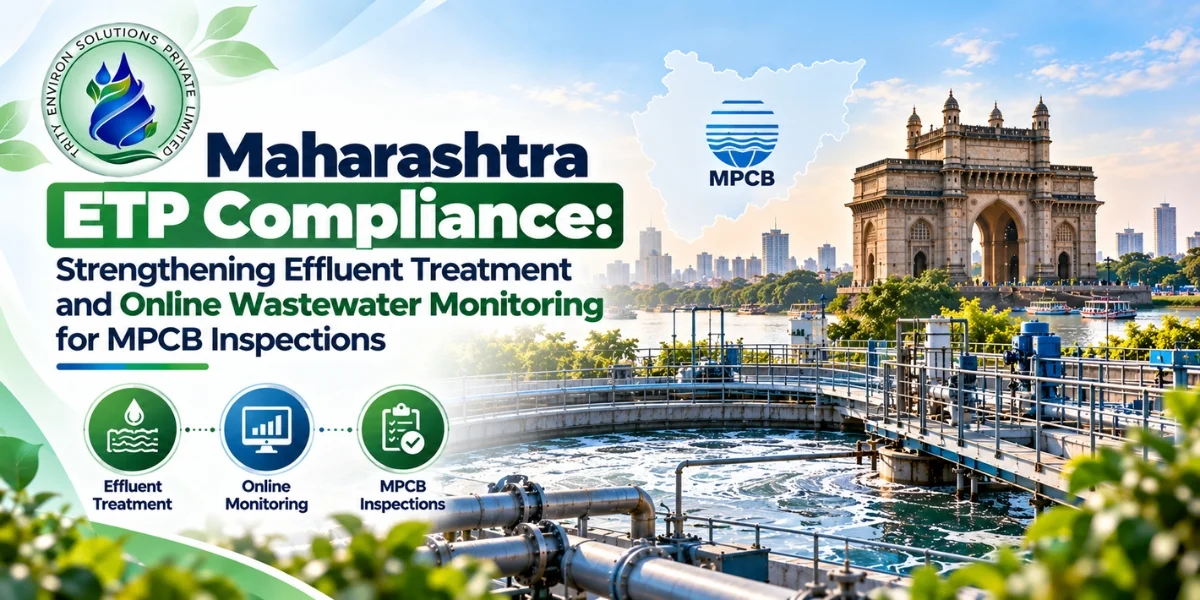
Get your Maharashtra ETP ready for MPCB inspections: discharge norms, online effluent monitoring, sampling records, common failures and upgrade options.











Discuss your requirements with our engineering team and get practical guidance for your project.

