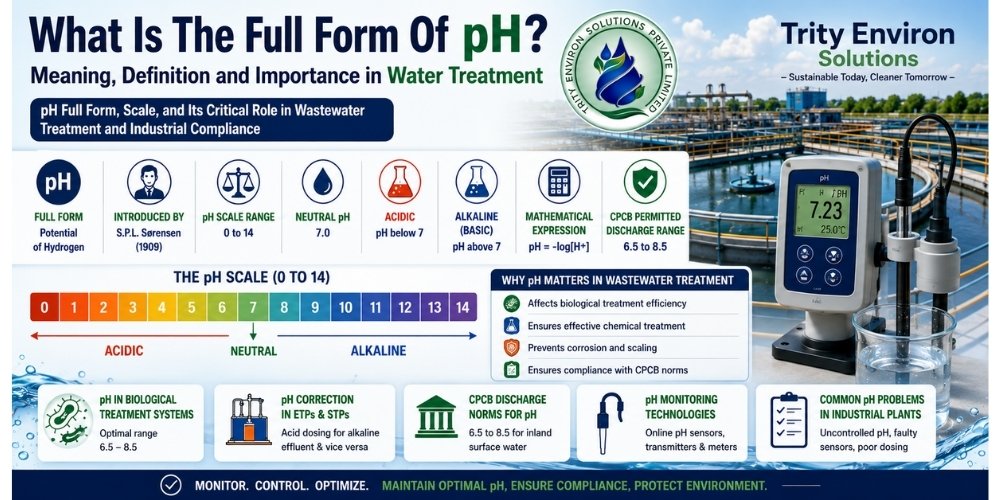
What Is The Full Form Of pH? Meaning, Definition and Importance in Water Treatment
The full form of pH is Potential of Hydrogen. Learn its meaning, scale, importance in wastewater treatment, CPCB pH norms, and pH correction in ETP and STP systems.

 ISO 9001:2015 & QCI Approved
Not every product marketed as a "water softener" actually removes hardness minerals. Some condition them, some claim to descale using magnets with no independent proof behind it. Here's what genuinely works.
Hard water, carrying dissolved calcium and magnesium, causes scale buildup in pipes and appliances, reduces soap and detergent effectiveness, and leaves skin and hair feeling dry after washing. Water softening addresses this, but not every product sold as a "softener" does it the same way, or does it at all.
The core process, ion exchange, works by replacing calcium and magnesium ions with sodium or potassium ions as water passes through a resin bed. Once the resin's capacity is exhausted, it regenerates using a salt (brine) solution, restoring its softening capacity.
This remains the only technology that genuinely and completely removes hardness minerals from water:
This is where marketing language and actual function diverge most:
This category deserves the most caution of the four:
A configuration variant rather than a fundamentally different technology:
India's hard water challenge varies considerably by region, and the right system depends on your actual water hardness, not a generic recommendation:
Skipping the water hardness test is the single most common mistake among first-time buyers, since it's tempting to select a system based on a neighbour's recommendation or general assumptions about the local area. Even within the same city, groundwater hardness can vary considerably between individual borewells, making a generic regional recommendation a poor substitute for testing your own specific source before committing to a system size and technology.
A water softener's price tag is only the starting point for what it will actually cost over its working life:
| Application | Recommended Technology | Key Reason |
|---|---|---|
| Genuinely hard water (North/West India) | Salt-based ion exchange | Only technology that fully removes hardness |
| Moderate hardness, salt-averse household | Salt-free (TAC) conditioning | Manages scale without salt or wastewater discharge |
| Continuous commercial/industrial demand | Dual-tank salt-based system | Uninterrupted soft water during regeneration |
| Pairing with a commercial RO plant | Salt-based softener as pretreatment | Protects RO membrane from scaling and extends its life |
Trity Environ Solutions is a trusted water softener manufacturer in India, and our engineering team recommends technology based on your actual water hardness test results, not marketing claims about a specific product category. As an experienced water treatment equipment manufacturer and supplier, we size and configure salt-based ion-exchange systems for genuine, verifiable hardness removal, and pair softeners with commercial RO plants where pretreatment is needed to protect membrane life.
Every installation is backed by pan-India Annual Maintenance Contract and operation and maintenance support. We are ISO 9001:2015 certified, QCI approved, and deliver CPCB-compliant engineering nationwide.
Contact Trity Enviro for water hardness testing (ppm/grains), resin capacity calculations, and custom automatic softener proposals.
Request a Free Water Hardness Assessment →Salt-based ion exchange is the only technology that genuinely removes calcium and magnesium from water, replacing them with sodium ions through a resin bed. It's also the only type with widely recognized independent certification, such as NSF/ANSI 44.
Salt-free systems don't remove hardness minerals; they condition them into a crystalline form less likely to cause scale buildup. They're more accurately called descalers, and their effectiveness is generally limited to moderate hardness levels up to around 25 grains per gallon.
These devices lack standardized, independent certification verifying their performance claims, and total dissolved solids and hardness remain completely unchanged after treatment. For genuinely hard water, they generally fall short of the scale control they advertise.
Modern automatic systems commonly handle feed water hardness up to around 800 ppm (as CaCO3), bringing it down to under 50 ppm, which covers most hard-water conditions found across Indian households and commercial applications.
Yes. The right technology and system capacity depend entirely on your actual water hardness level, and testing beforehand avoids under-sizing a system or choosing a technology, like salt-free conditioning, that may not be strong enough for genuinely hard water.
The full form of pH is Potential of Hydrogen. Learn its meaning, scale, importance in wastewater treatment, CPCB pH norms, and pH correction in ETP and STP systems.
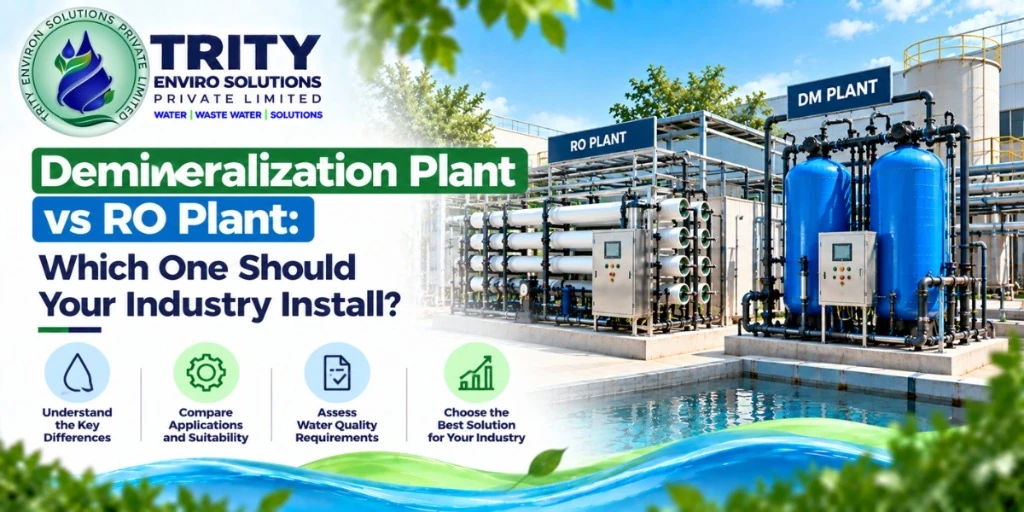
DM plant vs RO plant: compare how they work, product water quality, running cost, effluent and best use cases to decide which one your industry needs.

Onsite water recycling systems reduce urban water scarcity, cut costs, and support sustainable reuse through smart, decentralized technology.











Discuss your requirements with our engineering team and get practical guidance for your project.

