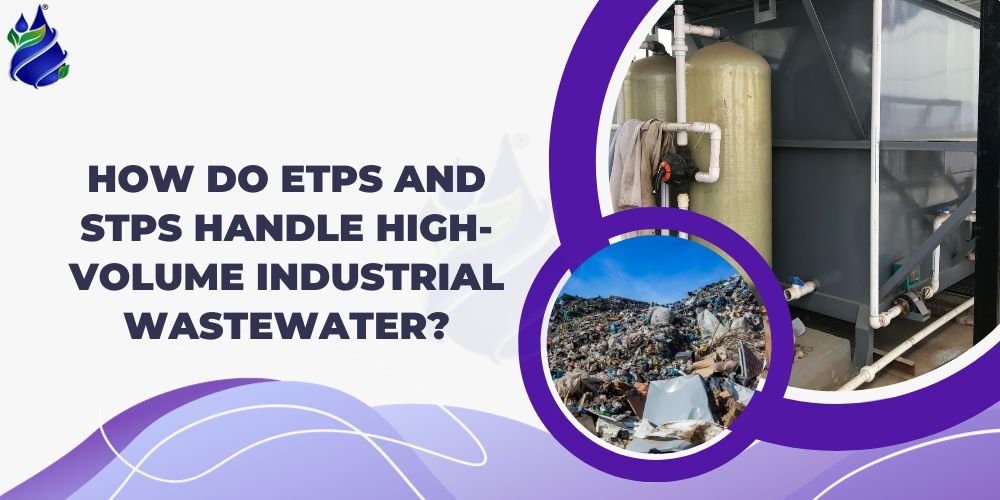
How Do ETPs and STPs Handle High-Volume Industrial Wastewater?
How ETPs and STPs manage extreme-volume industrial wastewater: equalization, advanced primary treatment, MBR, and modular scaling design.

 ISO 9001:2015 & QCI Approved
Match the symptom to the cause, run the right test and apply the fix. A practical troubleshooting guide for extended aeration, MBBR and SBR plants.
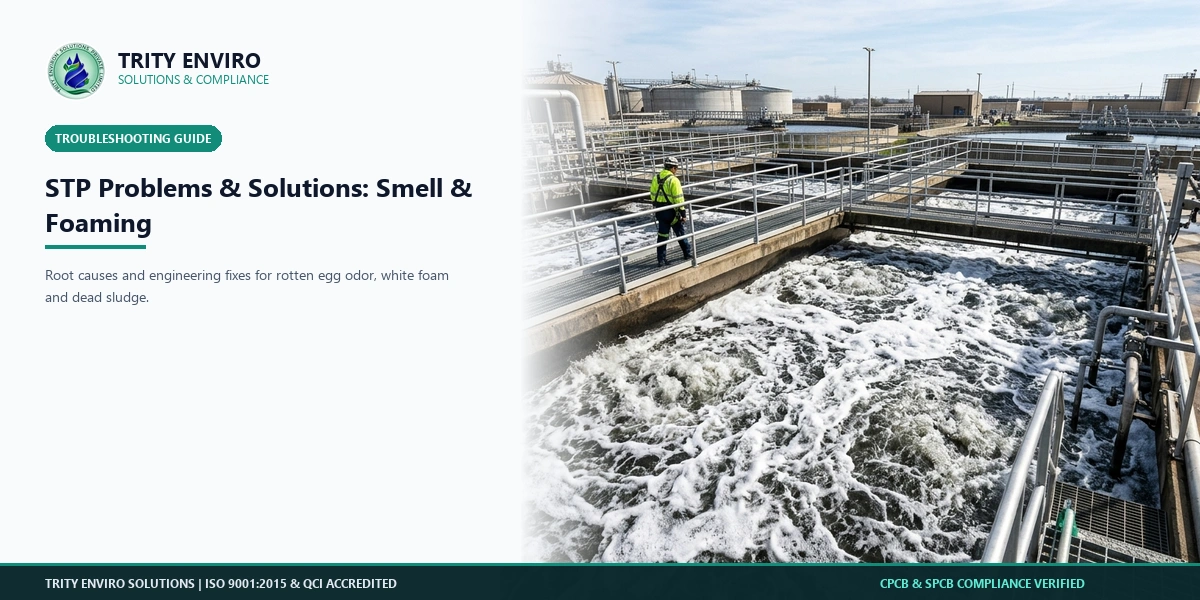
A sewage treatment plant rarely fails overnight. It sends warnings first: a sour smell near the equalization tank, a brown froth on the aeration tank, a clarifier that looks like cloudy tea, a blower that runs hot. Housing societies, hotels, hospitals and offices often ignore these signs until neighbours complain or the pollution control board takes a sample.
The reassuring fact is that most STP problems come from a short list of causes: too little oxygen, too much or too little food for the bacteria, shock loads, poor sludge control, equipment faults and neglect. Each has a visible symptom and a simple test that confirms it. An operator who knows the symptoms and keeps a few readings can solve most problems within a day or two, without calling an engineer.
This guide is organised by symptom. For each one it explains the likely causes, the quick checks and the corrective action. It also lists the normal operating ranges for an extended aeration plant, which is the most common design in housing societies and commercial buildings, so you can see when something has drifted. The advice also applies in broad terms to MBBR and SBR plants, with differences noted. It is written for facility managers, STP operators, RWA committees and consultants.
You cannot spot a problem without a baseline. Record readings when the plant is healthy and compare them when it is not.
Typical ranges, which your designer may adjust for your plant:
1. DO and pH with portable meters, daily, at the same point in the aeration tank.
2. SV30 (30 minute settleability): fill a one litre cylinder with aeration tank liquor, let it settle for 30 minutes and read the sludge volume. Good sludge settles to a clear layer with a firm blanket.
3. MLSS: a weekly lab test, which also lets you calculate SVI as SV30 in mL/L divided by MLSS in g/L.
4. Visual and smell checks of every tank, with notes in the logbook.
5. Outlet quality: BOD, COD, TSS and ammonia as often as your consent requires, and more often when the plant is in trouble.
Add a microscope check when you can. A look at the sludge reveals filamentous bacteria, protozoa and floc structure, and it often explains a problem before the numbers do.
A rotten egg smell is hydrogen sulphide, produced when organic matter decays without oxygen. It points to septic conditions. Look for these causes:
A musty, earthy smell from a healthy plant is normal, and a sour or ammonia smell points to overloading or low pH.
Foam has different meanings depending on its colour and behaviour.
If the treated water is cloudy, start with the clarifier. Look for a rising sludge blanket, floating solids, uneven flow over the weir and short-circuiting. Fine, tiny flocs, called pin floc, point to an old sludge or a toxic shock. Compare SV30, MLSS and microscopic observations.
If BOD or COD is high but the water is clear, the biology may be overloaded or short of oxygen. Check DO, load and the number of operating hours of the blower.
If ammonia is high, nitrification is not working. Causes include low DO, low sludge age, low alkalinity, low temperature, toxic inhibitors such as disinfectants, or insufficient retention time. Improve aeration, reduce sludge wasting and correct alkalinity.
If the water is clear but has a disinfectant smell, check the chlorine dose and contact time. If it fails coliform limits, the disinfection stage needs attention. A tertiary treatment plant adds filtration and disinfection for reuse-grade water.
Often the cause is mechanical. Blowers wear out, belts slip, diffusers clog, valves jam and sludge pumps fail. Our articles on air blower selection and air diffuser selection explain what to check and when to replace them.
Sometimes the plant itself is the limit. If the load has grown beyond the design, no operating trick will keep it compliant. Compare present flow and load with design values. Our guide on how to calculate STP capacity shows how. Upgrade routes include adding MBBR media to raise capacity, as explained in our MBBR sewage treatment plant page, a new aeration system or a larger equalization tank. If sludge handling is the bottleneck, see our guide to sludge dewatering options.
A proper operation and maintenance service or an annual maintenance contract prevents many of these problems by catching small drifts early.
When a problem appears, work through the same order. First look and smell: note which tank shows the symptom. Second, check the air: is the blower running, is the pressure normal and do the diffusers show an even bubble pattern. Third, measure DO and pH in the aeration tank. Fourth, run the 30 minute settling test and compare it with the last normal result. Fifth, check flows, power and the logbook for changes in the last few days, such as a new tenant, a cleaning schedule or a repair. Sixth, change one thing at a time and record the result. Changing blower speed, sludge wasting and chemical dose together makes it impossible to know what worked. Allow time for the biology to respond: a change in sludge wasting may take days to show.
| Parameter / Stage | Target Optimal Range | Failure Impact / Risk | Corrective Engineering Action |
|---|---|---|---|
| DO in aeration tank | About 1.5 to 3 mg/L | Foul smell, bulking, poor BOD and ammonia removal | Service blower and diffusers, add DO control, reduce overload |
| SVI | Roughly 80 to 150 mL/g | Bulking, solids in outlet, washout | Raise DO, adjust sludge age, improve equalization, check nutrients |
| MLSS | About 3,000 to 4,000 mg/L for extended aeration | Foaming if too low or too high, poor treatment | Adjust sludge wasting, rebuild MLSS slowly after upset |
| Equalization tank condition | Mixed, covered, free of settled solids | Septic wastewater, H2S smell, shock load | Restore air mixing, clean solids, control grease upstream |
Trity Environ Solutions is an ISO 9001:2015 certified and QCI-approved sewage treatment plant manufacturer and supplier in India, delivering robust, high-efficiency systems engineered for CPCB and SPCB regulatory compliance.
Every installation is supported by pan-India Annual Maintenance Contract and Operation and Maintenance services.
How ETPs and STPs manage extreme-volume industrial wastewater: equalization, advanced primary treatment, MBR, and modular scaling design.
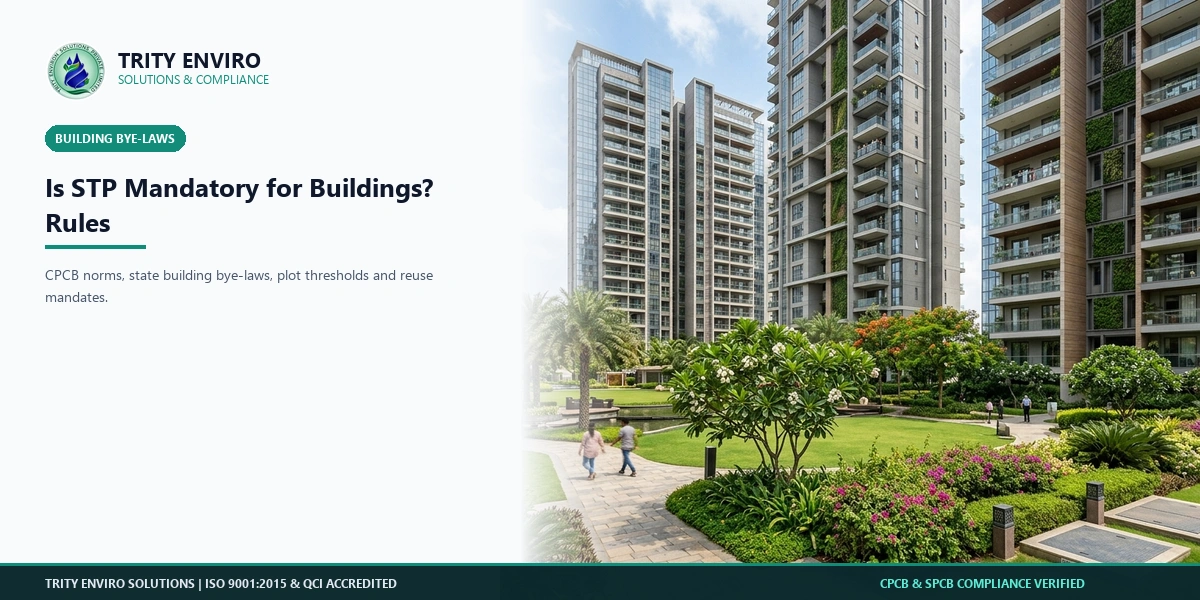
Is an STP required for your apartment, hotel or commercial building? Understand area thresholds, bye-laws, environmental clearance, consent and RERA impact.
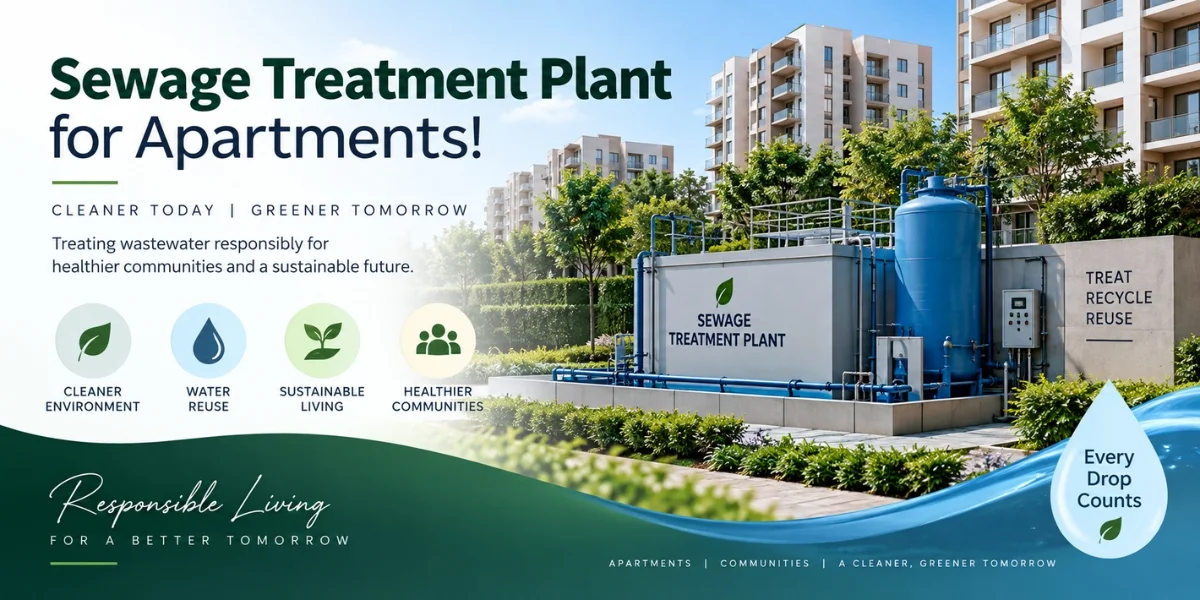
Everything housing societies need to know about a sewage treatment plant for apartments: legal rules, sizing, cost, and choosing the right STP manufacturer.











Discuss your requirements with our engineering team and get practical guidance for your project.

