Upcycling Wastewater: Using Treated Water for Sustainable Agriculture and Industry
Discover how upcycling treated wastewater supports agriculture, industry, and sustainability, conserving water and reducing pollution for a greener future.

 ISO 9001:2015 & QCI Approved
Reverse osmosis is often described as a clean solution to water pollution, and in many ways it is, but the full picture includes a byproduct stream that still needs proper handling. This guide covers exactly how RO removes pollutants, where it delivers real results, and what happens to what it leaves behind.
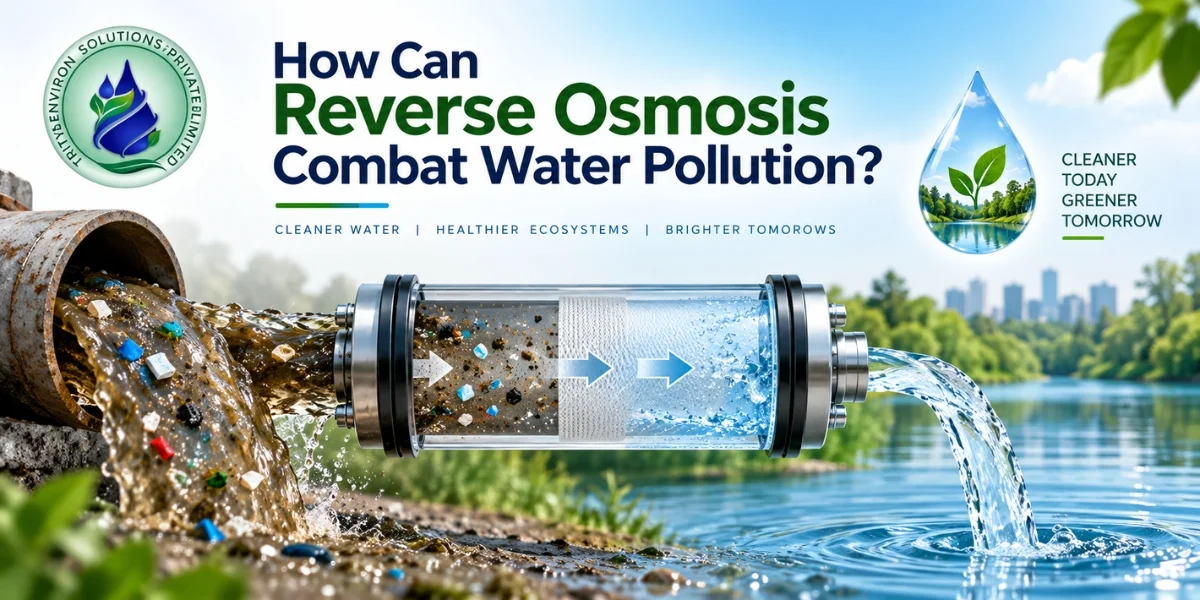
Reverse osmosis has become one of the most widely deployed technologies for addressing industrial water pollution, precisely because freshwater sources are limited and increasingly exposed to contamination from the massive scale of modern industrial activity. Rather than treating pollution purely as a discharge compliance problem, more industries are now using reverse osmosis to actively recover and reuse water that would otherwise be released, partially treated, into rivers, groundwater, or the sea. This shift, from pollution control to pollution prevention through reuse, is where RO's real impact on water pollution actually lies.
Reverse osmosis works by pressurizing contaminated water, typically between 150 and 600 psi depending on the application, and forcing it through a semi-permeable membrane, either thin-film composite or cellulose acetate. The membrane physically blocks dissolved salts, heavy metals, and organic molecules from passing through, while allowing purified water molecules to cross, separating clean permeate from a concentrated reject stream carrying the contaminants left behind.
Industrial RO systems typically achieve water recovery rates of 70-90%, meaning the majority of feed water is recovered as usable, purified output, alongside salt rejection rates commonly in the 90-99% range depending on membrane specification and pretreatment quality. In well-designed systems with proper pretreatment, overall wastewater recovery can exceed 90%, turning what would otherwise be a disposal cost into a genuine water resource for the facility.
The pollution-reduction capability of RO is well documented in real industrial settings, not just laboratory conditions. In one documented case study from alumina production wastewater treatment, reverse osmosis brought aluminium concentration down to below 3 mg/L, sodium to 145 mg/L, chlorides to 193 mg/L, and nitrate nitrogen to below 20 mg/L, successfully bringing every measured pollutant within the maximum allowed concentration for surface water discharge. This kind of documented before-and-after result illustrates that RO's pollution-reduction claims are grounded in measurable outcomes, not just theoretical membrane performance figures.
Electroplating and metal finishing operations generate rinse water heavily loaded with dissolved metals, a genuinely difficult pollutant category for standard biological treatment to address. RO treatment and recycling of these rinse waters both reduces the pollution load reaching discharge and allows valuable metal-bearing water to be reused within the same process line.
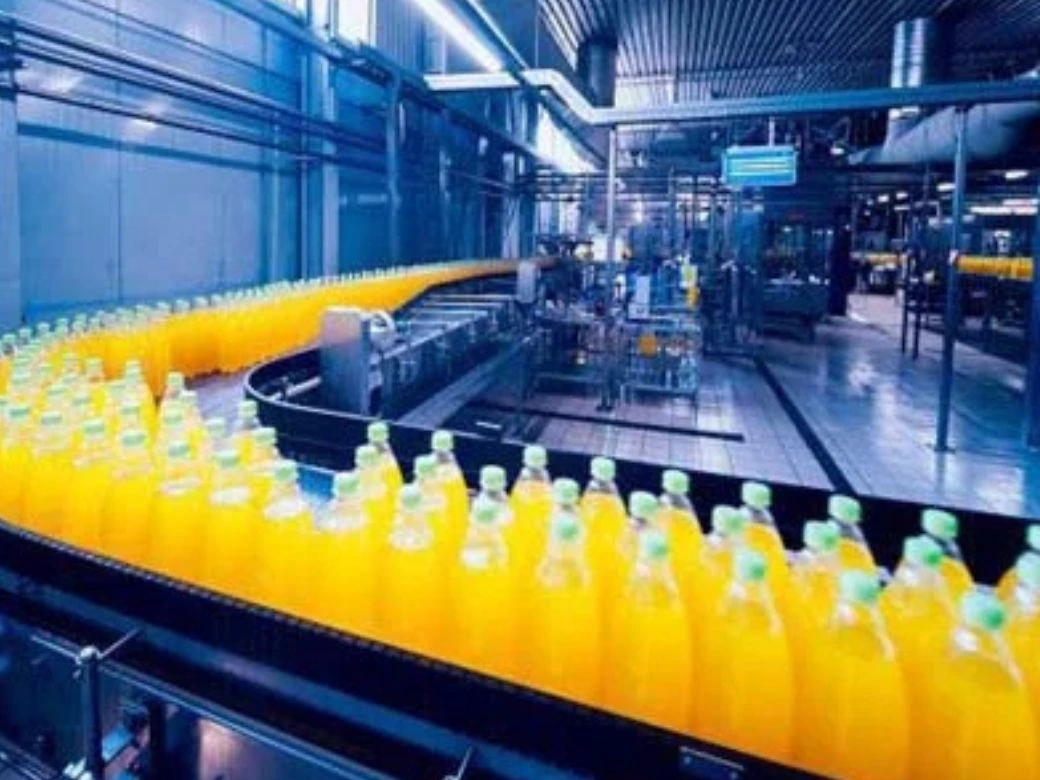
Food and beverage manufacturing generates wastewater with high organic content that drives up Biochemical Oxygen Demand (BOD) if discharged untreated. RO is used both to concentrate this wastewater ahead of further treatment and to reduce BOD prior to discharge, directly lowering the pollution burden the receiving water body would otherwise absorb.
Groundwater and landfill leachate, notoriously difficult to treat due to its complex, variable contaminant load, is another documented RO application, where membrane treatment reduces the concentrated pollutant mix in leachate before safe discharge or further processing.
An important nuance that gets skipped in most simplified explanations of RO is this: the membrane does not destroy the pollutants it removes, it concentrates them into a reject stream known as RO concentrate. This concentrate is characterized by high salinity and complex organic constituents, and managing it properly, rather than simply discharging it elsewhere, is an active area of ongoing environmental engineering research specifically because it represents its own distinct pollution control challenge. Facilities treating industrial wastewater with RO for pollution control need a clear plan for this concentrate stream from the outset, whether through further treatment, recovery, or proper disposal, rather than treating RO as a process that makes pollution simply disappear.
Membrane fouling, the gradual buildup of organic material, mineral scale, and biological growth on the membrane surface, remains the single biggest operational challenge limiting RO's real-world pollution control performance. A comprehensive 2026 review examining 36 peer-reviewed industrial RO studies found that most published research emphasizes short-term lab-scale performance gains and novel membrane materials under controlled conditions, with limited reconciliation of how these advances actually translate to full-scale industrial operating constraints. In practice, this means proper pretreatment, protecting the membrane against organic fouling, mineral scaling, and chemical degradation, is the single most important factor determining whether an RO system delivers its promised pollution-reduction performance consistently over years of operation, not just during initial commissioning.
For facilities pursuing the strictest form of pollution control, RO typically serves as the concentration stage within a broader Zero Liquid Discharge system, reducing wastewater volume significantly before the remaining concentrate moves to evaporation and crystallization. Understanding RO's role within this larger treatment train, rather than viewing it as a standalone solution, helps facilities plan realistically for both the water recovery benefit and the concentrate management responsibility that comes with it.
| Industry | Pollutant Addressed | RO's Role |
|---|---|---|
| Metal finishing and electroplating | Dissolved heavy metals in rinse water | Treatment and recycle of process rinsewater |
| Food and beverage manufacturing | High BOD organic wastewater | Concentration and BOD reduction prior to discharge |
| Alumina and metal processing | Aluminium, sodium, chlorides, nitrates | Direct pollutant reduction to below discharge limits |
| Landfill and groundwater sites | Complex, variable leachate contaminants | Membrane treatment ahead of safe discharge |
| ZLD-operating facilities | Overall liquid discharge volume | Primary concentration stage before evaporation |
Trity Environ Solutions is an experienced industrial RO plant manufacturer and commercial RO plant manufacturer in India, designing systems with the pretreatment rigor that determines whether an RO installation actually delivers its promised pollution-reduction performance over years of real operation, not just at commissioning. As a trusted RO and ETP manufacturer and supplier, our engineering team also helps facilities plan for RO concentrate management as part of the overall treatment strategy, whether that means further treatment, integration into a Zero Liquid Discharge system, or proper disposal. Every effluent treatment plant and RO system we deliver is backed by pan-India Annual Maintenance Contract and operation and maintenance support. We are ISO 9001:2015 certified, QCI approved, and deliver CPCB-compliant engineering across industrial projects nationwide.
Reverse osmosis pressurizes contaminated water and forces it through a semi-permeable membrane that physically blocks dissolved salts, heavy metals, and organic molecules, separating clean permeate from a concentrated reject stream carrying the removed contaminants.
Industrial RO systems typically achieve 70-90% water recovery and 90-99% salt rejection, depending on membrane specification and pretreatment quality, with well-designed systems sometimes exceeding 90% overall wastewater recovery.
Yes. In a documented alumina production wastewater case study, RO treatment brought aluminium, sodium, chloride, and nitrate nitrogen concentrations down below regulatory discharge limits, demonstrating measurable, real-world pollution reduction rather than just theoretical performance.
RO does not destroy pollutants, it concentrates them into a reject stream called RO concentrate, which carries high salinity and complex organic content and requires its own proper management, further treatment, recovery, or disposal, rather than being treated as waste that has simply disappeared.
Membrane fouling from organic material, mineral scaling, and biological growth is the primary factor limiting real-world RO performance, which is why proper pretreatment design matters more for long-term results than the membrane specification alone.
Discover how upcycling treated wastewater supports agriculture, industry, and sustainability, conserving water and reducing pollution for a greener future.

Rice is one of the most water-intensive crops India grows. Explore how water is used across cultivation and milling, and how reuse and treatment are reshaping the industry.
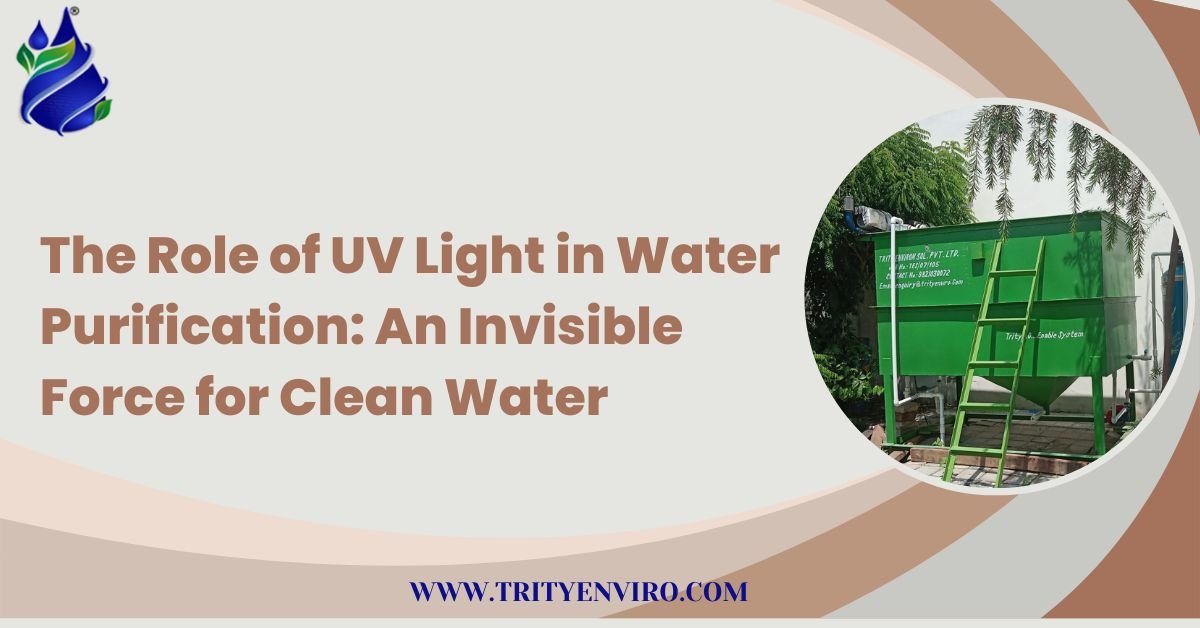
UV light disinfects water by eliminating harmful microorganisms, ensuring safe, chemical-free drinking water. A fast, eco-friendly, and effective purification method.

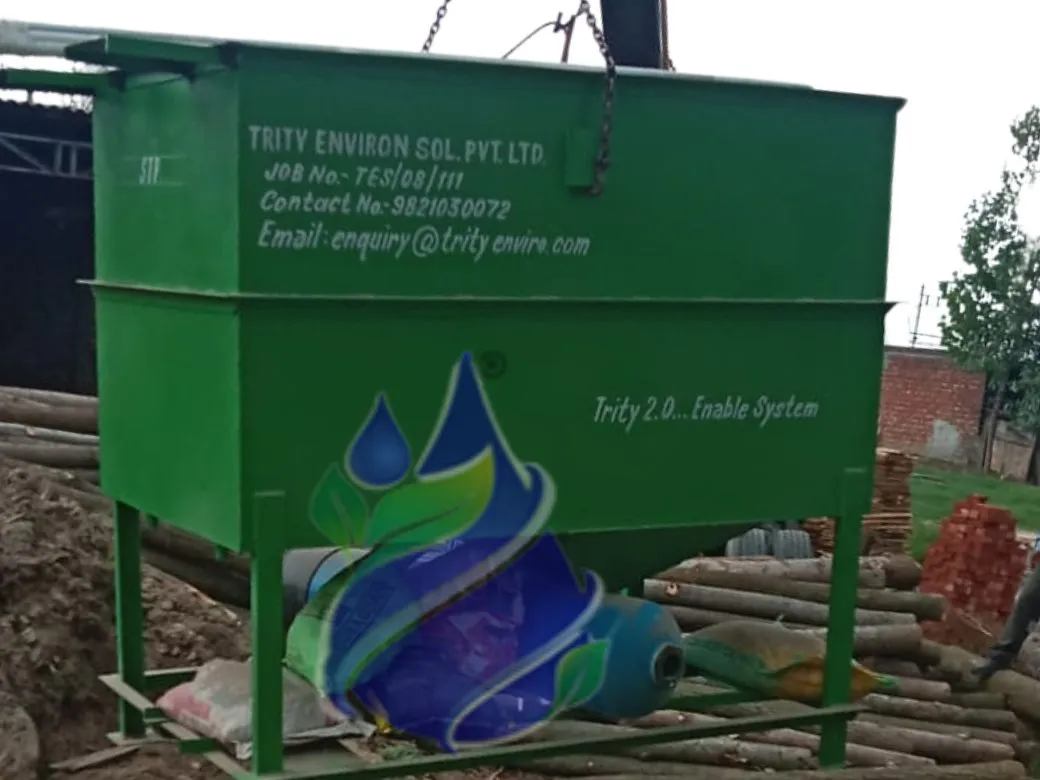
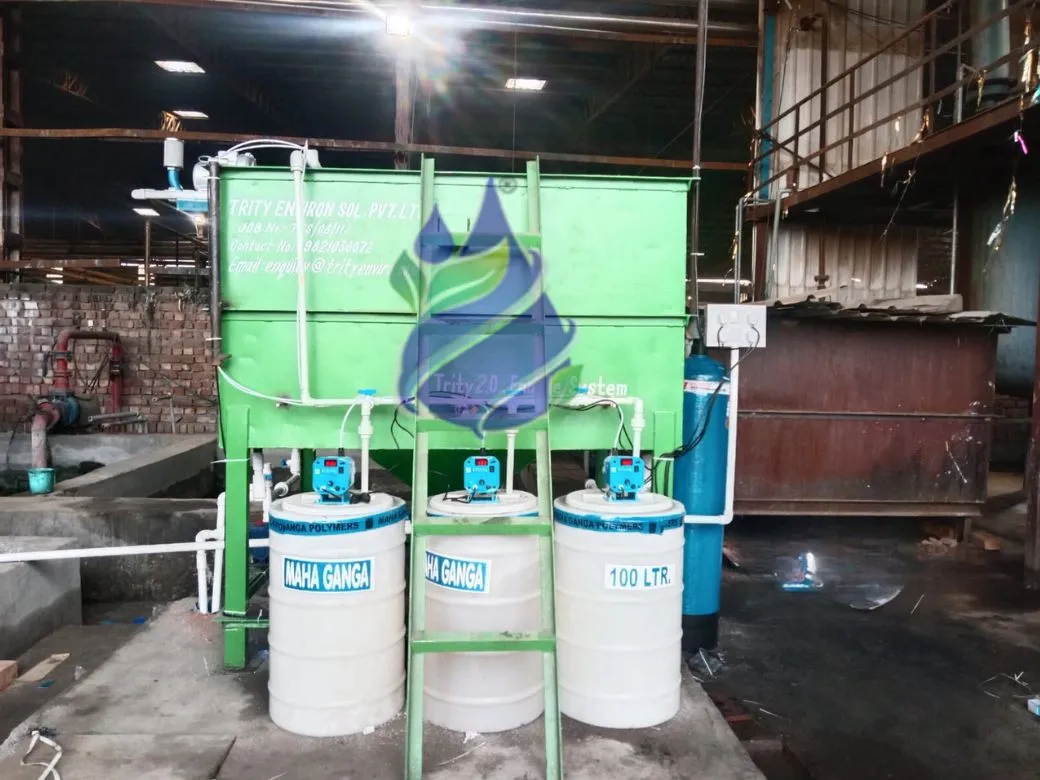



Discuss your requirements with our engineering team and get practical guidance for your project.