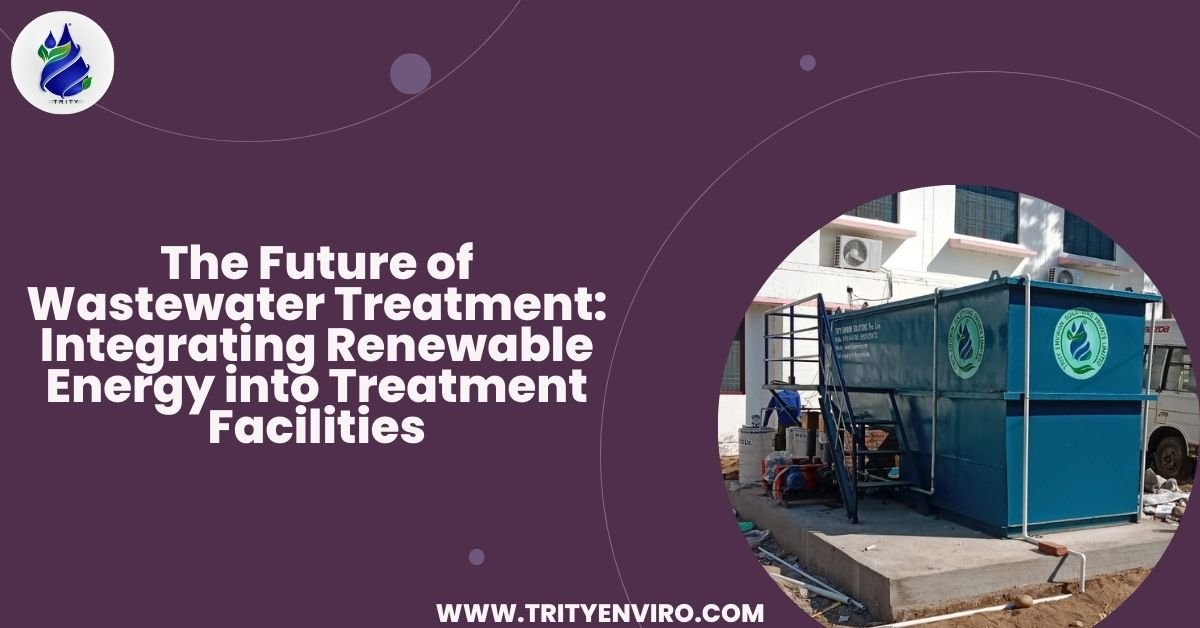
The Future of Wastewater Treatment: Integrating Renewable Energy into Treatment Facilities
Discover how integrating renewable energy in wastewater treatment can reduce costs, improve efficiency, and help achieve sustainability goals in the long run.

 ISO 9001:2015 & QCI Approved
What do the Bio-Medical Waste Rules require for liquid waste, and how should a hospital design its STP and ETP? Here is a practical guide.
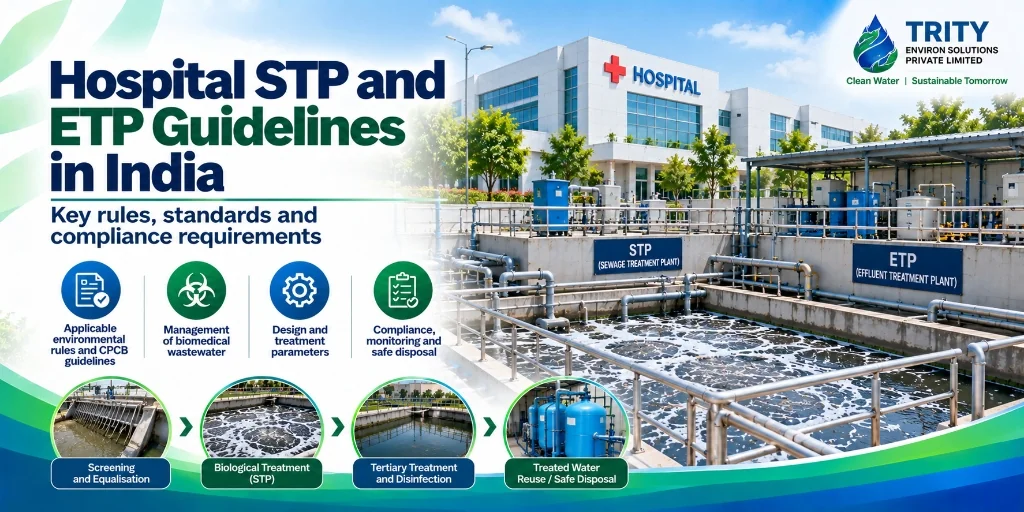
A hospital looks like a large residential or commercial building from the outside. It has toilets, kitchens, laundry and cooling towers, and it produces sewage like any other. But inside, it also produces wastewater that no apartment block does: blood and body fluid contaminated water from wards and operating theatres, pathology and microbiology laboratory effluent, chemical and disinfectant waste, radiology developer and fixer solutions, dialysis reject and pharmacy residues.
This changes the rulebook. A hospital's liquid waste is covered by the Bio-Medical Waste Management Rules, 2016 and their amendments, in addition to the general environmental standards, consent from the State Pollution Control Board and, for larger projects, environmental clearance conditions. Failing to manage it can spread pathogens, harm treatment plants downstream and attract notices and compensation.
The terms STP and ETP are often mixed up in hospitals. In broad terms, an STP treats the sewage from toilets, washing and kitchens. An ETP treats special streams, such as infectious liquid waste and laboratory effluent, before they join the sewage, or sometimes the combined flow. Many hospitals end up with a combined arrangement: pre-treatment and disinfection for infectious and chemical streams, followed by a main biological plant.
This guide explains the standards in plain language, how to build a design basis, which treatment steps a hospital plant needs, how to manage disinfection and records and what to ask a supplier. It is written for hospital administrators, facility managers, biomedical engineers and consultants. Trity Enviro designs hospital STP and ETP systems, and this guide draws on that work. Confirm the exact limits that apply to you with your SPCB.
The Bio-Medical Waste Management Rules, 2016, notified in March 2016 and amended in 2018 and 2019, require health care facilities to treat liquid waste before discharge. Schedule II sets treatment and disposal requirements, including that infectious liquid waste be pre-treated and disinfected before mixing with other wastewater, and that the combined discharge conform to the standards for liquid waste. Those standards, as quoted in official documents and summaries, include:
The rules also have conditions for small facilities. Health care facilities with fewer than ten beds, for instance, have simpler options, and non-bedded occupiers must disinfect infectious liquid waste before disposal. Check the current text, since the rules have been amended more than once.
Many SPCBs also apply the general STP norms to hospital sewage, and several hospital plant suppliers quote values like BOD of 10 mg/L, COD of 50 mg/L, TSS of 10 to 20 mg/L and faecal coliform of 100 MPN/100 mL, following the NGT's STP order for stricter categories. Whether these or the BMW Rule standards bind a particular hospital depends on its consent and on whether it discharges to a sewer, a drain or the ground. Read your consent, and design to the stricter value if in doubt.
Recent regulatory changes add confusion. In 2025, a CPCB circular on category reclassification affected how some hospitals are classified, and an analysis of that circular noted that a lower pollution category does not remove the duty to meet the liquid waste parameters of the BMW Rules. Larger hospital projects of 20,000 square metres or more of built-up area may also need environmental clearance with STP conditions, as explained in our guide to whether an STP is mandatory for your building. Consent to establish and operate are covered in our CTE and CTO guide.
Hospital water use is much higher per person than in residences. A common planning figure for bedded hospitals is in the region of 450 litres per bed per day, with outpatients, staff, kitchens, laundry, air conditioning and cooling towers adding to it. Use the figures in the National Building Code and your state's norms, and confirm them with actual metering if the hospital exists.
A worked example. A 200 bed hospital might use around 90 KLD for beds at 450 litres per bed, plus roughly 20 to 30 percent for outpatients, staff and services, giving about 115 KLD. Assuming about 80 percent becomes wastewater, the plant flow is about 90 to 95 KLD. Add a peak factor for the morning and evening periods, and add the cooling tower and laundry streams if they are connected. A design of around 100 to 120 KLD with an equalization tank is a reasonable starting point. For the full method, see our guide on how to calculate STP capacity. This is only an illustration: use your own metered data and the norms that apply.
Good hospital design starts with segregation. Keep these streams separate until they have been dealt with:
Anything that is not wastewater should not go through the plant. Disinfectants and antibiotics in large quantities can inhibit bacteria and damage biological treatment.
A typical hospital plant includes:
Nitrogen limits may require an anoxic zone, as explained in our guide to ammonia and nitrogen removal in STP. Our dedicated pages on hospital STP and hospital ETP describe the options.
Disinfection is not optional in a hospital. The pathogen profile includes bloodborne viruses, enteric bacteria and drug-resistant organisms. Chlorination, UV and ozone are the common choices. Chlorine dosing needs adequate contact time and a measurable residual, and it must be controlled to avoid excess chlorine in the discharge or reuse water. UV needs low turbidity water, so it follows filtration. Using two methods in series is sometimes done for the infectious pre-treatment stream and the final outlet.
Sludge from a hospital plant, especially from the pre-treatment of infectious liquid waste, should be stabilised and disinfected, for example with lime, and handled as the BMW Rules and your SPCB require. Ask your SPCB how it classifies the sludge, and keep records of disposal through authorised channels.
Reuse of treated water for flushing, gardening and cooling towers lowers the hospital's water bill, but it needs reliable filtration and disinfection and clear labelling of reuse pipes, and it should never reach areas where patients, food or sterile processes are involved.
Hospitals are inspected, and accredited hospitals also face audits under quality standards. Keep:
Our guide on the STP operation and maintenance checklist gives a logbook format that hospitals can adapt.
Trity Enviro's sewage treatment plant and effluent treatment plant range covers hospitals of all sizes, and an annual maintenance contract or operation and maintenance service keeps the plant dependable.
| Parameter / Stage | Target Optimal Range | Failure Impact / Risk | Corrective Engineering Action |
|---|---|---|---|
| Treated water pH, BOD, COD, TSS | At or within BMW Rule standards (pH 6.5 to 9.0, BOD about 30, COD about 250, TSS about 100 mg/L) or stricter STP norms in your consent | Notice, compensation, pathogen release | Design to the stricter limit, test monthly, tune the process |
| Disinfection | Adequate contact time and measurable residual, or UV dose after filtration | Pathogens in outlet, failed coliform test | Add or repair chlorination or UV, improve filtration, monitor residual |
| Segregation of special streams | Infectious, laboratory, radiology and chemical waste handled separately | Toxic shock to biology, regulatory findings | Install separate drains and pre-treatment, train staff |
| Equalization tank | Mixed and sized for peak and batch flows | Shock loads, odour near wards | Add volume and mixing, control grease and chemicals upstream |
Trity Environ Solutions is an ISO 9001:2015 certified and QCI-approved hospital sewage treatment plant and effluent treatment plant manufacturer and supplier in India, delivering robust, high-efficiency systems engineered for CPCB and SPCB regulatory compliance.
Every installation is supported by pan-India Annual Maintenance Contract and Operation and Maintenance services.
Discover how integrating renewable energy in wastewater treatment can reduce costs, improve efficiency, and help achieve sustainability goals in the long run.
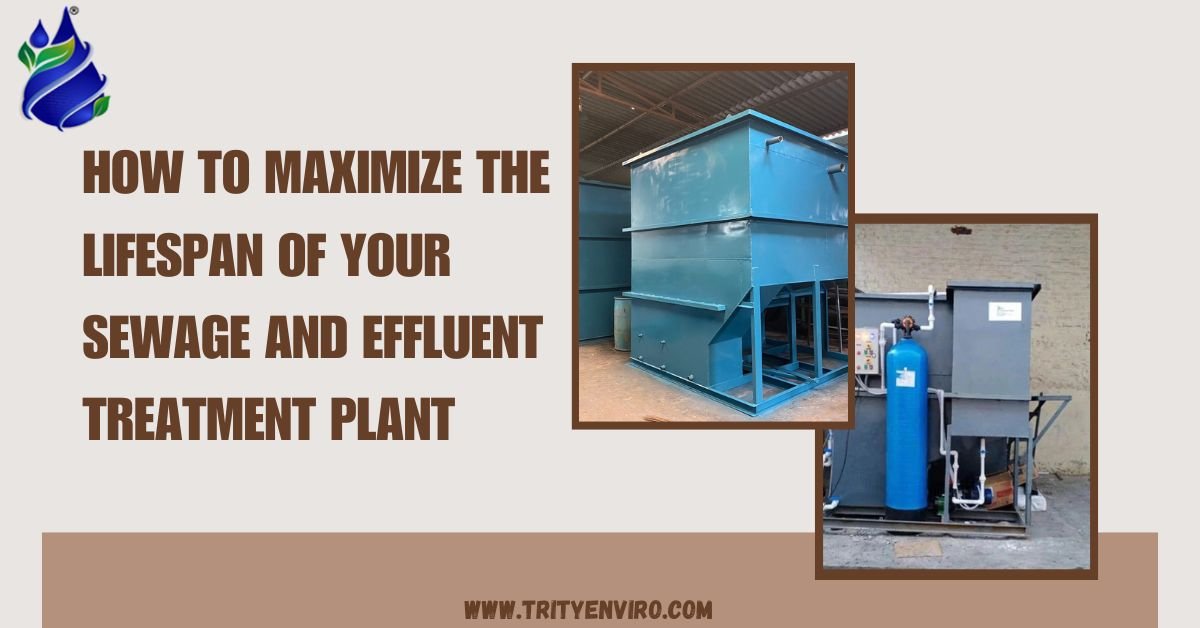
Learn how to extend the lifespan of your sewage and effluent treatment plant with regular maintenance, chemical optimization, and efficient staff training.
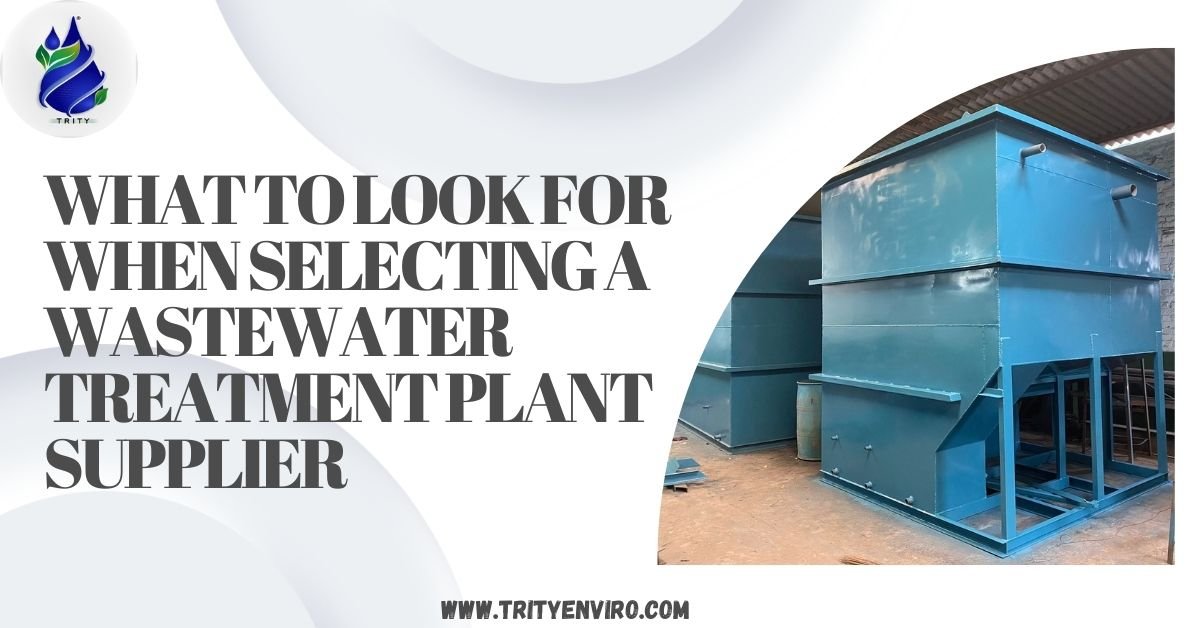
Learn what to consider when selecting a wastewater treatment plant supplier, including experience, certifications, technology, cost, and after-sales support.











Discuss your requirements with our engineering team and get practical guidance for your project.

