Why Is pH Control Crucial in ETP and STP Systems?
How pH balance affects biological treatment, coagulation, and equipment life in STP and ETP systems, with real control methods and dosing chemicals.

 ISO 9001:2015 & QCI Approved
Builders, societies and hotel owners keep asking the same question. Here is how national, state and local rules decide whether an STP is mandatory for you.
Ask three consultants whether an STP is mandatory for a building and you may hear three different answers: yes for anything above 20,000 square metres, yes for anything that produces more than 10,000 litres of wastewater a day, yes for every apartment block in this city, or no if you are below the threshold. All of them may be right, because the requirement does not come from a single law. It comes from several layers that apply at the same time.
At the national level, building projects above a certain size need an environmental clearance, and the clearance sets a condition to install an STP. At the model bye-law level, large water users are expected to treat and recycle wastewater. At the state and city level, local building bye-laws and development rules add their own thresholds. Then the State Pollution Control Board adds its own conditions through the consent to establish and consent to operate. Finally, in some states, the sewerage connection itself depends on whether you can show treatment.
For a developer, the cost of getting this wrong is delay, or a refusal of the completion certificate. For an existing society or hotel, it can mean a notice and environmental compensation. For a buyer or a committee, it can mean living next to an untreated drain.
This guide explains each layer, how to check your own case, what RERA changes and what to do if you are close to a threshold. It is a practical overview, not legal advice, and you should confirm the current text of rules with your local body and the SPCB. It is written for builders, architects, RWA committees, hotel owners and facility managers.
Under the Environment Impact Assessment Notification of 2006, building and construction projects with a built-up area of 20,000 square metres or more and below 150,000 square metres need prior environmental clearance from the State Environment Impact Assessment Authority. As a standard condition of that clearance, the project must provide a sewage treatment plant and often arrangements for reuse. The clearance document also sets monitoring and reporting duties.
There has been legal back and forth over how projects below that size are treated, including a 2016 move to fold the clearance into local approvals and later judicial reviews. Secondary summaries report that the tribunal set aside the 2016 amendment and that the Supreme Court later struck down an exemption in 2025. Because the position has changed more than once, check the current text and the stand of your SEIAA before relying on any summary.
The Model Building Bye-Laws, 2016 circulated by the central government suggest that buildings that discharge a large volume of wastewater, with 10,000 litres per day cited in secondary summaries, should have an on-site treatment and recycling plant. These model bye-laws are not binding by themselves. States and cities adopt them, usually with changes.
State and local bye-laws set the thresholds that actually apply. Some set them by built-up area, some by number of dwelling units, some by water consumption and some by occupancy type. One example is Karnataka, where a bye-law amendment reported to take effect in February 2026 is linked to buildings above 5,000 square metres. Delhi, Maharashtra, Tamil Nadu, Telangana, Haryana, Uttar Pradesh and others each have their own rules, and the city development authority may add more.
The State Pollution Control Board applies the Water Act through consent. Even where no environmental clearance is needed, a project may need consent to establish and consent to operate, and the board can require an STP as a condition. The Tamil Nadu Pollution Control Board, for example, has stated publicly that projects with an STP below the 20,000 square metre line also need to obtain its consent and that occupiers must run the plant properly or face environmental compensation.
Use this sequence:
1. Built-up area: Check the sanctioned plan. If it is 20,000 square metres or more, you almost certainly need environmental clearance and an STP.
2. Local bye-laws: Read your city's building bye-laws and the latest amendments for the threshold in area, dwelling units or water use.
3. Water consumption and wastewater: Estimate daily water use and wastewater. A rough rule is that wastewater is about 80 percent of water supplied, with domestic use per person commonly assumed at 135 litres per day and higher for hotels and hospitals. Our guide on how to calculate STP capacity shows the arithmetic.
4. Consent conditions: Look at your consent to establish or consent to operate, if you have one.
5. Sewer connection: If there is a public sewer with a treatment plant, ask whether it will accept your discharge without on-site treatment, and under what conditions.
6. Ask in writing: If you are on the line, write to the local body and the SPCB and keep the reply.
RERA does not set STP thresholds by itself. Its role is that a registered project must be built according to the sanctioned plans and approvals, including environmental ones, and the developer must deliver the amenities promised. In practice, the completion or occupancy certificate depends on the project having all required approvals and facilities in place, and an STP that is required but not built or not working can hold up the certificate. Buyers can also raise a complaint if a promised STP is missing.
For an existing society, the question is different. The board can ask for an STP if the area or water use crosses a threshold, or if wastewater is polluting the neighbourhood. The society may have to build or upgrade the plant on notice.
Non-compliance can lead to notices, closure directions, disconnection of water and power, and environmental compensation. Compensation orders have been issued against occupiers who ran non-functional STPs. Authorities in several states have also acted against buildings discharging untreated sewage into storm drains. Delays in the completion certificate add cost for developers through interest and penalties.
Do not treat an STP as a box to tick. A plant that exists but does not work is as bad as no plant, and sometimes worse, since it shows that the requirement was known.
If your project is just below a threshold, think carefully before deciding to skip the STP. Thresholds change, boards impose conditions case by case, buyers and lenders increasingly ask about it and a compact plant is cheap compared with retrofitting later. Many developers install an STP below the legal minimum because it gives a reuse source for flushing and gardening, which reduces water bills and supports green building ratings.
Plan the plant early. Reserve space in the layout, choose a process suited to the site, such as MBBR, SBR or MBR (see our comparison of MBBR vs SBR vs MBR), and design for peak occupancy. A containerised or packaged unit suits tight sites, as described on our packaged containerized sewage treatment plant page.
Our sewage treatment plant range covers apartments, hotels, hospitals and commercial buildings, and an annual maintenance contract keeps the plant working after handover. For a long-term view of running the plant, see our STP operation and maintenance checklist.
Keep your sanctioned plan, built-up area statement, environmental clearance if any, consent to establish and operate, STP design basis and drawings, commissioning certificate, treated water test reports and your AMC. These are the papers authorities, buyers and lenders ask for first.
| Parameter / Stage | Target Optimal Range | Failure Impact / Risk | Corrective Engineering Action |
|---|---|---|---|
| Built-up area | 20,000 sq m or more needs environmental clearance, with local thresholds possibly lower | Delay or refusal of approvals, stop-work notice | Check area against EIA and local bye-laws early |
| Daily wastewater volume | Compare against bye-law volume triggers, with about 10,000 L/day cited in model bye-laws | Notice to install an STP, sewer connection refused | Calculate from occupancy, add margin, ask the authority |
| Consent to establish and operate | Obtained before construction and operation as applicable | Closure direction, compensation | Apply to the SPCB, keep conditions and monitoring on file |
| STP working condition | Plant running and meeting norms at all times | Compensation, complaints, delayed completion certificate | Install correctly, operate daily, hold an AMC |
Trity Environ Solutions is an ISO 9001:2015 certified and QCI-approved sewage treatment plant manufacturer and supplier in India, delivering robust, high-efficiency systems engineered for CPCB and SPCB regulatory compliance.
Every installation is supported by pan-India Annual Maintenance Contract and Operation and Maintenance services.
How pH balance affects biological treatment, coagulation, and equipment life in STP and ETP systems, with real control methods and dosing chemicals.
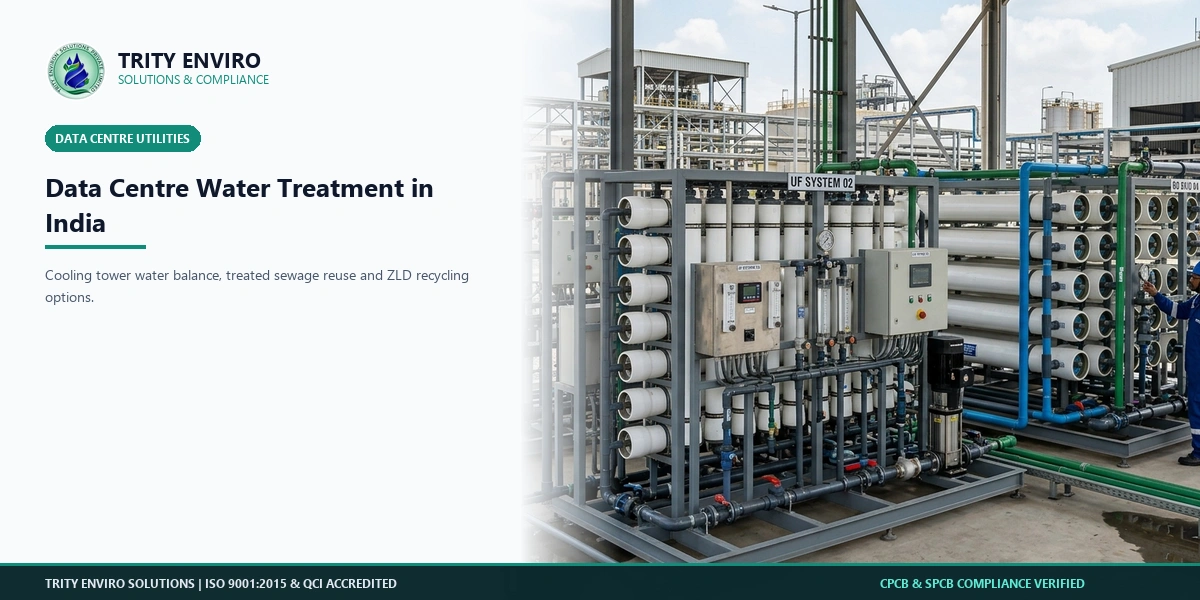
How data centres in India can cut water use: cooling tower treatment, treated sewage reuse, RO, ZLD and a worked water balance for a 10 MW facility.
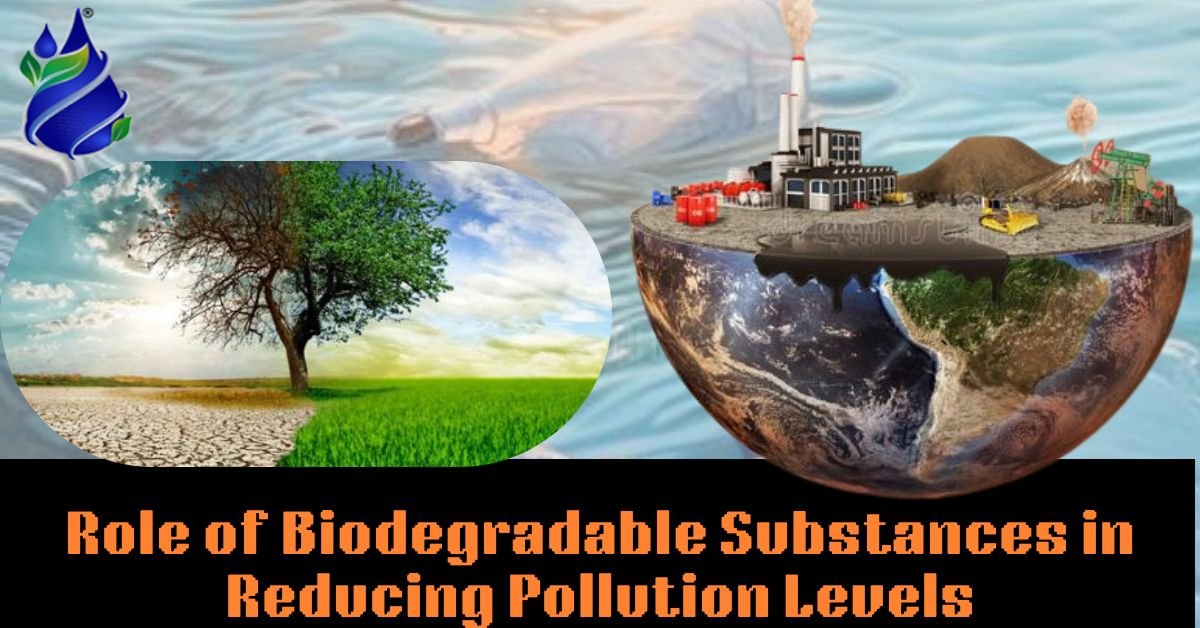
How biodegradable substances affect the environment two ways: enriching soil through composting, or releasing methane when sent to landfill.

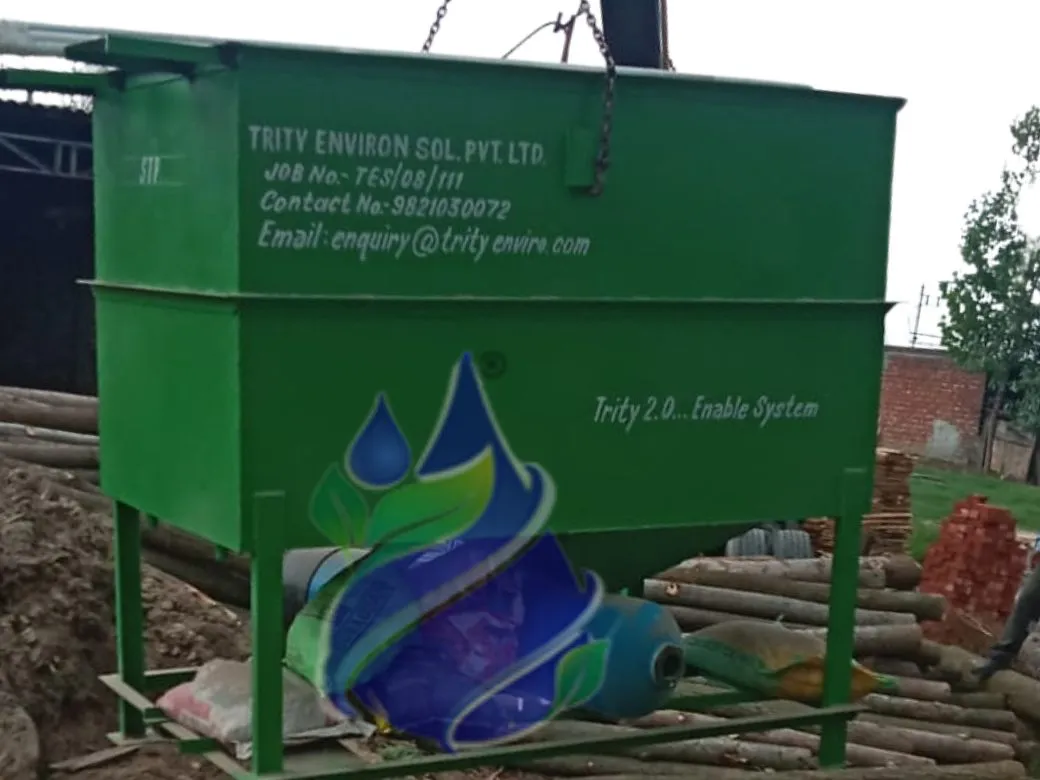


Discuss your requirements with our engineering team and get practical guidance for your project.