Introduction: Why "Cost per KLD" Is an Incomplete Answer
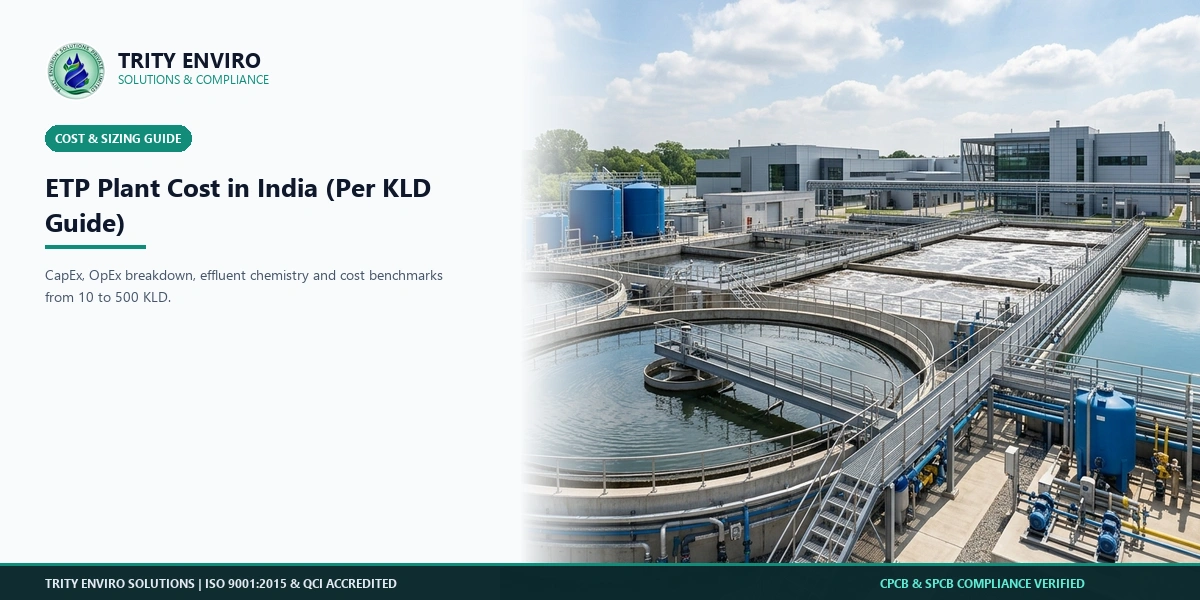
The first question most buyers ask is simple: what does an ETP cost per KLD? It is a fair question, and the internet is full of answers. Published guides for 2026 quote ranges that start in the tens of thousands of rupees per KLD for simple, small flows and climb to well over a lakh for difficult effluents or zero liquid discharge. One recent guide places industrial ETPs at roughly Rs 60,000 to Rs 2,00,000 per KLD, which is a spread of more than three to one.
That spread is not a sign that someone is lying. It reflects the nature of effluent. A 100 KLD plant treating wash water from a packaging unit and a 100 KLD plant treating dye house wastewater share a flow rate and almost nothing else. The first may need screening, equalization and a simple biological stage. The second may need segregation, coagulation, advanced oxidation, biological treatment, membranes and evaporation. Their costs differ for good reason.
So the useful answer is not a number but a method. This guide shows what determines the cost of an ETP plant in India, how the capital cost splits across civil, mechanical, electrical and process items, what the zero liquid discharge (ZLD) premium looks like, how to estimate running cost per cubic metre, how to compare quotes and how to reduce cost without cutting corners. It is written for owners, plant heads and procurement teams who need a defensible budget before they ask for proposals.
What Decides the Cost of an ETP
Effluent Characteristics and Treatment Targets
Cost starts with the water. The main characteristics are:
- Organic load: COD and BOD. High strength effluent needs larger biological tanks, more aeration and sometimes anaerobic treatment.
- Suspended solids, oil and grease: These call for screening, oil separators, flotation or settling.
- Dissolved salts (TDS) and colour: These cannot be removed by biology. They need membranes, oxidation or evaporation, and they add the most cost.
- Toxic or inhibitory compounds: Metals, solvents, cyanide, phenols and high ammonia require dedicated pre-treatment.
- pH and temperature extremes: These need neutralisation and cooling.
The treatment target matters as much. A plant that must only meet a sewer discharge limit costs less than one that must meet a river discharge limit, which costs less than one designed for reuse, which costs less than ZLD. Your consent order, or the condition you expect in it, sets the target. If it is unclear, ask your consultant to confirm it in writing before the design starts.
Flow, Variability, Site and Materials
Capital cost rises with flow, but not in a straight line. Larger plants cost less per KLD because tanks, pumps and control systems scale well. Variability raises cost: a plant that must handle a 3 to 1 swing between average and peak needs a larger equalization tank and stronger equipment. Site conditions add cost: poor soil, a high water table, limited space that forces deep or stacked tanks, and long pipe runs. Materials change the price too: RCC tanks, MS tanks with lining, FRP or stainless steel each have a different cost and life. Acidic or salty effluent may need corrosion resistant materials throughout.
Finally, automation and monitoring affect price. A manually operated plant costs less than one with a PLC, online instruments and remote access, but the second reduces operating risk and helps with compliance. If online monitoring is required, read our guide on OCEMS installation for industries.
Capital Cost: Where the Money Goes
Typical Split Across Civil, Equipment and Controls
For a biological ETP, the capital budget usually divides into these parts. The proportions vary with design, so treat them as a rough guide:
- Civil work: Tanks, foundations, pump rooms and drains. Often the largest single block, and strongly dependent on soil and material choice.
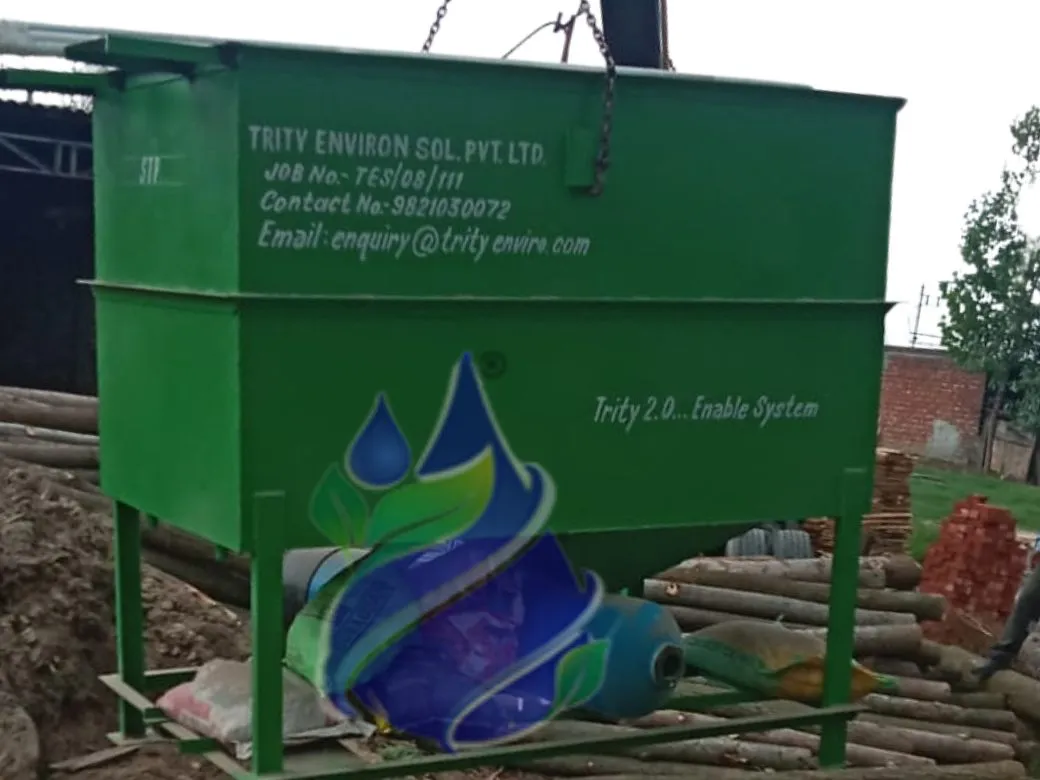
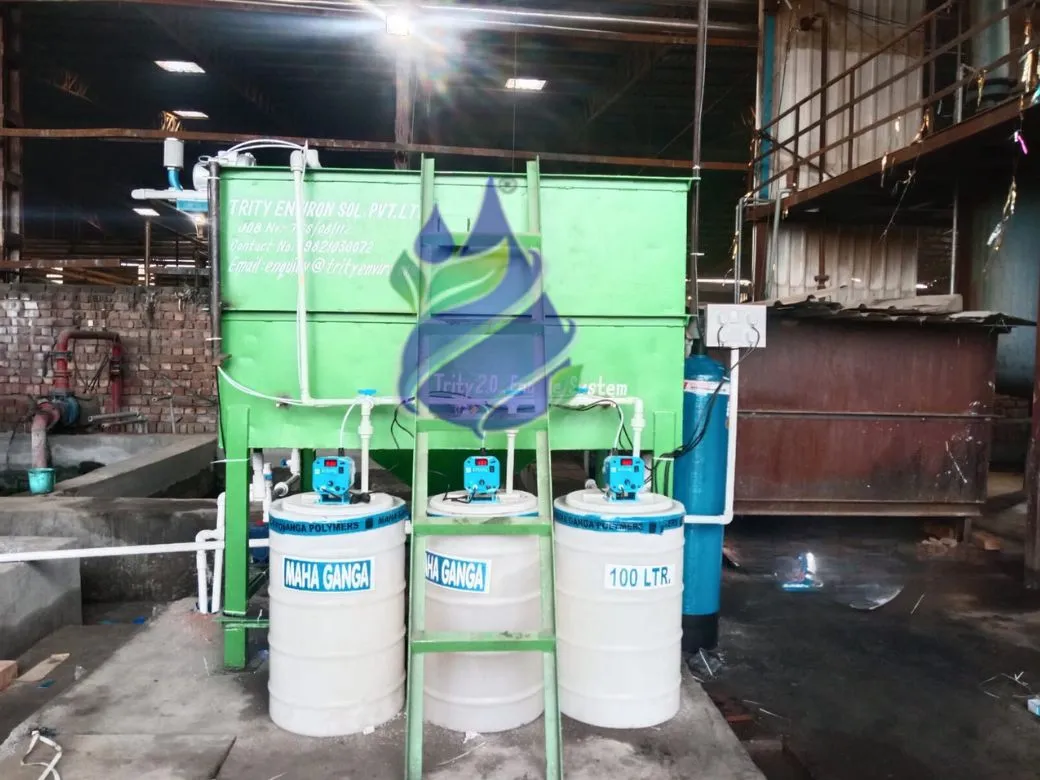
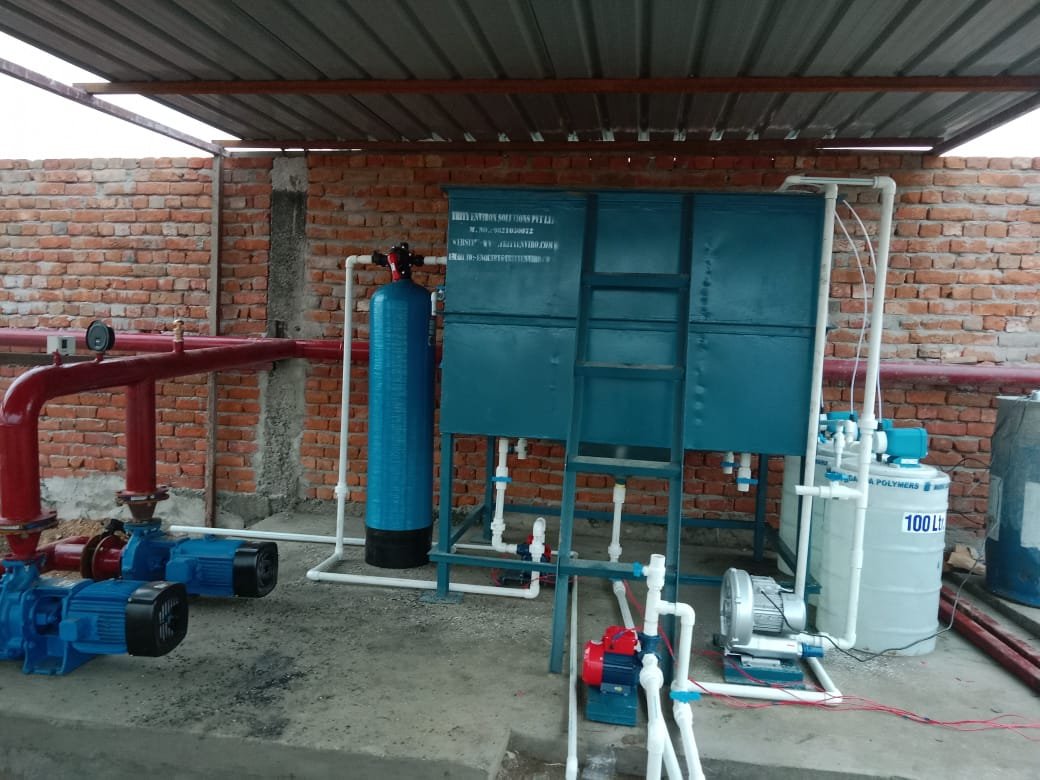
- Process equipment: Screens, oil separator, equalization mixers, dosing systems, aeration diffusers and blowers, clarifier mechanisms, filters and sludge dewatering. See our guides on blower selection, air diffusers and filter press sizing.
- Piping, valves and electricals: Pipework, cabling, motor control centre and lighting.
- Instrumentation and automation: Level, flow and pH instruments, PLC and, where needed, online analysers.
- Erection, commissioning and training.
- Statutory costs and contingency: Consent fees, testing and an allowance for changes.
Ask each bidder to split the quotation into these heads. It makes comparison honest and shows where one supplier is cheap because it has left something out.
The ZLD Premium
Zero liquid discharge adds a train of equipment after the conventional ETP: usually ultrafiltration, reverse osmosis, a multiple effect evaporator and an agitated thin film dryer or crystalliser. An academic review of textile and tannery ZLD in India notes that the evaporators and crystallisers needed to capture the last portion of the liquid are estimated to roughly double the cost of a system that stops at reverse osmosis. Operating cost rises too, because evaporation uses steam or power and the recovered salt must be disposed of.
ZLD is not a universal requirement. Guidelines introduced in 2015 targeted sectors such as textile, tannery, distillery and pulp and paper, and many consents for other sectors do not require it. If your consent does not require ZLD, compare it with partial reuse options before committing. Our zero liquid discharge systems page covers the technology, and a separate article in this series explains ZLD plant cost, technology and mandate.
Running Cost per Cubic Metre
Components of Operating Cost
Running cost is a bigger part of the real cost than most buyers expect, because it continues for years. Its main parts are:
- Power: Aeration is usually the largest part, and then pumps, mixers and scrapers.
- Chemicals: Coagulants, polymers, acid, alkali, nutrients and disinfectants.
- Manpower: Operators and supervision, plus laboratory testing.
- Sludge handling and disposal: Dewatering, transport and authorised disposal, which can be a large item for hazardous sludge.
- Maintenance and spares: Annual maintenance and replacement of wear parts such as diffusers, belts, bearings and filter cloths.
- Membrane and media replacement, where used.
An Illustrative Calculation
The figures below are assumptions for illustration. Replace them with quotes and your tariff.
For a 100 KLD biological ETP treating about 36,500 m3 a year:
- Power at about 1.0 kWh per m3 and Rs 8 per kWh: about Rs 8 per m3
- Chemicals at an assumed Rs 10 per m3
- Two operators at an assumed Rs 30,000 a month each: Rs 7.2 lakh a year, or about Rs 20 per m3
- Annual maintenance at 3 percent of an assumed Rs 1 crore capital cost: Rs 3 lakh a year, or about Rs 8 per m3
That gives about Rs 46 per m3, before sludge disposal, which could add a lot for hazardous sludge, and before any membrane replacement. Over ten years, the running cost of such a plant is a large fraction of its purchase cost. This is why a cheaper plant that uses more power and chemicals can cost more over its life.
Comparing Quotes and Reducing Cost
What a Comparable Proposal Contains
A proposal you can compare should state the design flow and the influent quality it assumes, the guaranteed outlet quality, the process flow, the equipment list with make and capacity, the tank dimensions and materials, the scope split between supplier and client for civil, electrical and utilities, the power and chemical consumption, the sludge quantity and handling, the commissioning period and performance test, the warranty and the service and spares offer. Reject proposals that do not give a design basis, since they were not designed for you.
Ways to Cut Cost Without Cutting Compliance
- Segregate strong streams and treat them separately, so the main plant is smaller. See our guide on industrial wastewater pre-treatment before the ETP.
- Reduce water use at source: less water in means a smaller plant and lower running cost.
- Phase the plant: build the core now and add tertiary or membrane stages later if needed, as long as the layout allows it.
- Use a good equalization tank: it shrinks every downstream unit. See our equalization tank design guide.
- Choose efficient aeration: fine bubble diffusers and DO control lower power bills.
- Check common effluent options if you are a small unit. Read our article on CETP vs individual ETP.
- Sign a maintenance contract so that performance stays at design level.
Our effluent treatment plant range covers sector-specific designs, and an annual maintenance contract protects the investment. For a budget quote, share your flow, a lab report and your consent target.
What to Put in Your Request for Quotation
A quote is only as good as the brief. Send every supplier the same package: average and peak flow, a recent laboratory report of the effluent, the discharge or reuse standard from your consent, available land and its shape, power availability, preferred materials, the level of automation you want, whether you plan ZLD or reuse, and the required completion date. Ask for an itemised bill of quantities, the design basis, guaranteed outlet quality, power and chemical use per cubic metre, warranty and maintenance terms. Itemised quotes let you compare like with like and spot what is missing.
Industry Comparison / Operational Parameter Table
| Parameter / Stage |
Target Optimal Range |
Failure Impact / Risk |
Corrective Engineering Action |
| Design basis in the quotation |
Stated flow, influent quality and guaranteed outlet quality |
Plant under-designed, failed samples, cost overruns |
Insist on design basis, sample effluent before ordering |
| Cost split by head |
Civil, equipment, piping, electrical, controls and commissioning shown separately |
Hidden exclusions, unfair comparison |
Ask for itemised quotes with scope matrix |
| Running cost |
Power, chemicals, manpower, sludge and maintenance estimated per m3 |
Plant is cheap to buy but costly to run |
Compare five to ten year cost, choose efficient equipment |
| ZLD premium |
Roughly double the cost of a system that stops at RO, per one academic estimate |
Budget overrun if ZLD is added late |
Confirm the consent target early, plan modular ZLD |
Why Choose Trity Enviro
Trity Environ Solutions is an ISO 9001:2015 certified and QCI-approved effluent treatment plant manufacturer and supplier in India, delivering robust, high-efficiency systems engineered for CPCB and SPCB regulatory compliance.
Every installation is supported by pan-India Annual Maintenance Contract and Operation and Maintenance services.
Free Engineering Consultation
ETP Plant Cost in India (2026): Cost per KLD by Industry, ZLD Premium and Running Cost
Looking to upgrade, size, or install a high-performance system? Speak directly with our senior environmental engineers today for expert sizing calculations, CPCB/SPCB compliance support, and turnkey execution. Call +91-9821030072 or email enquiry@trityenviro.com.
Request a Free Site Assessment