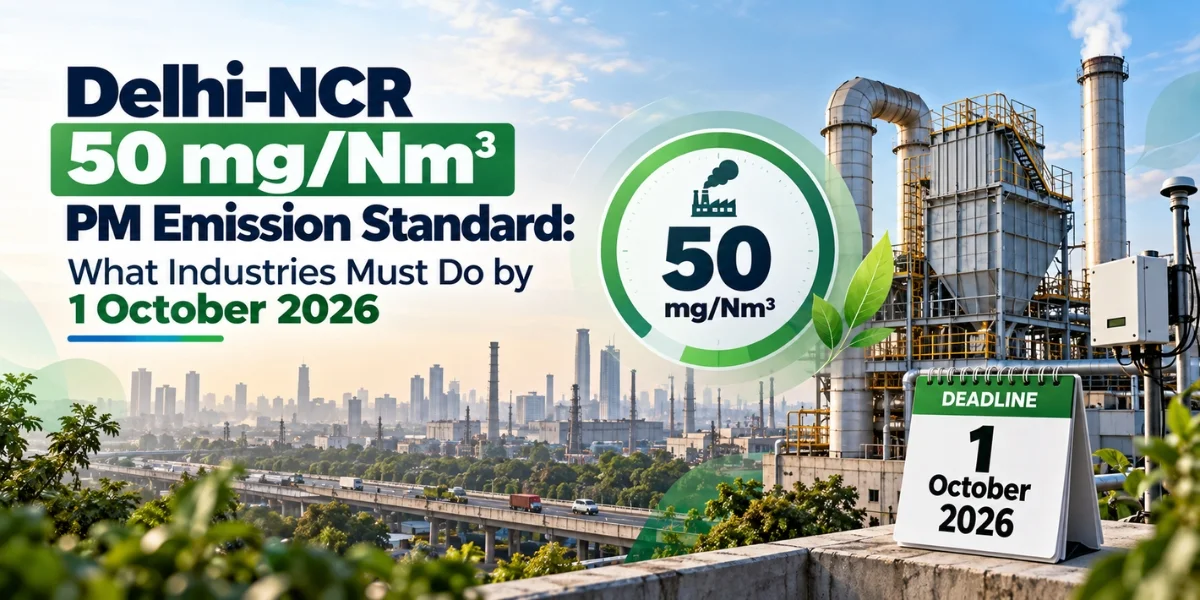
Delhi-NCR 50 mg/Nm³ PM Emission Standard: What Industries Must Do by 1 October 2026
CAQM Direction 98 sets a 50 mg/Nm3 particulate limit for covered Delhi NCR industries from 1 October 2026. See who is covered and how to close the gap.

 ISO 9001:2015 & QCI Approved
Our blog covers practical engineering topics for anyone planning or operating a Sewage Treatment Plant or Effluent Treatment Plant in India. You will find capacity calculation guides, technology comparisons like MBBR versus SBR versus MBR, industry specific treatment guides for pharma, textile and dairy effluent, and state wise pollution control board compliance requirements. These articles are written by our engineering team based on real project experience, not generic content, so you get information you can actually use when planning a plant or preparing for compliance.
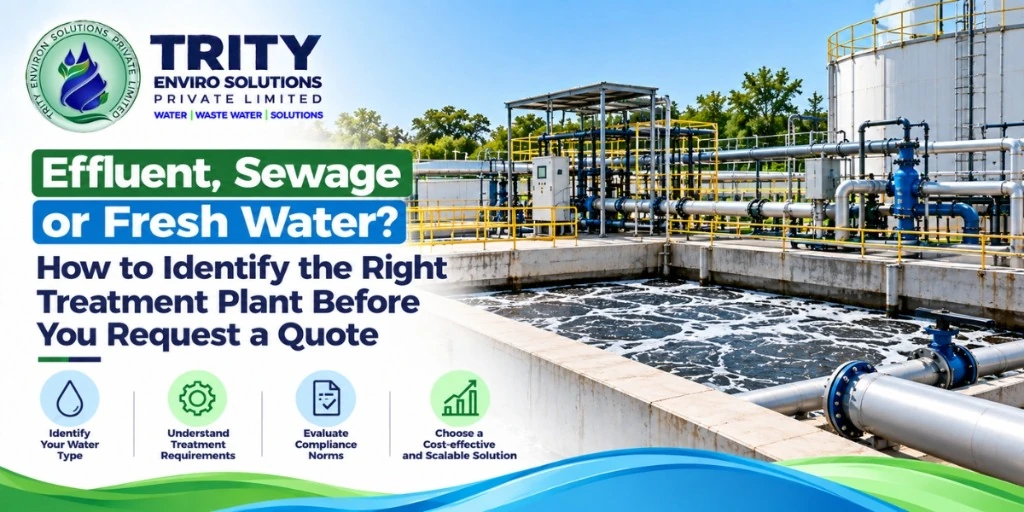
Not sure if you need an ETP, STP or water treatment plant? Learn how to identify your water type, what data to share and how to compare quotes before ordering.
Read Full Article
CAQM Direction 98 sets a 50 mg/Nm3 particulate limit for covered Delhi NCR industries from 1 October 2026. See who is covered and how to close the gap.
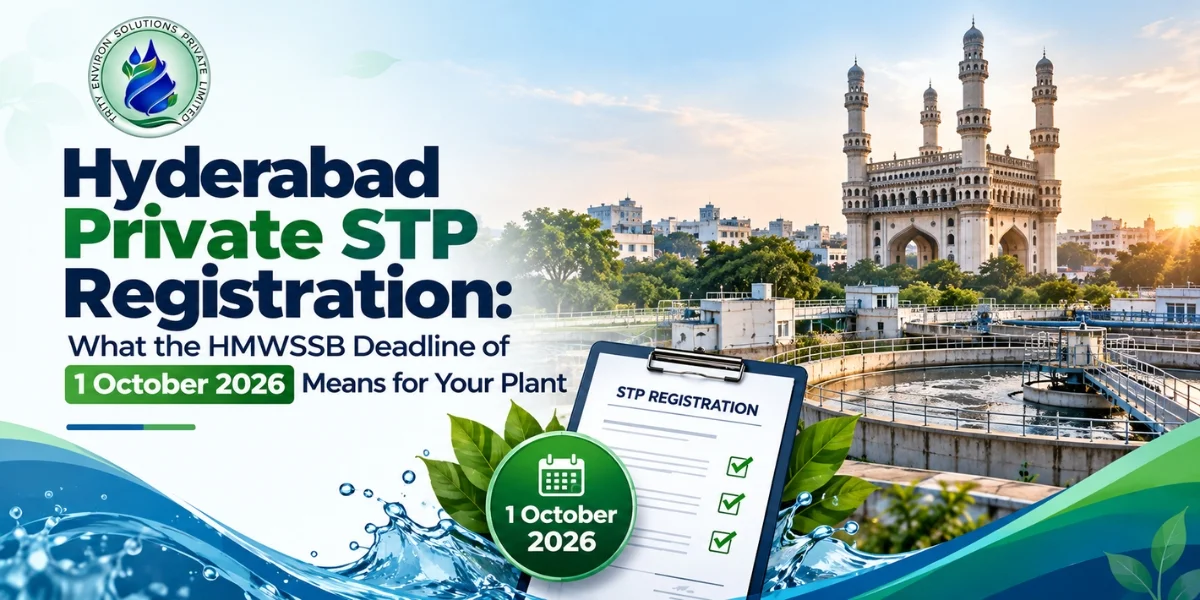
Private STP operators in Hyderabad must register with HMWSSB by 1 October 2026. See the documents needed, EPTRI certification, quality data and upgrade options.
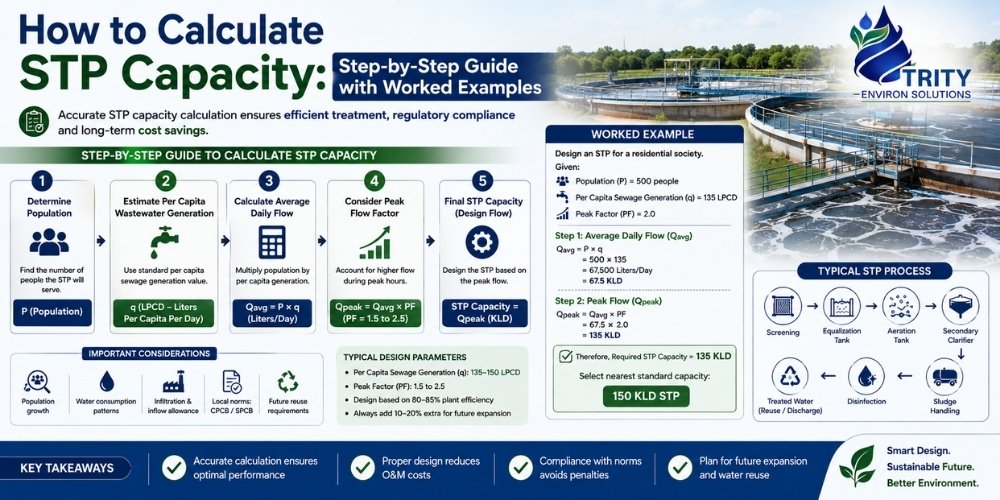
Calculate STP capacity correctly with worked examples for residential, hotel, hospital, and industrial projects. CPHEEO-based formulas, peak factors, and tank sizing explained.
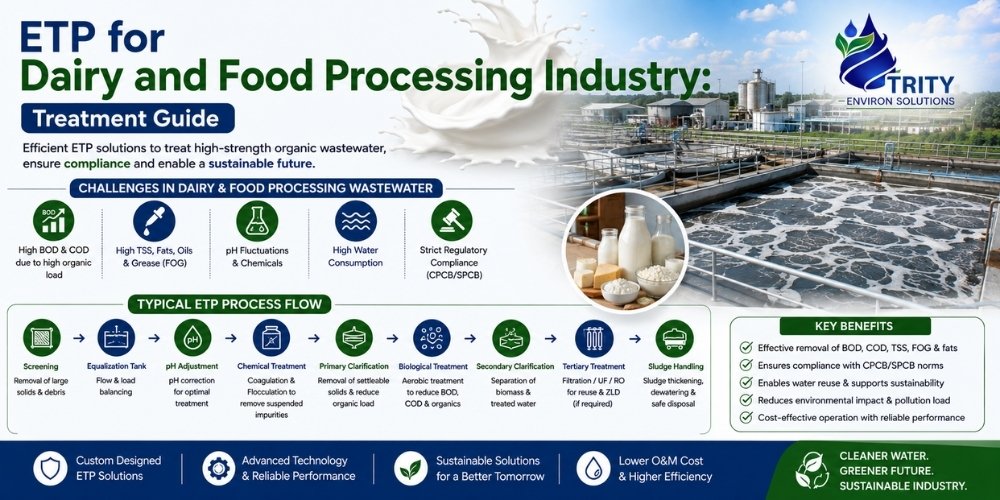
Dairy and food processing effluent carries high BOD, COD, and FOG that standard ETPs struggle with. See the treatment stages and technology choices that actually work.
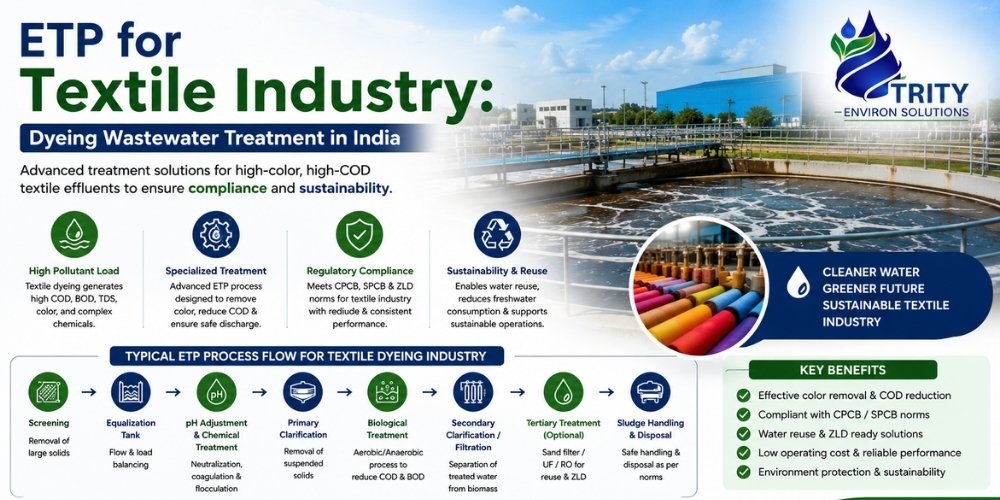
Textile effluent brings colour, high TDS, and variable pH that generic ETPs can't handle. See the treatment stages, technology choices, and compliance norms that actually work.
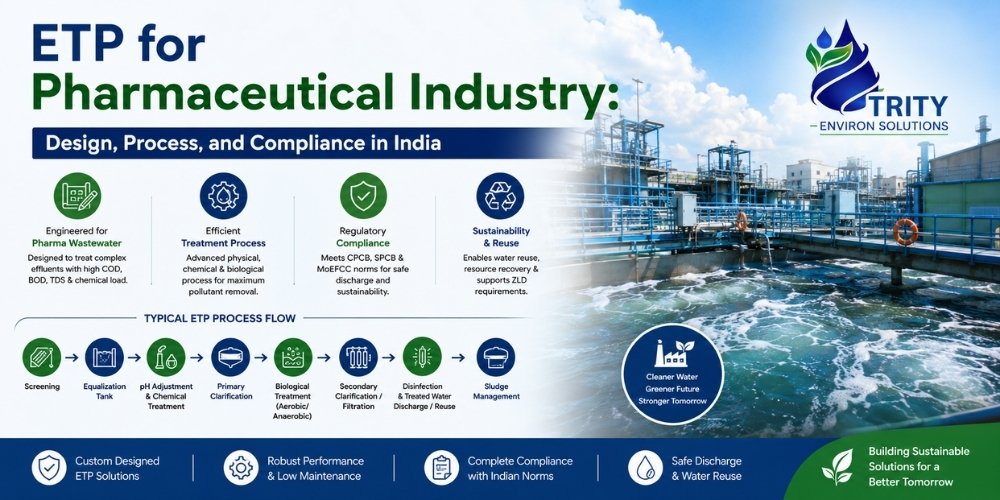
Pharmaceutical wastewater needs specialised ETP design, not a standard template. See the treatment stages, technology choices, and CPCB compliance requirements that matter.
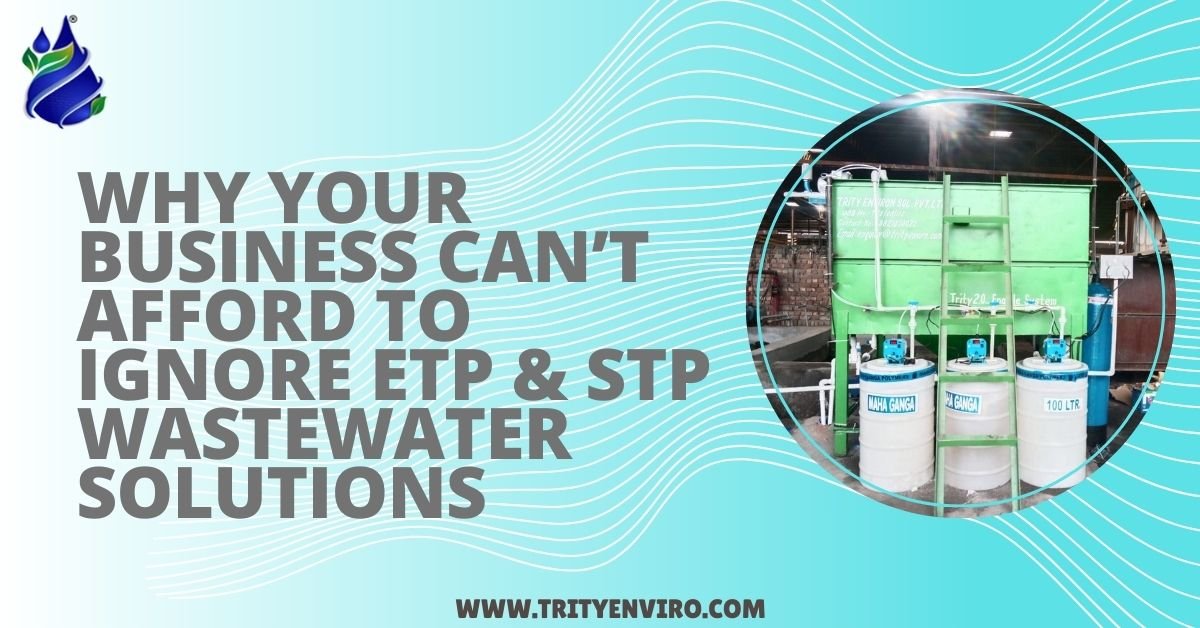
Learn why businesses must adopt ETP & STP wastewater solutions to ensure regulatory compliance, reduce costs, and protect the environment. Stay ahead of risks and grow sustainably.

AOPs revolutionize wastewater treatment by removing toxic pollutants efficiently, ensuring cleaner water, and supporting sustainable environmental practices.
Discover how wastewater treatment plants tackle pharmaceutical pollutants using advanced methods like ozonation, activated carbon, and membrane filtration to ensure cleaner water.




Discuss your requirements with our engineering team and get practical guidance for your project.