
Can Treated Sewage Water from a Sewage Treatment Plant Be Drinkable?
Can treated sewage water be drinkable? Yes, real cities already do this. See how Singapore's NEWater and California's DPR rules actually work.

 ISO 9001:2015 & QCI Approved
Every RO supplier calls their plant high-performance. The useful question is which numbers back that claim: rejection, recovery, energy use, membrane life and uptime.

Words like "advanced" and "high-performance" cost nothing to print on a brochure. What separates a plant that delivers for ten years from one that disappoints in the second is a short list of measurable benchmarks.
Knowing those benchmarks lets you compare proposals on facts. It also gives you specific questions to put to any manufacturer, which tends to reveal quickly who has done the engineering and who is selling a catalogue.
The sections below cover the five numbers that matter, how to match a system to your use, and what a credible proposal contains.
Rejection tells you how much of the dissolved contamination the membranes actually remove:
Recovery is the share of feed water that becomes product water:
Be cautious of any quote that promises very high recovery without a feed water analysis behind it.
Pumping is the biggest running cost, so energy design matters:
Membrane replacement is a major long-term cost, and life depends mostly on what happens before the membrane:
A plant that is down is not performing, whatever its rejection figure says:
The right configuration depends on what the water is for:
A credible RO proposal is built on data and states its assumptions. Look for:
Our guide on how to choose a commercial RO plant manufacturer in Delhi NCR walks through the comparison process in more detail.
A high-performance plant should pay for itself, and the economics are straightforward to test:
Payback is also why a slightly higher upfront price for better pretreatment and automation often wins over the cheapest quote within a couple of years.
| Application | Priority Benchmark | Typical Configuration |
|---|---|---|
| Hotels and hospitals | Consistency and uptime | Commercial RO with storage and alarms |
| Manufacturing process water | Rejection and continuous duty | Industrial RO with PLC and SCADA |
| Boiler feed and pharma | Ultra-pure output | RO plus demineralised polishing |
| Variable-quality feed | Fouling resistance | Ultrafiltration plus RO |
Trity Environ Solutions is a trusted commercial RO plant manufacturer and industrial RO plant manufacturer in India, and every proposal we issue is built on your feed water analysis with the design recovery, expected rejection and pretreatment train stated clearly. As an experienced RO manufacturer and supplier, we engineer the complete system, including ultrafiltration, softening, demineralised polishing and automation where your application needs it.
Each plant is backed by pan-India Annual Maintenance Contract support with written terms, so the performance in the proposal is the performance you keep. We are ISO 9001:2015 certified, QCI approved, and deliver CPCB-compliant engineering nationwide.
Can treated sewage water be drinkable? Yes, real cities already do this. See how Singapore's NEWater and California's DPR rules actually work.
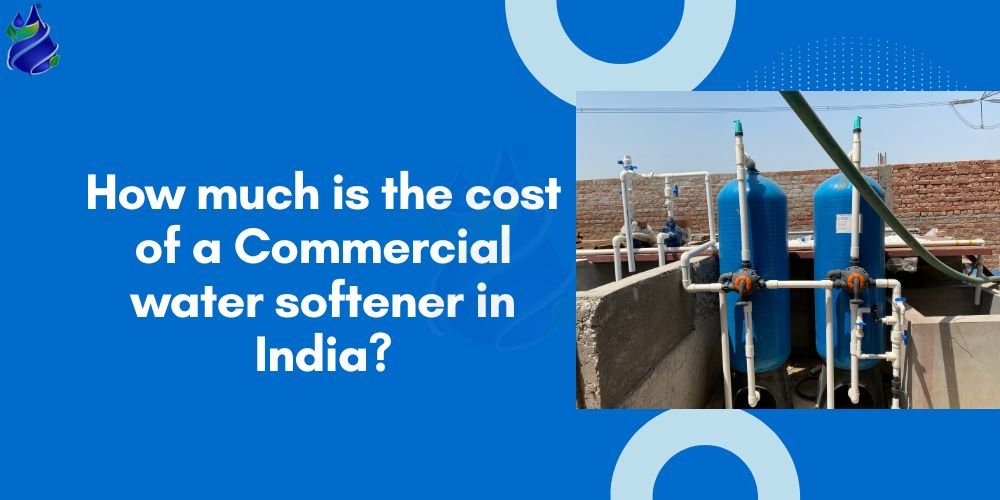
Real commercial water softener prices in India by capacity, salt-based vs salt-free systems, running cost, and the ROI case for equipment protection.

What Total Suspended Solids (TSS) actually measures, how it's tested, why it matters for aquatic life, and standard reference levels.











Discuss your requirements with our engineering team and get practical guidance for your project.

