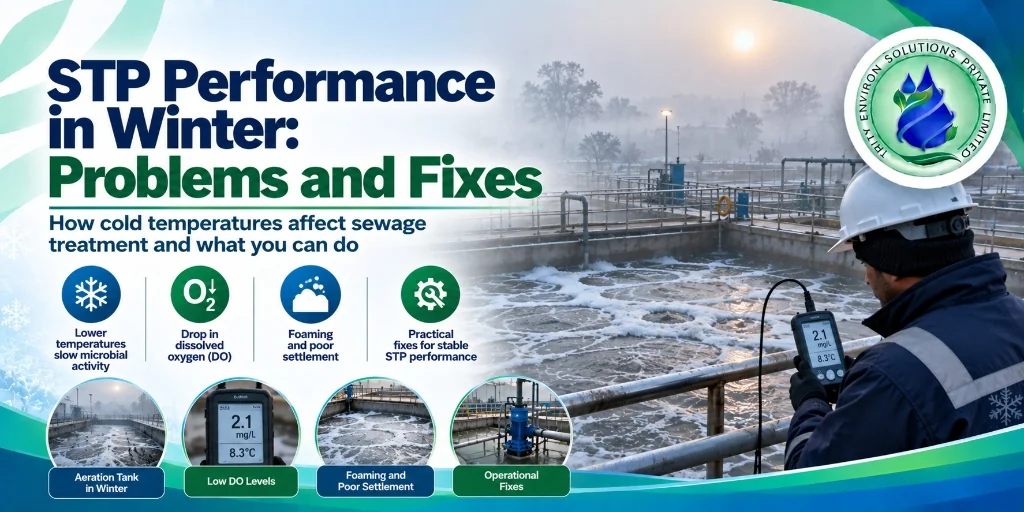
STP Performance in Winter: Problems and Fixes
Trity Enviro explains why STPs struggle in winter: slow nitrification, high ammonia, poor settling and foam. Practical fixes to keep treated water compliant.

 ISO 9001:2015 & QCI Approved
Our blog covers practical engineering topics for anyone planning or operating a Sewage Treatment Plant or Effluent Treatment Plant in India. You will find capacity calculation guides, technology comparisons like MBBR versus SBR versus MBR, industry specific treatment guides for pharma, textile and dairy effluent, and state wise pollution control board compliance requirements. These articles are written by our engineering team based on real project experience, not generic content, so you get information you can actually use when planning a plant or preparing for compliance.
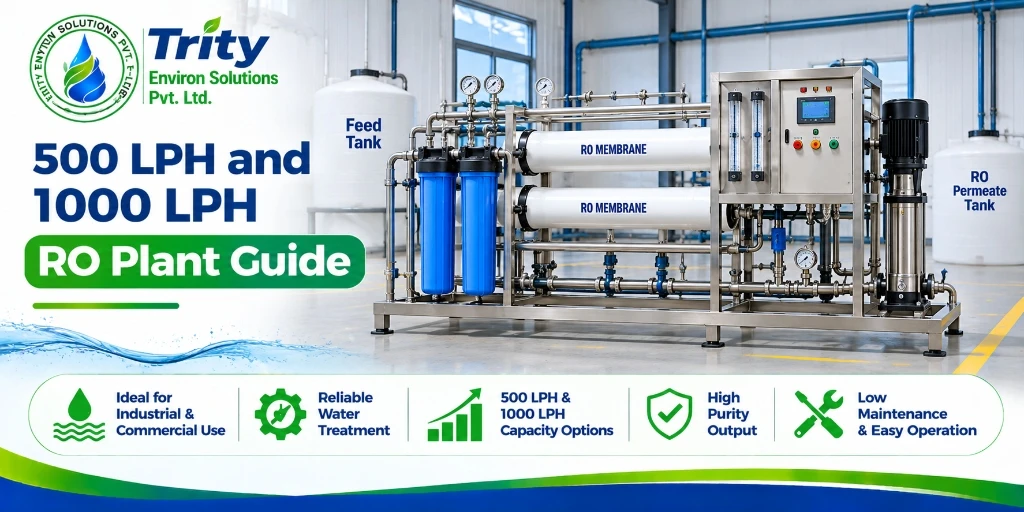
Trity Enviro explains 500 LPH and 1000 LPH RO plants: membranes, feed flow, recovery, power, pre-treatment and who each size suits, with a sizing example.
Read Full Article
Trity Enviro explains why STPs struggle in winter: slow nitrification, high ammonia, poor settling and foam. Practical fixes to keep treated water compliant.
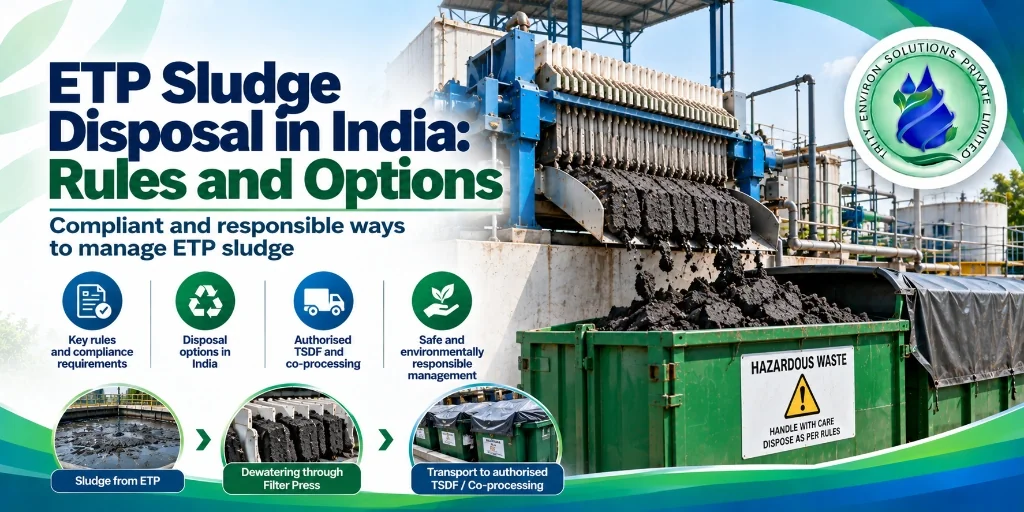
Trity Enviro explains ETP sludge disposal in India: hazardous or not, authorisation, storage, TSDF, co-processing, dewatering and how to cut disposal cost.
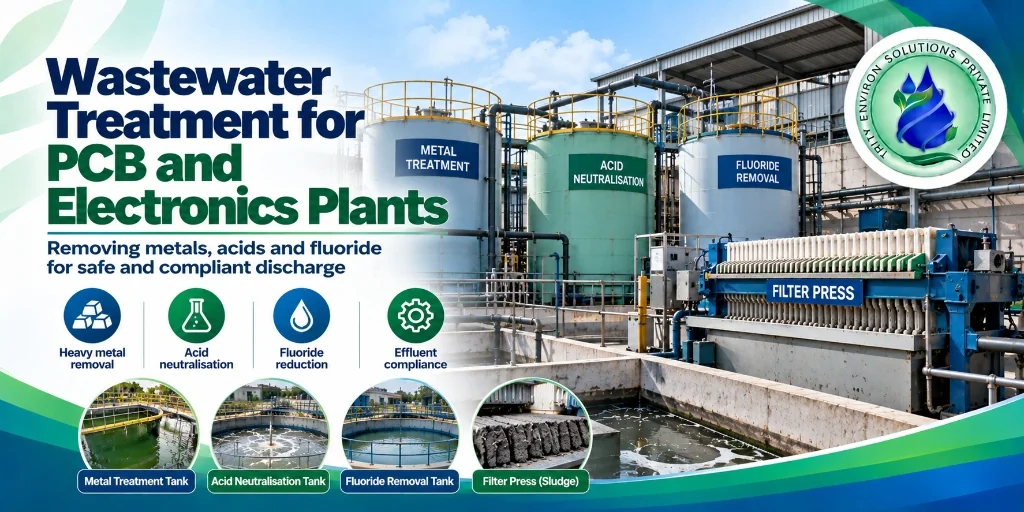
Trity Enviro explains PCB and electronics wastewater treatment: metals, chelated copper, fluoride, acid streams, reuse and ZLD for India's growing plants.
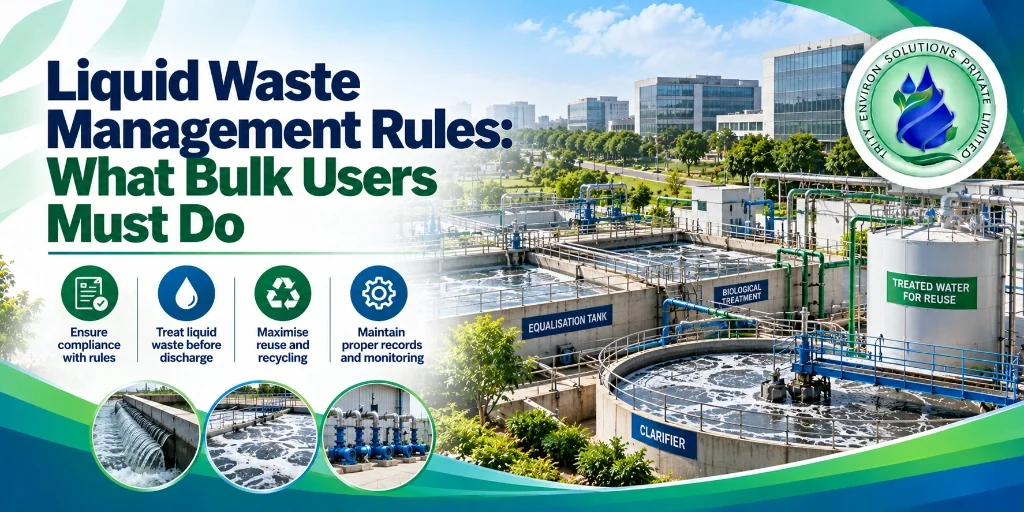
Trity Enviro explains the draft Liquid Waste Management Rules: bulk user limits, EUR certificates, reuse targets and how to prepare your wastewater system.
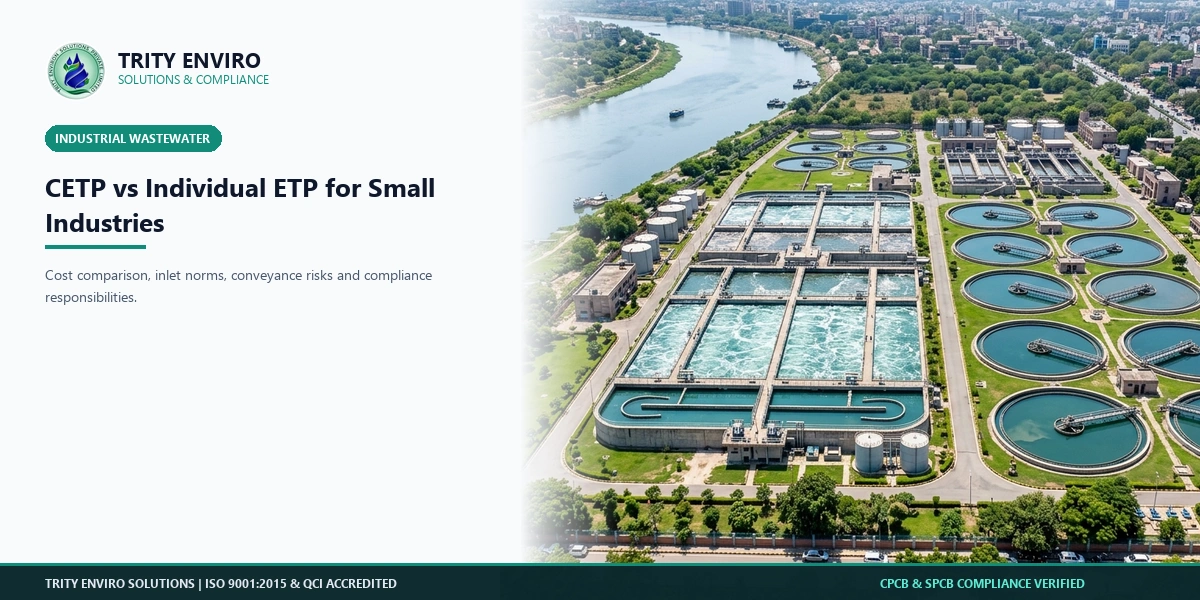
CETP membership or your own ETP? Compare cost, control, inlet norms, compliance risk and ZLD for small industries, with a decision checklist.
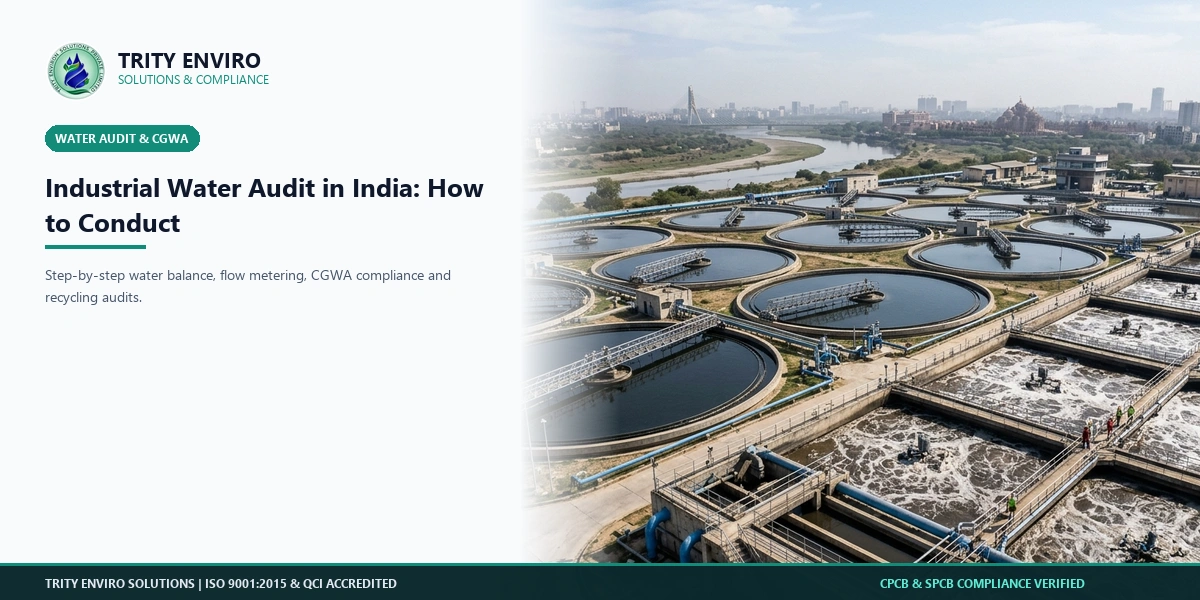
How to conduct an industrial water audit in India: CGWA rules, water balance, leak survey, reuse options, action plan and cost, with a worked balance example.

Explore how nanotechnology boosts ETP membranes in wastewater treatment, enhancing efficiency while addressing environmental risks and sustainability.

Commercial RO (Reverse Osmosis) plants have become increasingly popular in recent years as a reliable solution to provide clean drinking water.
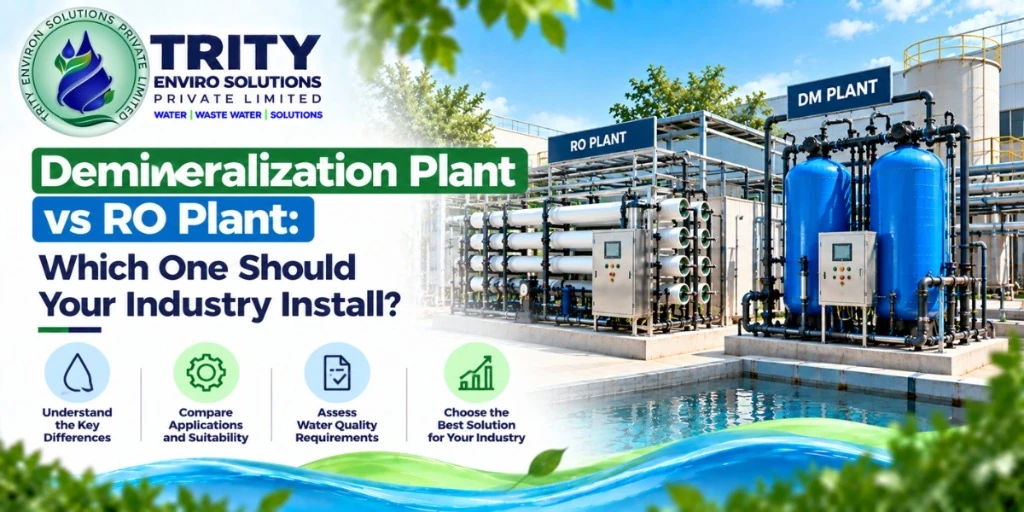
DM plant vs RO plant: compare how they work, product water quality, running cost, effluent and best use cases to decide which one your industry needs.











Discuss your requirements with our engineering team and get practical guidance for your project.

