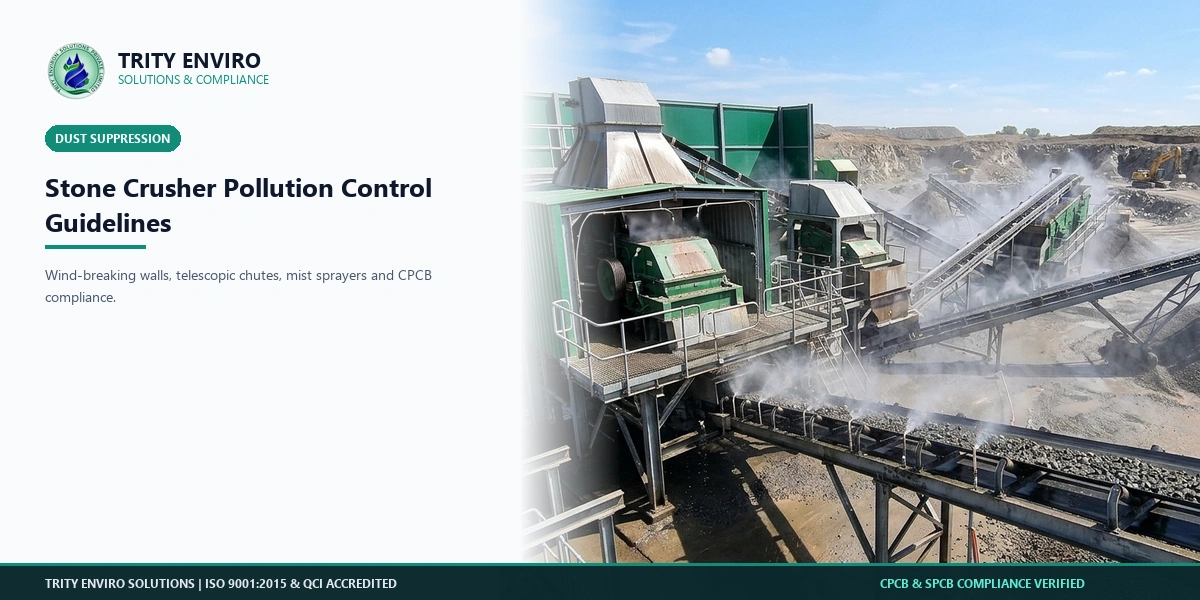
Stone Crusher Pollution Control: CPCB 2023 Guidelines, CAQM Conditions and Dust Collection Systems
A practical guide to stone crusher dust control: CPCB 2023 guidelines, enclosures, water mist, dust extraction, green belt and what inspectors check.

 ISO 9001:2015 & QCI Approved
Ammonia rising, sludge settling slowly, foam returning? Cold weather is often the reason. Here is what to check and how to adjust.

Most STP problems are blamed on summer: heat, smell, blower failures. Winter looks easier. Odour is lower, power use may fall and the plant seems calm. Then the monthly lab report arrives, and ammonia has doubled, BOD is creeping up and the clarifier looks cloudy even though nothing was changed.
Nothing changed in the plant, but something changed in the water. The sewage entering the plant is colder, and so is the mixed liquor in the aeration tank. In northern India, sewage and tank temperatures in December and January can fall well below the 25 to 30 °C range that most biological plants are designed for. The bacteria that remove BOD, and especially the slower growing bacteria that convert ammonia to nitrate, work more slowly in the cold.
The effect is gradual, which is why it is often missed. By the time the outlet fails a sample, the sludge has aged, the ammonia has built up and recovering takes weeks. This guide explains why cold weather affects each part of an STP, which readings give early warning, what adjustments work for extended aeration, MBBR and SBR plants and when winter problems point to a design limit. It is written for facility managers, STP operators and consultants. At Trity Enviro, we see the same pattern every winter in plants across northern and central India, and the fixes below come from that experience.
Bacterial reaction rates fall as temperature falls. A common rule of thumb in wastewater design is that rates drop by roughly a third to a half for every 10 °C decrease, and the effect is stronger for nitrifying bacteria than for the bacteria that consume BOD. Nitrification, the conversion of ammonia to nitrate, is a two stage process carried out by slow growing organisms. In cold water they grow even more slowly, so they can be washed out of the system if sludge is wasted too aggressively.
The practical result is that BOD removal usually continues reasonably well in winter, while ammonia removal is the first to suffer. If your consent or the NGT norms for STPs include limits on ammonia or total nitrogen, winter is when you are most likely to see a violation.
Cold water holds more dissolved oxygen, so saturation is higher and oxygen transfer can look better on paper. But bacteria use oxygen more slowly, and the system may still suffer because the biology is slower, not because oxygen is scarce.
Cold water is also more viscous, which slows the settling of sludge flocs. A clarifier designed for summer conditions may carry more solids over the weir in winter, especially at high flows. Sludge may look more dispersed and less compact, and the sludge volume index can rise. Add short term effects of winter fog and low sunlight, and plants with uncovered tanks lose heat faster at night.
Add temperature to the daily logbook, measured in the aeration tank at the same time each day. Then watch these trends:
Foam often returns in winter, because slow growing filamentous organisms such as Nocardia thrive in cooler conditions and old sludge. A thick brown scum on the aeration tank or the clarifier is the sign. Remove it physically, reduce grease inflow and adjust sludge wasting rather than adding antifoam alone.
In the clarifier, watch for a rising sludge blanket, floating solids and pin floc. These show that settling is deteriorating. Check flow distribution, weirs and sludge return rates early, before the outlet turns turbid.
Extended aeration plants rely on a long sludge age, which is helpful in winter. The standard response is to protect that age:
MBBR plants hold bacteria on plastic media as biofilm, which gives them an advantage in winter. The biofilm retains slow growing nitrifiers regardless of sludge wasting, so MBBR plants usually handle cold better than suspended growth plants. Keep media moving, check aeration, make sure the media fill is adequate and inspect for media loss. Our MBBR sewage treatment plant and MBBR media pages describe the process, and our comparison of MBBR vs SBR vs MBR shows how each process handles variation.
SBR plants can be adjusted through cycle timing. Lengthen aeration time, extend the settling period slightly to allow for slower settling and adjust decant rates so that solids are not drawn off. Review the cycle programme in the control panel at the start of winter, not after a failure.
Across all types, make one change at a time, record it and wait several days to see the effect. Biology responds slowly.
If your plant fails ammonia limits every winter despite good operation, it may be a design limit. Typical upgrade routes are:
Cost depends on the size of the plant, the nitrogen target and the civil work needed. A media retrofit is usually the least disruptive, while new tanks are the most expensive. Get an audit before spending: a week of temperature, ammonia, alkalinity and MLSS readings shows whether the cause is operating or design. Also confirm that the plant has not outgrown its capacity, using our guide on how to calculate STP capacity.
A good operation and maintenance service or annual maintenance contract includes a pre-winter inspection, adjusted operating settings and more frequent lab tests in the cold months. Our guide to the STP operation and maintenance checklist shows what to add to the winter routine.
Do these checks in October or early November, before temperatures fall. Record the aeration tank temperature, ammonia, alkalinity, MLSS and SVI as your baseline. Service the blowers, replace worn belts and filters and clean or replace clogged diffusers, so that oxygen supply is dependable. Test pH and DO probes against standards. Clean the clarifier, weirs and scum removal, and check that return sludge pumps run at the set rate. Review the sludge wasting schedule and plan to reduce it in steps as the water cools. Stock sodium bicarbonate or soda ash in case alkalinity needs support. Cover or protect small exposed tanks where practical. Brief the operator on the winter readings and the actions that follow each. Ask your service provider for a pre-winter audit: Trity Enviro engineers carry out such visits as part of our AMC and O&M services, with adjusted settings and a written action list for the cold months.
| Parameter / Stage | Target Optimal Range | Failure Impact / Risk | Corrective Engineering Action |
|---|---|---|---|
| Aeration tank temperature | Logged daily, with action when it falls below the plant's design basis | Slow nitrification, high ammonia | Raise sludge age, protect MLSS, cover tanks, consider MBBR media |
| Outlet ammonia | Within consent or NGT limit, tested weekly in winter | Failed samples, notices | Adjust sludge age and DO, add alkalinity, upgrade if needed |
| MLSS and sludge age | MLSS held at or slightly above normal, sludge age about 20 to 30 days in cold months | Loss of nitrifiers, bulking, foam | Reduce wasting in steps, monitor SV30 and SVI |
| Alkalinity and pH | pH about 7 or higher, with enough alkalinity for nitrification | Nitrification stalls, corrosion | Dose bicarbonate or soda ash under control, test inlet alkalinity |
Trity Environ Solutions is an ISO 9001:2015 certified and QCI-approved sewage treatment plant manufacturer and supplier in India, delivering robust, high-efficiency systems engineered for CPCB and SPCB regulatory compliance.
Every installation is supported by pan-India Annual Maintenance Contract and Operation and Maintenance services.
A practical guide to stone crusher dust control: CPCB 2023 guidelines, enclosures, water mist, dust extraction, green belt and what inspectors check.
How to choose a sewage treatment plant supplier in India under 2026 CPCB norms: tiered discharge standards, CTE/CTO, and what separates good suppliers.

Why the Yamuna is so polluted: real CPCB data on sewage, industrial discharge, toxic froth, and why Delhi's 22 km stretch causes 80% of it.

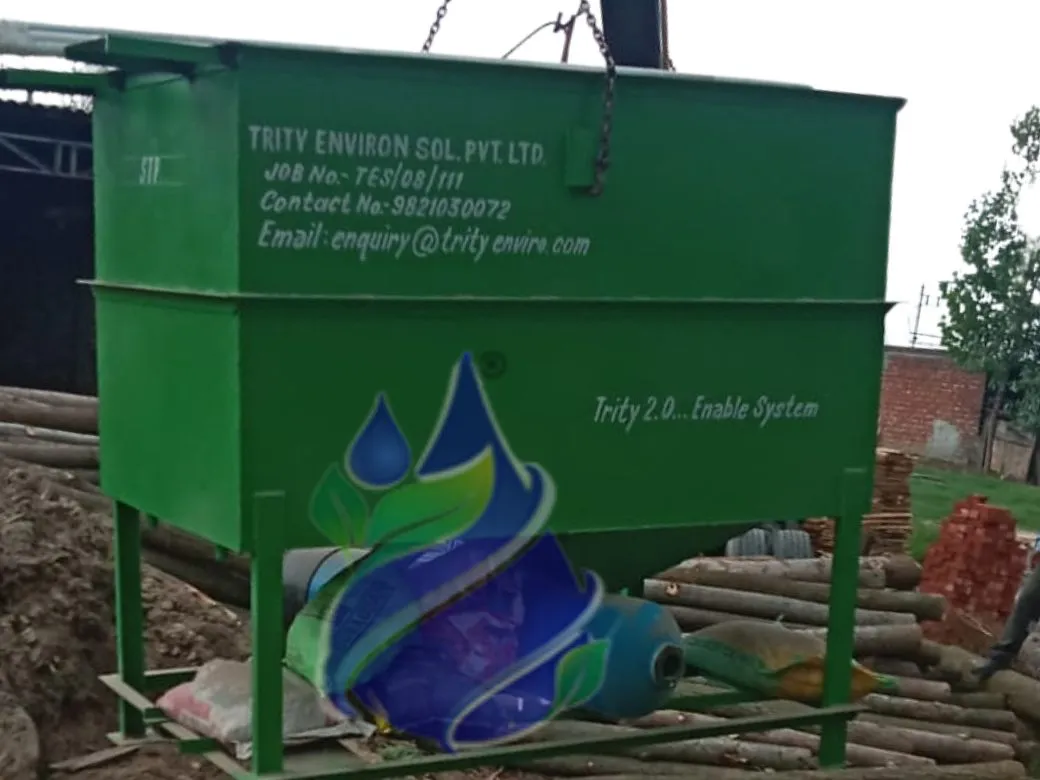
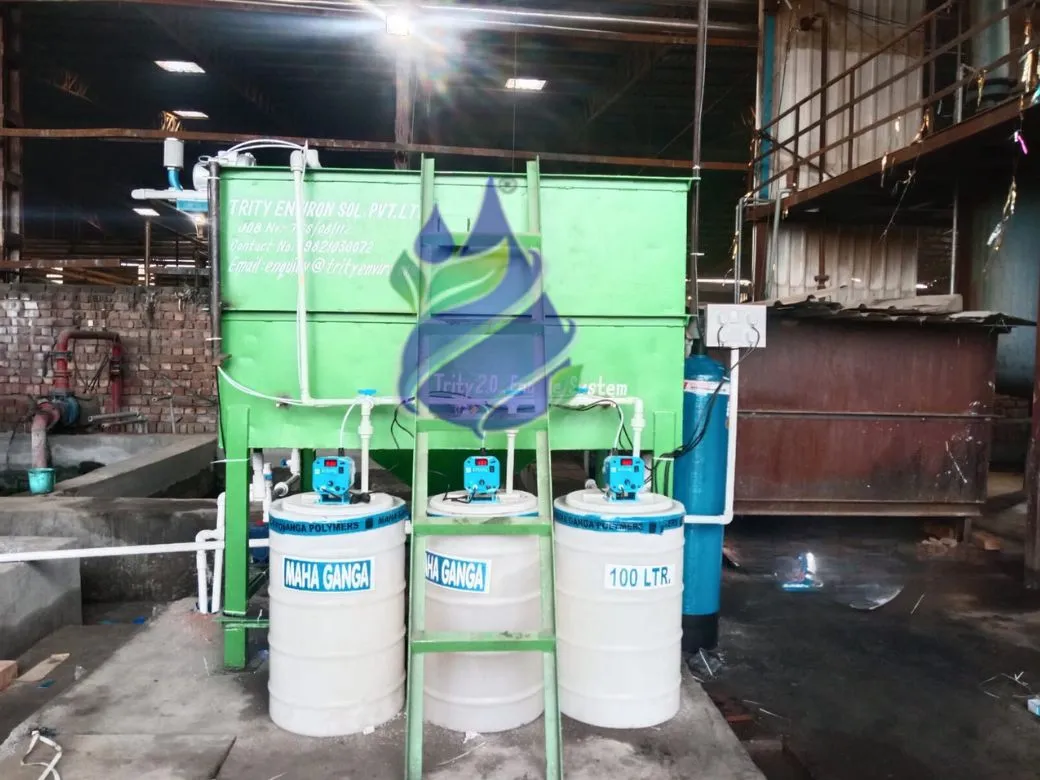




Discuss your requirements with our engineering team and get practical guidance for your project.