UPPCB STP Guidelines: What You Need to Know in Uttar Pradesh
A guide to UPPCB's sewage treatment plant requirements in Uttar Pradesh, covering discharge norms, mandatory installation rules, and compliance steps.

 ISO 9001:2015 & QCI Approved
The cheapest quotation often leaves out pre-treatment, spares or service. Here is how to see the whole cost before you buy.
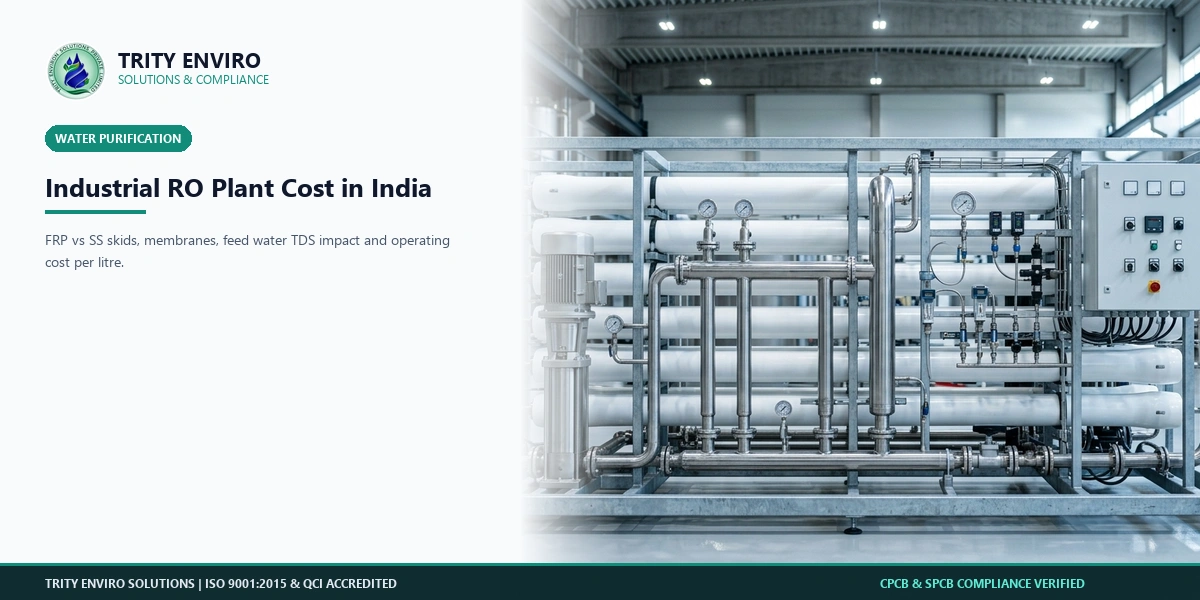
Search for the price of a 500 LPH RO plant in India and you will find an astonishing spread. Published 2026 price guides quote anything from under Rs 1 lakh to around Rs 7 lakh for the same nominal capacity. A 1000 LPH plant appears at Rs 90,000 on one page and at Rs 4 lakh on another. The difference is not a market anomaly. It reflects what is inside the box: pre-treatment, membrane make, pump and vessel materials, instruments, automation, storage and installation. Two plants with the same sticker capacity can be entirely different machines.
There is a second problem. Even a fair purchase price tells only part of the story. An RO plant consumes electricity every hour, needs antiscalant and cleaning chemicals, wears out cartridges and membranes, produces reject water that has a value and a disposal cost and needs people to look after it. Over five to ten years, these costs can equal or exceed the purchase price.
This guide sets out how to think about the industrial RO plant cost in India. It explains what drives the price, how the running cost builds up, how to calculate cost per cubic metre of permeate with an example, how water price and recovery affect the economics, how to compare quotes and how to reduce cost sensibly. It is written for plant heads, utility engineers and procurement teams. For how to choose the type and size of plant, see our companion articles on commercial RO plant selection and on industrial RO vs commercial RO.
Capacity is the obvious driver, but the type of feed water often matters more. Brackish water with a few thousand mg/L of TDS needs more pressure and more membrane area than a municipal supply of a few hundred. High hardness, silica, iron or organic content calls for stronger pre-treatment. Seawater needs a different class of plant altogether, with high pressure pumps and corrosion resistant materials. The recovery you target also shapes the design: higher recovery uses less feed water but needs more careful scale control and often a second stage.
Temperature and duty matter as well. A plant that runs 24 hours a day needs heavier pumps and instrumentation than one that runs for six hours with storage. Our article on industrial RO vs commercial RO explains these differences.
The main price components are:
Cheap quotations usually save money in two places: pre-treatment and instrumentation. Both look like savings on day one and turn into costs within a year.
Running cost has seven parts:
1. Electricity: The high pressure pump is the main user. For brackish water RO, typical specific energy is roughly 0.5 to 2 kWh per cubic metre of permeate, rising with TDS and pressure. Published guides for small commercial plants quote a few kW of load for a 500 LPH unit.
2. Feed water: Every cubic metre of permeate needs more than one cubic metre of feed, because part leaves as reject.
3. Antiscalant and cleaning chemicals.
4. Cartridge filters and media: Cartridges typically change every few months, and media such as carbon and softener resin last longer.
5. Membrane replacement: Published guides for small plants quote a life of two to three years depending on feed and care, and a well run industrial plant may do better with good pre-treatment.
6. Manpower and laboratory testing.
7. Maintenance contract and spares: Guides for small plants quote annual maintenance contracts in the range of tens of thousands of rupees a year.
The numbers below are assumptions for illustration. Replace them with your quotes and tariff.
Consider a plant delivering 10 m3/h of permeate for 20 hours a day, for 330 days a year, which is 66,000 m3 a year.
Running cost excluding feed water is about Rs 25 per m3. Add the feed water and reject disposal cost, and the picture changes, as the next section shows.
At 75 percent recovery, producing 1 m3 of permeate needs 1 ÷ 0.75 = 1.33 m3 of feed. If your water costs Rs 60 per m3, including supply, pumping and treatment, the feed alone costs about Rs 80 per m3 of permeate, more than three times the other running costs in the example. If recovery is only 50 percent, the feed cost rises to Rs 120 per m3. In water scarce areas where borewell levels are falling or tanker water is used, water cost often outweighs everything else.
This is why recovery is an economic setting and not a technical detail. Raising recovery from 60 to 75 percent can cut feed water cost per m3 by a fifth, as long as scale control keeps the membranes healthy. It is also why many plants send the reject to a second use.
Reject carries concentrated salts, typically 25 to 40 percent of the feed. Options include using it for gardening, flushing, washing or cooling make-up where quality permits, sending it to an ETP or sewer if the consent allows, concentrating it further with a second stage RO or evaporation or, in restricted areas, moving toward zero liquid discharge. Decide this before you buy, since disposal can change the cost of the whole project.
Ask each supplier to state, in the same format: the design feed water quality and the basis of design, the guaranteed permeate flow and quality at that feed, the recovery, the pre-treatment included, the membrane make, number and expected life, the pump and motor make and power, vessel and piping materials, the instrumentation and automation, the CIP system, the storage tanks, the installation scope, the warranty and the service contract terms. Also ask for the expected power, chemical and water consumption per cubic metre. A supplier who cannot state these has not designed the plant for you.
For sizing and specification, see our industrial RO plant and commercial RO plant pages, our guide on UF before RO and our article on softener sizing. To compare RO with demineralisation for high purity, read DM plant vs RO plant.
To get comparable quotes, give each supplier the same data: a recent full analysis of the feed water, the quantity needed per hour and per day, hours of operation, required product quality, the use of the water, available space, power supply, the temperature range and any storage already in place. State how you plan to handle reject water. Ask suppliers to list membrane make and number, pressure vessel and pump materials, pre-treatment included, instrumentation, recovery assumed, expected power and consumables and the terms of the maintenance contract. A quote that cannot answer these questions has not been designed for your water.
Finally, ask for the plant's guaranteed permeate flow and conductivity at your feed TDS and water temperature, and have the guarantee written into the purchase order with a performance test at site before final payment.
| Parameter / Stage | Target Optimal Range | Failure Impact / Risk | Corrective Engineering Action |
|---|---|---|---|
| Specific energy | Roughly 0.5 to 2 kWh per m3 of permeate for brackish water, depending on TDS and pressure | High power bills, oversized pump | Choose efficient pump and membranes, optimise pressure and recovery |
| Recovery | Set from hardness and silica, often 60 to 80 percent for brackish water | Scaling if too high, wasted water if too low | Add softening or antiscalant, use second stage, reuse reject |
| Membrane life | Typically two to three years on small plants, longer with good pre-treatment | Early replacement and downtime | Protect with pre-treatment and UF, clean early, monitor pressure drop |
| Cost per m3 of permeate | Calculated from power, feed water, chemicals, membranes, labour and service | Cheap purchase, expensive operation | Compare five to ten year cost per m3, not purchase price |
Trity Environ Solutions is an ISO 9001:2015 certified and QCI-approved industrial RO plant manufacturer and supplier in India, delivering robust, high-efficiency systems engineered for CPCB and SPCB regulatory compliance.
Every installation is supported by pan-India Annual Maintenance Contract and Operation and Maintenance services.
A guide to UPPCB's sewage treatment plant requirements in Uttar Pradesh, covering discharge norms, mandatory installation rules, and compliance steps.
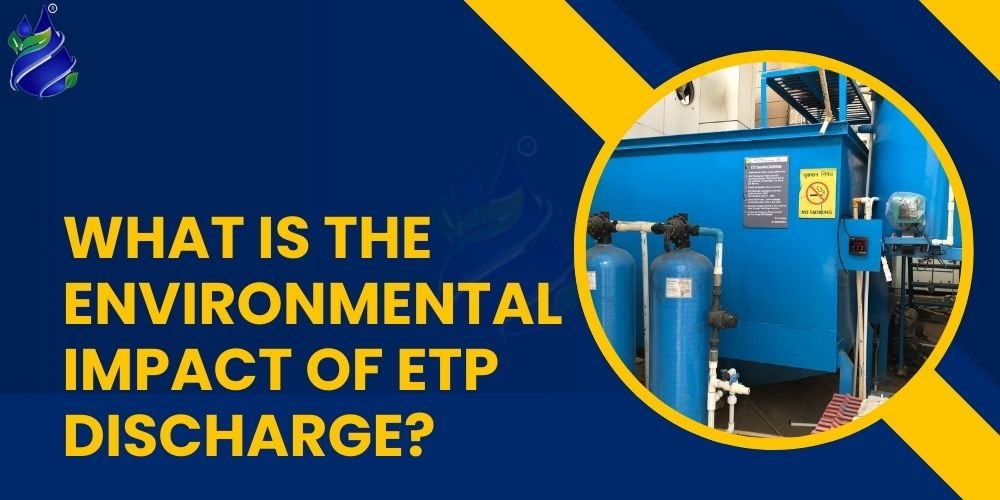
How poorly treated ETP discharge damages Indian rivers and ecosystems, with real pollution data, and what genuinely protective treatment looks like.
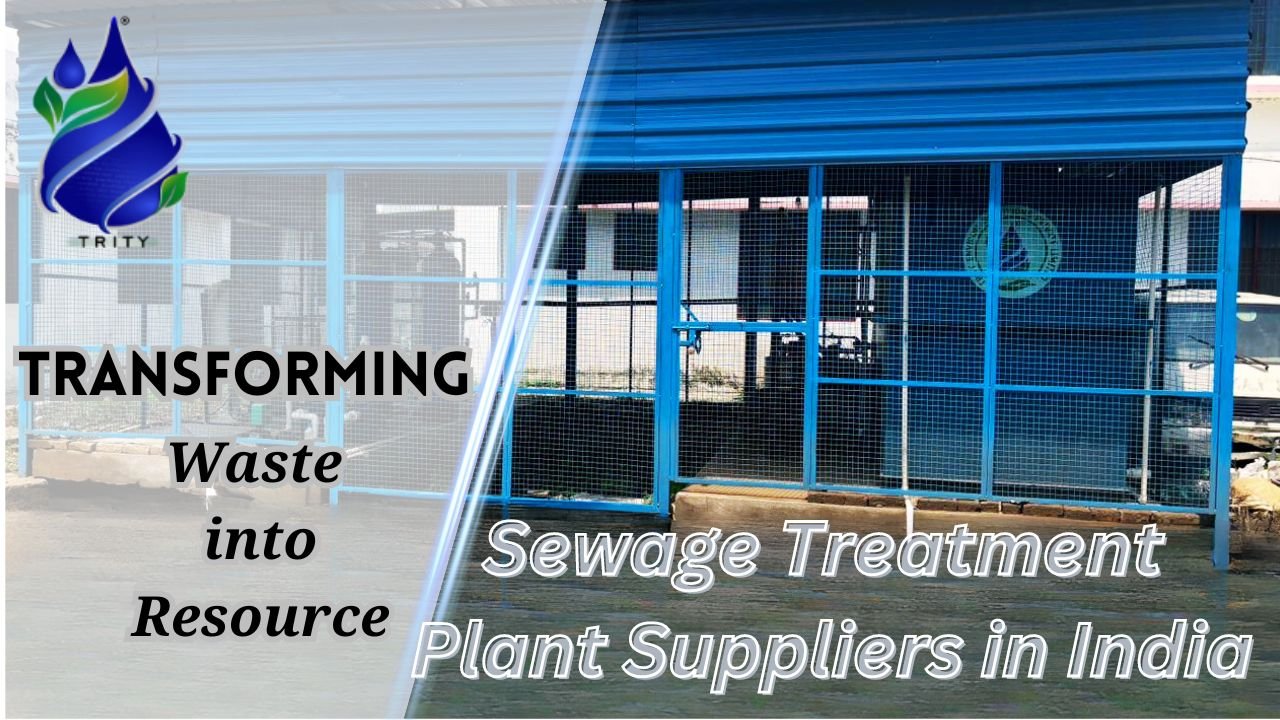
How to choose a sewage treatment plant supplier in India under 2026 CPCB norms: tiered discharge standards, CTE/CTO, and what separates good suppliers.











Discuss your requirements with our engineering team and get practical guidance for your project.

