Introduction: Why Most RO Plant Problems Begin Before Purchase
A commercial RO plant looks simple from outside: a skid, a few pressure vessels, a panel and a storage tank. That simplicity is misleading. Ask a hotel engineer why membranes scaled in the second year, or a hospital facility head why the plant cannot keep up at 7 AM, and the answer usually goes back to the day of purchase. The plant was sized on a brochure number, and nobody tested the water properly.
Hotels, hospitals and industrial units use RO water for different things. A hotel needs drinking water, kitchen water and softened feed for laundry and boilers. A hospital needs drinking water, laboratory water, sterilisation support and, in some wards, systems built to separate clinical standards. A factory may need canteen water, process water or boiler feed. One plant design cannot serve all of them equally well.
This guide walks through the decision in the order a good engineer would take it: understand your demand, test your water, design the pre-treatment, pick the right RO configuration and then compare suppliers and running cost. If you follow these steps, you can buy a commercial RO plant that performs for years instead of months.
Start With Your Demand and Your Water
Two numbers drive the whole design: how much RO water you need at peak, and what the incoming water contains. Get both right and most other choices follow.
Working Out the Capacity You Really Need
Start with daily consumption, not plant rating. Add up RO water used for drinking, cooking, dishwashing, laboratory work, boiler feed and any process, and then identify the peak hour. A hotel with a breakfast rush, or a hospital at shift change, may need three to four times the average hourly flow for a short period. A storage tank covering several hours of demand lets you buy a smaller plant that runs steadily, instead of a large one that runs at partial load.
Check what capacity means on the quotation. Some suppliers quote the rated output at ideal conditions, with low TDS water at 25 °C. Cold water and high TDS reduce actual output. Ask for the output at your own feed TDS and your lowest expected water temperature.
Add a margin of 10 to 20 percent for growth and membrane ageing. Do not add a large margin: an oversized plant that stops and starts repeatedly wears pumps and membranes faster.
A Simple Sizing Example
Suppose a 60 room hotel uses about 6,000 litres of RO water per day over 18 hours of operation, with a morning peak. A plant delivering around 500 litres per hour with a 2,000 litre storage tank covers the day comfortably. Without storage, the same hotel would need a plant roughly two to three times larger just to survive the peak.
Feed Water Tests That Decide the Design
Take a fresh sample, preferably from the actual source and not from a stored tank, and have it analysed by a competent laboratory. The key parameters are TDS, total hardness, alkalinity, iron, manganese, chloride, sulphate, silica, turbidity, pH, residual chlorine and bacteria count. If the supply is municipal, test during different seasons, since quality can change. If you use borewell water, test again after monsoon.
Ask for the Silt Density Index (SDI), which shows how much fouling material is in the water. Most spiral wound membranes need feed with SDI below about 5, and lower is better. Hardness, silica and iron decide how much scaling risk you face, which affects recovery and antiscalant dosing.
For drinking use, India's standard IS 10500:2012 gives TDS of 500 mg/L as the acceptable limit and up to 2,000 mg/L as permissible where no alternative source exists. RO is usually the way to bring water from the higher end of that range down to a comfortable taste.
Designing the System Around the Application
The membranes get the attention, but the plant stands or falls on what happens before them.
Pre-Treatment Before the Membranes
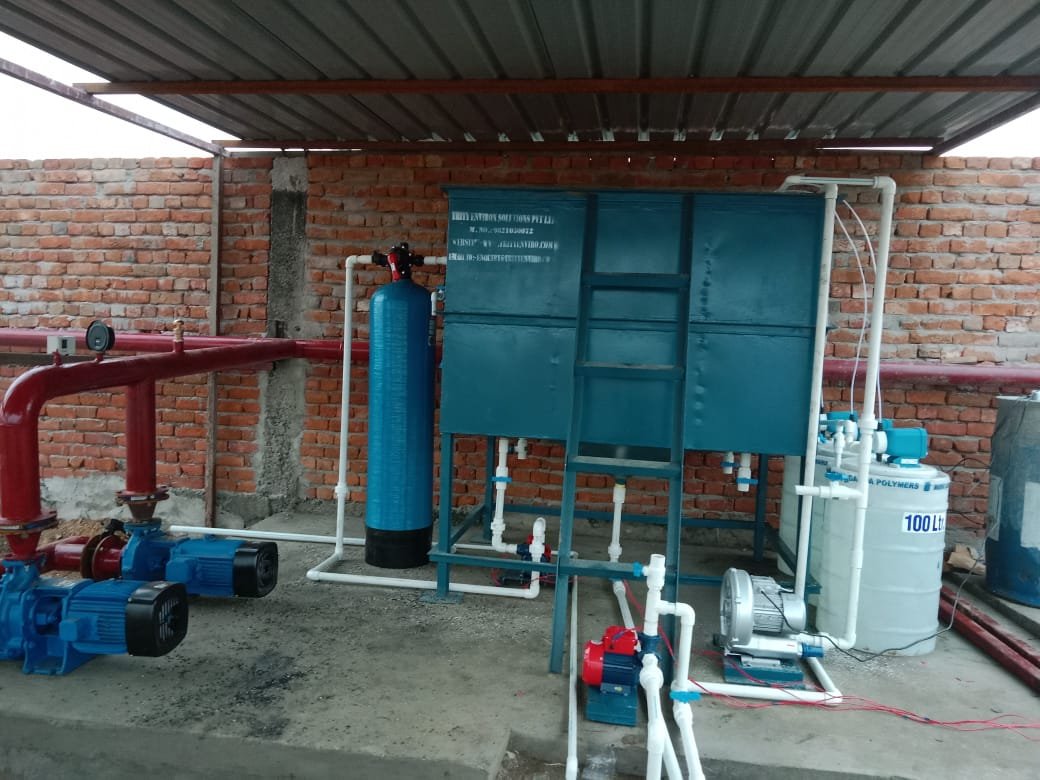
Most commercial RO plants use some combination of the following:
- Antiscalant dosing and cartridge filters of about 5 micron as the last guard before the high pressure pump
Chlorine is the silent killer of polyamide membranes. Keep residual chlorine going to the membranes close to zero, typically below 0.1 mg/L, and confirm that the carbon filter is sized to remove it. Where bacterial load is high, an ultrafiltration system ahead of RO gives very stable feed quality and protects the membranes from biofouling.
Needs of Hotels, Hospitals and Industries
Hotels and resorts need reliable drinking and kitchen water, and often softened water for laundry and boilers. They benefit from automatic flushing, storage sized for peak and a plant that runs quietly in a service area. Reject water, which can be 30 to 50 percent of the feed in many systems, can feed flushing, gardening or cooling if the quality allows.
Hospitals need consistent quality and traceable maintenance. Drinking water and general laboratory use are well served by a commercial RO. Dialysis water, however, follows its own clinical standards and calls for a dedicated, validated system, so discuss it with your clinical engineering team and the supplier early instead of assuming a general plant can double as one. Hospitals also generate wastewater with special characteristics, which our guides on hospital STP and hospital ETP cover.
Industries vary the most. A canteen plant is close to a hotel plant. A boiler feed or process plant may need two pass RO or polishing with ion exchange. If your requirement goes beyond a few thousand litres per hour or involves high TDS water, compare the industrial RO plant option as well.
Running Cost, Reliability and Common Mistakes
Buying price is the smaller part of owning an RO plant over five to ten years. Running cost and reliability decide the real value.
What It Costs to Keep an RO Plant Healthy
The recurring items are electricity for the high pressure pump, antiscalant and cleaning chemicals, cartridge filter replacement, membrane replacement every few years depending on feed and care, carbon and softener media, and operator or service time. Recovery rate matters too. A higher recovery saves water but raises scaling risk, so the right figure depends on your hardness and silica levels, not on what looks best on the datasheet.
Monitor three readings daily: feed pressure, differential pressure across the membrane stages and permeate conductivity. Membrane makers commonly advise cleaning when normalised flow drops or pressure drop rises by roughly 10 to 15 percent from the baseline. Cleaning early restores performance, while waiting until a membrane is badly fouled often means it never fully recovers.
Mistakes Buyers Repeat
- Buying on capacity and price alone, with no feed water report
- Skipping softening or antiscalant on hard water to save cost
- Letting residual chlorine reach the membranes
- Using no storage and then running the plant continuously at peak
- Having no service contract, so nobody checks the plant until it fails
- Throwing away reject water that could serve flushing or gardening
- Accepting the plant without a performance test at site
Before you sign the handover, run an acceptance test: measure output at your own feed TDS, check permeate conductivity, record pressures and flows at each stage and confirm that alarms and auto-flush work. Keep these readings as the baseline for every future comparison.
If your site also needs treated sewage recycled for flushing, a wastewater recycling system can take pressure off the freshwater RO plant.
Buying Decision: Capacity, Supplier and Contract Terms
Once you have demand and water data, you can ask suppliers for comparable proposals.
How to Compare Quotes Properly
Put quotes side by side using the same columns: rated and actual output at your TDS, membrane make and number, pressure vessel and pump material, pre-treatment included, instrumentation, storage and piping, warranty and what the service contract covers. A cheap quote often leaves out the softener, the storage tank or the antiscalant dosing unit, and then the real price appears after delivery.
Ask for expected power consumption, membrane life and annual consumables. A plant with a slightly higher price but lower power use and longer membrane life often costs less over five years.
Questions to Ask Before You Order
- Will you test my water or design from my lab report, and what recovery do you propose?
- What pre-treatment do you include and why?
- How is output guaranteed at my feed TDS and temperature?
- What spares do you keep, and how soon can your engineer reach my site?
- What does the annual maintenance contract include, and how is performance reported?
You can review the specifications of our commercial RO plant range, and consider an annual maintenance contract so that cleaning, filter changes and checks are on a calendar instead of left to chance.
Industry Comparison / Operational Parameter Table
| Parameter / Stage |
Target Optimal Range |
Failure Impact / Risk |
Corrective Engineering Action |
| Feed SDI |
Below about 5, lower is better |
Membrane fouling, frequent cleaning |
Improve multigrade filtration, add UF, check cartridge filters |
| Residual chlorine at membrane |
Below about 0.1 mg/L |
Irreversible membrane damage, high salt passage |
Size carbon filter correctly, add sodium bisulphite if needed, test often |
| Recovery rate |
Set from hardness and silica, commonly 50 to 75 percent |
Scaling at high recovery, wasted water at low recovery |
Add softener or antiscalant, adjust reject valve and recycle |
| Differential pressure across membranes |
Stable near baseline; clean when it rises by about 10 to 15 percent |
Blocked flow channels, higher power use, shorter membrane life |
Clean in place early, check pre-filters, review feed quality |
Why Choose Trity Enviro
Trity Environ Solutions is an ISO 9001:2015 certified and QCI-approved commercial RO plant manufacturer and supplier in India, delivering robust, high-efficiency systems engineered for CPCB and SPCB regulatory compliance.
Every installation is supported by pan-India Annual Maintenance Contract and Operation and Maintenance services.