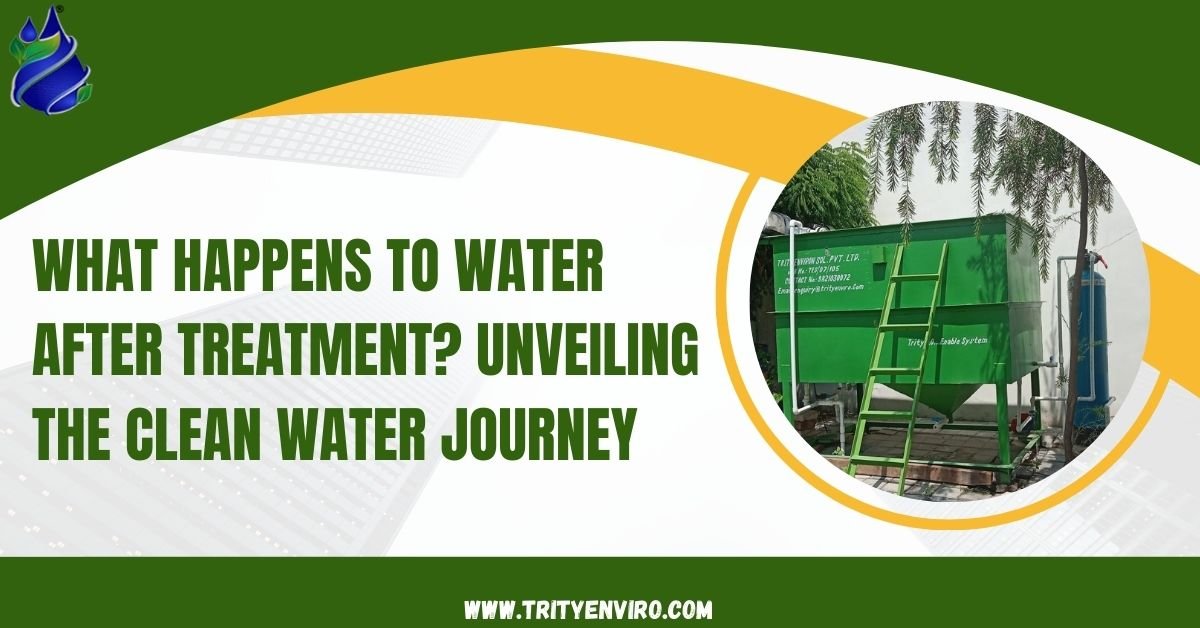
What Happens to Water After Treatment? Unveiling the Clean Water Journey
Discover the steps water takes after treatment, from removal of impurities to disinfection, ensuring safe, clean water for homes, businesses, and the environment.

 ISO 9001:2015 & QCI Approved
Sizing a softener is simple arithmetic once you have the right numbers. Follow these steps to match resin, vessel and regeneration cycle to your hardness and flow.
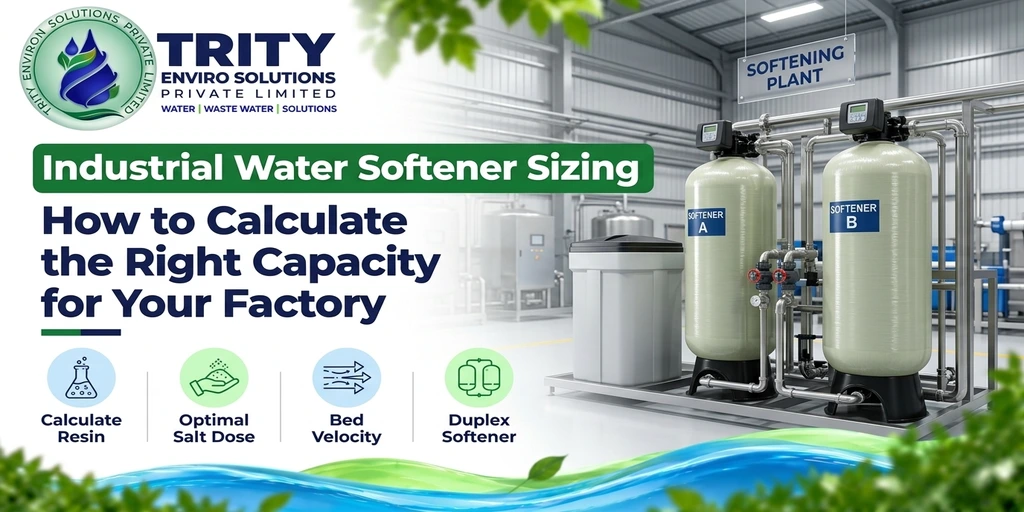
Hardness scale does not announce itself. It builds quietly inside boiler tubes, heat exchangers, cooling coils and RO membranes, and by the time someone notices, efficiency has already dropped and a shutdown is on the calendar. A softener is the cheapest protection against this, yet many factories run one that was bought by flow rate alone. The vessel looked big enough, the brochure said "10 m/h", and nobody asked how long it could run between regenerations on the plant's real water.
The result is familiar. Hardness leaks into the product water an hour or two before the programmed regeneration. Operators shorten the cycle to compensate and salt consumption climbs. Or the plant is oversized, the resin sits idle, and channelling develops because the flow is too low for the bed.
This guide shows how to size an industrial water softener the way a process engineer does it. You will see which numbers to collect, how resin capacity relates to salt dose, how to check service flow and bed velocity, how to choose between a single, duplex or twin arrangement, and how to read a quotation critically. A worked example at the end puts figures on every step. It is written for plant managers, utility engineers and procurement teams who buy or run softeners for boilers, cooling systems, laundries, RO pre-treatment and process lines.
You cannot size a softener from a brochure. Five numbers decide the design, and each one has to come from your plant.
Take a laboratory report for total hardness expressed as mg/L of CaCO. If your source is a borewell, test after the monsoon as well, because hardness can shift with the water table. If you receive municipal or tanker water, test several loads. Note also iron, manganese, turbidity and chlorine, since all of them harm resin. Iron above about 0.3 mg/L fouls cation resin, and chlorine slowly oxidises it, so filtration and carbon treatment often come first. Our multi grade filter and activated carbon filter are the usual companions.
Then fix the target. A low pressure boiler may accept 5 mg/L as CaCO or less. An RO plant needs near zero hardness at the membrane. A laundry may accept a little more. Softeners rarely deliver exactly zero, so ask for a guaranteed leakage figure in the quotation.
Record three flows: the average hourly flow, the continuous maximum and the short peak. Industrial softeners are normally sized on the continuous maximum flow, and the peak is checked against the allowed peak for the resin bed. Also note how many hours per day the plant runs and whether the demand is steady or comes in bursts, such as a boiler with variable steam load.
Finally, decide how often you are willing to regenerate. Industrial softeners are usually designed to run for 8 to 24 hours between regenerations, and in some cases up to two or three days. Longer runs mean fewer regenerations but a larger resin bed.
Strong acid cation resin removes hardness by swapping calcium and magnesium for sodium. Its working capacity depends on how much salt you use to regenerate it. Published design guidance gives these typical figures for standard resin:
The gain flattens at high salt doses, which is why most industrial designs use 100 to 150 g of salt per litre. Going from 150 to 250 g/L raises capacity by under 20 percent while raising salt use by two thirds. Use the capacity that your resin supplier guarantees at the chosen salt dose, and apply a design factor of about 0.85 to 0.9 for ageing and imperfect distribution.
Two limits protect the bed. The first is the service flow in bed volumes per hour, meaning litres of water per litre of resin per hour. Design references commonly use around 40 bed volumes per hour for continuous flow and up to about 60 for short peaks. The second is the linear velocity through the bed, around 25 m/h for continuous flow and about 37 m/h at peak.
If flow is too high, the resin compacts, contact time drops and hardness leaks early. If flow is too low, water channels through part of the bed and capacity is wasted. A flow range with a minimum as well as a maximum is a sign of a thoughtful design.
A complete regeneration runs through backwash to loosen the bed, brine injection at a controlled strength, slow rinse to push brine through, and a fast rinse to flush out the remaining salt. Together they take roughly one to two hours for an industrial vessel. During this time the vessel is out of service, which is why twin or duplex arrangements are used wherever water is needed continuously.
Consider a factory that feeds a boiler and a cooling system. The raw water has 400 mg/L total hardness as CaCO. The plant needs a continuous 10 m/h of softened water for 16 hours a day. The target hardness is below 5 mg/L, and the plant wants a run of at least 8 hours between regenerations on each vessel.
1. Hardness load per hour: 10 m/h x 400 g/m = 4,000 g/h, or 4 kg/h as CaCO.
2. Load over an 8 hour run: 4 kg/h x 8 h = 32 kg as CaCO.
3. Resin capacity: Choose a salt dose of 150 g/L, giving about 60 g CaCO per litre. Apply a design factor of 0.9, so usable capacity is about 54 g/L.
4. Resin volume per vessel: 32,000 g 54 g/L = about 593 litres. Round up to 600 litres.
5. Check service flow: 10 m/h 0.6 m = about 17 bed volumes per hour. This is well below the 40 bed volume limit, so the flow check passes.
6. Check the run length: 600 L x 54 g/L = 32.4 kg capacity 4 kg/h = about 8.1 hours. This meets the requirement.
Because the plant runs 16 hours a day, a duplex system with one vessel in service and one regenerating or standing by gives continuous softened water. Across the day the plant will regenerate about twice in total, roughly once per vessel.
For the vessel, use the bed velocity limit. At 25 m/h, 10 m/h needs a bed area of 0.4 m. A 900 mm diameter vessel has an area of about 0.64 m, which gives a velocity near 16 m/h, comfortably inside the limit. A 600 L bed in that vessel is about 0.94 m deep. Add freeboard for backwash expansion, often about 50 to 100 percent of the bed depth, so the straight side height is roughly 1.8 to 2.0 m.
Salt per regeneration is 150 g/L x 600 L = 90 kg. Saturated brine holds roughly 0.3 kg of salt per litre, so each regeneration draws about 300 litres of strong brine. A brine tank that stores several regenerations of salt, for example 500 to 1,000 litres in volume with a bed of salt, keeps refilling manageable. At two regenerations per operating day, that is about 180 kg of salt a day, or roughly 5,400 kg over 30 days, which is the number to carry into your cost estimate.
Treat these as design figures. Your resin supplier's capacity data, the valve make and the final pressure drop calculation may adjust the numbers slightly.
A simplex softener has one vessel and interrupts supply during regeneration, so it needs a treated water storage tank. A duplex or twin alternating system keeps one vessel in service while the other regenerates, which is the safe choice when water is needed around the clock. Automatic control with a flow meter or conductivity trigger regenerates on throughput instead of a fixed timer, which saves salt when demand varies. Manual systems cost less but depend on the operator.
Cost has three parts: the purchase of vessels, resin, valves, brine system and controls, then the running cost of salt, water for backwash and rinse, power and resin replacement, and finally the cost of the waste. Regeneration brine is high in chloride and TDS. If your site discharges to a sewer or a treatment plant, check what your consent allows, and plan for it in your effluent treatment plant or, where discharge is restricted, in a zero liquid discharge system.
Also check whether a softener is enough. A softener removes hardness only. It does not reduce TDS. If your feed has high dissolved solids, an RO stage may be the better investment, and the softener then protects the membranes. Our guide on DM plant vs RO plant explains when to move beyond softening.
You can review our water softener plant range, and consider an annual maintenance contract to keep resin, valves and brine systems in working order. Our article on how to select a water treatment plant for industries shows how a softener fits into a full treatment train.
| Parameter / Stage | Target Optimal Range | Failure Impact / Risk | Corrective Engineering Action |
|---|---|---|---|
| Service flow through resin | About 40 bed volumes per hour continuous, up to about 60 at peak | Hardness leakage from compaction, or channelling at very low flow | Resize resin volume, add vessel, or set minimum flow |
| Bed velocity | About 25 m/h continuous, about 37 m/h at peak | High pressure drop and resin damage if too high | Increase vessel diameter, check distributor |
| Salt dose | Commonly 100 to 150 g/L of resin, based on supplier data | Poor capacity if too low, wasted salt if too high | Optimise dose from lab tests and hardness load |
| Treated water hardness | Below 5 mg/L as CaCO for boilers, near zero before RO | Scale in boilers, exchangers and membranes | Regenerate on throughput, test daily, replace aged resin |
Trity Environ Solutions is an ISO 9001:2015 certified and QCI-approved water softener plant manufacturer and supplier in India, delivering robust, high-efficiency systems engineered for CPCB and SPCB regulatory compliance.
Every installation is supported by pan-India Annual Maintenance Contract and Operation and Maintenance services.
Discover the steps water takes after treatment, from removal of impurities to disinfection, ensuring safe, clean water for homes, businesses, and the environment.

Learn the difference between hard water and soft water, their effects on daily use and industry, and the best water treatment methods to improve water quality.
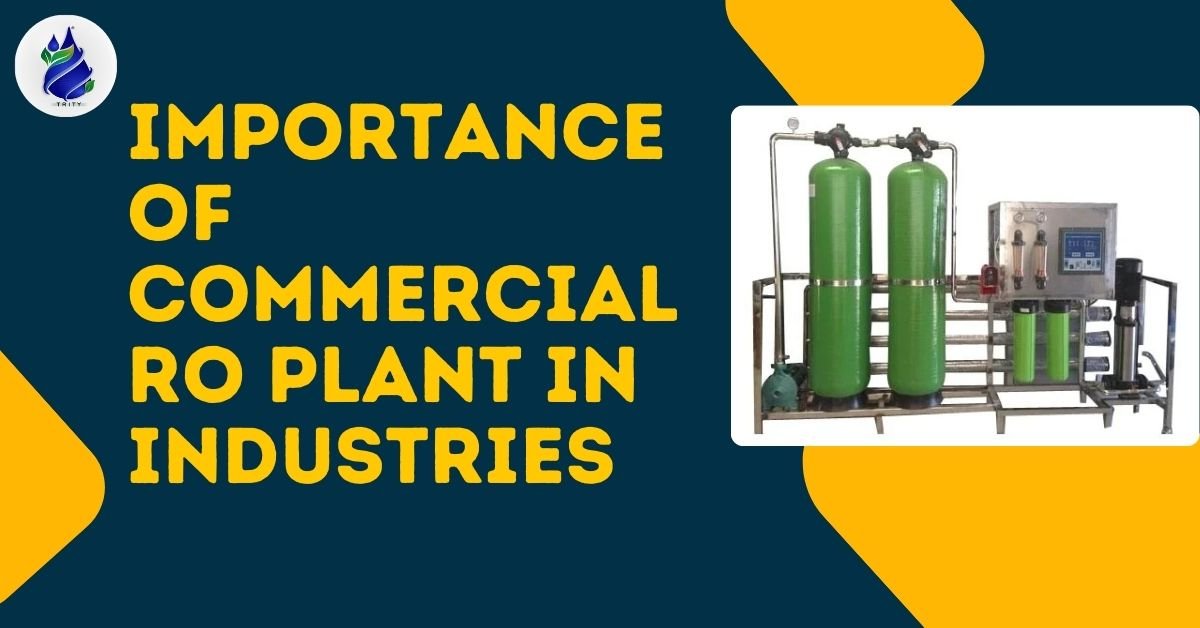
Discover the vital role of Commercial RO Plants in industries, enhancing water quality, reducing costs, and promoting sustainability for eco-friendly operations.











Discuss your requirements with our engineering team and get practical guidance for your project.

