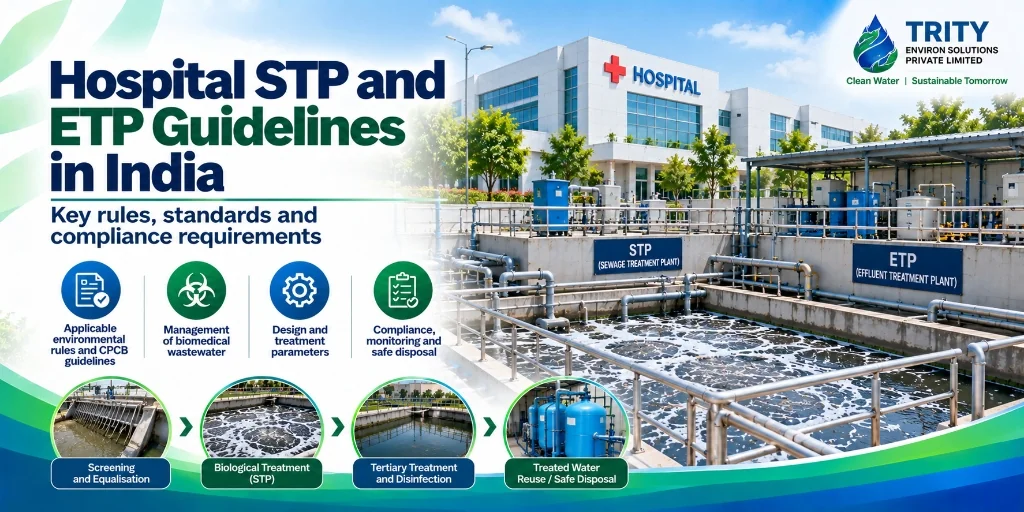
Hospital STP and ETP Guidelines in India
Trity Enviro explains hospital STP and ETP guidelines in India: BMW Rules standards, design per bed, treatment train, disinfection and records.

 ISO 9001:2015 & QCI Approved
Our blog covers practical engineering topics for anyone planning or operating a Sewage Treatment Plant or Effluent Treatment Plant in India. You will find capacity calculation guides, technology comparisons like MBBR versus SBR versus MBR, industry specific treatment guides for pharma, textile and dairy effluent, and state wise pollution control board compliance requirements. These articles are written by our engineering team based on real project experience, not generic content, so you get information you can actually use when planning a plant or preparing for compliance.
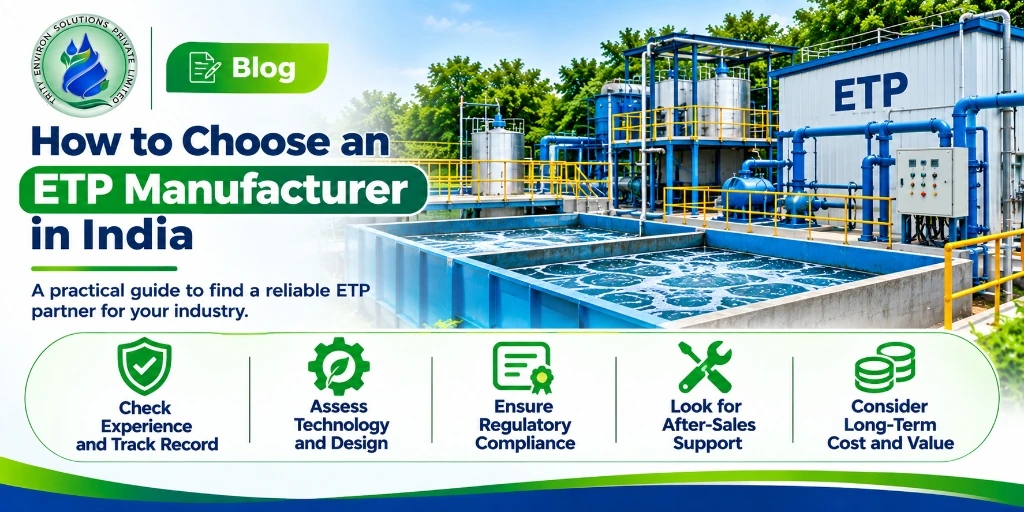
Trity Enviro gives a 12-point checklist to choose an ETP manufacturer in India: design basis, references, guarantees, AMC, consent support and red flags.
Read Full Article
Trity Enviro explains hospital STP and ETP guidelines in India: BMW Rules standards, design per bed, treatment train, disinfection and records.
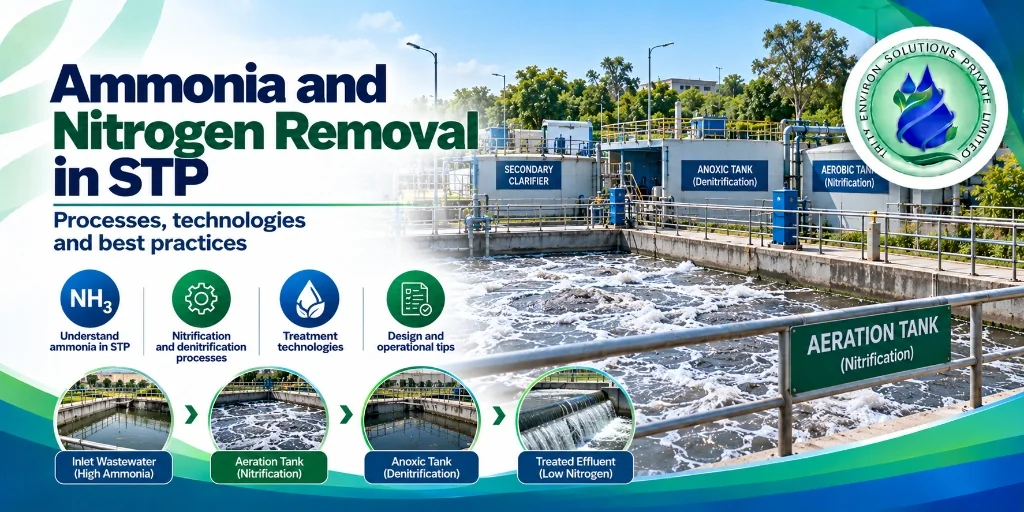
Trity Enviro explains ammonia and nitrogen removal in STP: nitrification, denitrification, NGT norms, design numbers and a worked example for a 200 KLD plant.
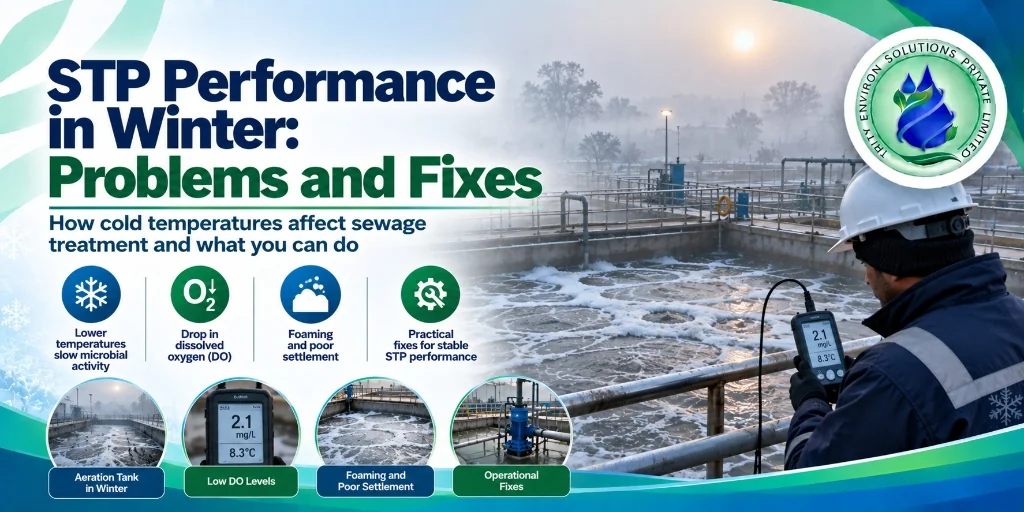
Trity Enviro explains why STPs struggle in winter: slow nitrification, high ammonia, poor settling and foam. Practical fixes to keep treated water compliant.
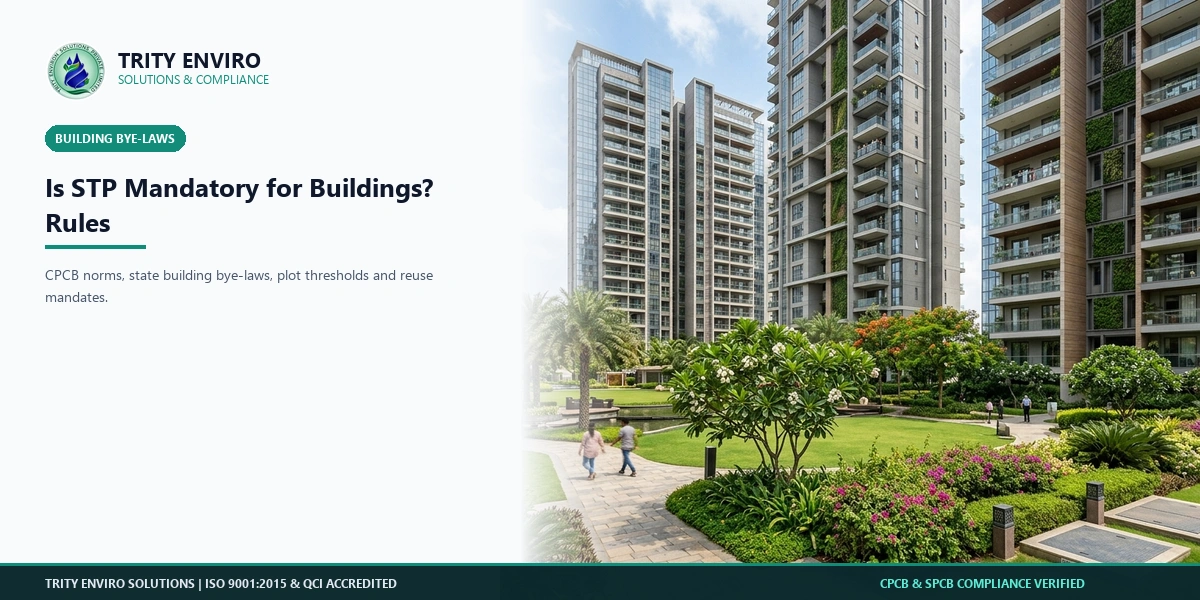
Is an STP required for your apartment, hotel or commercial building? Understand area thresholds, bye-laws, environmental clearance, consent and RERA impact.
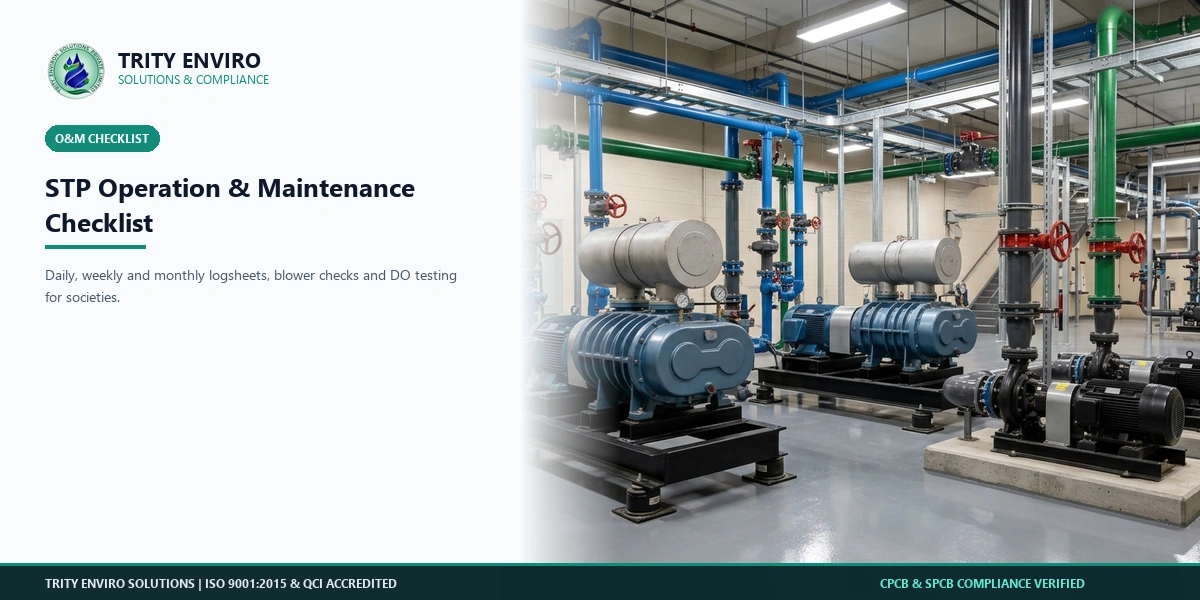
A complete STP operation and maintenance checklist for housing societies: daily, weekly, monthly and yearly tasks, logbook, lab tests, spares and AMC scope.
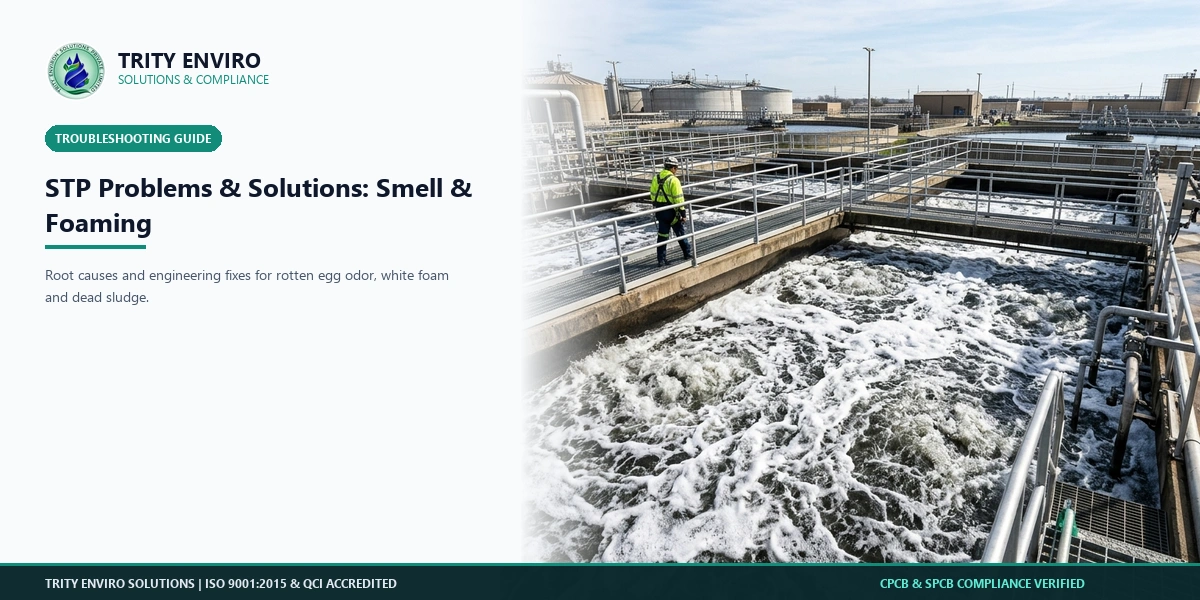
Fix common STP problems: foul smell, foaming, sludge bulking, low DO, rising sludge and turbid outlet. Causes, quick tests and corrective actions explained.
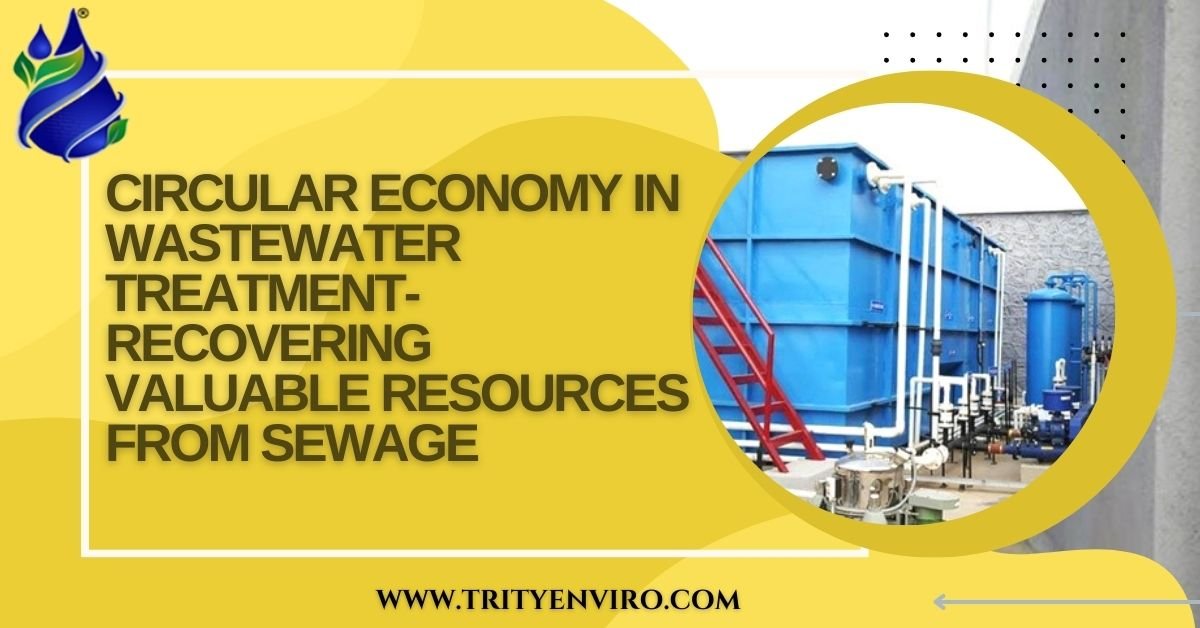
Discover how circular economy transforms wastewater into clean water, energy, and fertilizers—promoting sustainability, reducing waste, and saving resources.
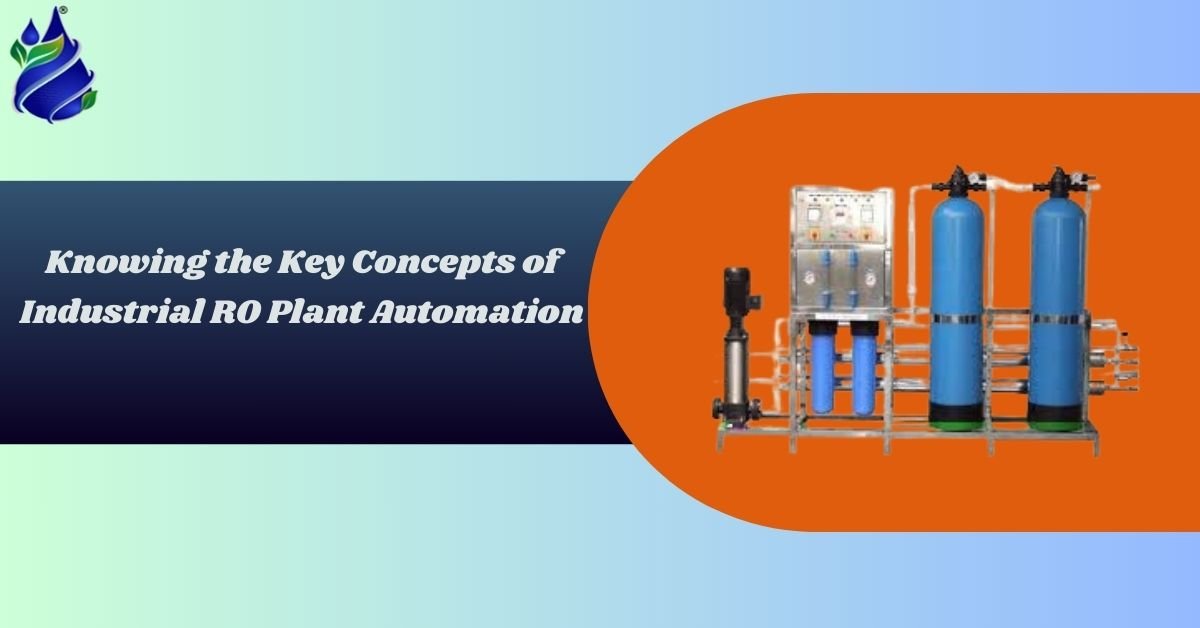
Industrial RO plant automation explained: PLC and HMI control, key sensors, VFDs, dosing, SCADA and remote monitoring, and which automation level fits.
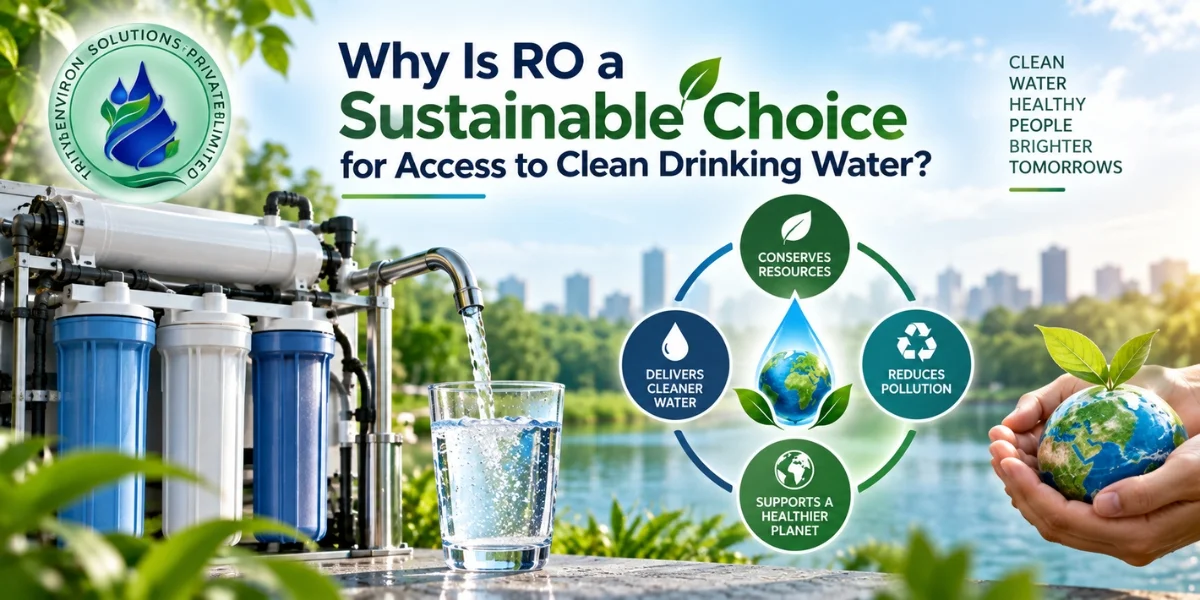
An honest look at why RO supports sustainable drinking water access, its real trade-offs, and how modern design addresses reject water and energy use.











Discuss your requirements with our engineering team and get practical guidance for your project.

