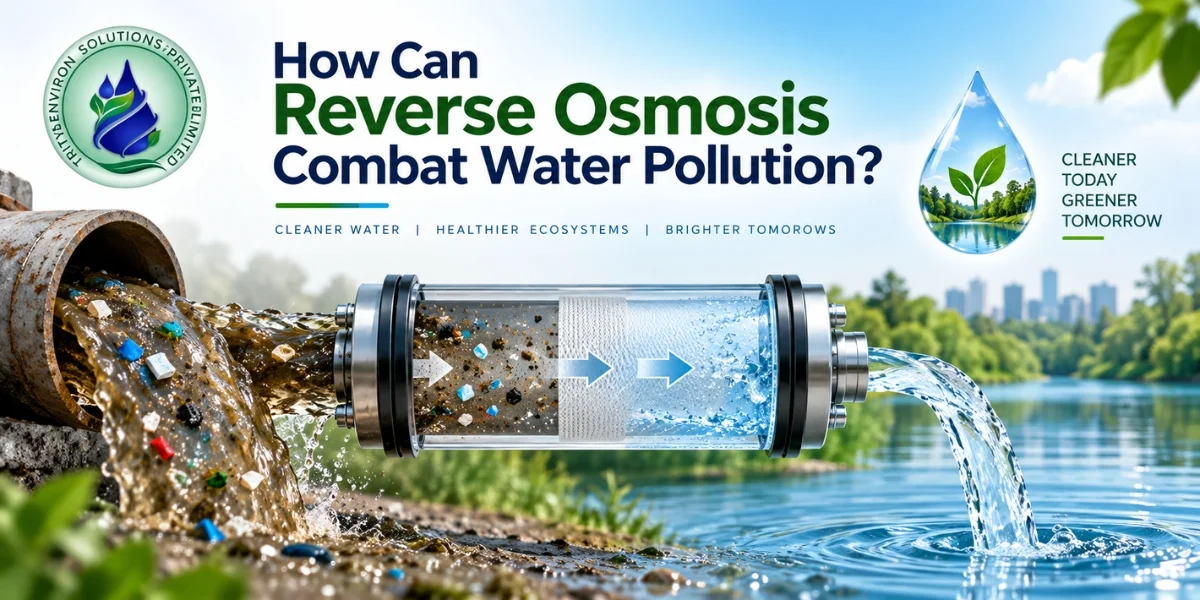
How Can Reverse Osmosis Combat Water Pollution?
How reverse osmosis removes industrial pollutants, real case study data, recovery rates, and the RO concentrate challenge most guides skip.

 ISO 9001:2015 & QCI Approved
If your ETP or STP struggles with colour, salts or load, an upgrade may be cheaper than repeated penalties. Here is how Tamil Nadu units can decide, plan and budget.
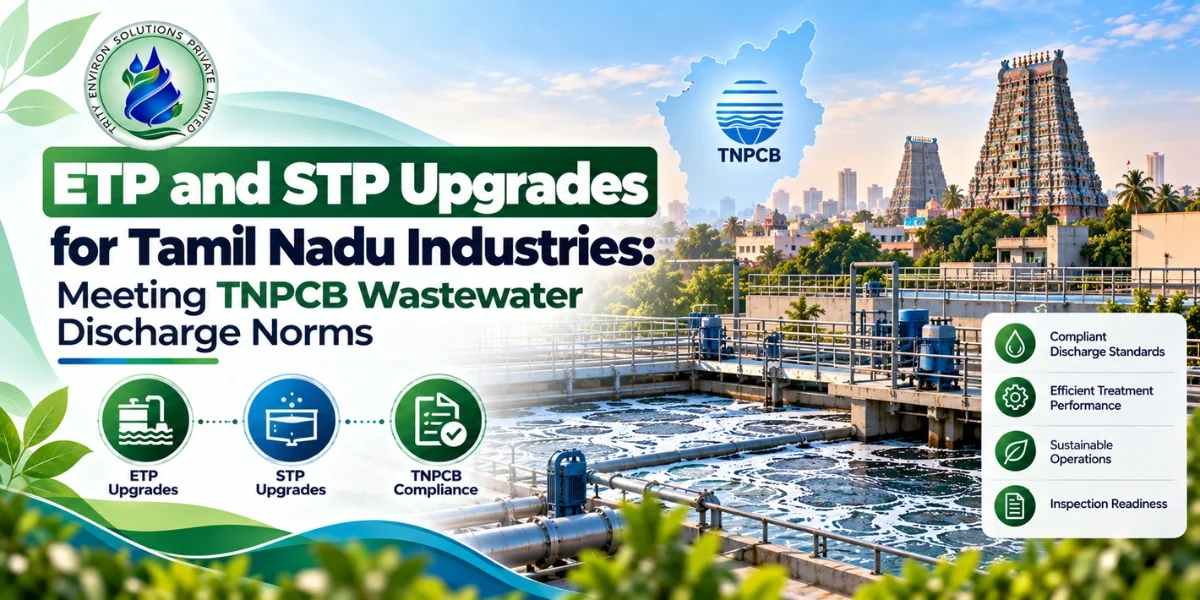
Tamil Nadu carries a history that every plant manager in the state knows. Court-driven closures of dyeing and bleaching units in and around Tiruppur, and concern for river and groundwater quality in places like the Noyyal basin, pushed the state toward some of the strictest wastewater practices in the country. Industry guides commonly describe the Tamil Nadu Pollution Control Board (TNPCB) as particularly firm in textile hubs, with a strong emphasis on groundwater protection.
The pressure is not limited to industry. Recent local reports from the Coimbatore area describe worries among farmers about groundwater and about a stalled sewage plant plan along the Noyyal river. Wastewater compliance in Tamil Nadu is watched by regulators, courts and neighbours.
If you run a textile, chemical, food, hospital or hospitality facility in the state, your ETP or STP has to work every day, not only on inspection day. This guide explains the signs that a plant needs an ETP and STP upgrade in Tamil Nadu, the options available and how to plan the spend. It is written for plant heads, EHS officers and facility managers.
TNPCB regulates wastewater through consent orders under the Water Act. Your consent defines the discharge route, permitted volume and quality limits, and it can include conditions on treated water reuse.
Guidance published by consultants notes that Tamil Nadu often requires a fresh inspection at each consent renewal. That means your plant must look and perform well at renewal time, not only when a complaint arrives. Keep flow logs, laboratory reports, chemical purchase records and sludge disposal papers organised so they are ready for whoever visits.
Dyeing wastewater is difficult for three reasons. Colour is hard to remove and easy for a regulator to see. Salt load, mostly sodium chloride and sodium sulphate from dyeing and fixing, raises TDS beyond what biological treatment can remove. And process discharge changes with each dye lot, so pH, colour and COD move constantly. Because of this, textile units that meet limits usually combine strong equalisation, physico-chemical and biological treatment, then membrane systems and evaporation for salt management. Our textile and dyeing ETP page and technical guide on ETP for the textile industry cover the process in detail.
Because so much of Tamil Nadu depends on groundwater, regulators pay close attention to anything that could seep into the soil: unlined storage ponds, leaking tanks, spilled sludge and treated water discharged on land. Inspect tank walls, drains and sludge storage for leaks, keep a paved and bunded area for chemicals, and avoid using untreated or poorly treated water for irrigation. Reuse inside the plant is generally viewed favourably, provided the treated water meets the quality your process needs and your records show it.
Not every problem needs new equipment. Learn to tell operating faults from design limits.
Watch for outlet COD or BOD that rises even when the plant is well run, colour that survives treatment, foam that keeps returning, sludge that will not settle, strong odour at the outlet and TDS above what your consent allows. If you adjust doses and aeration and the plant still fails the same parameter, the design is the problem.
For sewage plants at hotels, hospitals, campuses and residential projects, warning signs include overflowing tanks, odour in the neighbourhood, dark treated water and high blower power bills with no improvement in quality.
Many plants were designed for a smaller load than they now treat. A hostel that added a block, a factory that added a dye line or a hospital that opened new wards can double the inflow. Compare present flow and load with design data. If the plant runs above roughly 100 percent of design flow for long periods, quality will drop no matter how well the operator works. Our guide on how to calculate STP capacity explains the arithmetic for sewage systems.
Before approving any upgrade, collect a week of data. Take samples at the inlet, after equalisation, after the biological stage and at the outlet, and test for pH, COD, BOD, TSS, TDS and colour. Record flow at the same time. A composite sample taken over a full production cycle gives a truer picture than a single grab sample, especially in dyeing units where every lot is different. This data shows which stage is failing, which is often not the stage people assume.
Not every plant in Tamil Nadu is industrial. Hotels, hospitals, schools and residential projects run sewage treatment plants too, and their problems differ: peak loads at meal times and check-in days, grease and detergent, disinfectants that harm biology and space limits in basements. Grease traps upstream, flow equalisation and sturdy blowers make the biggest difference. Hospital plants also need reliable disinfection. Compare the options on our STP for hospital and packaged or containerised STP pages if space or speed of installation is a concern.
The right upgrade depends on which parameter fails and on what your consent asks of you.
If BOD and COD are high, strengthen the biological stage. An MBBR retrofit adds biofilm surface inside the existing tank and raises capacity without new civil work. See our MBBR sewage treatment plant and MBBR media pages. If the treated water is cloudy or the consent asks for polished water, add filtration and disinfection through a tertiary treatment plant.
If space is the limit, a sequencing batch reactor or a membrane bioreactor can deliver high quality water in a compact footprint, at higher cost and with more operator skill.
Where groundwater protection or water scarcity drives regulation, reuse is often the practical route. Treated water passes through ultrafiltration and RO, and the permeate returns to process, cooling or flushing. Reject water needs handling: evaporators concentrate it, and the solid salts go to authorised disposal. Our zero liquid discharge systems and industrial RO plants support this route. Reuse cuts freshwater purchase and lowers discharge risk, but its running cost is real, so test the numbers before committing.
An upgrade is a project, not a purchase. It needs a shutdown plan, civil and electrical work and time for the biology to settle after start up.
Cost rises with flow, the difficulty of the effluent and the target quality. A basic aeration retrofit costs far less than an RO and evaporation train. Include running costs in your comparison: power, chemicals, membrane replacement, manpower and sludge or salt disposal. A cheaper plant with high running cost may be more expensive over five years.
Ask for a phased plan where possible. Fix inlet and biological problems first, measure improvement, then add tertiary or membrane stages only if needed. Phasing spreads investment and avoids paying for stages the plant may not require.
After commissioning, an annual maintenance contract protects performance. Sewage plants at hotels and campuses can also be covered by our sewage treatment plant range, and you can read our news on the Noyyal river STP plan in Coimbatore for regional context.
A typical timeline includes the measurement week, a few weeks for design and approvals, two to three months for fabrication and delivery and installation during a controlled shutdown. Biological stages then need several weeks to build a healthy culture and reach steady quality, so seed the system with active sludge where possible and increase load gradually. Avoid switching on full production the day the plant starts.
A useful contract lists preventive visits, spare part replacement, chemical dosing checks, laboratory tests, operator training and response time for breakdowns. Ask whether instruments and membranes are included and whether the supplier submits monthly performance reports. A contract that only promises visits, without performance targets, does little to protect you at renewal inspections.
Reuse and ZLD projects look attractive on paper because they reduce freshwater purchase and discharge risk. Test the numbers by adding power for pumps and membranes, steam or electricity for evaporation, antiscalants and cleaning chemicals, membrane replacement every few years, salt disposal and extra manpower. If the total exceeds the value of the water saved, look for a partial reuse design that recycles the cleanest streams and treats the rest conventionally.
| Parameter / Stage | Target Optimal Range | Failure Impact / Risk | Corrective Engineering Action |
|---|---|---|---|
| Outlet TDS | As per consent; reuse designs often aim for RO permeate quality | Groundwater and consent concerns, closure risk | Add RO and evaporation, or reduce salt at source |
| Colour and COD (textile) | Within consent limits | Visible colour, notice, sampling failure | Add coagulation, advanced oxidation or adsorption stage |
| Plant load vs design flow | At or below 100 percent of design | Overload, poor quality, odour | Add capacity through MBBR media or a new module |
| Sludge settling (SVI) | Around 80 to 150 mL/g for stable activated sludge | Bulking, solids carryover, high outlet TSS | Adjust F/M ratio, check DO and nutrients, correct return rates |
Trity Environ Solutions is an ISO 9001:2015 certified and QCI-approved effluent treatment plant manufacturer and supplier in India, delivering robust, high-efficiency systems engineered for CPCB and SPCB regulatory compliance.
Every installation is supported by pan-India Annual Maintenance Contract and Operation and Maintenance services.
Looking to upgrade or install a high-performance ETP or STP system? Call +91-9821030072 or email enquiry@trityenviro.com, or request a free engineering consultation from our technical team.
How reverse osmosis removes industrial pollutants, real case study data, recovery rates, and the RO concentrate challenge most guides skip.

Real operational cost breakdown for ETP and STP systems in India: power, labour, chemicals, and why the cheapest plant often costs more long-term.

Explore energy-efficient technologies that cut carbon emissions in wastewater treatment plants, using automation, renewables, and smart systems for sustainability.

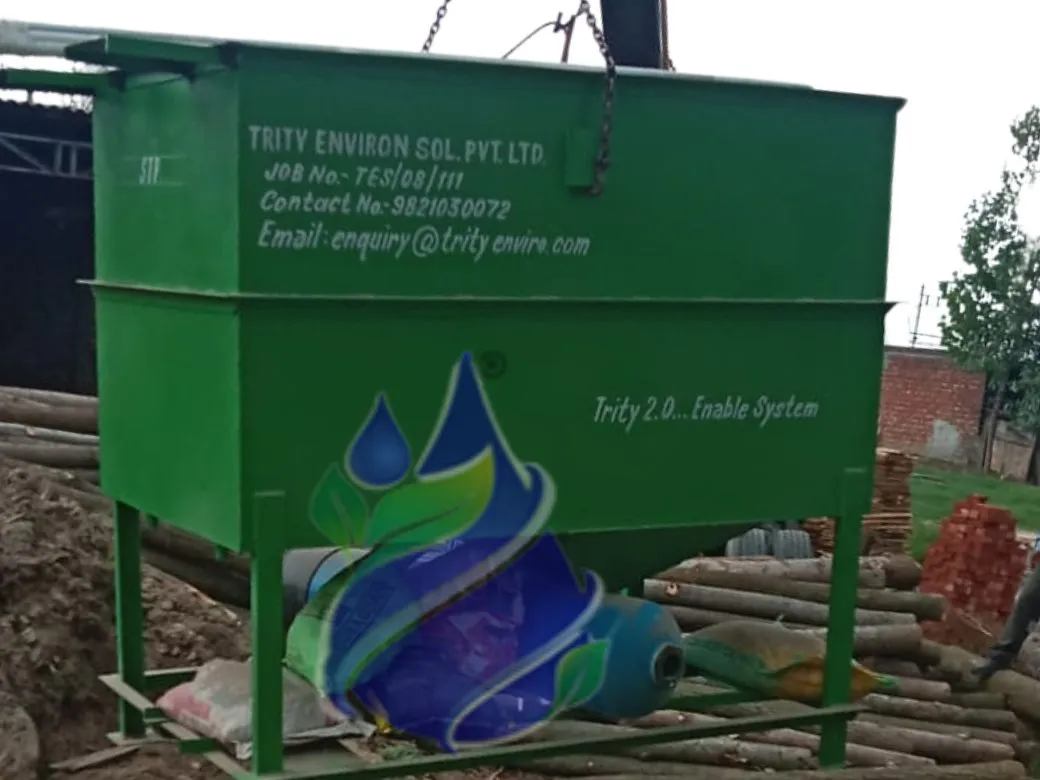
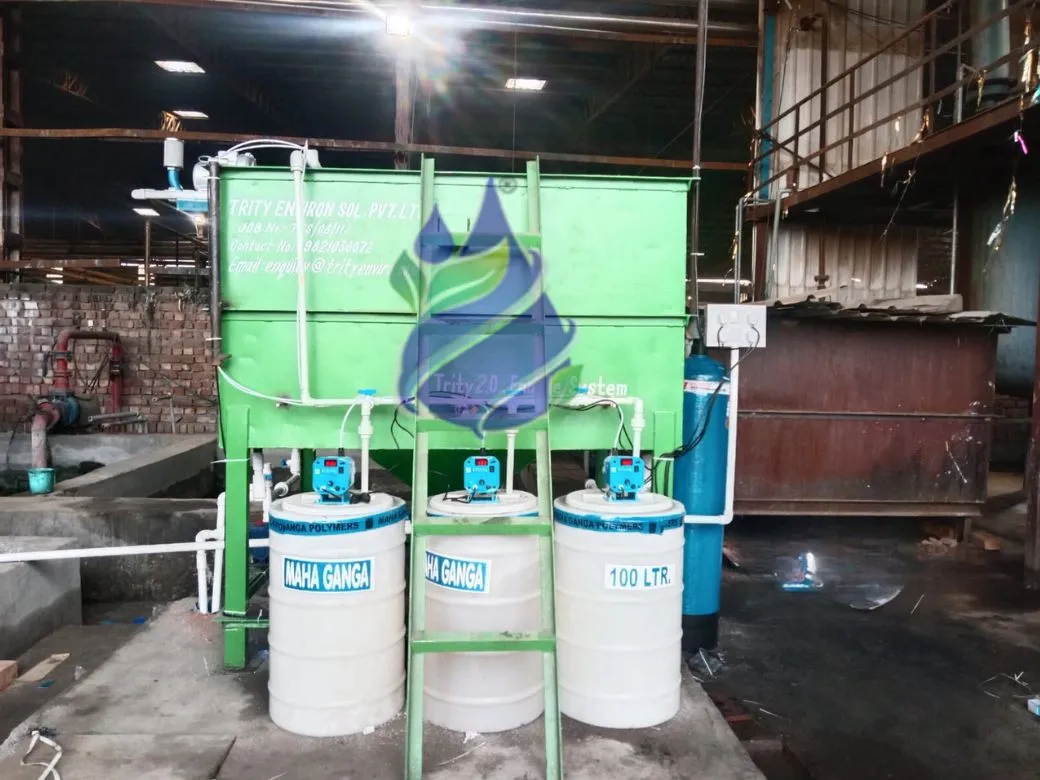



Discuss your requirements with our engineering team and get practical guidance for your project.