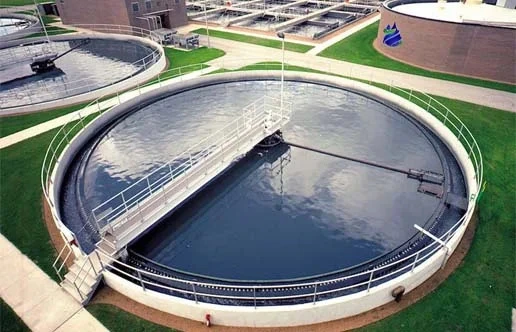
Introduction: Why MPCB Inspections Test the Plant and the Paperwork
Industrial units in Maharashtra tend to describe the Maharashtra Pollution Control Board (MPCB) in one of two ways: firm, or unpredictable. Trade reports describe frequent inspections in clusters such as Pune and the Thane-Belapur belt, and escalation to closure directions for repeat violations. Whether or not your unit sits in one of those belts, the inspection logic is the same. An officer looks at the treated water, the plant that produced it and the data trail that proves it is not a one day performance.
Many plants fail on the third point. The ETP works well enough, but the flow meter is stuck, the logbook stops three weeks ago and the online analyser reads the same number every hour. In an inspection, unexplained gaps read as violations.
This guide explains how to prepare an ETP for MPCB compliance from three angles: treatment performance, online wastewater monitoring and record keeping. It suits plant heads, EHS officers and maintenance engineers in chemical, pharma, engineering, textile and food units across the state.
How MPCB Looks at Industrial Wastewater
MPCB enforces the Water Act and the Environment Protection Rules through consent orders. Your Consent to Operate names the discharge point, the permitted volume and the quality limits. It may also state whether you must reuse water or aim for zero discharge.
Consent Conditions and Discharge Limits
CPCB's general standards under Schedule VI of the Environment Protection Rules set baseline limits, for example pH between 5.5 and 9.0, BOD up to 30 mg/L, COD up to 250 mg/L and suspended solids up to 100 mg/L for discharge to inland surface water. Sector specific rules and consent conditions can be stricter, and reports suggest MPCB has applied tighter COD and TDS limits in some clusters. The rule of thumb is that the stricter of national and state standards applies, and your consent is the final word.
What Inspectors Check on Site
Expect the officer to sample the outlet, then walk back through the plant. Common checks are the condition of the equalisation tank, dosing systems, aeration, clarifier and sludge handling, the state of sludge disposal records, the online monitoring system and its calibration record, and whether power and chemical consumption match the flow claimed. If treated water looks clear but the chemical store is nearly empty, questions follow.
Preparing for the Day of the Inspection
Inspections are often unannounced, so preparation has to be a habit, not a project. Keep the ETP area clean and the walkways clear. Make sure every tank has a working level indicator, every pump has a tag and every dosing tank is labelled and stocked. Post a current process flow diagram near the control panel. Nominate one person who can answer technical questions and another who can pull records quickly. If an officer takes samples, take split samples of your own and send them to your laboratory, so that you have a reference if results are disputed.
Online Effluent Monitoring That Holds Up
For certain categories of industries, regulators require online continuous effluent monitoring, with data sent to the board's server. Check whether your category and consent include this requirement, and what parameters are named.
What Is Measured and How Data Reaches the Board
Typical online effluent monitoring covers flow, pH, and one or more of COD, BOD, TSS and ammonia, depending on the sector. A sensor set in the outlet stream feeds a data logger, which sends readings to a server at fixed intervals. Flow measurement matters as much as quality, because the board calculates pollutant load from concentration times flow.
Calibration and Cross Checks
Sensors drift. pH probes need regular cleaning and buffer calibration, often weekly in dirty effluent. COD and TSS analysers need reagent and lamp checks. Keep a calibration register signed by the responsible engineer, and compare online readings with lab results from time to time. A large, persistent gap between the two is what triggers questions.
Why Online Systems Fail
The usual causes are simple: fouled probes, power cuts without battery backup, lost internet connectivity, sensors installed in stagnant pockets and no one assigned to look at the dashboard. Assign a named person, set alarm thresholds and keep spare probes on the shelf.
Fixing the Weak Points in an ETP
Most inspection failures trace back to a handful of recurring faults. Fix these before you spend on new tanks.
Equalisation, Dosing and Sludge
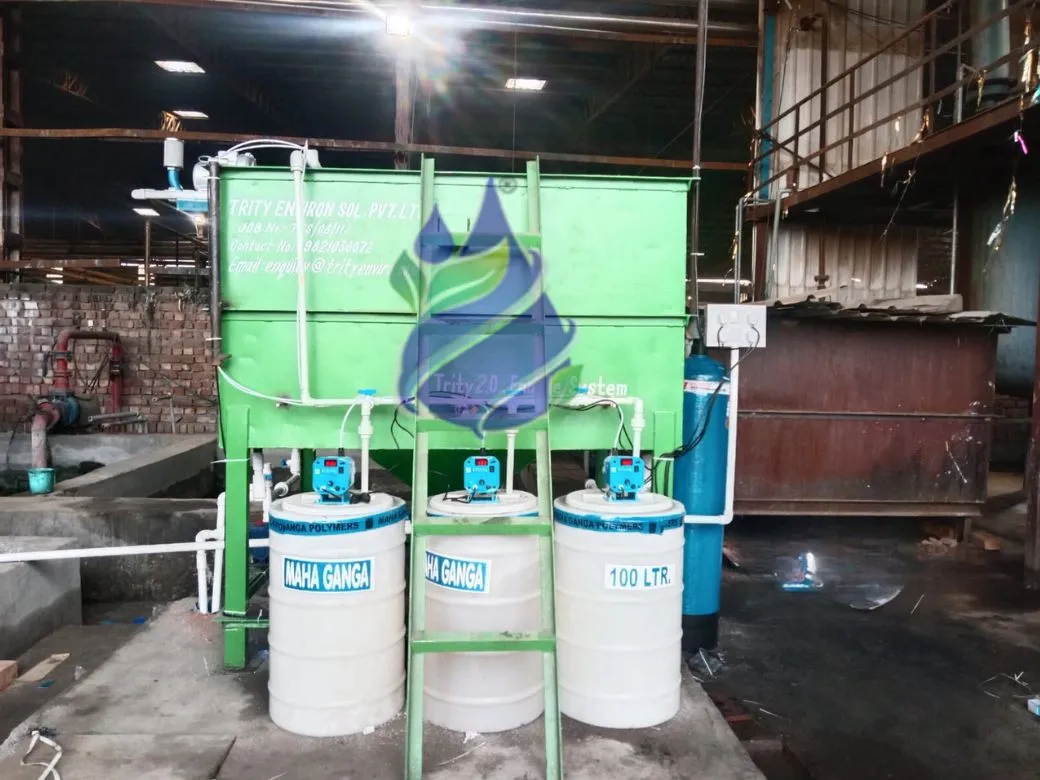
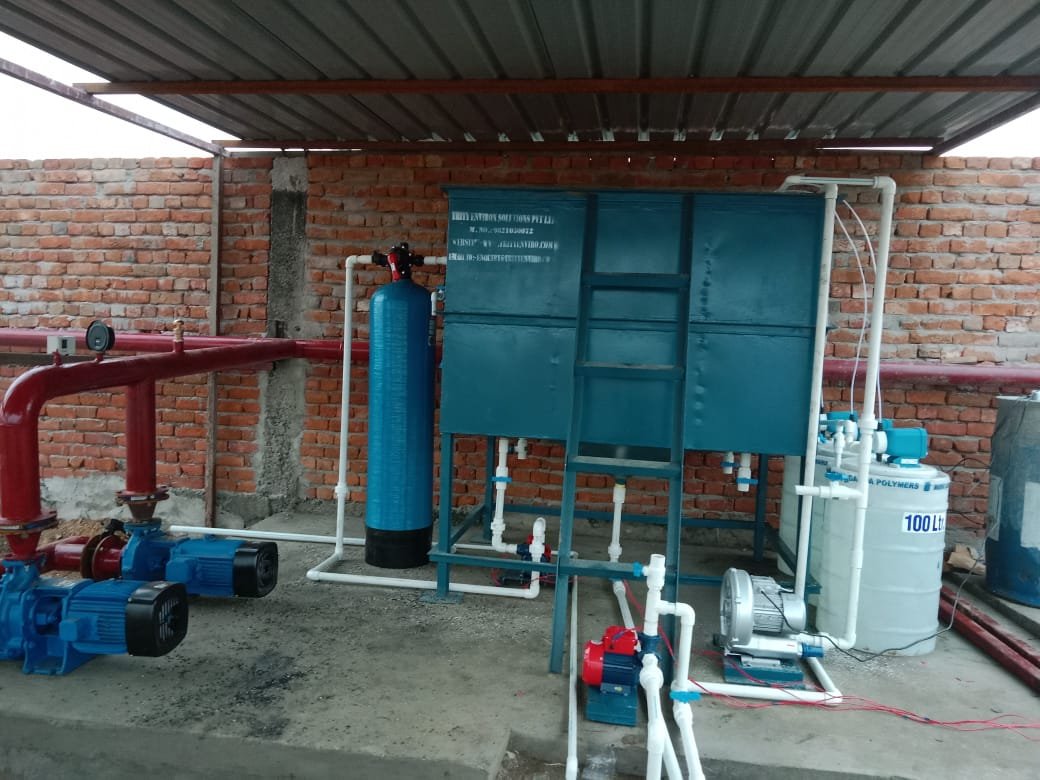
An undersized or unmixed equalisation tank sends shock loads to the biological stage. Dosing pumps that run open loop, without pH feedback, cause swings that kill bacteria. Sludge that sits too long in the clarifier rises, and sludge that is not dewatered properly turns disposal into a recurring headache. A filter press for sludge dewatering reduces sludge volume and simplifies records, and an oil skimmer protects the biological stage in units with floating oil.
Biological Stage Health
In an activated sludge or MBBR system, keep dissolved oxygen around 1.5 to 3 mg/L, pH near 6.5 to 8.5 and adequate nutrients. Watch for foam, dark sludge or a sudden drop in treatment efficiency. Each is a symptom of shock load, toxic input, low oxygen or nutrient imbalance. Our pages on biological ETP design and physico-chemical ETP explain which process suits which type of effluent.
Handling Batch and Chemical Discharges
Many Maharashtra units run batch processes, and the effluent from a single vessel wash can differ sharply from the daily average. Give the ETP team a simple discharge schedule so they know when a strong batch is coming, and route high strength or toxic washes to a holding tank instead of straight to equalisation. Release it slowly into the main flow. This one habit protects the biological stage more than almost any equipment upgrade.
Also list every chemical that reaches the drain: cleaning agents, biocides, solvents, disinfectants and lubricants. Some of them kill the bacteria your plant depends on. Replace the worst offenders where you can, or divert them.
Operator Training and Shift Handover
Plants with strong records usually have simple routines. Operators check flow, pH, dissolved oxygen, sludge level and dosing tanks at fixed times, write the readings in a logbook and hand over to the next shift with a short note on anything unusual. Train each operator to recognise the early signs of trouble: change in colour or smell, foam patterns, a clarifier that looks cloudy, a blower that sounds different. A trained operator with a logbook costs far less than one failed sample.
Cost, Upgrade Paths and Choosing an ETP Partner in Maharashtra
If the audit shows deep problems, decide whether to repair, retrofit or rebuild. That decision should rest on measured inlet load and outlet quality, not on habit.
Which Upgrade to Pick
If the plant struggles with colour, COD or dissolved solids, you may need tertiary treatment, advanced oxidation or membrane systems. If flow has grown beyond the design, you need capacity, and MBBR media can raise it inside the same tanks. If the consent asks for reuse, add ultrafiltration and RO. For units near the edge of compliance, a zero liquid discharge system is a serious option but carries high running cost, so model it carefully.
Questions for Suppliers
- Will you sample and characterise my effluent before proposing a design?
- What outlet quality do you guarantee and how is it verified?
- Do you supply and integrate online monitoring, or only the treatment plant?
- What is your service response time in my part of Maharashtra?
- Can you show working plants in industries like mine?
Trity's regional page for ETP and STP plant manufacturers in Maharashtra covers our work across the state's industrial belts. If your unit also runs a sewage plant, read our guide to MPCB's STP rules, and choose an annual maintenance contract that keeps monitoring equipment in the scope.
Timeline for an ETP Upgrade
For a typical upgrade, allow a few weeks for effluent sampling and design, then two to three months for fabrication and delivery, followed by installation and commissioning. Biological systems need extra weeks after start up to build a healthy culture and reach steady performance, so do not schedule the upgrade for the week before an expected inspection. Where possible, finish the work well ahead of consent renewal.
Budget Items People Forget
Quotes often cover tanks, pumps and media but leave out items that decide whether the plant runs well: online instruments and their calibration kits, a laboratory corner for daily tests, standby power for critical equipment, sludge storage, operator training and the first year of chemicals. Ask for these in writing so that you can compare quotes fairly and avoid surprises after commissioning.
Comparing Quotes on a Five Year Basis
Lay quotes side by side using the same columns: capital cost, power use, chemical use, manpower, membrane or media replacement, sludge quantity and maintenance. Multiply the yearly running items by five and add them to the capital cost. A plant that costs more at purchase but uses less power and produces less sludge often wins on this basis, and a supplier who cannot provide these figures has not designed the plant carefully.
Industry Comparison / Operational Parameter Table
| Parameter / Stage |
Target Optimal Range |
Failure Impact / Risk |
Corrective Engineering Action |
| Outlet pH |
6.5 to 8.5 for most process design (limit as per consent) |
Consent violation, biological upset |
Install pH feedback dosing and calibrate probes weekly |
| Outlet COD and BOD |
Within consent; general standard is 250 mg/L COD and 30 mg/L BOD for inland surface water |
Sampling failure, notice, closure direction on repeat |
Improve equalisation, check aeration, consider tertiary stage |
| Online analyser vs lab result |
Close agreement over repeated checks |
Data credibility questioned, penalty risk |
Recalibrate, clean sensors, log every calibration |
| Sludge handling and disposal |
Regular dewatering and manifest records |
Storage violations, odour, hazardous waste findings |
Add filter press, keep disposal register up to date |
Why Choose Trity Enviro
Trity Environ Solutions is an ISO 9001:2015 certified and QCI-approved effluent treatment plant manufacturer and supplier in India, delivering robust, high-efficiency systems engineered for CPCB and SPCB regulatory compliance.
Every installation is supported by pan-India Annual Maintenance Contract and Operation and Maintenance services.
Looking to upgrade or install a high-performance ETP system? Call +91-9821030072 or email enquiry@trityenviro.com, or request a free engineering consultation from our technical team.