Redefining Clean Water: How Wastewater Is Shaping the Future of Global Resources
Wastewater is no longer waste—it’s a valuable resource for global water sustainability. Advanced treatment technologies are reshaping water reuse, tackling scarcity.

 ISO 9001:2015 & QCI Approved
A guide to MPCB's sewage treatment plant requirements in Maharashtra, covering current discharge norms, mandatory reuse rules, and compliance steps.
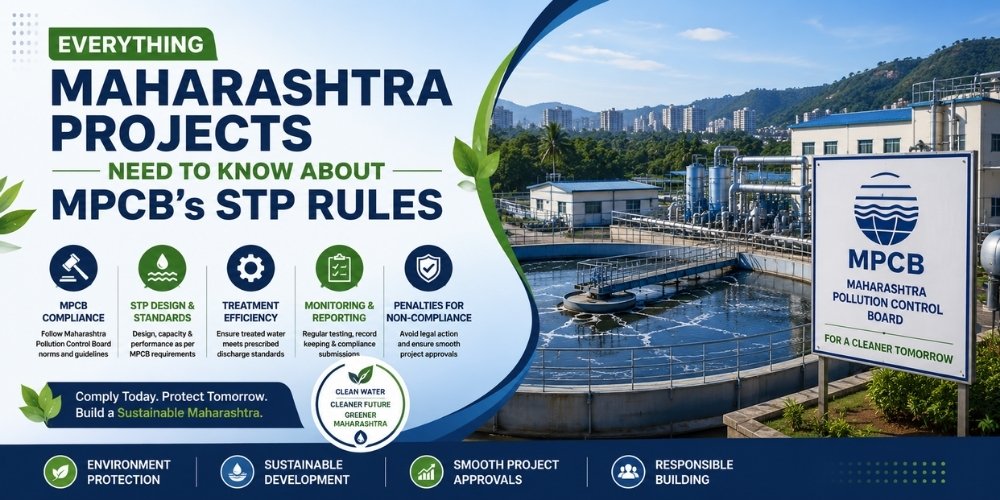
Norms last verified: July 2026. Regulatory figures are subject to periodic revision — always confirm current limits directly with MPCB before finalising a compliance decision.
Maharashtra runs one of India's oldest and most established pollution control frameworks, and it shows in how thoroughly the Maharashtra Pollution Control Board (MPCB) has built out its STP compliance requirements. Established on 7 September 1970 under the Maharashtra Prevention of Water Pollution Act, 1969, MPCB actually predates the central Water (Prevention and Control of Pollution) Act, 1974, which the state formally adopted only on 1 June 1981. Few state boards in India have this kind of head start, and it has translated into one of the country's more mature and demanding regulatory environments for sewage treatment, with specific requirements around reuse and continuous monitoring that project developers need to plan for well before applying for consent.
MPCB operates under the Environment Department, Government of Maharashtra, headquartered in Sion, Mumbai, and its STP-related mandate covers:
| Parameter | Commonly Cited Standard |
|---|---|
| pH | 6.5 – 8.5 |
| BOD (5-day) | ≤ 10 mg/L |
| COD | ≤ 50 mg/L |
| Total Suspended Solids | ≤ 10 mg/L |
| Ammoniacal Nitrogen | ≤ 5 mg/L |
| Fecal Coliform | ≤ 100 MPN/100 mL (some notifications cite different limits depending on reuse application) |
These figures reflect CPCB's baseline standard as applied through MPCB's framework. Given Maharashtra's active enforcement posture and periodic circular updates, confirming the current figure applicable to your specific project category directly with MPCB remains the safest approach before finalising plant design.
A few specific requirements set Maharashtra apart from the general national baseline, and project developers need to plan for these from the design stage rather than discovering them during consent review.
Maharashtra's compliance demands vary meaningfully across its major urban and industrial centres, and understanding this regional texture helps set realistic expectations for a specific project.
MPCB does not mandate a single treatment technology, focusing instead on the discharge and reuse outcome a plant must achieve. Several established approaches are commonly used across the state.
Given the mandatory reuse requirement, technology selection in Maharashtra often comes down to which option most reliably hits the reuse-grade quality bar, rather than discharge compliance alone, a design consideration that carries more weight here than in states without a fixed reuse mandate.
All industries, commercial complexes, and residential projects with a built-up area exceeding 20,000 square metres are required to install and operate a compliant STP. Any project falling under MPCB's Orange or Red pollution index categories is generally expected to have treatment infrastructure in place as a condition of consent, regardless of built-up area. Given how actively MPCB pursues compliance across the state's dense urban and industrial mix, confirming the specific threshold applicable to your project type with the relevant regional office is worth doing early in project planning.
MPCB's public compliance tracking includes active monitoring of NGT-directed matters, including sustained follow-up on National Green Tribunal orders concerning sewage and effluent discharge into Maharashtra's water bodies. The board also maintains a published list tracking compliance status against Supreme Court and NGT directives for major defaulting units, reflecting an enforcement posture that treats non-compliance as an ongoing, trackable matter rather than a one-time inspection event. For any facility operating in Maharashtra, this translates into a genuinely higher likelihood of sustained scrutiny compared to states with less mature monitoring infrastructure, making it worth building a documentation and self-monitoring discipline into daily operations rather than treating compliance as something addressed only around inspection cycles.
As with the national framework, the Water (Prevention and Control of Pollution) Amendment Act, 2024 has shifted many minor procedural offences toward monetary penalties rather than imprisonment in states that have adopted it. Confirming which penalty framework currently applies in Maharashtra is worth doing directly with MPCB, since serious violations like unauthorised discharge remain criminally punishable under both the original and amended structures regardless.
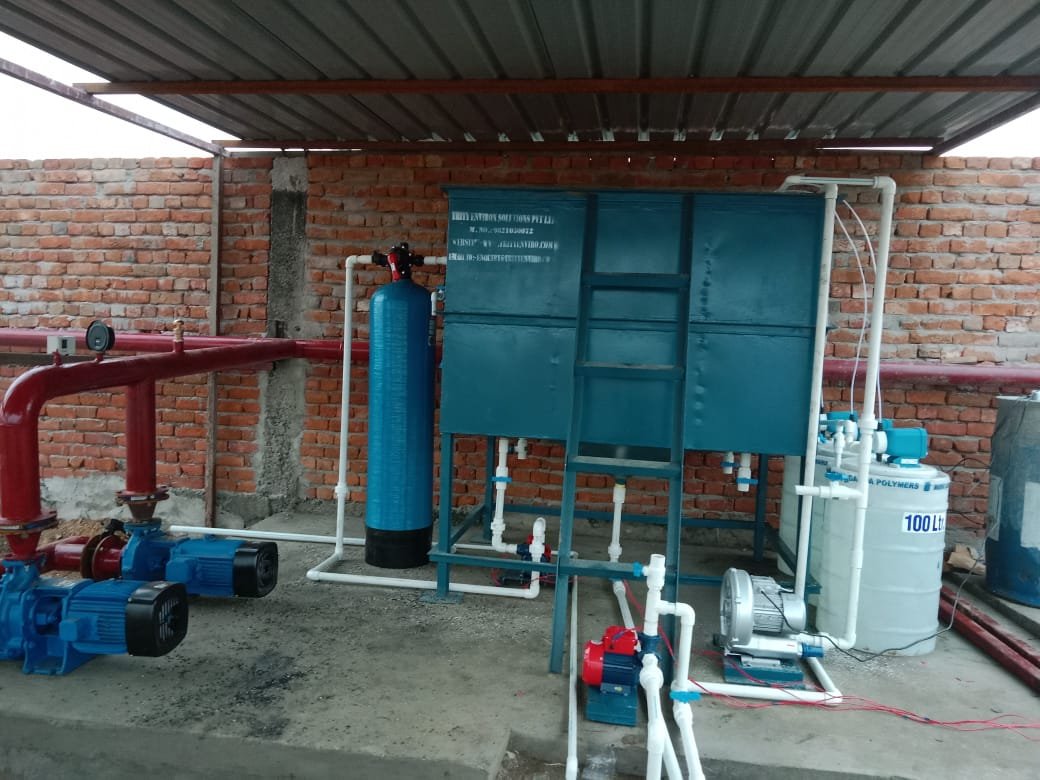
Trity Environ Solutions designs and installs STP and ETP systems engineered to meet MPCB's specific requirements, including the mandatory reuse threshold and continuous monitoring infrastructure the state requires, backed by installation and ongoing AMC support.
If your project in Maharashtra needs a compliance-ready STP or ETP, reach out through our services page or contact us at enquiry@trityenviro.com or +91-9821030072 for a site-specific assessment.
MPCB was established on 7 September 1970 under Maharashtra's own water pollution law, predating the central Water Act, 1974, which the state adopted later in 1981. This gives Maharashtra one of the longest-running pollution control frameworks among Indian states.
Commonly cited figures include BOD ≤10 mg/L, COD ≤50 mg/L, TSS ≤10 mg/L, and pH 6.5–8.5, though these should be confirmed against MPCB's current notification for your specific project category.
Yes. MPCB requires a minimum of 50 percent of treated sewage to be reused for non-potable applications such as gardening and flushing, a specific figure that needs to be planned into project design from the outset.
Yes. Online flow meters and data loggers are mandatory at STP inlets and outlets for continuous monitoring, alongside regular sampling and reporting obligations to MPCB.
Consequences can include financial penalties, legal action under the Environment Protection Act, 1986, Consent to Operate suspension, and public listing among tracked defaulters on MPCB's NGT and Supreme Court compliance monitoring.
Maharashtra's compliance framework reflects its position as one of India's oldest and most heavily monitored pollution control jurisdictions, with a mandatory reuse threshold, continuous monitoring requirements, and active enforcement tracking that go beyond what many other states currently require. For projects in the state, designing an STP around these specific obligations from day one, rather than treating them as add-ons after commissioning, is the more reliable path to sustained compliance. Trity Environ Solutions works with developers and facility owners across Maharashtra to build that compliance in from the outset, backed by current regulatory knowledge and support well beyond commissioning.
Wastewater is no longer waste—it’s a valuable resource for global water sustainability. Advanced treatment technologies are reshaping water reuse, tackling scarcity.

Explore key factors influencing operational costs in Effluent Treatment Plants (ETP) and Sewage Treatment Plants (STP). Discover strategies to optimize efficiency, reduce expenses, and implement sustainable practices for effective wastewater treatment.
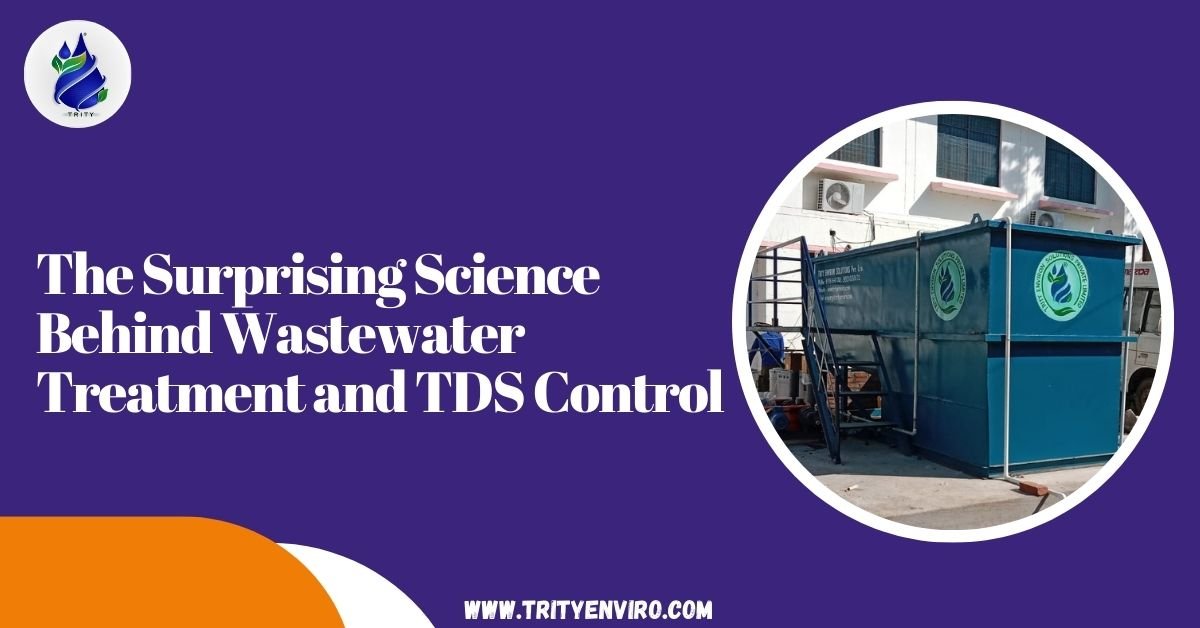
Discover how wastewater treatment and TDS control protect health and the environment through innovative technologies, sustainable practices, and smart solutions.

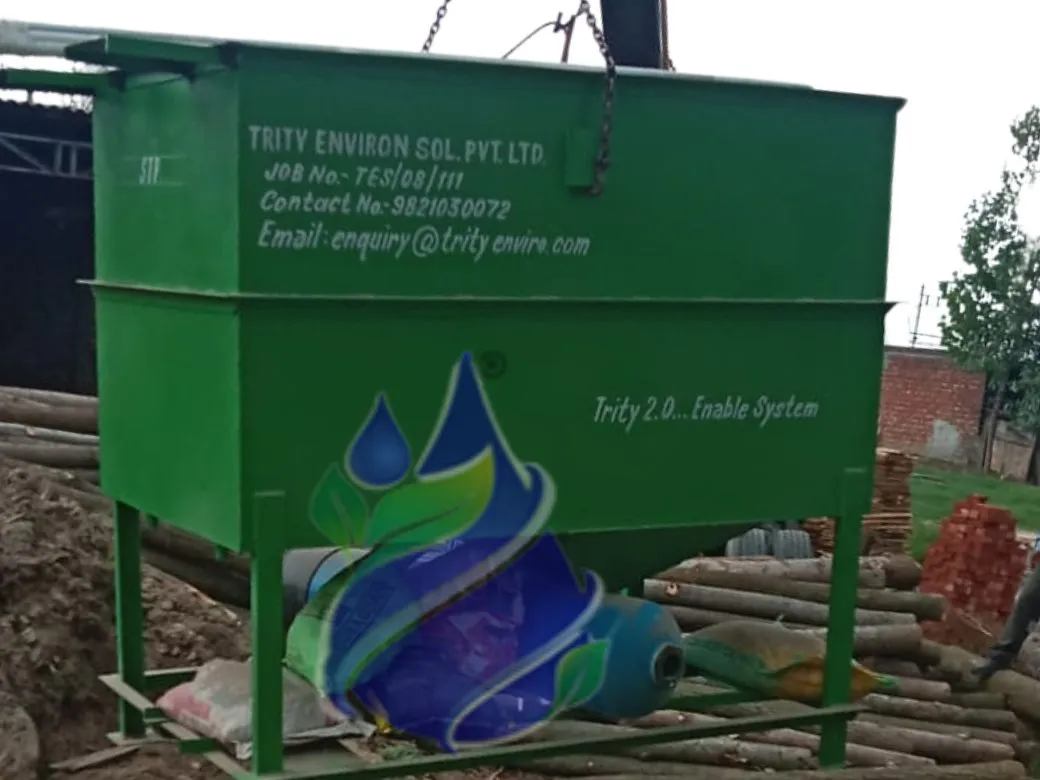
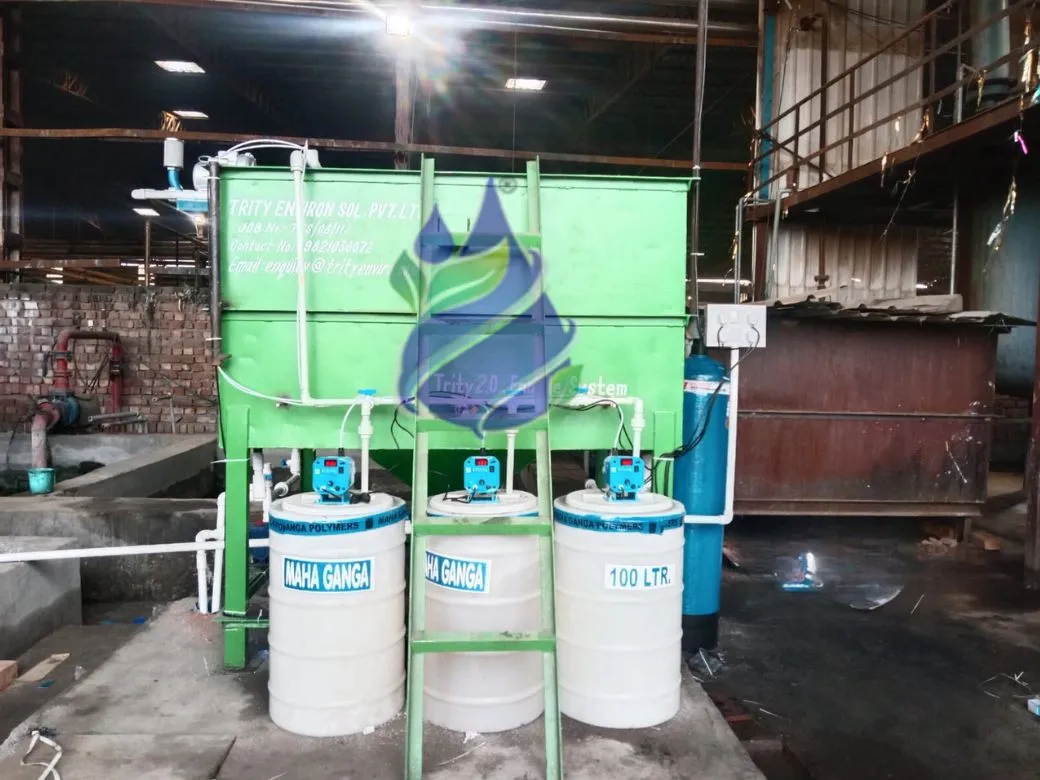



Discuss your requirements with our engineering team and get practical guidance for your project.