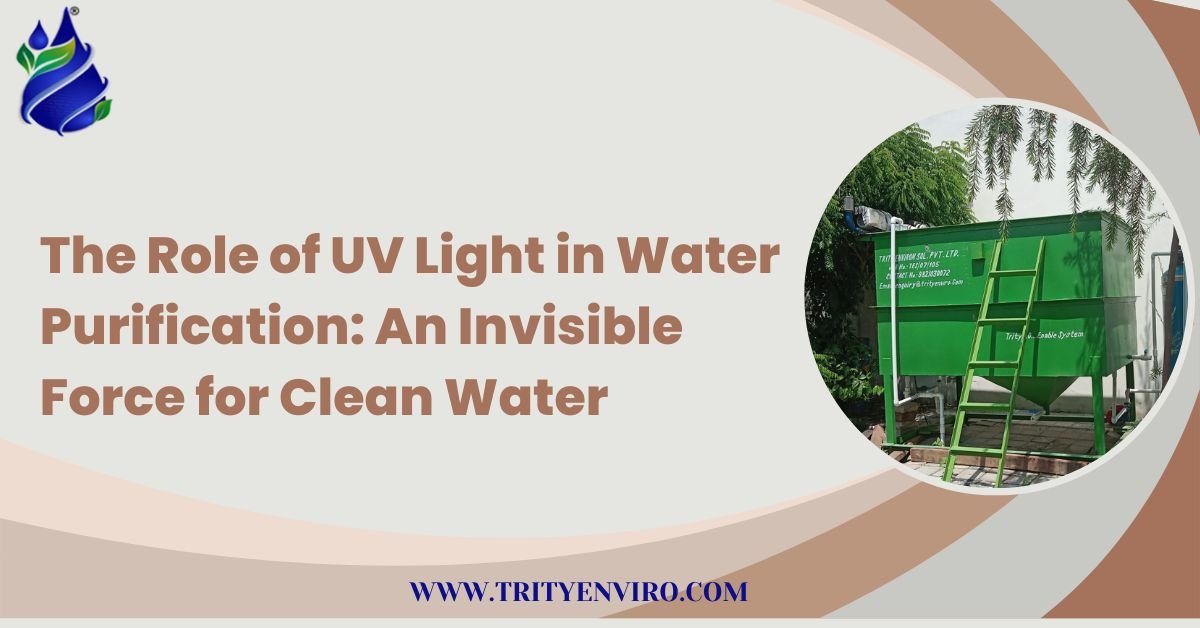
The Role of UV Light in Water Purification: An Invisible Force for Clean Water
UV light disinfects water by eliminating harmful microorganisms, ensuring safe, chemical-free drinking water. A fast, eco-friendly, and effective purification method.

 ISO 9001:2015 & QCI Approved
Not every industry needs the same plant. Start with a waste audit, match each stream to a system and plan for the 2026 rules before you spend.
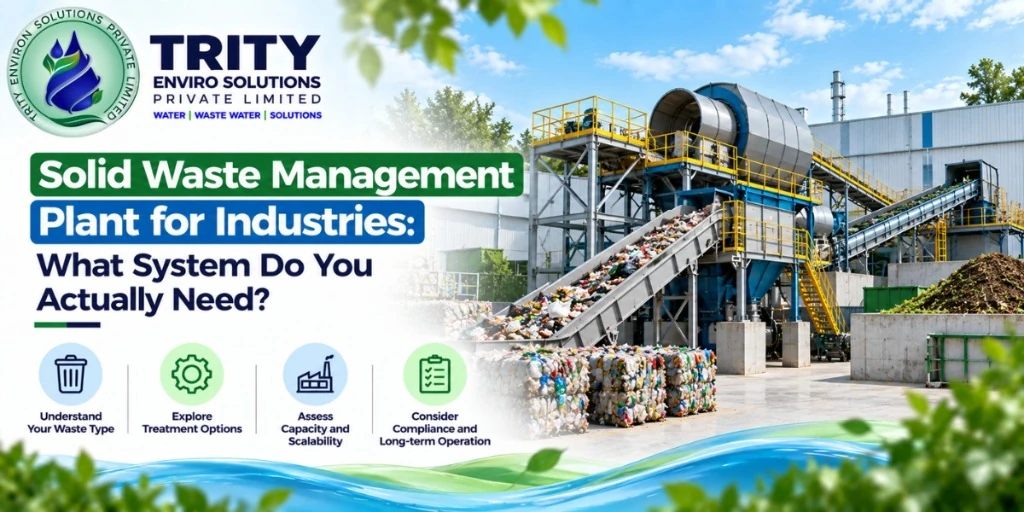
Ask five factory owners what a solid waste management plant is, and you will get five answers. For a food processing unit, it is a composting or biogas system for kitchen and process waste. For an engineering unit, it is a baler for cardboard and plastic, a scrap yard and a hazardous waste store. For a hotel or a campus, it is a segregation hub with an organic waste converter. For a pharma unit, it is a tightly controlled storage and disposal process for residues and sludge.
That is why buying a plant first and thinking later goes wrong. The market sells composters, shredders, balers, compactors, biogas digesters, RDF lines and incinerators, and each is the right tool for a specific stream. Choosing a machine before you know your waste leads to idle equipment, extra cost and compliance gaps.
This guide helps you work out which solid waste management plant for industries you actually need. It explains the legal context, shows how to do a waste audit, maps each stream to a suitable system and outlines the costs and checks involved. It is written for plant heads, EHS officers and administrators of factories, hotels, hospitals, campuses and large facilities.
The Solid Waste Management Rules, 2026 were notified by the Ministry of Environment, Forest and Climate Change and came into force on 1 April 2026, replacing the 2016 rules. They place more responsibility on large generators and push waste processing to the point of generation.
Under the 2026 rules, summaries describe a bulk waste generator as an entity that meets any one of these conditions: it generates 100 kg or more of solid waste per day, it uses 40,000 litres or more of water per day, or it has a built-up area of 20,000 square metres or more. Many factories, hotels, hospitals, campuses, malls and housing societies cross at least one of these lines. Check the exact text of the rules and any state notification that applies to you, since local bodies may add their own conditions.
Summaries of the rules point to several duties for bulk generators:
One summary also notes that cement plants and industries using solid fuel must gradually replace a share of fuel with refuse derived fuel (RDF) over several years. If you operate a kiln or a large boiler, ask your consultant whether that applies to you.
Responsibility stays with the occupier even if you outsource the work, so choose partners carefully and keep records.
A waste audit takes one to two weeks and saves months of wrong decisions. Nothing else gives you better data.
Walk through every department and note what waste appears, where it is stored and how it leaves. Weigh each stream daily for at least seven days, including a high-production day. Typical streams in industrial and institutional sites include:
Record weight, moisture, contamination and variation across days. A stream that is 40 kg on Monday and 180 kg on Friday needs a different design from one that is steady.
Some waste is not part of general solid waste at all. Hazardous waste from process residues, used oil, solvents, certain sludges and contaminated packaging falls under the Hazardous and Other Wastes rules and needs authorised storage, transport and disposal. Biomedical waste from hospitals has its own rules. Plastic packaging and e-waste carry producer responsibility obligations. Do not mix these with general waste, and do not process them in a composter or a baler. Keep manifests and authorisations in order.
Once you know the waste, matching it to a system is straightforward.
For canteen, kitchen and food process waste, the main options are aerobic composting, mechanical organic waste converters and biomethanation. Composting machines turn waste into a soil conditioner and suit hotels, campuses and societies, and a separate buying guide covers them in detail in our article on organic waste composting machines. Where wet waste volume is high and steady, such as in food and beverage units or large kitchens, an anaerobic digester can treat it and recover biogas for energy.
Choose by volume, consistency, available space and what you will do with the output. Compost needs a user or a disposal route, and biogas needs a use such as cooking, heating or power.
For dry waste, the core of the plant is a segregation area and a small material recovery setup: sorting tables, bins by stream, a baler for cardboard and plastic, a shredder where needed and a storage shed with a dry floor. Selling clean, baled material to registered recyclers often brings income that offsets part of your costs. For non-recyclable combustibles, the route is usually delivery to an authorised RDF or co-processing facility. Do not burn waste in the open or in unauthorised units.
Compactors and balers reduce volume and transport cost. Weighbridges and simple software help you record quantities, which is useful for audits and for the reporting that the new rules call for.
Sludge from an effluent treatment plant or sewage treatment plant is often the heaviest and wettest stream a factory has. Dewatering cuts its weight and disposal cost. A filter press for sludge dewatering or a sludge dewatering system can make a large difference. Whether the dewatered sludge is hazardous depends on its source and composition, so classify it correctly and send it only through authorised routes.
Machines are only part of the cost. Include:
Compare cost against what you pay today for transport, landfill fees and fines, and against income from recyclables and compost. For many sites the payback comes mainly from avoiding rising disposal charges and compliance risk. Ask each supplier to show a simple before and after cost table for your own waste figures, including transport, landfill or tipping charges, manpower, recyclable income and the cost of any penalty you have faced in the past. If a proposal cannot show this, it has not been built around your site.
A supplier who understands both waste and water systems helps you avoid gaps, because leachate, sludge and washdown water all end up in a treatment plant. Our wastewater treatment plant range, project execution service and annual maintenance contract support keep these linked.
Treat compliance as a project with a calendar. In the first two weeks, complete the waste audit and classify each stream. In the following month, decide the system for each stream, request proposals and check the registration requirements of your local body and the central portal for bulk generators. Over the next two to four months, install segregation infrastructure, order and install machines and train staff. Start small trials early so that problems show up before the full rollout.
Keep records from day one. A simple register should show daily weight by stream, the name of the collector or processor, quantities sent for recycling, composting or disposal, authorisation numbers, and any rejects. Photos of segregation points and training sessions help in inspections. Under rules that place responsibility on the occupier, these records are your proof that waste reached an authorised destination. Review the data every month: a rising reject share tells you that segregation is slipping, and a rising wet waste weight may mean you need more processing capacity.
| Parameter / Stage | Target Optimal Range | Failure Impact / Risk | Corrective Engineering Action |
|---|---|---|---|
| Source segregation quality | Clean separation into wet, dry, sanitary and special care streams | Contaminated compost, rejected recyclables, compliance gaps | Colour coded bins, training, supervision, feedback to departments |
| Daily waste measurement | Weighed and logged for each stream | Wrong sizing, poor reporting | Install scales or weighbridge, keep a simple daily log |
| Wet waste processing capacity | Sized to average plus peak generation with margin | Backlog, odour, pests | Add capacity or second unit, rebalance schedules |
| Sludge moisture after dewatering | As low as the process allows, set by disposal route | High disposal weight and cost, leakage | Optimise polymer dosing, upgrade or service dewatering unit |
Trity Environ Solutions is an ISO 9001:2015 certified and QCI-approved solid waste management and waste treatment plant manufacturer and supplier in India, delivering robust, high-efficiency systems engineered for CPCB and SPCB regulatory compliance.
Every installation is supported by pan-India Annual Maintenance Contract and Operation and Maintenance services.
Speak directly with our environmental engineering specialists for system sizing, CPCB/SPCB compliance review, or a tailored technical proposal.
Request Free Engineering ConsultationCall: +91-9821030072 | Email: enquiry@trityenviro.com
UV light disinfects water by eliminating harmful microorganisms, ensuring safe, chemical-free drinking water. A fast, eco-friendly, and effective purification method.
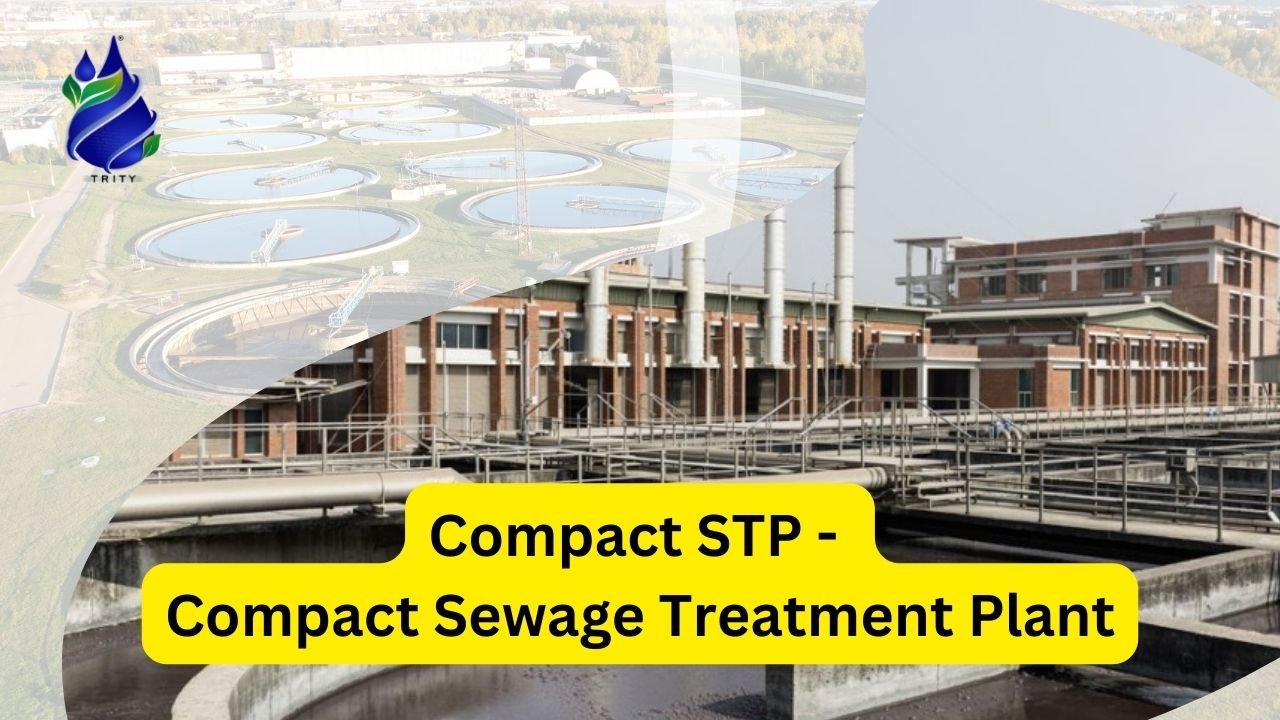
Compact STP – Compact Sewage Treatment Plant for efficient wastewater treatment in residential, commercial and industrial applications. Space-saving, cost-effective and easy to install solutions.
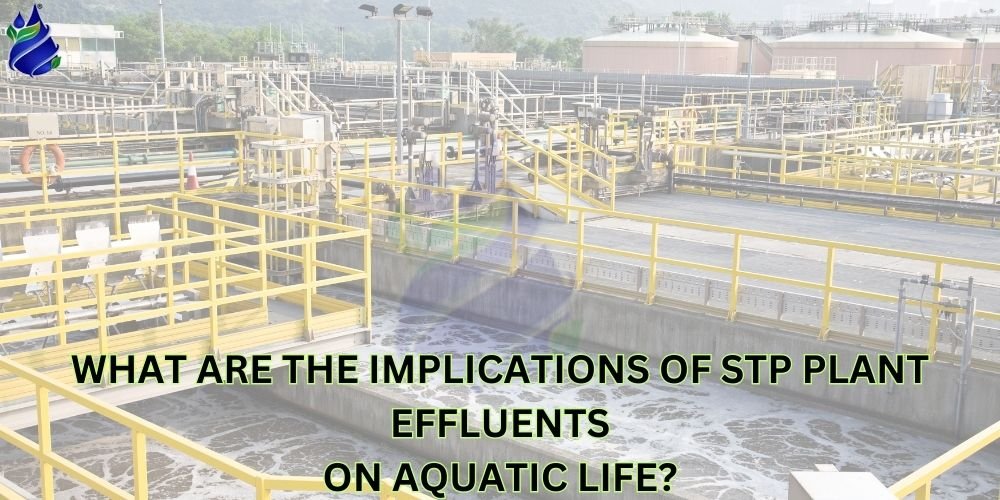
How STP effluent affects aquatic life through endocrine disruption, with real fish studies showing sex ratio and reproductive impacts.



Discuss your requirements with our engineering team and get practical guidance for your project.