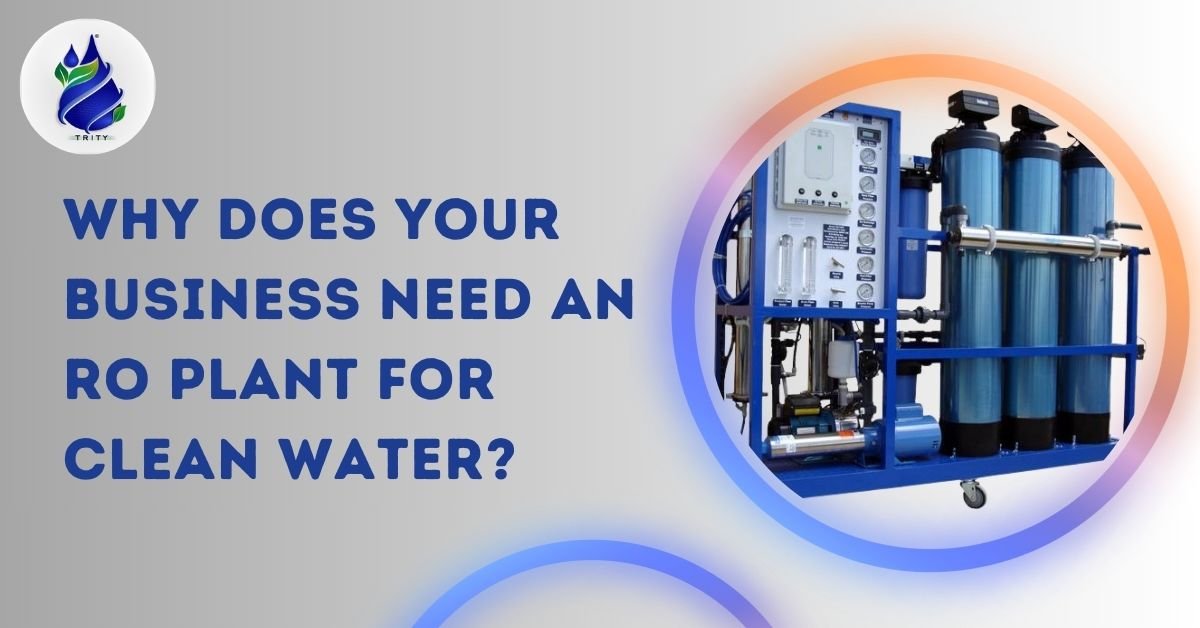
Why Does Your Business Need an RO Plant for Clean Water?
RO plants ensure clean, safe water for businesses, reduce costs, improve product quality, and enhance sustainability while meeting industry water purity standards.

 ISO 9001:2015 & QCI Approved
Regulators now watch stacks and drains in real time. Here is how to install, connect and maintain an OCEMS that holds up to scrutiny.
For decades, pollution inspections meant a visit, a sample and a report that arrived weeks later. A unit could pass on the day of the sample and run dirty on every other day. Online continuous emission and effluent monitoring changes this. Sensors at the stack and at the effluent outlet send readings every few minutes to a server that the pollution control board can open at any time.
The Central Pollution Control Board (CPCB) has been tightening this system. Industry notices describe a new online portal for Online Continuous Emission and Effluent Monitoring Systems, often called OCEMS, to which industries have been directed to migrate and register their monitoring stations, with live data and, in many cases, video from PTZ (pan, tilt, zoom) cameras. Reports in early 2026 also describe closure directions for units that failed to register or connect on time. The details differ by state and by industry category, so every unit must read the direction that applies to it, but the direction of travel is clear: real-time data is becoming the basis of compliance.
For a plant head or EHS officer, this raises practical questions. Does my unit need OCEMS? What parameters must be measured? What equipment is acceptable? How do I get the data to the portal? What goes wrong most often? And what will it cost to do properly?
This guide answers these questions in a working order. It is written for industries with boilers, furnaces, process stacks and effluent treatment plants, and for the consultants and procurement teams who support them. It is a practical guide, not legal advice. Always confirm the exact requirement in your consent order and in the latest CPCB or SPCB direction for your category.
CPCB and state boards have required online monitoring mainly for the highly polluting and larger units: the 17 categories of highly polluting industries, large red category units, common effluent treatment plants, sewage treatment plants above certain capacities, waste-to-energy plants and landfills, and industries in air-polluted regions such as Delhi-NCR. Recent directions have extended the requirement to more units and tightened what counts as an acceptable system. Which of these categories apply to you is decided by your consent order and by the direction issued to your sector, so check both.
Typical parameters are:
The two systems use different technology. Emission monitoring takes a sample of hot, dusty and sometimes corrosive flue gas, conditions it and passes it to an analyser, or measures in situ across the stack. Effluent monitoring places probes or an analyser in the outlet stream, or draws a sample to an analyser that works on optical or electrochemical principles. Each has its own failure modes, which we cover later. A site with both a boiler and an ETP usually needs both systems, often from one integrator.
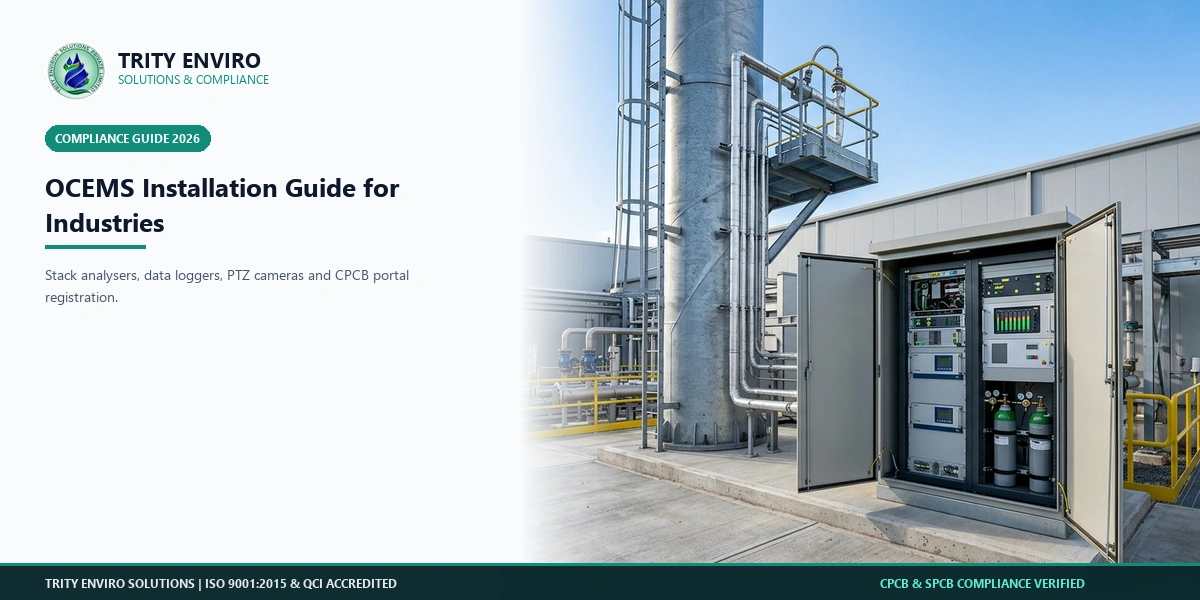
A typical emission monitoring station has a sampling probe fitted into the stack at a proper location, a heated sample line, a conditioning unit that removes moisture and dust, gas analysers for the required parameters, a flow, temperature and oxygen sensor, a data acquisition system or logger and a shelter or enclosure with power and cooling. For particulate matter, the instrument typically uses light scattering or similar methods and is calibrated against manual isokinetic sampling.
An effluent monitoring station has flow measurement, pH and other probes in a flow cell or in the channel, an analyser for COD, BOD proxies and suspended solids, an auto-cleaning system where required and a logger. Many designs use a small sample pump and a shelter near the ETP outlet.
The CPCB expects instruments to be of a type that meets its technical requirements, and it has used certification and listing of models as a tool to make sure that analysers are fit for Indian conditions. Ask each vendor for the certification or approval status of the instruments they propose and check it against the current CPCB position.
The logger collects readings at short intervals, such as every minute, stores them and transmits them to the CPCB and state board servers through a defined protocol. The industry has to register its monitoring stations on the portal, link each analyser and parameter and keep the connection alive. Missing data, flat lines, sudden jumps and out of range values are flagged by the system and may trigger notices.
Many directions also require PTZ cameras that give the regulator a live view of the monitored process or the stack, so that readings can be read against what is actually happening. Cameras need a stable network connection, a proper mounting and a clear field of view. Where the direction applies, plan power, networking and camera placement along with the analysers.
Location decides data quality. A stack sampling point should be in a straight section of the duct, away from bends, dampers and fans, following the usual rule of several duct diameters downstream and upstream of any disturbance. A platform, ladder, power and a safe working area are needed, and a shelter close to the stack keeps sample lines short. For effluent, the sensor should sit in a flowing, representative part of the final outlet, not in a corner where solids settle, and the flow measurement should follow the standard channel or pipe arrangement.
Choose analysers for your gas or effluent, not for a catalogue. Wet, acidic or very dusty flue gas calls for a different sampling approach from dry, clean gas. High colour or oily effluent calls for a different COD or TSS technique from clean water. Share your gas data and effluent characteristics with the vendor and ask how the system will handle them.
Online systems fail in predictable ways:
Keep a calibration and maintenance register with dates, standards used and results, because the regulator may ask for it. Assign a named person to check the dashboard daily, and set alarms for data gaps and high readings, so that you can act before the board does. A service contract with a vendor who responds quickly is worth much more than a low purchase price.
Cost depends on the number of stacks and effluent points, the parameters, the analyser technology, the shelter and civil work, the camera and network setup, the integration with the portal and the service plan. A single boiler stack with PM, SO2, NOx and flow costs far less than a plant with many stacks and a large ETP. Running costs include calibration gas and standards, consumables, spares, power, communication and service visits. Ask for a five year cost, not just the equipment price.
For the emission side, our SOx-NOx gas analyzer supports continuous monitoring of two key pollutants, and our effluent treatment plant and sewage treatment plant designs can integrate effluent monitoring at the outlet. If you are in Delhi-NCR, read our guides on the 50 mg/Nm3 PM emission standard and on GRAP rules for industries, since monitoring, fuel and emission limits are all linked. An annual maintenance contract keeps calibration and service on schedule.
A sensible compliance plan has five steps: confirm your obligation in writing from the direction and your consent, survey your stacks and outlets, select a vendor and approved instruments, install and register on the portal and then run a daily review with monthly calibration and quarterly audit. Start early, since procurement, installation and portal connection can take weeks to months.
Keep a folder with your consent order, the OCEMS direction that applies to you, portal registration proof and station IDs, analyser certificates and calibration records, validation test reports, maintenance and outage logs, and the service contract. Inspectors often ask for these before they look at the equipment. A tidy file shows control, and it also saves your team hours of searching when a notice arrives.
| Parameter / Stage | Target Optimal Range | Failure Impact / Risk | Corrective Engineering Action |
|---|---|---|---|
| Data availability to portal | Continuous, with minimal gaps and a stored backup | Notices for missing data, possible closure directions | Add UPS, backup network, logger memory and daily dashboard checks |
| Sampling location | Straight duct section away from bends and fans, safe access | Unrepresentative readings, disputed results | Relocate probe, add platform, follow standard duct diameter rules |
| Analyser calibration | At set intervals with certified standards, compared with manual tests | Drift, wrong readings, penalty risk | Calibration schedule, register, periodic isokinetic cross-check |
| Sample conditioning | Heated lines, effective moisture and dust removal | Condensation, blocked lines, corrosion, false readings | Correct heating, filters, purge cycle, suitable materials |
Trity Environ Solutions is an ISO 9001:2015 certified and QCI-approved continuous emission monitoring and effluent treatment plant manufacturer and supplier in India, delivering robust, high-efficiency systems engineered for CPCB and SPCB regulatory compliance.
Every installation is supported by pan-India Annual Maintenance Contract and Operation and Maintenance services.
RO plants ensure clean, safe water for businesses, reduce costs, improve product quality, and enhance sustainability while meeting industry water purity standards.

Learn the difference between hard water and soft water, their effects on daily use and industry, and the best water treatment methods to improve water quality.
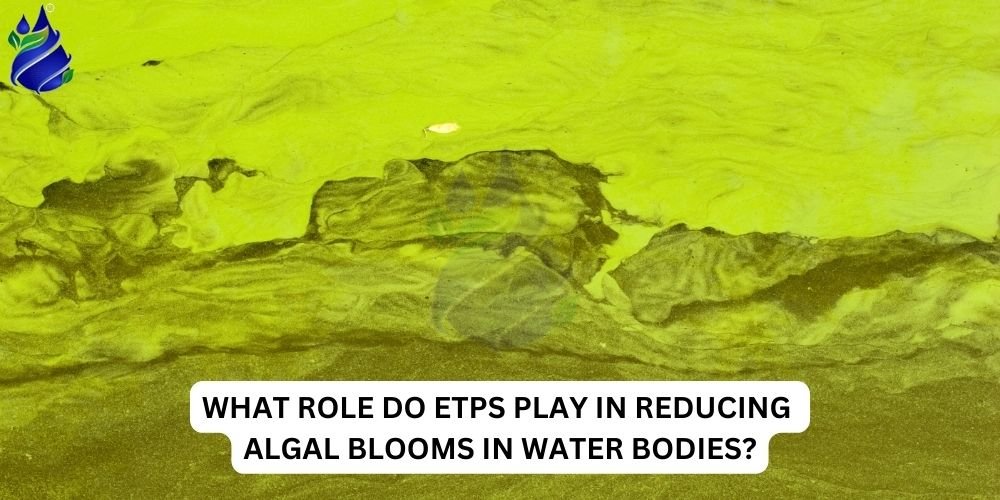
How ETPs prevent algal blooms through biological nutrient removal, the eutrophication chain explained, and why standard treatment often isn't enough.











Discuss your requirements with our engineering team and get practical guidance for your project.

