What Are the Key Steps in Designing a Sustainable STP Plant?
An 8-step guide to designing a genuinely sustainable STP plant: site investigation, technology choice, energy efficiency, and resource recovery.

 ISO 9001:2015 & QCI Approved
SBR technology does more than treat sewage, it can be tuned for nutrient removal, industrial wastewater, and specific effluent quality targets. Here's how.

A Sequencing Batch Reactor's basic fill-react-settle-decant cycle is only the starting point. What actually determines whether an SBR delivers excellent effluent quality or merely adequate compliance comes down to how the cycle is tuned, what the incoming wastewater actually looks like, and whether the plant is configured for the specific removal targets a project needs, beyond just organic matter. This becomes especially relevant once you move from domestic sewage into industrial wastewater, where flow characteristics, pollutant load, and treatment goals often look nothing like a typical residential complex, and where the same basic technology needs meaningfully different configuration to perform well.
An SBR is not limited to basic organic matter removal. With the right configuration, it can be tuned toward several distinct effluent quality goals.
| Parameter | What It Measures | How SBR Addresses It |
|---|---|---|
| BOD (Biochemical Oxygen Demand) | Organic load that consumes oxygen as it degrades | Aerobic bacteria break down organics during the react phase |
| COD (Chemical Oxygen Demand) | Total oxidisable material, including some non-biodegradable compounds | Extended aeration and cycle tuning improve removal of harder-to-degrade fractions |
| TSS (Total Suspended Solids) | Undissolved particulate matter | Settling phase separates solids from clarified water before decant |
| Total Nitrogen | Ammonia and organic nitrogen compounds | Alternating aerobic and anoxic conditions within the cycle drive nitrification and denitrification |
| Total Phosphorus | Phosphate compounds contributing to eutrophication | Can be reduced through biological phosphorus removal configurations or supplemental chemical dosing |
Nutrient removal is where SBR configuration really matters: Basic organic matter removal happens in almost any properly run SBR, but nitrogen and phosphorus removal require deliberately structured anoxic and aerobic periods within the cycle, which is a design decision made upfront rather than something that happens automatically simply by installing standard SBR equipment.
Nitrogen removal deserves its own explanation, since it depends on a two-step biological process that many basic SBR descriptions skip over entirely.
Industrial wastewater rarely behaves like domestic sewage, and an SBR configured for one does not automatically perform well on the other without adjustment.
| Characteristic | Domestic Sewage | Typical Industrial Wastewater |
|---|---|---|
| Flow pattern | Fairly predictable, tied to occupancy | Can be highly variable, tied to production schedules |
| Organic load | Moderate and relatively consistent | Can swing significantly between batches or shifts |
| Toxicity risk | Low | Can carry inhibitory compounds affecting biological treatment |
| Nutrient balance | Generally balanced for biological treatment | Often imbalanced, needing supplemental nutrients or carbon |
| Temperature | Near ambient | Can run significantly higher, especially from process discharge |
Shock loads need specific design accommodation: Industrial sites with batch-based production, common across food processing, pharmaceutical, and chemical manufacturing, can send sudden high-strength discharges into the treatment system, and an SBR designed with this in mind uses equalisation and flexible cycle timing to absorb these swings without upsetting the biological process, which would otherwise risk a temporary drop in treatment performance across the following cycles.
Inhibitory compounds need to be identified before design: Certain industrial wastewater streams carry compounds that can suppress or kill the biological population responsible for treatment, and a proper influent characterisation study catches this risk before it becomes an operational problem after commissioning, since discovering an inhibitory compound only after the plant is running is a far more expensive and disruptive fix than accounting for it at the design stage.
Temperature affects biological activity rates: Elevated wastewater temperature from certain industrial processes can either help or hurt biological treatment depending on the specific range, and cycle timing sometimes needs seasonal or process-linked adjustment to account for this, particularly for facilities where discharge temperature varies meaningfully between production shifts or seasons.
Getting consistent effluent quality from an SBR depends on tracking a handful of operational indicators, not just checking final discharge numbers periodically.
A few recurring problems show up across SBR installations, and recognising them early prevents small issues from becoming compliance failures.
Modern SBR performance depends heavily on how well the control system tracks and responds to actual conditions inside the reactor, rather than running on fixed timers alone.
Cycle configuration is not a one-size decision, and getting it right depends on matching the design to actual project requirements rather than defaulting to a standard template.
| Project Need | Cycle Configuration Consideration |
|---|---|
| Organic matter removal only | Standard aerobic react phase, simpler cycle structure |
| Nitrogen removal required | Alternating aerobic and anoxic periods within the react phase |
| Phosphorus removal required | Additional anaerobic period ahead of the aerobic phase, or supplemental chemical dosing |
| Variable or shock-load flow | Equalisation tank ahead of the SBR, flexible fill and react timing |
| High-strength industrial wastewater | Extended react phase duration, possible pre-treatment for inhibitory compounds |
| Water reuse target | Extended settle and decant optimisation, potential polishing stage downstream |
Start with the discharge or reuse standard, not the technology: Working backward from the actual effluent quality target, whether that is a straightforward BOD and TSS discharge limit or a more demanding nutrient removal and reuse standard, is what should drive cycle configuration decisions, rather than specifying a generic SBR and hoping it meets whatever standard applies later.
Revisit configuration if the standard or the wastewater changes: A cycle configuration that met requirements at commissioning may need adjustment if discharge norms tighten or if upstream processes change the wastewater's characteristics over time, making this a decision worth revisiting periodically rather than treating as permanently fixed once the plant is installed and running.
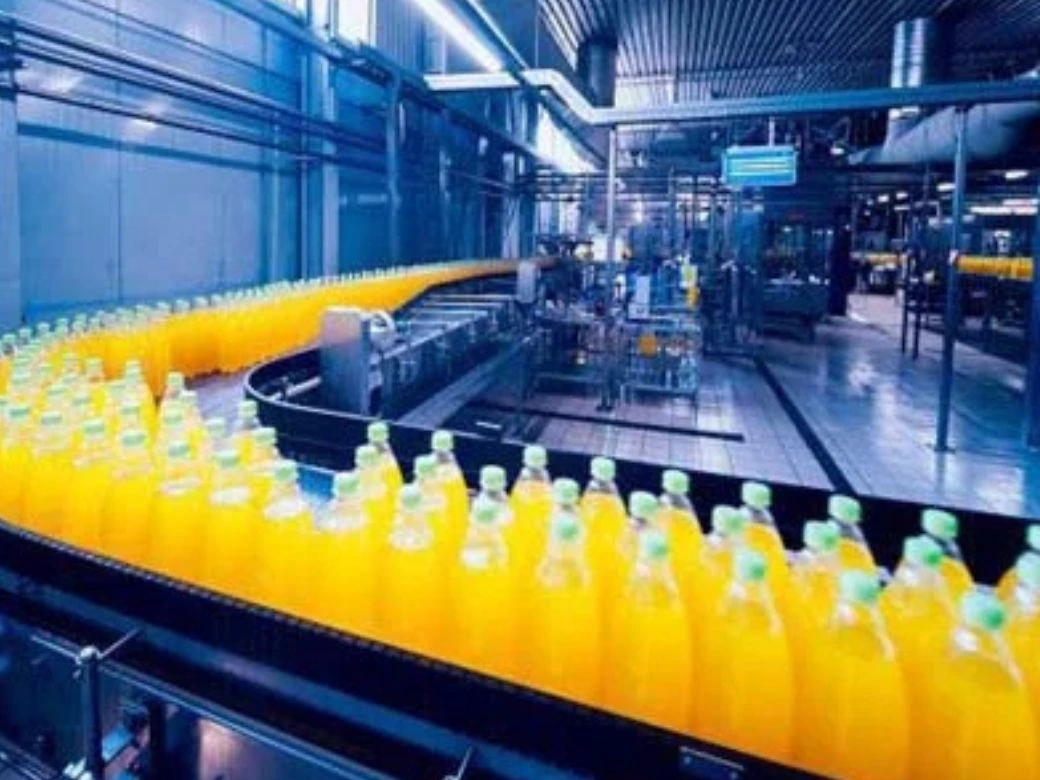
Certain industrial sectors get particular value from a properly configured SBR system, especially where nutrient removal or shock load handling matters.
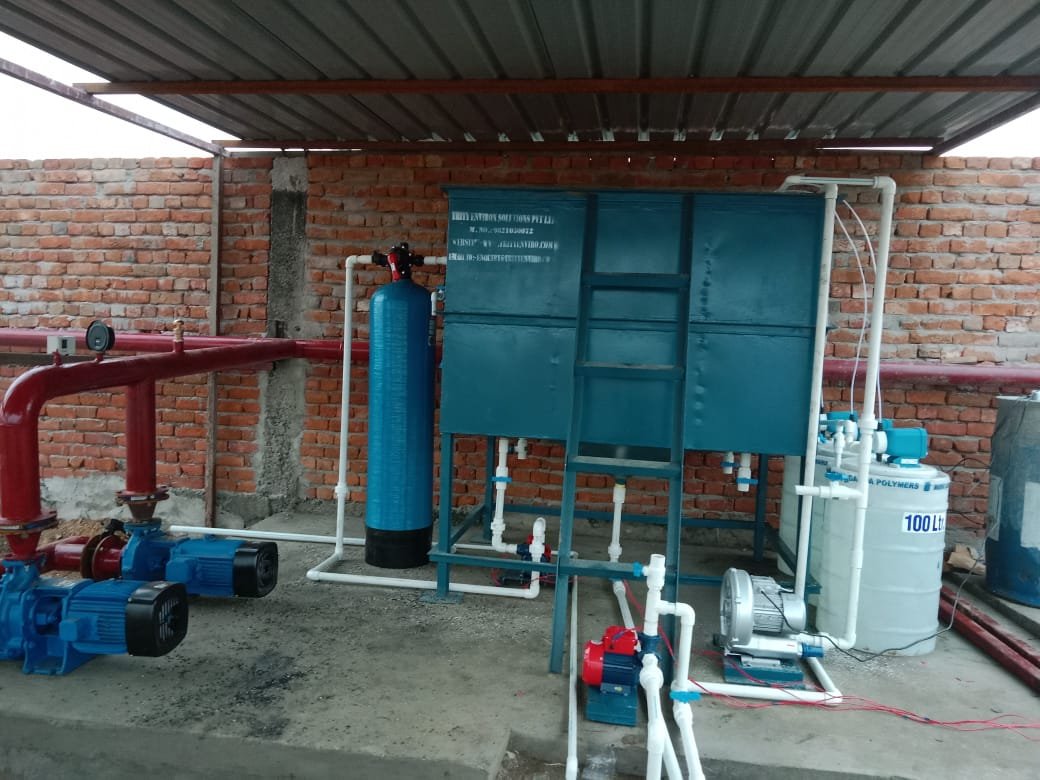
Our Sequencing Batch Reactor systems are engineered around the specific effluent quality targets and wastewater characteristics of each project, whether that means straightforward organic matter removal or a full nutrient removal configuration for a more demanding discharge standard, and pair naturally within a broader effluent treatment plant setup for industrial sites with more complex wastewater profiles. Getting this configuration right from the outset, rather than retrofitting nutrient removal or shock-load handling onto an already-built plant, generally proves both cheaper and more reliable over the system's operating life.
If your facility needs an SBR system tuned to specific effluent quality targets or industrial wastewater characteristics, reach out through our services page or contact us at enquiry@trityenviro.com or +91-9821030072 for a technical assessment.
A properly designed SBR can remove nitrogen through alternating aerobic and anoxic phases that drive nitrification and denitrification, and phosphorus through biological removal configurations or supplemental chemical dosing. This needs to be part of the original design intent rather than assumed automatically from a basic organic-matter-focused configuration.
Generally, yes. Industrial wastewater often carries higher variability in flow and load, different nutrient balances, and sometimes compounds that can inhibit biological treatment, all of which need to be accounted for in cycle timing, equalisation capacity, and biomass management, rather than applying a standard domestic-sewage configuration directly.
A rising SVI typically signals developing settling problems within the reactor, often linked to filamentous bacteria overgrowth from nutrient imbalances, low dissolved oxygen, or extended low-load periods. Catching this early, before effluent quality visibly deteriorates, allows corrective action before it becomes a compliance issue.
This usually points to a shift in influent characteristics that the original cycle timing no longer matches, whether from a new process added upstream, seasonal variation, or gradual changes in occupancy or production patterns. Periodic reassessment of cycle timing against actual current conditions catches this kind of drift.
Yes, with the right design accommodations. Equalisation capacity ahead of the reactor and flexible cycle timing that can absorb load variability are what make SBR technology workable for sites with batch-based production and the resulting shock load risk, rather than the basic technology itself needing to change.
Sensor-based control, such as dissolved oxygen monitoring during aeration or sludge blanket level tracking before decant, allows the system to respond to actual real-time conditions rather than assuming a fixed timing schedule remains correct regardless of load or seasonal variation. This tends to produce more consistent effluent quality and better energy efficiency than a purely timer-based setup, particularly for sites with variable industrial wastewater characteristics.
An 8-step guide to designing a genuinely sustainable STP plant: site investigation, technology choice, energy efficiency, and resource recovery.
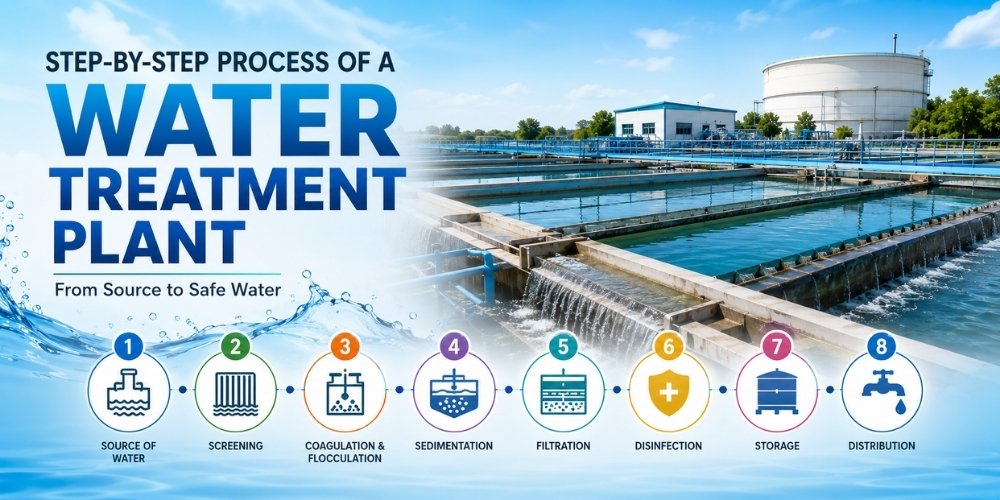
Learn the complete step-by-step process of a water treatment plant, including screening, coagulation, sedimentation, filtration, disinfection, sludge handling, and compliance standards.
Explore how water treatment helps mitigate climate change by reducing emissions, conserving resources, and improving water security for a sustainable, climate-resilient future.

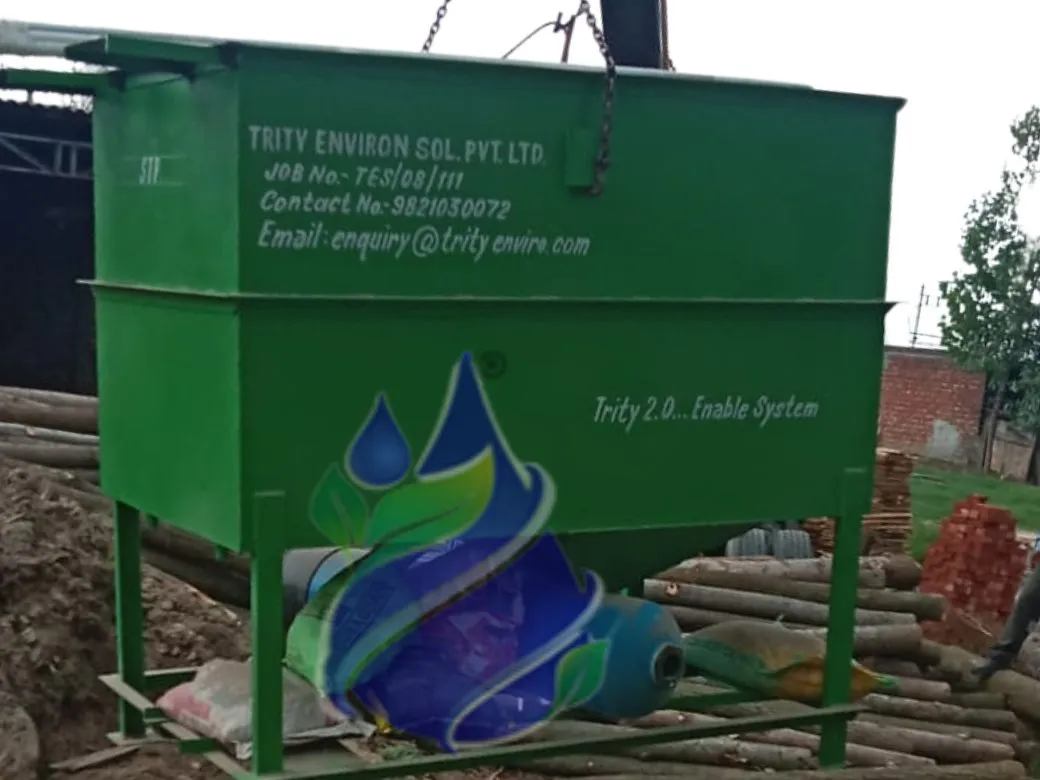
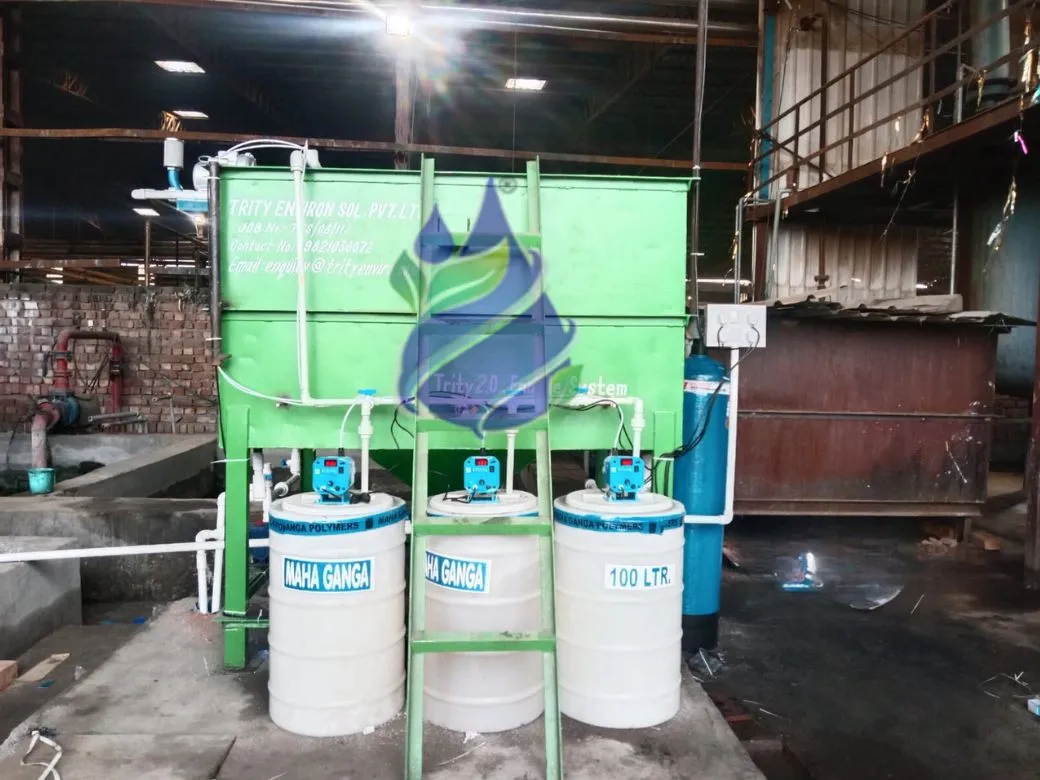



Discuss your requirements with our engineering team and get practical guidance for your project.