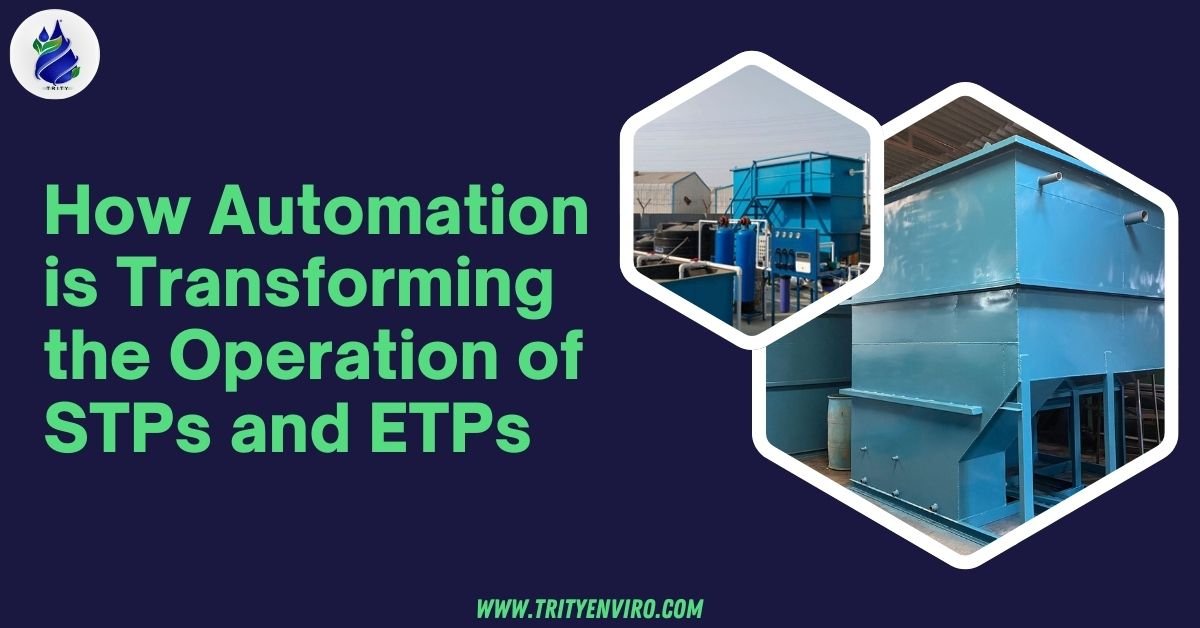
How Automation is Transforming the Operation of STPs and ETPs
Discover how automation enhances the performance of STPs and ETPs with smart sensors, predictive maintenance, and machine learning for better wastewater management.

 ISO 9001:2015 & QCI Approved
Wet waste rules are tighter for large generators in 2026. Here is how hotels, housing societies and institutions can choose a composting machine that works day after day.
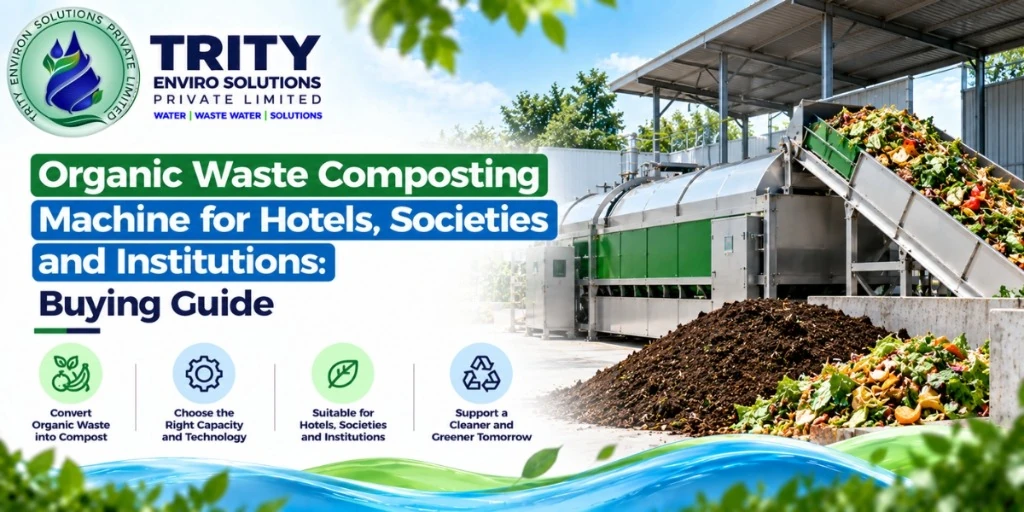
Hotels, housing societies, hospitals, hostels and corporate campuses have one thing in common: a steady stream of food and garden waste that used to leave in a municipal truck. That arrangement is changing. Under the Solid Waste Management Rules, 2026, which came into force on 1 April 2026, large generators are expected to process wet waste on site through composting or biomethanation. Where that is not feasible, they can obtain an Extended Bulk Waste Generator Responsibility certificate through authorised arrangements, subject to the local body.
For many facilities, an organic waste composting machine is the most practical answer. It sits close to the kitchen or the garden, handles daily waste and turns it into a material that can be used as soil conditioner. When it is the right size and the staff use it properly, it quietly solves a problem. When it is wrongly sized, poorly placed or fed the wrong waste, it becomes a source of smell, flies and complaints.
This guide helps you buy well. It explains how to estimate capacity, how the main machine types differ, which specifications matter, what running a unit really involves and what to ask a supplier before you order. It is written for facility managers, hotel engineers, society committees and institutional administrators.
Summaries of the 2026 rules describe a bulk waste generator as an entity that generates 100 kg or more of solid waste per day, uses 40,000 litres or more of water per day, or has a built-up area of 20,000 square metres or more. Large hotels, big housing societies, hospitals, malls and campuses frequently cross one of these lines. Some local bodies had earlier set lower thresholds, so check what your city or state requires. Even if you fall below the legal threshold, on-site composting can cut disposal cost and make your premises cleaner.
Do not guess. Collect wet waste data for at least a week and record the weight each day, including weekends and event days. Use the peak days, not only the average, to decide capacity.
As a rough guide from industry buying guides, a building of 50 to 100 flats tends to generate about 10 to 30 kg of food waste a day, a small or mid-size restaurant may need 50 to 100 kg per day of capacity, and a large hotel, hospital kitchen or food court may need 200 kg per day or more. Your own numbers will differ with menu, covers, garden waste and how well waste is segregated.
For a site with variable load, two smaller units can be more reliable than one large one. You can run one during low periods, and if one stops for maintenance, the other keeps working. For a steady load, a single unit is simpler and often cheaper.
Many listings describe volume reduction of up to about 90 percent, and the dry output is typically a small fraction of the input weight. Ask the supplier for the output quantity and quality you should expect for your waste mix.
Composting machines work best with cooked and raw kitchen waste, vegetable and fruit peels, leftover food, tea and coffee waste, garden leaves and flowers. Keep out plastic, metal, glass, stones, large bones, thick coconut shells, excess oil and liquid, and chemicals. Foreign material damages blades and spoils compost.
The biggest factor in success is the quality of segregation. Train kitchen and housekeeping staff, place clearly labelled bins, and assign a person to supervise loading. A small amount of contamination can ruin a batch.
Well run composters produce little smell. Strong odour means one of three things: the load is too wet, the exhaust or filter is not working, or the machine is overloaded. Add dry bulking material such as sawdust or dry leaves if the waste is soggy, and clean the exhaust filter on schedule.
Place the unit where noise and heat will not trouble guests or residents, with a washable floor, a water point, drainage and ventilation. Keep fingers and tools away from moving parts and never override door interlocks.
Think about the output before you buy. If you plan to use the compost in your own gardens, you may not need more than basic screening. If you plan to give or sell it, check the local requirements for compost quality, including the standards under the Fertiliser Control Order. A garden, a nursery, a farmer or a municipal arrangement can all take compost, but you need to line this up in advance.
Where you put the machine decides whether people accept it. Choose a spot close to the kitchen or garden waste collection point, so that waste does not travel far, but away from guest areas, dining rooms and apartment windows. Provide a roof, a washable floor with a slope to a drain, a water point for cleaning and good ventilation. Keep the exhaust outlet away from air intakes. Check the noise level at the proposed spot, and if the unit runs overnight, confirm that it will not disturb residents. Inform residents or staff before commissioning and explain what the machine does, since a clear introduction avoids rumours about smell or pests. Fix a schedule for loading and output collection, and put one person in charge of daily checks.
Machine price rises with capacity, materials and automation. Other costs to include are installation and civil work, electrical connection, water and drainage, shed or room, bio-culture or bulking material, power consumption, spare blades and filters, operator time and annual service.
Compare cost with what you pay now for waste collection and any penalties, and with the value of avoided disposal. For hotels, the machine can also support a green image with guests and certifications.
If your property also treats its own sewage, ask the supplier to coordinate with your water systems. A hotel, for instance, may run a sewage treatment plant and a grey water treatment plant, and leachate and washdown water should fit into that system. Food and beverage units can read our guide to ETP for dairy and food processing for the wastewater side. For a broader plan covering all waste streams, see our article on the solid waste management plant for industries.
| Parameter / Stage | Target Optimal Range | Failure Impact / Risk | Corrective Engineering Action |
|---|---|---|---|
| Daily feed vs rated capacity | Within rated kg per day, with margin for peak days | Overloading, incomplete composting, odour | Add second unit, schedule loading, reduce moisture |
| Moisture content of mix | Moist but not dripping, balanced with dry bulking material | Soggy mass, smell, flies if too wet; slow action if too dry | Add sawdust or dry leaves, drain liquids, adjust heater |
| Contamination in feed | Close to zero plastic, metal, glass and large bones | Blade damage, poor compost, rejection of output | Train staff, label bins, inspect loads |
| Exhaust and odour filter condition | Clean, replaced or regenerated on schedule | Foul smell and complaints | Clean or replace filter, check fan and ducting |
Trity Environ Solutions is an ISO 9001:2015 certified and QCI-approved organic waste composting machine and waste treatment plant manufacturer and supplier in India, delivering robust, high-efficiency systems engineered for CPCB and SPCB regulatory compliance.
Every installation is supported by pan-India Annual Maintenance Contract and Operation and Maintenance services.
Speak directly with our environmental engineering specialists for system sizing, CPCB/SPCB compliance review, or a tailored technical proposal.
Request Free Engineering ConsultationCall: +91-9821030072 | Email: enquiry@trityenviro.com
Discover how automation enhances the performance of STPs and ETPs with smart sensors, predictive maintenance, and machine learning for better wastewater management.

Discover how eco-friendly technologies in wastewater treatment are redefining sustainability by improving efficiency, reducing costs, and promoting cleaner water for future generations.

The real innovations shaping RO plant technology in 2026: graphene membranes, ultra-low-pressure RO, AI optimization, and next-gen ZLD integration.




Discuss your requirements with our engineering team and get practical guidance for your project.