RO Plant Role in Industrial Area
Industrial units need consistent, high-purity water for daily operations. Learn where RO plants fit into an industrial area's water strategy and why they matter.

 ISO 9001:2015 & QCI Approved
Zero Liquid Discharge is no longer just an advanced option for environmentally conscious plants, it is a direct CPCB and state pollution board mandate for several high-polluting industries in India. This guide covers exactly who needs ZLD, how the system actually works, and what it costs to implement.
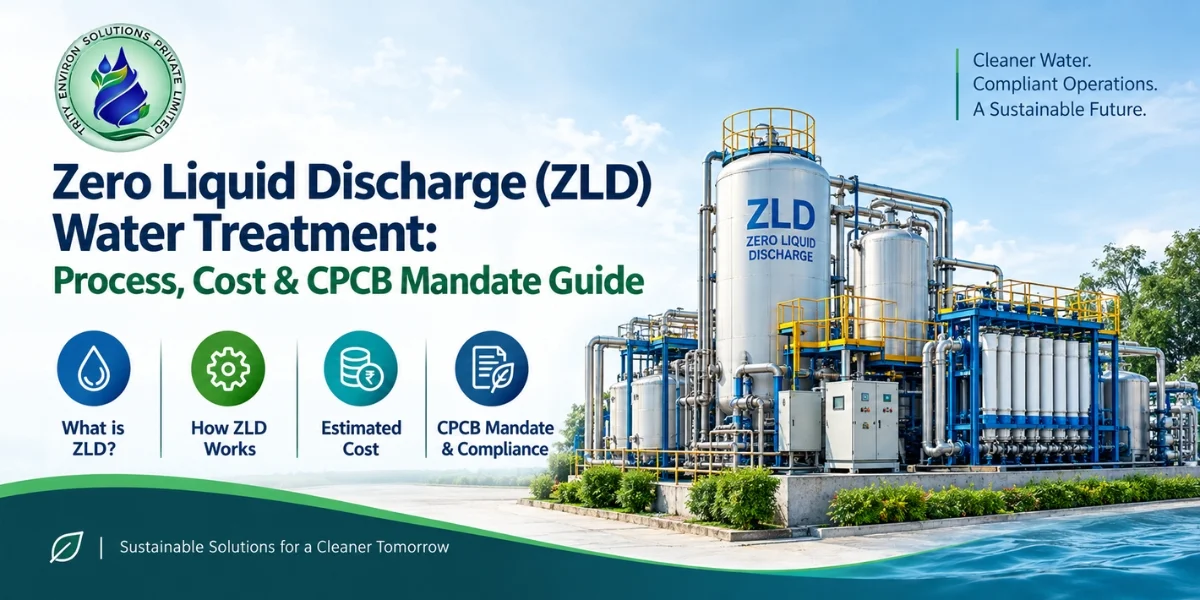
Water scarcity and industrial pollution have pushed Indian environmental regulations into a fundamentally new phase. Where earlier standards focused on keeping discharge within permissible effluent limits, today the regulatory expectation for high-polluting sectors is increasingly absolute: Zero Liquid Discharge (ZLD), a treatment process that purifies and recycles all wastewater produced by an industrial facility, leaving zero liquid effluent discharged into the environment or public sewers. Understanding what ZLD actually involves, who is legally required to install it, how the technology chain works, and what it realistically costs to build and operate is essential for any industrial facility navigating India's tightening environmental landscape.
Zero Liquid Discharge is a comprehensive wastewater treatment engineering process designed to eliminate all liquid waste from an industrial plant. Instead of discharging treated effluent into rivers, lakes, or drainage networks, a ZLD system treats wastewater through a sequence of filtration, membrane separation, evaporation, and crystallization stages, recovering up to 95-99% of the water for reuse in plant operations. The remaining contaminants are converted into a solid dry residue, typically a salt cake, that is either safely disposed of at an authorized hazardous waste facility or recovered for industrial reuse.
The Central Pollution Control Board (CPCB) and State Pollution Control Boards (SPCBs) have made ZLD mandatory for specific categories of heavily polluting industries, particularly those located in critically polluted industrial clusters and Ganga basin states under the Namami Gange programme.
Key mandated sectors include:
A properly engineered ZLD system combines three integrated stages to achieve maximum water recovery at optimal operating cost:
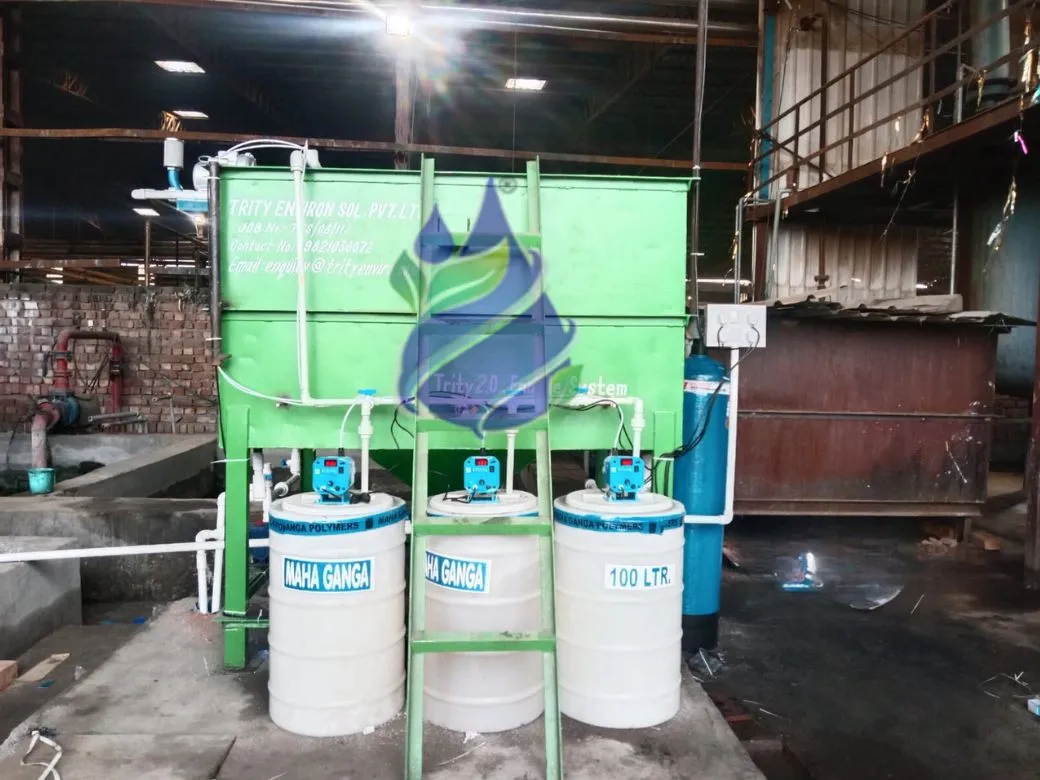
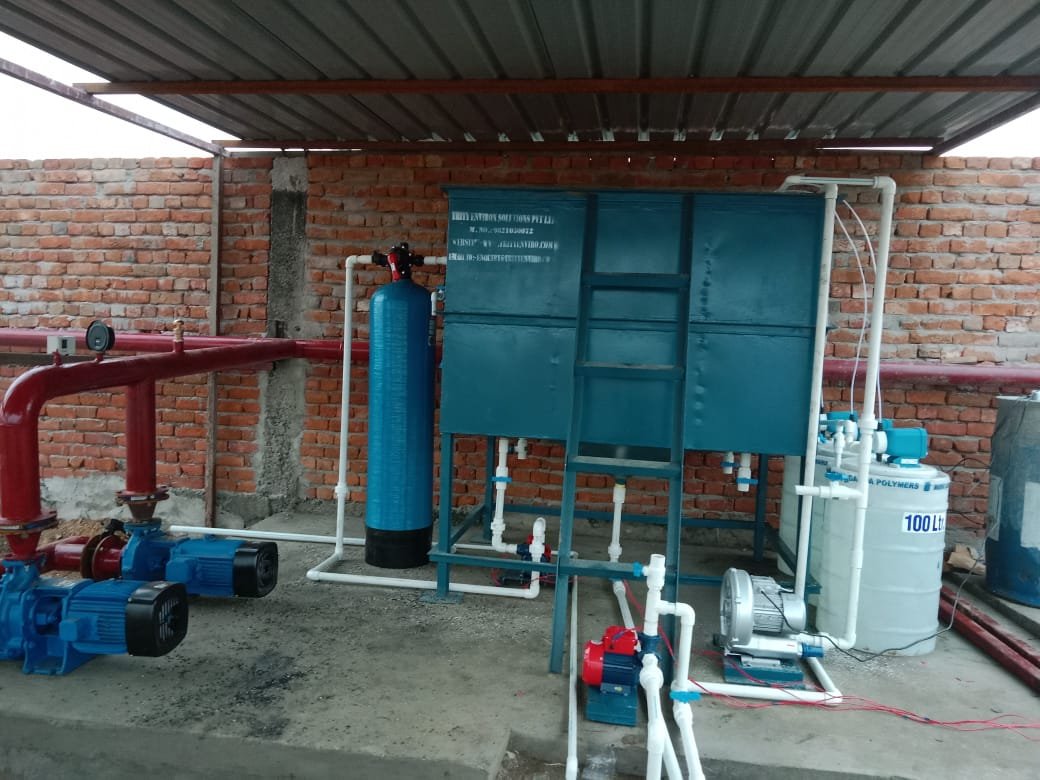
Raw effluent is treated with chemical coagulation, flocculation, and dissolved air flotation to remove suspended solids, oil, grease, and heavy metals. Biological treatment (such as MBBR or SBR) reduces BOD and COD loads.
The pre-treated stream passes through multi-stage commercial RO or industrial RO systems, including High Recovery RO and Disc Tube RO (DTRO), concentrating TDS up to 70,000-100,000 ppm while recovering 75-85% of clean permeate water.
The concentrated brine is fed into a Multiple Effect Evaporator (MEE) or Mechanical Vapour Recompression (MVR) system, followed by an ATFD (Agitated Thin Film Dryer) or crystallizer. Water vapour is condensed into pure distilled water, leaving behind dry solid salts.
A major consideration for any plant owner is the capital and operating cost of ZLD. While membrane stages are energy-efficient, thermal evaporation carries significant steam and power consumption. Proper engineering design that maximizes RO recovery significantly reduces the thermal load and lowers operating expenses by 30-40%.
The dry salt residue generated at the crystallization stage is classified as hazardous waste under Indian regulations and must be sent to an authorized Treatment, Storage, and Disposal Facility (TSDF) unless fractional crystallization is employed to separate high-purity sodium chloride or sodium sulfate for commercial sale.
Trity Environ Solutions is a leading Zero Liquid Discharge plant manufacturer in India, designing turnkey ZLD systems tailored to the specific chemical characteristics of your industrial effluent. Our engineering team designs optimized membrane-thermal combinations backed by pan-India Annual Maintenance Contract and operation and maintenance support. We are ISO 9001:2015 certified, QCI approved, and deliver CPCB-compliant engineering nationwide.
Industrial units need consistent, high-purity water for daily operations. Learn where RO plants fit into an industrial area's water strategy and why they matter.
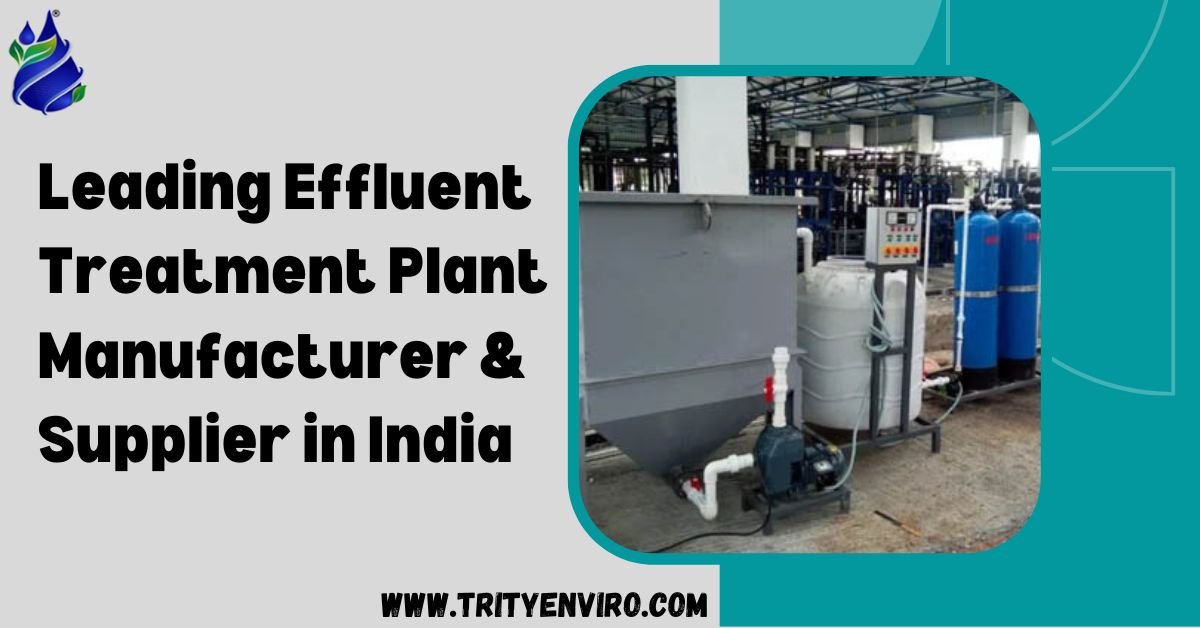
Trity Enviro Solution provides high-quality, customized effluent treatment plants in India, ensuring regulatory compliance, sustainability, and efficient water treatment.
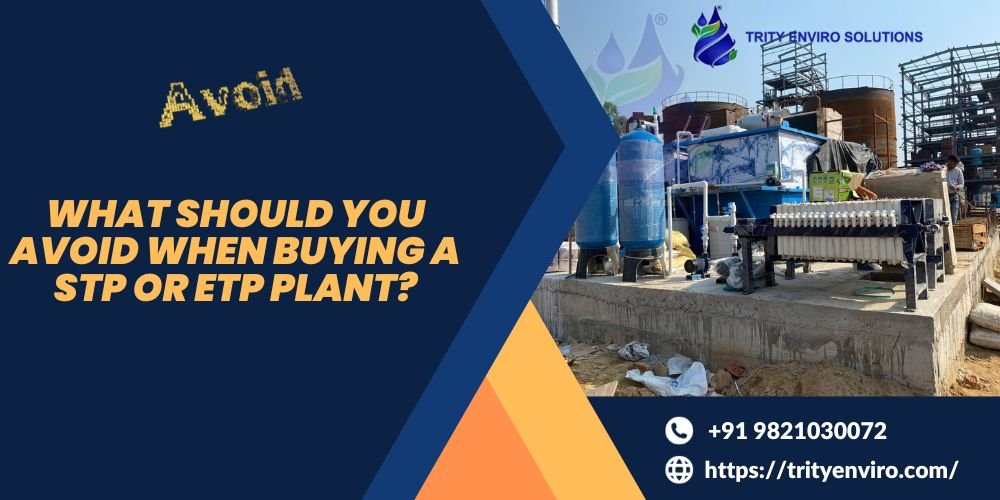
Real mistakes that cost STP and ETP buyers money and compliance standing, from undersizing to skipping equalization tanks, with the actual numbers behind why they matter.

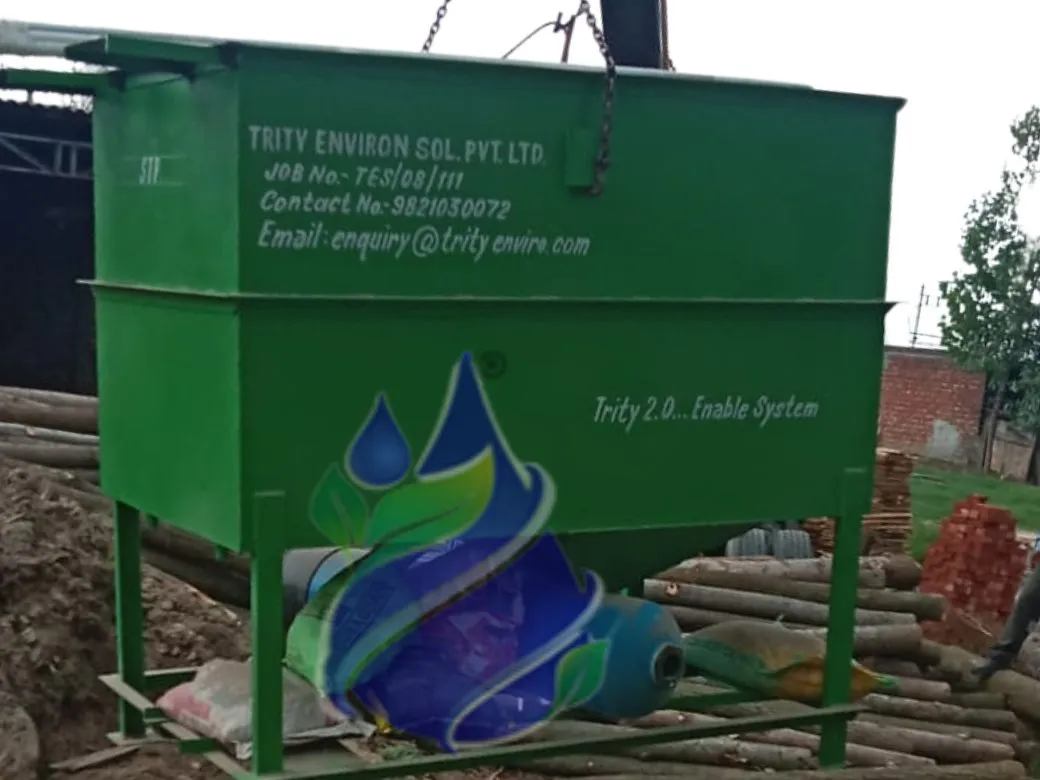


Discuss your requirements with our engineering team and get practical guidance for your project.