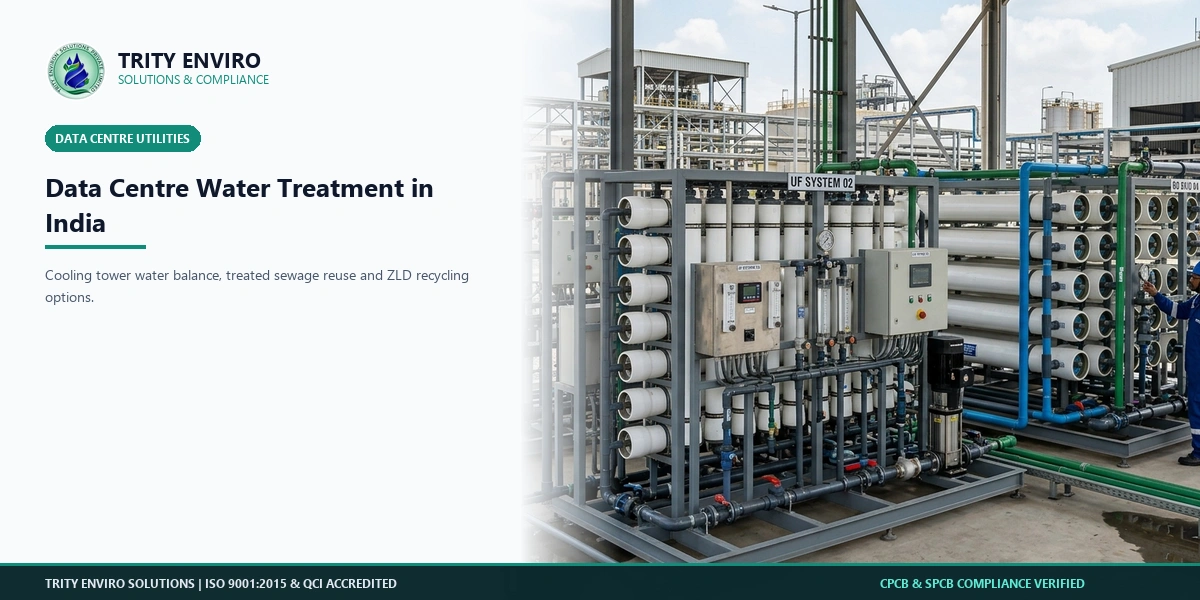
Data Centre Water Treatment in India: Cooling Water, Treated Sewage Reuse and ZLD Options
How data centres in India can cut water use: cooling tower treatment, treated sewage reuse, RO, ZLD and a worked water balance for a 10 MW facility.

 ISO 9001:2015 & QCI Approved
Under GRAP, a unit that is not ready can be shut down on a bad air day. Here is what each stage means for you and how to prepare in advance.
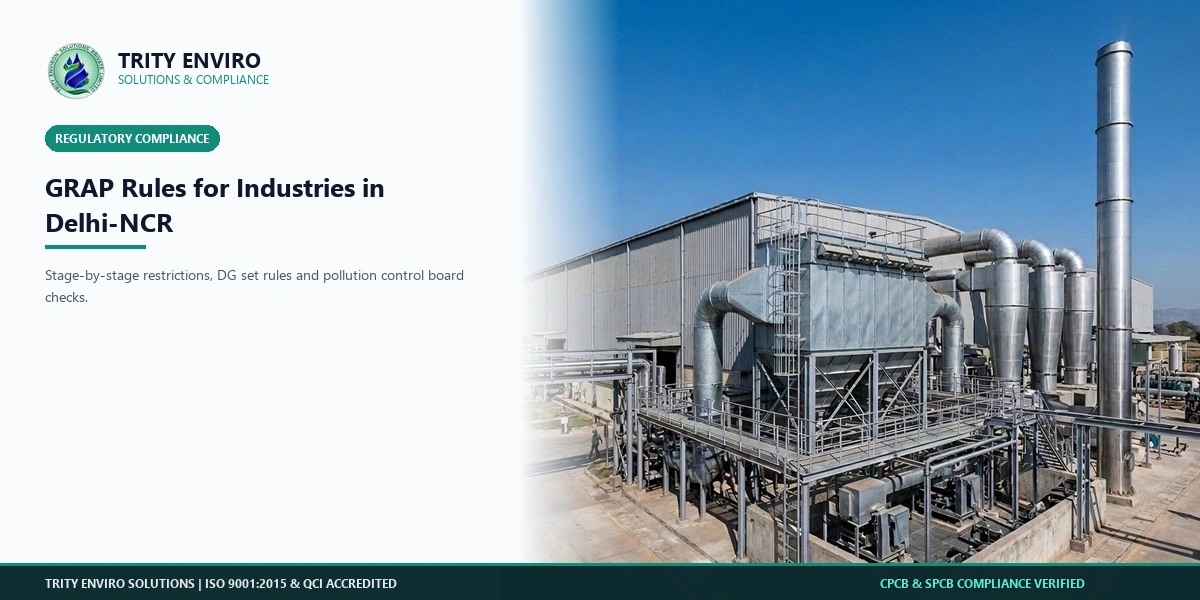
Every winter, as the air over Delhi-NCR thickens, a set of emergency measures called the Graded Response Action Plan (GRAP) switches on. GRAP links restrictions to the air quality index (AQI). As the AQI rises through the poor, very poor, severe and severe plus bands, the actions grow stricter. For industries, those actions can mean checks on fuel, limits on diesel generators, tighter dust control and, in the worst stages, closure for units that are not running on approved fuels.
The plan keeps changing. The Commission for Air Quality Management (CAQM) issued a revised GRAP in November 2025 after the Supreme Court proposed changes, and on 28 September 2026 it approved a further revised schedule. According to the government's summary of that decision, repeated measures on dust control, municipal solid waste and transport were merged under Stage I, and actions on diesel generator sets and BS-IV buses moved from Stage II to Stage I. The revised GRAP now has 25 actions under Stage I, eight under Stage II, ten under Stage III and five under Stage IV. The Commission also noted that more than 1,800 violating units had received closure orders.
For a plant head, the point is practical. GRAP is not something that happens to other people. It decides whether your boiler can run, whether your generator can start and whether your plant can open on a bad air day. This guide explains the stages in plain language, shows how they affect industrial units, and gives a checklist for the weeks before winter. It is a practical summary, not legal advice. GRAP is revised by order, so always read the current CAQM schedule and the orders of your state authority.
GRAP has four stages, tied to Delhi's AQI. Stage I applies when air quality is poor (AQI about 201 to 300), Stage II when it is very poor (about 301 to 400), Stage III when it is severe (about 401 to 450) and Stage IV when it is severe plus (above 450). Actions are cumulative. When a higher stage is invoked, the actions of the lower stages continue.
Stage I is the baseline of enforcement. It focuses on strict implementation of existing rules: use of approved fuels in industries, brick kilns and hot mix plants, enforcement of pollution control regulations, regular lifting of industrial waste, dust control and no use of diesel generator sets as a regular source of power. Stage II and above add more restrictions and, at the top, closures.
It is easy to confuse two things. When CAQM approves a revised GRAP schedule, it changes the list of actions under each stage. That does not mean that every stage or restriction is in force. A stage comes into force only when CAQM invokes it by order, based on AQI readings and forecasts. Read the schedule as a conditional framework: it tells you what will apply if and when each stage is invoked.
This matters for planning. You need to be ready for Stage I conditions from the day the winter season begins, and ready to move to higher stages at short notice.
The actions below summarise published CAQM material. Details change with each revision, so check the current schedule for exact wording and for which district or area each action covers.
Earlier published GRAP schedules describe tougher industrial measures at the upper stages. For example, at Stage III, industries in areas with PNG infrastructure and supply that use fuels not approved by CAQM face closure, and at Stage IV the closure covers all industries in the NCR that do not run on approved fuels. The revised schedules also shift some measures between stages, so treat these examples as an illustration of the direction of enforcement and confirm what applies now.
The main lesson is simple: a unit that runs on approved fuel, meets its emission limits and keeps its documents in order is far less exposed at every stage than a unit that does not.
Start with fuel. Confirm that every boiler, thermic fluid heater, furnace, oven and dryer runs on an approved fuel, and keep the supply documents, such as gas connection papers or biomass supplier details, in one file. If you are still converting, our comparison of PNG vs biomass vs LPG for NCR industrial boilers will help you choose.
Then check emissions. The 50 mg/Nm3 particulate limit applies to covered industries from 1 October 2026, as explained in our article on the Delhi-NCR PM emission standard. Do a stack test before winter. If the result is close to the limit, service the filter, replace worn bags and fix combustion problems now. Where you need new equipment, read our guides on choosing an air pollution control system and bag filter vs wet scrubber vs ESP. If your unit must report online, check that your OCEMS and portal connection are working and stable.
With DG set actions moved to Stage I, your generator plan matters from the start of winter. List every set, its capacity and its fuel mode, check compliance with CAQM and DPCC directions and keep standby arrangements ready, such as grid reliability and, where permitted, dual fuel sets. Our article on DG set compliance for housing societies and commercial buildings explains the rules.
Control dust at source: cover stockpiles, sprinkle water on roads and yards, pave internal roads, enclose conveyors and transfer points and fit dust collection at crushing, grinding and handling points. Our industrial dust collector selection guide shows how to size and choose.
Keep a GRAP file ready with approved fuel evidence, stack test reports, consent orders, DG set details, maintenance logs, dust control measures and an emergency contact list. Brief shift supervisors on what to do if a new stage is invoked.
Do the low cost, high impact steps first: documents, stack tests, filter maintenance, dust control basics and generator checks. Then plan capital items: fuel conversion, new filters, DG set emission control devices and online monitoring. Weigh these against the cost of a closure day. For many plants, one lost day of production costs more than a filter upgrade.
Our products page lists air pollution control equipment, and an annual maintenance contract keeps filters and fans in order through the season.
Use a short checklist so that nothing depends on memory when an order arrives:
Review the checklist in October, and update it after every new order from the Commission.
Remember that a revised schedule is not the same as an order in force. Stages are invoked by the Commission as air quality worsens, so watch the official orders instead of relying on social media summaries, and brief your supervisors the same day an order is issued.
| Parameter / Stage | Target Optimal Range | Failure Impact / Risk | Corrective Engineering Action |
|---|---|---|---|
| Fuel in all combustion units | CAQM approved fuel only, with supply documents | Closure at Stage I and higher, environmental compensation | Convert or switch fuel, keep records |
| Stack particulate | At or below 50 mg/Nm3 for covered industries | Notice, penalty, closure orders | Stack test, filter service or upgrade |
| DG set use | Not a regular power source, compliant sets only | Sealing, compensation under CAQM and DPCC directions | Fix grid backup, retrofit or replace sets |
| Fugitive dust | Covered stockpiles, sprinkled roads, enclosed transfer points | Dust notices, higher PM at boundary | Add dust collection, water sprinkling and paving |
Trity Environ Solutions is an ISO 9001:2015 certified and QCI-approved air pollution control equipment manufacturer and supplier in India, delivering robust, high-efficiency systems engineered for CPCB and SPCB regulatory compliance.
Every installation is supported by pan-India Annual Maintenance Contract and Operation and Maintenance services.
How data centres in India can cut water use: cooling tower treatment, treated sewage reuse, RO, ZLD and a worked water balance for a 10 MW facility.
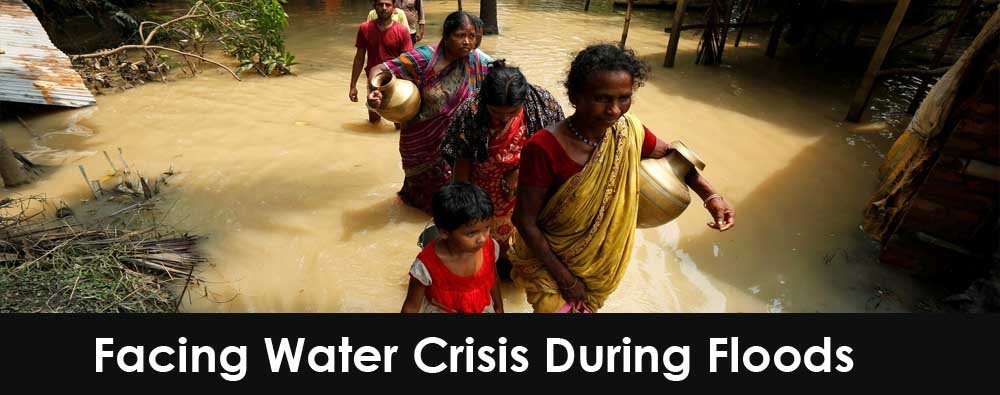
Floods bring water everywhere but almost none of it safe to drink. Learn why this happens in India and the right way to purify water during and after a flood.
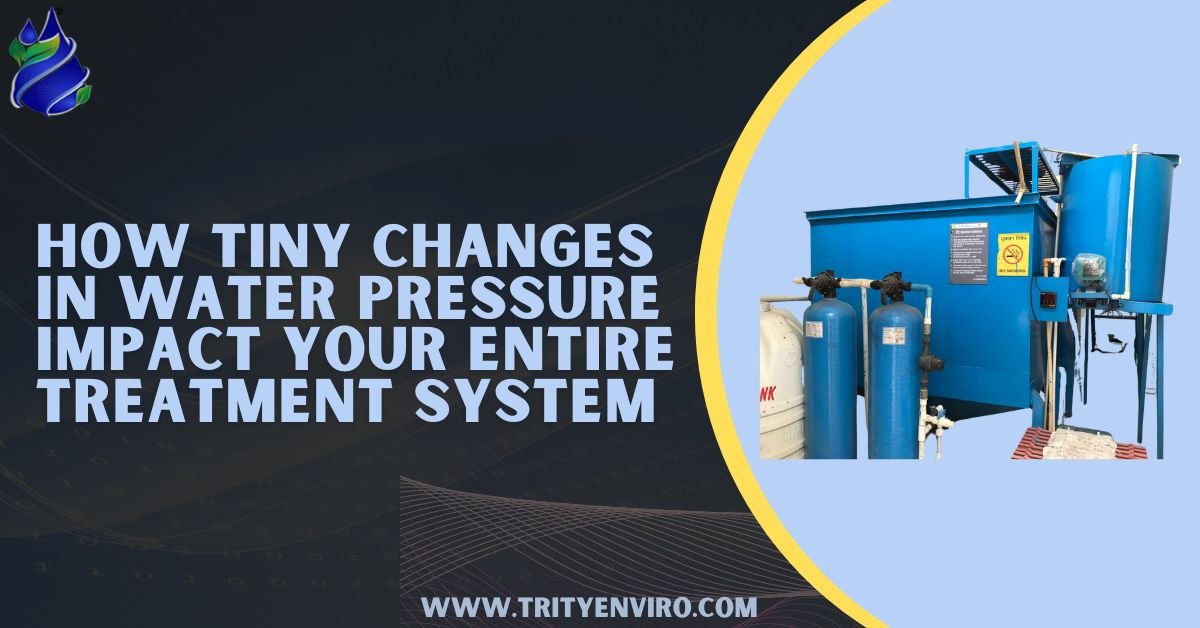
Learn how small changes in water pressure affect treatment systems, causing inefficiency, equipment wear, and poor water quality. Discover monitoring and regulation strategies.











Discuss your requirements with our engineering team and get practical guidance for your project.

