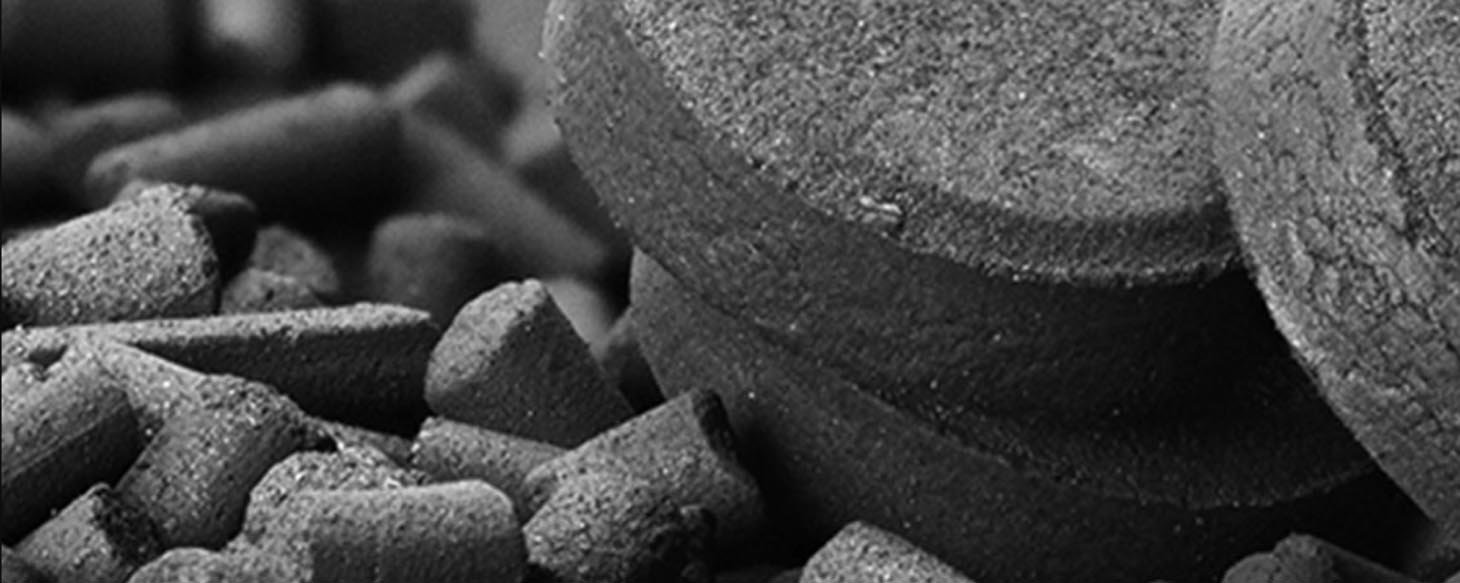
Types of Activated Carbon for Water Filtration
Discover the 4 main types of activated carbon filters—GAC, PAC, EAC & carbon blocks. Learn how each purifies water, removes contaminants & improves water quality.

 ISO 9001:2015 & QCI Approved
From hood airflow to hopper design, these are the decisions that make an industrial dust collector work for years. Use this guide before you request a quote.

Walk through enough factories and you see the same sight: a dust collector that is in place, yet the shop floor is still dusty. The collector may be too small for the airflow, the ducts may be badly laid out, the filter media may be wrong for the dust, or the compressed air may carry water that wets the bags. The machine is blamed, but the real fault was in the selection.
An industrial dust collector has a simple job. It pulls dusty air from the process through hoods and ducts, filters the dust out, and returns clean air. Doing this well takes more than picking a size from a catalogue. You need the right airflow, the right filter type for your dust, the right cleaning method and a layout that lets dust travel without settling or igniting.
This guide follows the sequence of an engineer's selection: capacity, filter type and cleaning, special risks such as combustible dust, and installation. It also covers how to compare quotes and what to ask for. It is written for plant managers, maintenance heads and procurement teams in industries like cement, minerals, wood, metals, food, chemicals and plastics.
Capacity in a dust collector is airflow, measured in m³/h or m³/min. Everything else follows from it.
Start at the source. Each dust generating point, such as a crusher, transfer point, mixer, grinder or packing machine, needs a hood designed to capture dust before it escapes. The airflow required depends on the hood type, its opening area and the capture velocity needed to draw dust in against room air movement. Add up the airflow of all hoods connected to the collector, then add an allowance of roughly 10 to 20 percent for leakage and future changes.
Duct velocity should be enough to carry dust without letting it settle. A common design range for fine dust is 15 to 20 m/s, with higher values for heavy or abrasive dust. Too low, and ducts clog. Too high, and bends wear out and pressure drop climbs. A simple duct layout with gentle bends, balanced branches and clean-out doors saves trouble later.
The fan has to overcome the pressure drop of hoods, ducts, the filter and the stack. Add them up before choosing the fan. An undersized fan delivers less airflow than the design, and dust escapes at the hoods. An oversized fan wastes power. For a pulse jet filter, a working pressure drop across the filter commonly sits near 100 to 200 mm water column, but the total system pressure will be higher.
The air-to-cloth ratio, also called filtration velocity, is the airflow divided by the total filter area, usually expressed in m/min. Lower ratios mean more filter area, a larger collector and longer media life. Higher ratios mean a smaller collector but faster wear and more frequent cleaning.
As a broad guide, pulse jet bag collectors on general industrial dust commonly use ratios around 1 to 1.5 m/min, with lower values for fine, sticky or oily dust. Cartridge collectors, with their pleated media, can handle fine dust at comparable or lower velocities in a compact footprint. Your supplier should justify the ratio for your specific dust and show the filter area in the offer. A quote that gives only airflow and a model number hides the most important number.
Also check the can velocity, the upward air speed between bags or cartridges inside the housing. If it is too high, dust is carried back toward the filters instead of dropping into the hopper. Keep it low, often below about 1 m/s, especially for fine or light dust.
Bags are the standard choice for large airflows, abrasive dust and higher temperatures. Common media are polyester felt for general service, polypropylene for chemical resistance, acrylic for moderate temperature, PPS for hot and acidic gas, aramid and P84 for higher temperatures, and fibreglass with PTFE membranes for the hardest conditions. Match the media to gas temperature, moisture, chemistry and dust type.
Cartridges use pleated media and give a lot of filter area in a small space. They suit fine, dry dust such as powders, welding fumes and plasma cutting, and they fit well where headroom is limited. They are less forgiving with sticky, fibrous or heavy dust loads.
Surface treatments help. Anti-static finishes reduce spark risk, oleophobic and hydrophobic finishes help with oily or humid dust, and membrane laminated media release dust cake easily and extend life. Ask which treatment is included and why.
Pulse jet cleaning is the most common method on modern collectors. Compressed air at about 5 to 7 bar pulses through each row of bags, releasing dust in seconds while the collector stays online. It needs dry, clean, oil free compressed air, since moisture or oil will wet the dust and blind the bags. Fit an air dryer and filter if your plant air is not clean.
Reverse air and shaker systems are older but still used for large, hot gas applications and low dust loads. They clean gently, which suits delicate media, but they are bulkier and slower.
Set the cleaning cycle based on pressure drop, not on a fixed timer alone. Cleaning too often wears bags and wastes air. Cleaning too rarely lets dust cake build up and pressure rise. Note the pressure drop range at which cleaning starts and stops, and keep it written near the panel so that every operator and service engineer works to the same settings.
Many industrial dusts are combustible: wood, grain, sugar, flour, plastics, coal, aluminium, magnesium and some chemicals. Where these are collected, an explosion is a real risk. Treat this as a design question from the start.
Typical protections include explosion vent panels sized to recognised guidance such as NFPA 68, isolation devices that stop an explosion travelling back through ducts, spark detection and suppression, conductive and earthed components, and placing the collector outdoors with vents pointed away from people and equipment. Anyone designing for combustible dust should follow the relevant standards and, where needed, test your dust for explosibility properties. Do not accept a quote for a combustible dust application that is silent on safety.
Plan the physical layout as carefully as the equipment:
After installation, commission with a leak test of ducts and housing, record baseline pressure drop and airflow at each hood, set the cleaning cycle and train operators. Keep these numbers: they are your reference when something changes.
Ask each supplier to state in writing the design airflow, filter area, air-to-cloth ratio, media type and temperature rating, cleaning system, fan power, pressure drop at design flow, expected outlet emission, scope of ducting, structural steel and electrical, and the spares included. A low quote that leaves out ducting, fan or a rotary valve is not a low quote.
Compare running costs too. Bags typically last from one to three years depending on dust and temperature. Compressed air and fan power run every hour. Add dust handling and disposal. A collector that costs a little more but uses less air and power and has longer media life often wins on cost over five years.
If your plant also generates wastewater, treat it as one project. Our wastewater treatment plant range and project execution service keep design and installation under one team, and you can compare dust collection with other control options in our article on bag filter vs wet scrubber vs ESP. For emission limits that apply to your region, read the Delhi-NCR PM emission standard guide.
| Parameter / Stage | Target Optimal Range | Failure Impact / Risk | Corrective Engineering Action |
|---|---|---|---|
| Air-to-cloth ratio (pulse jet bags) | Commonly about 1 to 1.5 m/min, lower for fine or sticky dust | Short bag life, high pressure drop, dust leakage | Add filter area, reduce airflow, choose better media |
| Duct velocity | Commonly 15 to 20 m/s for fine dust | Settling and blockage if low, wear and noise if high | Resize ducts, balance branches, add clean-out doors |
| Compressed air for pulse cleaning | About 5 to 7 bar, dry and oil free | Wet bags, blinding, poor cleaning | Add dryer and filter, check valves and tank |
| Pressure drop across filter | Typically 100 to 200 mm water column | Reduced airflow and dust escape if too high; torn bags if suddenly low | Tune cleaning on demand, replace worn media, inspect for leaks |
Trity Environ Solutions is an ISO 9001:2015 certified and QCI-approved industrial dust collector and air pollution control equipment manufacturer and supplier in India, delivering robust, high-efficiency systems engineered for CPCB and SPCB regulatory compliance.
Every installation is supported by pan-India Annual Maintenance Contract and Operation and Maintenance services.
Speak directly with our environmental engineering specialists for system sizing, CPCB/SPCB compliance review, or a tailored technical proposal.
Request Free Engineering ConsultationCall: +91-9821030072 | Email: enquiry@trityenviro.com
Discover the 4 main types of activated carbon filters—GAC, PAC, EAC & carbon blocks. Learn how each purifies water, removes contaminants & improves water quality.

Explore government policies, subsidies, and incentives driving sustainable water reuse for industries, agriculture, and urban infrastructure in India.

Wastewater treatment and recycling save resources, reduce pollution, and combat climate change. Explore how innovative technologies and global efforts are transforming water use.





Discuss your requirements with our engineering team and get practical guidance for your project.