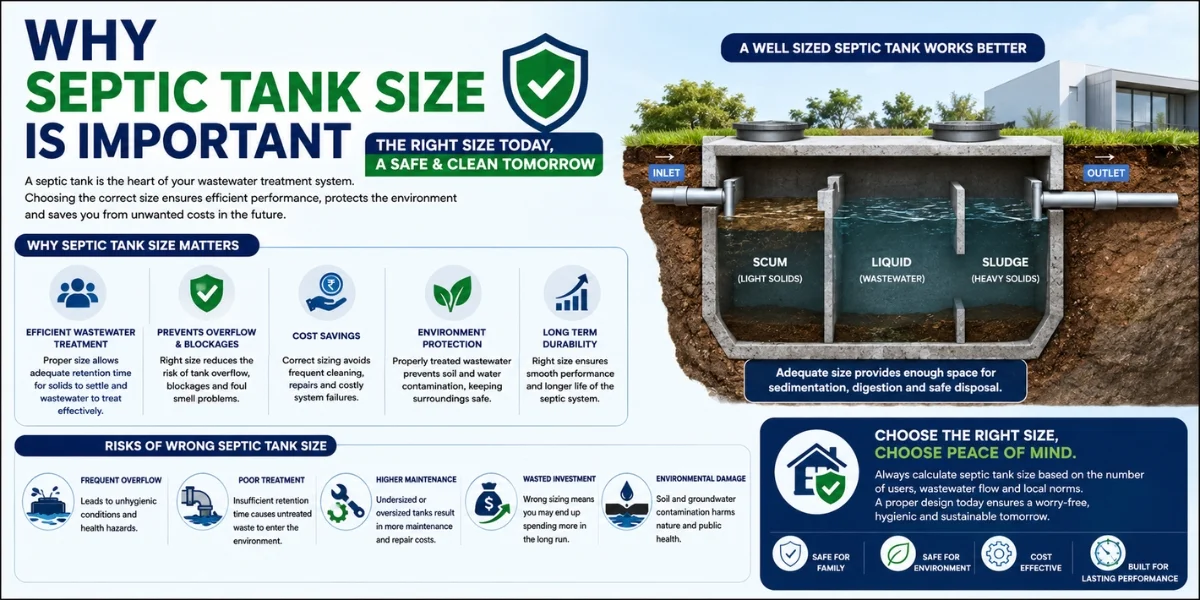
Why Septic Tank Size Matters: Standard Sizes, Formula & Sizing Guide for India
Learn the correct septic tank size for your property, IS 2470 based sizing formula, standard capacities per person, and when to upgrade to an STP.

 ISO 9001:2015 & QCI Approved
Buying emission control equipment without gas data is guesswork. Follow these steps to match the technology to your process, your limits and your budget.
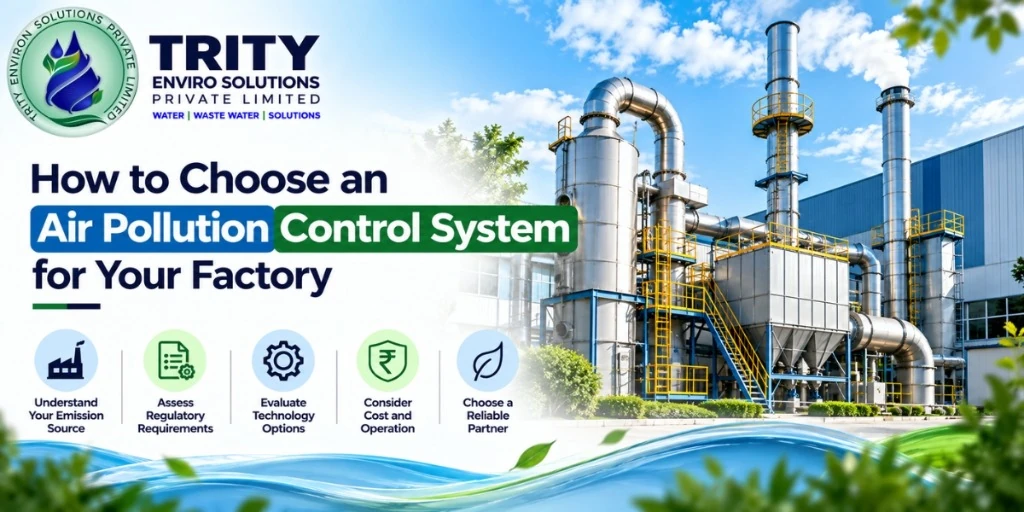
Most factory owners do not buy emission control equipment often. When they do, the purchase is usually forced: a notice from the pollution control board, a tighter limit in a renewed consent, or an inspection that did not go well. The pressure is high, the timeline is short, and the supplier brochures all promise the same compliance.
That is when expensive mistakes happen. A bag filter is chosen for a gas stream that is full of acid mist. A wet scrubber is installed where nobody planned for the wastewater. A cyclone that could never meet the limit is sold as a complete solution. The equipment itself may be fine. It was simply the wrong match.
A good air pollution control system is the result of a short, disciplined process. You identify what you emit, measure the gas, know your legal limit, shortlist technologies that suit those conditions and only then compare suppliers. This guide takes you through that process in plain terms. It is written for plant heads, EHS officers and project managers in boiler, furnace, process and material handling units.
Begin with a walk through the plant, with a notepad. List every point where air leaves the process and goes outdoors.
Typical sources include boilers, thermic fluid heaters, furnaces, DG sets, dryers, reactors, grinding and crushing units, conveyors, packing lines, storage silos and vents from process tanks. For each, note the fuel or raw material, the operating hours and the likely pollutants.
Do not forget fugitive dust from open storage, loading and internal roads. These do not leave through a stack, but they are visible and often cited in inspections.
Your emission limits come from your consent order and from any specific direction that applies to your region or industry. National standards under the Environment Protection Rules set baseline limits by sector, while state pollution control boards and special commissions can set tighter ones. For example, industries in Delhi-NCR face a 50 mg/Nm³ particulate limit under a CAQM direction, which our article on the Delhi-NCR 50 mg/Nm³ PM emission standard explains. Units in Karnataka should read their KSPCB consent closely, as covered in our guide for Karnataka industries.
Write down the limit for each pollutant at each stack and the unit in which it is expressed, such as mg/Nm³ at a stated oxygen reference. Equipment guarantees must use the same basis, or the numbers cannot be compared.
No competent supplier will finalise a design without gas data. If one does, treat the quote as a guess.
For each source, collect:
Temperature and dew point matter more than many buyers realise. If gas is cooled below its acid dew point in a filter housing, corrosion and blinding follow. If gas is too hot for the filter medium, bags burn.
Ask an accredited laboratory to carry out stack sampling at normal operating load. Isokinetic sampling for particulates, with simultaneous flue gas analysis for oxygen and temperature, gives the base data. Run it at full load and, if your process varies, at more than one condition. A test at half load flatters the result and leads to undersized equipment.
Where you need continuous data for compliance, consider an online analyser, such as our SOx-NOx gas analyzer, which supports continuous emission monitoring.
With data in hand, shortlist technology that suits the job.
Each has strengths and limits, and the choice between them is a topic of its own. See our detailed comparison in the article on bag filter vs wet scrubber vs ESP.
The fan, ducting, dampers and stack are part of the system. An undersized induced draft fan starves the boiler of draught and spoils combustion, while an oversized one wastes power. Duct velocity should be high enough to carry dust, commonly in the range of 15 to 20 m/s for fine dust, but not so high that it erodes bends and raises pressure drop. A system that ignores these details can fail even with a perfect filter.
For acid gases like SO2 and HCl, wet scrubbers with alkali dosing or dry sorbent injection are common. For NOx, combustion control and, in larger units, selective catalytic or non-catalytic reduction. For VOCs and odour, activated carbon adsorption, biofilters or thermal oxidisers, depending on concentration and flow. If the gas carries both dust and gases, the best answer is often a combination, such as a bag filter followed by a scrubber.
Where a scrubber is used, plan for the liquor. It will carry dissolved salts and suspended solids and must go to a treatment system. Our effluent treatment plant range covers this, and it is cheaper to plan it with the scrubber than to retrofit it later.
Emission control is a long-term cost, not a one-time purchase.
Include in your budget the control device, ID fan, ducting, dampers, structural steel, foundations, electrical and control work, stack modifications, compressed air for bag filters, water and wastewater handling for scrubbers, installation, commissioning and testing. Running costs include power, consumables such as bags or chemicals, water, labour and disposal of collected dust.
Fuel decisions affect cost too. A cleaner or more consistent fuel can shrink the equipment and cut the running cost. Ask suppliers to price more than one option so that you see the effect. Also ask what happens if production grows: a system sized with a sensible margin and space for an added module costs far less than one that must be replaced after two years. If you operate several boilers or furnaces, check whether one shared control system with a common stack is cheaper than separate units, and what a single breakdown would do to your production.
Plan the shutdown. Tie-in work usually needs the process to stop. Fit the project into a maintenance window, and confirm who is responsible for cranes, power and approvals. Check with your pollution control board whether the change requires an amendment to your consent.
Look for a supplier that can stand behind the system after installation. Our annual maintenance contract and project execution services keep design, supply and installation under one accountable team, and you can see the wider range on our products page.
A control system is not finished when the last bolt is tightened. Insist on a proper commissioning plan that is written into the contract. It should include a leak test of ducting and housing, a check of fan rotation and airflow at each hood or inlet, calibration of pressure and temperature instruments, a trial run at normal load and a stack test by an accredited laboratory to confirm that the outlet emission meets the guaranteed value.
Record the baseline readings on handover: pressure drop across the device, fan current, gas temperature and, for scrubbers, liquor flow and pH. These numbers become your reference. When a reading drifts later, you will know whether the system is deteriorating or the process has changed. Ask for operating manuals, a spare parts list, drawings and operator training as part of the handover, and agree on a warranty start date that follows the successful performance test, not the delivery date. Plan the first service visit within a few weeks of start up, since small adjustments in the cleaning cycle or fan settings are common in the early weeks.
| Parameter / Stage | Target Optimal Range | Failure Impact / Risk | Corrective Engineering Action |
|---|---|---|---|
| Stack emission against limit | At or below the limit in your consent or applicable direction | Notice, penalty, closure direction | Stack test, then upgrade or add control equipment |
| Gas temperature at filter inlet | Within the media rating and above acid dew point | Burnt bags, condensation, corrosion | Add cooling or insulation, choose suitable media |
| Duct velocity | Commonly 15 to 20 m/s for fine dust | Dust settling in ducts or erosion and high pressure drop | Resize ducts, add clean-out doors, balance branches |
| Pressure drop across device | Within design, steady over time | Fan overload, reduced airflow, poor capture | Tune cleaning cycle, replace worn media, service fan |
Trity Environ Solutions is an ISO 9001:2015 certified and QCI-approved air pollution control equipment manufacturer and supplier in India, delivering robust, high-efficiency systems engineered for CPCB and SPCB regulatory compliance.
Every installation is supported by pan-India Annual Maintenance Contract and Operation and Maintenance services.
Speak directly with our environmental engineering specialists for system sizing, CPCB/SPCB compliance review, or a tailored technical proposal.
Request Free Engineering ConsultationCall: +91-9821030072 | Email: enquiry@trityenviro.com
Learn the correct septic tank size for your property, IS 2470 based sizing formula, standard capacities per person, and when to upgrade to an STP.
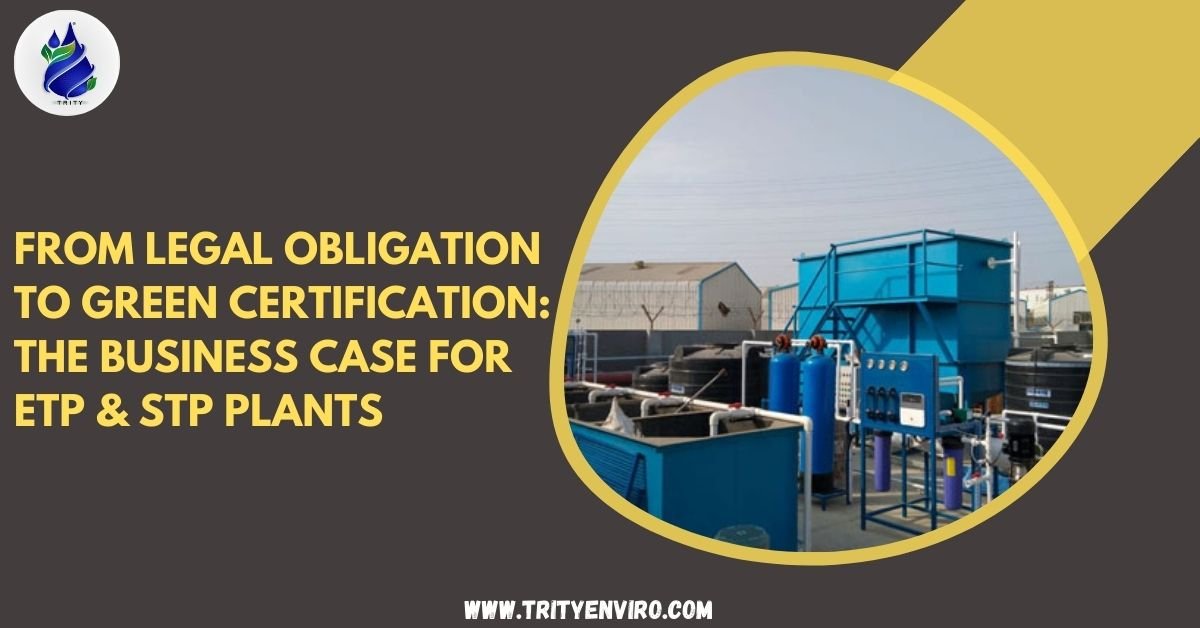
Discover how ETP & STP plants help businesses meet legal obligations, gain green certifications, reduce costs, and enhance brand value through sustainable wastewater treatment.
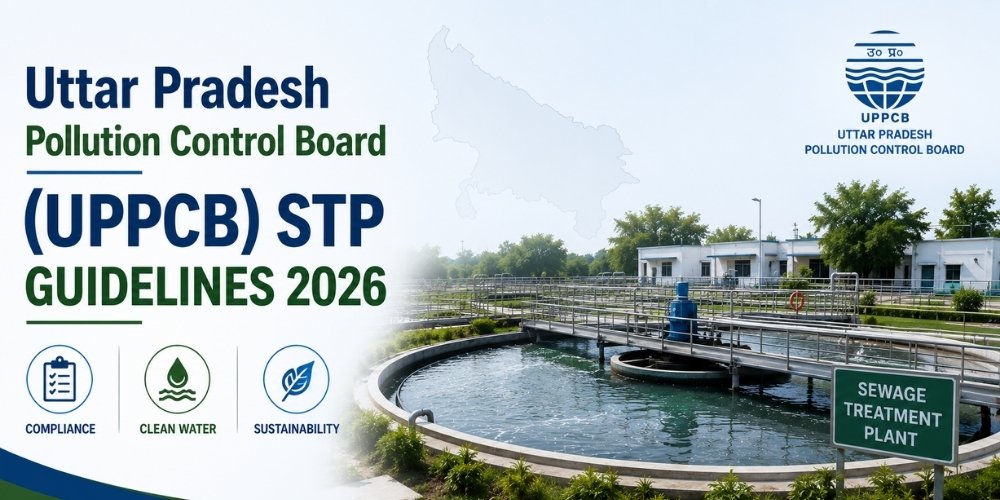
A guide to UPPCB's sewage treatment plant requirements in Uttar Pradesh, covering discharge norms, mandatory installation rules, and compliance steps.




Discuss your requirements with our engineering team and get practical guidance for your project.