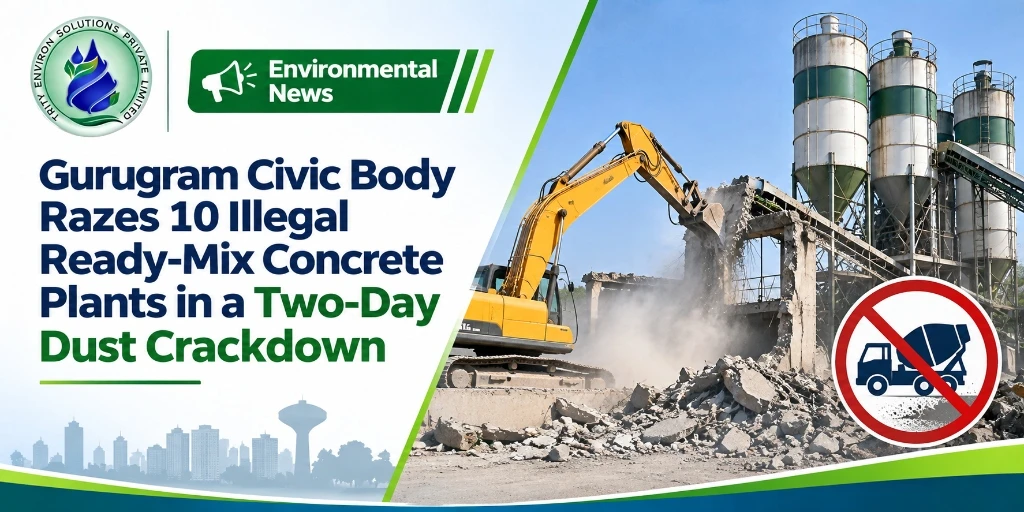
The Municipal Corporation of Gurugram (MCG) has demolished ten illegal ready-mix concrete (RMC) plants in two days, as part of a drive against construction dust and air pollution. Eight plants were removed on Tuesday, October 27, and two more in Daulatabad on Wednesday, October 28.
The action follows an order issued earlier this month to clear all 31 RMC plants in the MCG area by October 25.
What Happened on October 27 and 28
Tuesday, October 27: eight plants
ThePrint carried a PTI report on the demolition, and The Tribune reported it the next day. Three MCG teams worked in different areas.
- Assistant Engineer Ashish Hooda's team: three plants on Rithoj Road, Jail Road and in Behrampur
- Assistant Engineer Hariprakash's team: three plants in Daulatabad
- Joint Commissioner Sapna Yadav's team (with Junior Engineer Kapil): two plants in Dhumaspur and Maidawas
The reports name Bhondsi, Daulatabad, Dhumaspur, Berhampur and Maidawas as the areas covered.
Wednesday, October 28: two more
Urban Acres, citing Live Hindustan, reported that two more illegal plants were demolished in Daulatabad on Wednesday, led by Assistant Engineer Hariprakash. It put the total removed at 10. That outlet used both "over the past few days" and "within two days", which fits eight plus two.
The total of ten comes from adding the two reports. A single official count was not available in the reports reviewed.
Why the Corporation Acted
MCG Commissioner Pradeep Dahiya said controlling pollution and maintaining a clean environment are among the corporation's priorities. Officials said dust from RMC plants, combined with other construction activity, can raise pollution levels.
Dahiya also said violators would not be spared, and that monitoring and sealing would continue. The Tribune reported that enforcement and inspections would go on, without saying how many plants remain or whether more demolitions are planned.
The Deadline That Preceded the Demolitions
The demolitions followed a clear paper trail.
- October 17: H4E News reported that MCG had set October 25 as the deadline to remove all 31 RMC plants within its jurisdiction. Commissioner Dahiya issued the directions to joint commissioners during a review of pollution-control measures
- October 20: PropNewsTime reported that plants still operating after the deadline would be sealed and permanently shut, and that notices were being issued to owners
- October 25: the deadline passed
- October 27 and 28: demolitions began
Neither report said under which rules the order was issued or how many of the 31 plants held permissions. The October 27 and 28 reports also did not say how many of the plants demolished had been among the 31.
A neighbouring action
PropNewsTime also reported that the Municipal Corporation of Manesar ordered unauthorised RMC plants closed on October 7, with a 15-day timeline. It said only two of Manesar's 32 RMC plants are authorised. That is a single-source figure.
Why RMC Plants Raise Dust
This section is general background, not a finding from the reports.
An RMC plant stores and mixes cement, sand and aggregate. Dust can arise at several points.
- Open stockpiles of sand and aggregate in wind
- Cement handling during loading into silos and mixers
- Truck movement on unpaved yards and access roads
- Spillage carried onto public roads by tyres
Well-run plants control these with enclosed silos, dust filters, water sprinklers, paved yards and wheel-wash facilities. Unauthorised plants often lack them.
Wastewater, the less discussed issue
RMC plants also produce wastewater when mixer drums and trucks are washed. The water is alkaline and carries cement slurry and suspended solids. Compliant plants collect it, settle the solids and reuse the water. Where this is not done, slurry can block drains. This is general background and the reports on Gurugram do not mention wastewater.
Where the Action Sits in Gurugram's Dust Plan
The PropNewsTime report said MCG plans to make 294 roads dust-free by December 31, 2026, and identified nearly 50 kilometres of key road stretches for dust control in its 2026 action plan. It added that some stretches reappeared in later months' plans, which has raised questions about implementation. That is the outlet's observation and not a finding from officials.
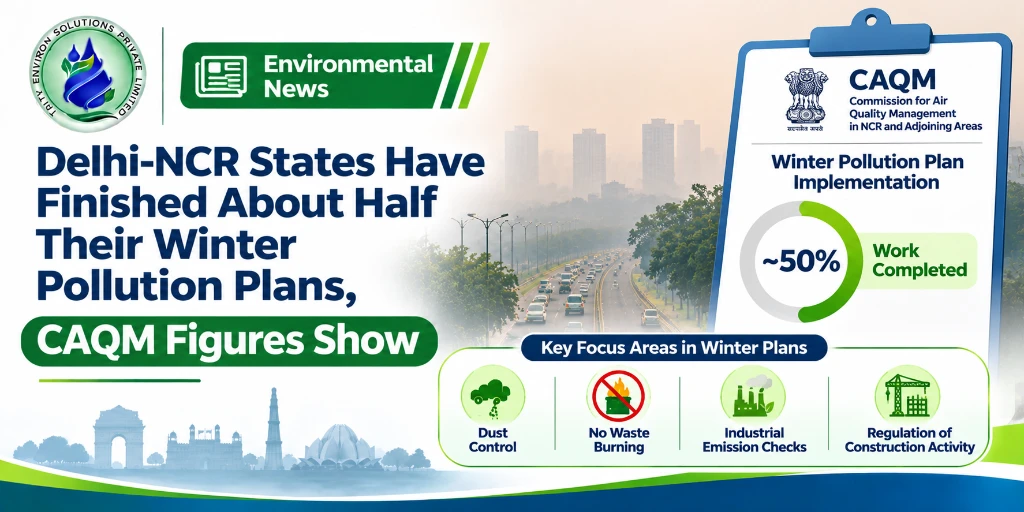
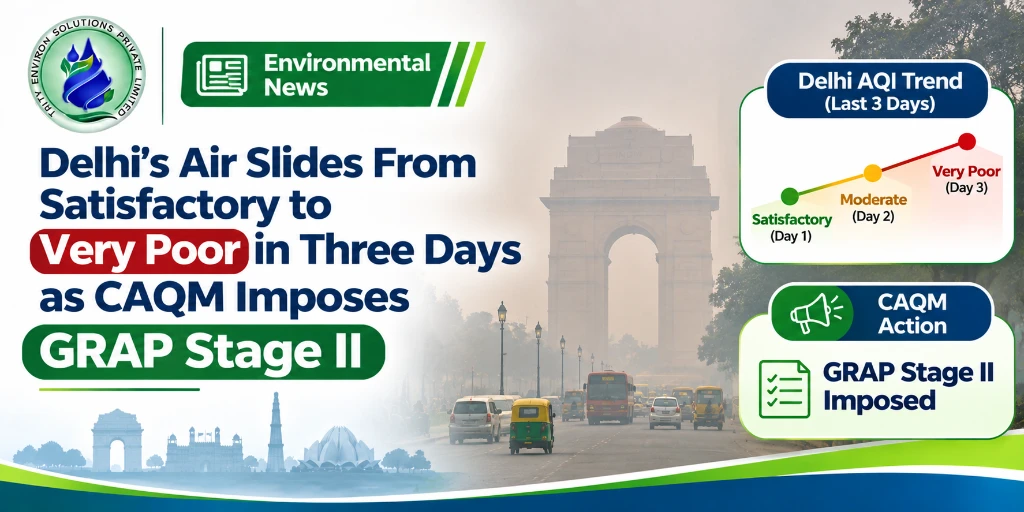
Elsewhere in the region, the national air quality commission has been tightening its approach. On CAQM's website readers can find the directions and Graded Response Action Plan schedules that apply across the National Capital Region. Delhi-NCR entered GRAP Stage II on November 2, when Delhi's AQI reached 324.
What the Crackdown Means for Builders
Developers and contractors who source concrete from these plants may need to change suppliers and logistics. The actual impact depends on alternative supply and how firmly the order is enforced.
Practical steps for developers
- Ask suppliers for proof of authorisation and environmental compliance
- Check where the plant is located and whether it has dust controls
- Plan deliveries with more than one supplier to avoid delays
- Keep site-level dust measures in place, including covered materials and water sprinkling
Practical steps for plant owners
- Confirm approvals and consent from the relevant authorities before operating
- Install dust suppression and collection systems
- Pave and wet internal roads, and wash vehicle wheels before they leave
- Set up a closed system for washout water, including settling and reuse, using a suitable effluent treatment plant where volumes justify it
These are general good-practice measures and not conditions from the corporation's order.
How Demolition Differs From Closure
Municipal action against an unauthorised plant can take several forms, and the reports use "demolished" for these ten.
- Notice: the owner is told to stop operating and given a short period to respond
- Sealing: the plant is locked and cannot run, but the structure stands
- Demolition: the plant structure is physically removed, so it cannot restart
Demolition is the strongest step, and it is usually taken after notices were ignored. The reports do not say whether each of the ten plants had received notices or what legal provision was used, so this article does not state either.
What it signals
The speed of the sequence is the notable point. A deadline on October 17, a warning of sealing on October 20, and demolition within three days of the October 25 cut-off show that the corporation is prepared to follow through. Builders should expect other construction-linked sources, such as unpaved yards and debris dumps, to face similar scrutiny as winter approaches.
What to Watch Next
- Whether MCG publishes a list of plants removed, sealed or cleared to operate
- Whether more of the 31 plants are demolished or sealed in the coming days
- Whether dust complaints and Gurugram's AQI readings change
- Whether enforcement extends to other construction-linked sources, such as unpaved roads and debris dumping
Gurugram was among the NCR cities in the "very poor" range on November 4, with an AQI of 322, according to a Business Standard report. Sources of dust are likely to stay under pressure through the winter.