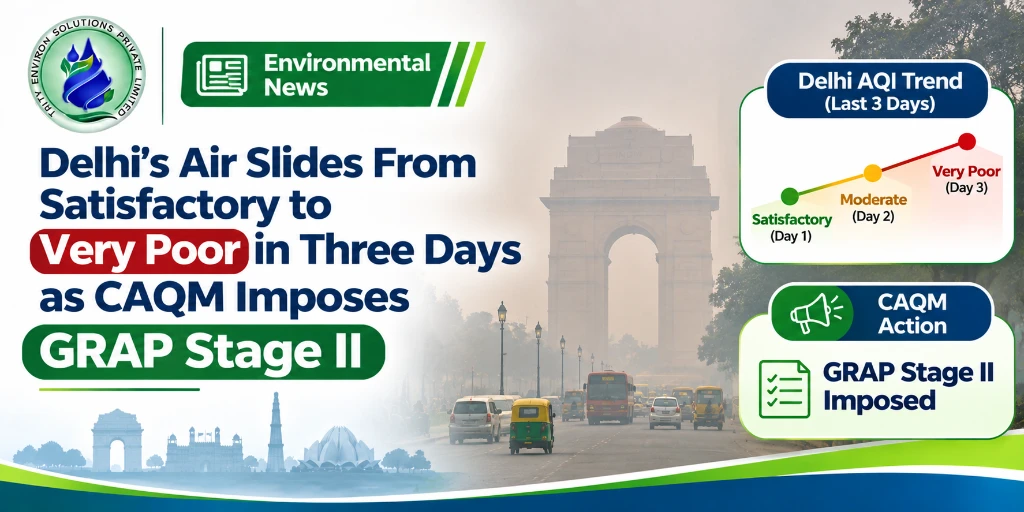
Delhi's air quality has deteriorated sharply in the first days of November. The city's average Air Quality Index (AQI) rose from 117 on October 31 to 261 on November 1 and 324 on November 2, prompting the Commission for Air Quality Management (CAQM) to invoke Stage II of the Graded Response Action Plan (GRAP) across the National Capital Region.
By the morning of November 4, the AQI stood at 373, with 21 monitoring stations in the "severe" range.
How the AQI Moved
The reported readings
- October 31: 117
- November 1: 261
- November 2: 324, "very poor", the daily average that triggered Stage II (The Pioneer)
- November 3, 8 am: 451, "severe", at a single time of day, per ANI
- November 3 and 4: Business Standard gave 331 for Tuesday and 373 at 7 am on Wednesday, November 4
The figures are of different kinds. The 324 is a 24-hour average, the 451 is a morning reading at one time, and the 331 and 373 are as reported by the outlet. They should not be compared as a single series.
November 4 in detail
Business Standard reported the following.
- All 59 reporting stations were above 200, 54 were above 300 and 21 were above 400
- Highest: Punjabi Bagh (452), Jahangirpuri (450), IIT Delhi (446) and Mundka (440)
- Lowest: IGNOU-Maidan Garhi (257) and IMD Lodhi Road (294)
- PM2.5 and PM10 were the main pollutants
NCR cities were also affected: Bahadurgarh 373, Gurugram 322, Manesar 320, Noida 310, Greater Noida 255, Ghaziabad 233 and Faridabad 128.
What GRAP Stage II Adds
GRAP-I was imposed on October 21, when the AQI was 244. Stage II was invoked across the whole NCR with immediate effect on November 2, the first time this season, in addition to the Stage I measures already in place.
Measures reported
- Mechanical or vacuum road sweeping and water sprinkling
- Higher parking fees to discourage private vehicle use
- More frequent Metro services and more CNG and electric buses
- Anti-smog guns, staggered office timings and restrictions on coal and firewood in commercial tandoors (Business Standard)
The commission's schedule and notices are on the CAQM website. Readers should check it for the exact wording of each stage.
What Is Driving the Pollution
Source shares
The Decision Support System, as reported by The Pioneer on November 3, gave the following shares for Delhi.
- Transport: 19.2%
- Stubble burning: 8.4%
- Residential activity: 4.9%
- Industries in Delhi and peripheral areas: 4.2%
- Other sources: 20.7%
The report did not say what the remaining share was. The listed shares add up to about 57%.
Weather
The Pioneer attributed the rise to unfavourable weather and stubble burning. CAQM cited IMD and IITM forecasts and said air quality would likely stay "very poor" in the coming days. Business Standard also pointed to "unfavourable meteorological conditions" and did not name specific sources.
Stubble burning, in context
According to the CAQM fact sheet reported by Outlook on November 3, Punjab recorded 1,514 farm fires between September 15 and November 1, down from 2,084 in 2025 (a fall of 38%). Haryana recorded 42, down from 118 (64%). Union Environment Minister Bhupender Yadav said about 40% of paddy stubble was managed through ex-situ methods, per ANI.
A fall in farm fires does not mean a clear sky. Fires are one of several sources, and weather decides how long pollution stays.
The Vehicle Restrictions
The Delhi High Court declined to stay a ban on non-Delhi-registered vehicles that do not meet BS-VI norms, in effect from November 1 to January 31, as reported by The Pioneer.
- Heavy traffic queues formed at the Gurugram, Noida, Ghaziabad, Sonipat and Najafgarh borders
- On November 1, police checked 7,279 vehicles, turned back 714 and impounded 38
What Residents Can Do
These are general suggestions and not official advice.
- Limit outdoor exertion, especially in the morning, and especially for children, older people and those with lung or heart conditions
- Keep windows closed during peak pollution hours and use air purifiers where possible
- Use public transport or carpool
- Avoid burning waste, leaves or firewood
What Industry and Facility Managers Should Do
- Keep diesel generator sets for standby use only
- Keep stack emissions within consent limits. Calibrated SOx NOx gas analysers let operators see deviations in real time
- Keep dust controls active at construction sites and material yards. Construction restrictions across the NCR run from November 5 to 20, according to the CAQM fact sheet
- Keep monitoring records ready for inspection
Why the Warning Signs Were There
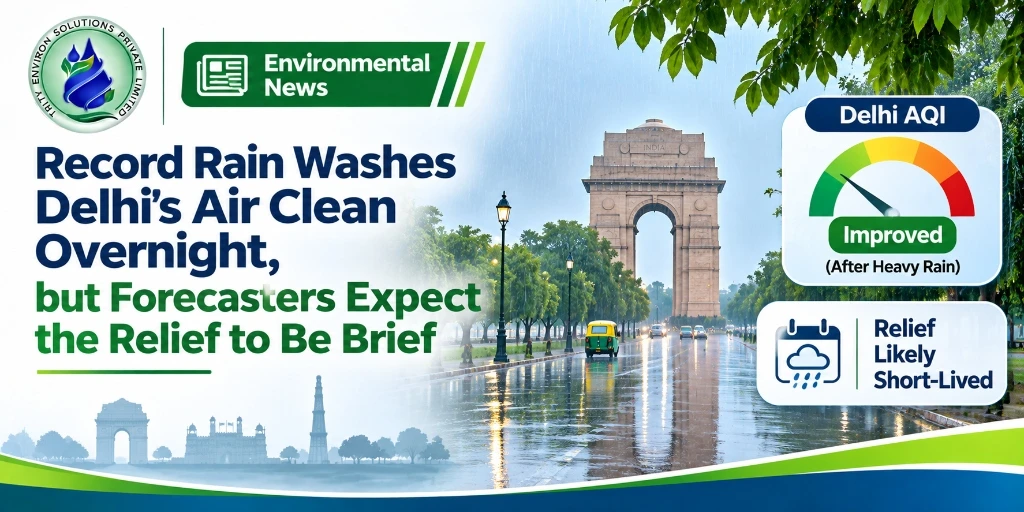
Three days before, rain had cleaned Delhi's air to an AQI of 78. Forecasters warned that the relief might not last. The reversal shows how quickly weather decides which side of the line Delhi falls on, while baseline emissions stay the same.
What the Numbers Mean for Health
Under the CPCB scale, "very poor" (301 to 400) and "severe" (above 400) air can affect healthy people with prolonged exposure and seriously affect people with existing conditions. This is general guidance based on the standard AQI categories.
- Children and older people are more sensitive and should limit time outdoors
- People with asthma, heart or lung disease should keep medication handy and avoid heavy exertion
- Outdoor workers such as traffic personnel and delivery staff face the longest exposure
The reports do not give health data, such as hospital visits, so none is stated here.
Why daily averages and single readings differ
A 24-hour average blends cleaner afternoons with polluted nights and mornings. A morning reading, such as 451 at 8 am, can be far higher than the daily average. That is why the AQI at the time you step outside can be worse than the headline figure for the day.
A Season Compared With Last Year
Last year, Delhi first turned "poor" on October 14 (AQI 211) and reached "very poor" on October 20 (AQI 345), as Outlook reported on October 22. This year the first "poor" reading came later, on October 21 (AQI 244), and "very poor" came on November 2. The CAQM fact sheet also counts 220 good-air days this season against 200 last year. A later start does not guarantee a milder winter, and the early-November readings show how quickly that can change.
What to Watch Next
- Whether CAQM moves to a higher GRAP stage
- Daily stubble-burning share estimates
- Whether border enforcement reduces non-compliant vehicle entry
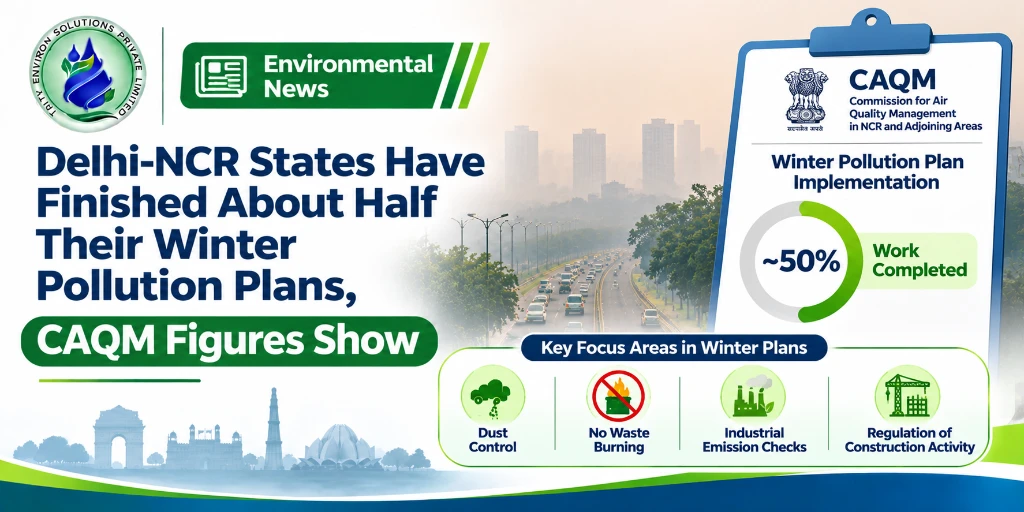
- How the NCR states perform on their own action plans, covered in a separate article
The commission has already signalled that conditions are likely to stay "very poor" in the coming days. Residents should plan for that.