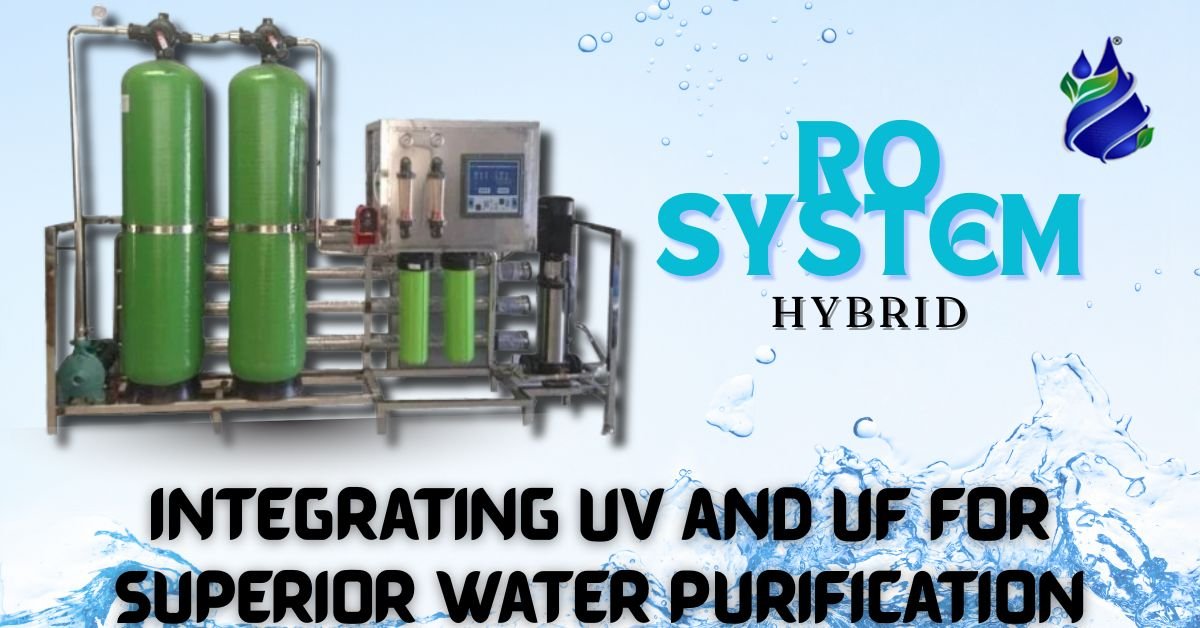
Hybrid RO Systems: Integrating UV and UF for Superior Water Purification
Discover hybrid RO systems combining UV & UF for pure, safe water. Ideal for homes, offices & industries. Reliable, efficient & eco-friendly solutions.

 ISO 9001:2015 & QCI Approved
Karnataka industries need air pollution control that matches their own KSPCB consent, not a generic template. Here is how to review your stack, pick equipment and stay inspection ready.
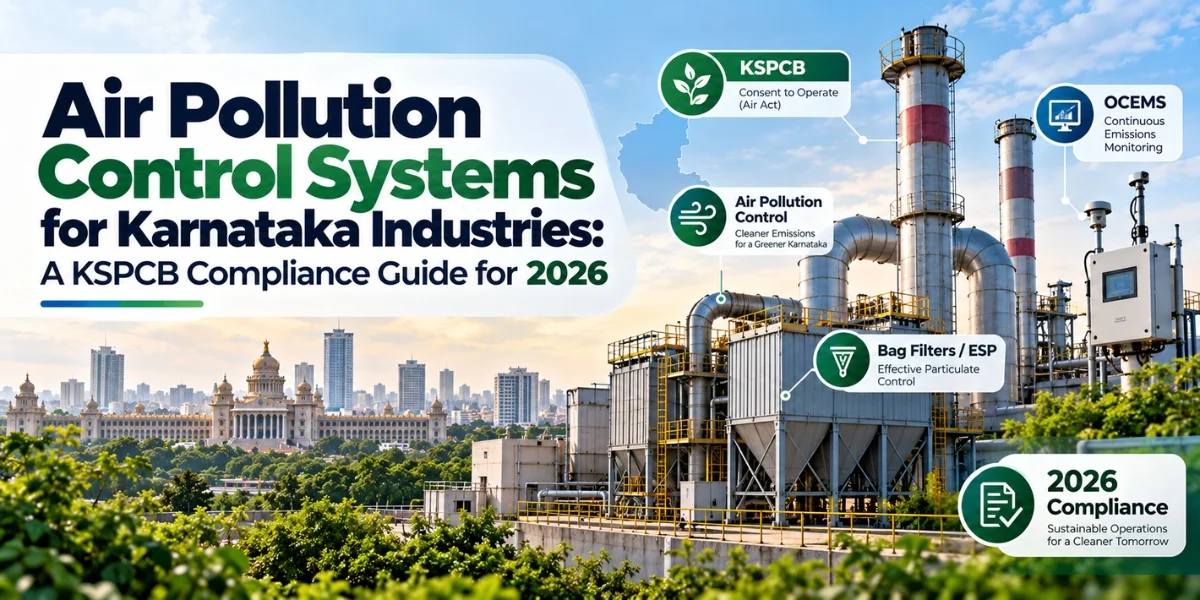
Karnataka has a mixed industrial base: garment and food units around Bengaluru, engineering clusters in areas like Peenya and Bommasandra, and cement and process industries in the interior districts. What they share is that air emission limits come from one document, the consent order issued by the Karnataka State Pollution Control Board (KSPCB).
That matters because the news cycle in 2026 has been dominated by the tighter particulate norm for Delhi-NCR. It is a regional direction from the Commission for Air Quality Management and does not automatically apply to Karnataka. Your limits are in your Consent to Operate. What does apply in Karnataka is the board's habit of checking whether the equipment on site actually delivers what the consent assumes, and Bengaluru area units in particular are reported to face close scrutiny, driven partly by lake pollution concerns.
This guide helps plant heads and EHS officers read their consent, audit their air pollution control setup and choose an air pollution control system that fits their fuel and process. It is written for boilers, thermic fluid heaters, furnaces, DG sets and process vents.
KSPCB works through the Air (Prevention and Control of Pollution) Act and the consent system. A unit needs Consent for Establishment before construction and Consent for Operation before production, and both are applied for through the board's online portal.
Each consent lists the emission sources at your site, the permitted pollutants and their limits, the required stack height and the control equipment you have committed to install. Read this document line by line. Many units discover that a boiler added later was never added to the consent, or that a control device promised in the application was never installed.
Stack height, sampling port access and a platform for safe sampling are also usually conditions. Missing sampling facilities can lead to a notice even when your emissions are fine.
Two Karnataka specific measures are worth knowing. The state has restricted the use of pet coke as fuel since 2017, with an exception for cement kilns including their captive power plants. And KSPCB has directed operators of DG sets of 125 kVA and above to retrofit emission control devices with a minimum particulate capturing efficiency of 70 percent, tested on a 5 mode D2 cycle by a laboratory recognised by CPCB. If you run large standby generators in a factory, hospital, mall or IT park, check whether your sets comply.
Fuel switching is often the cheapest compliance step, so confirm which fuels your consent allows before ordering any equipment.
An audit does not need a large team. It needs a day on site, a set of recent stack reports and honest answers.
Walk each emission source from the furnace or boiler to the stack. Look at the ducting for leaks and corrosion, the cyclone for wear at the cone, the bag filter for torn bags and failing pulse valves, the scrubber for clogged nozzles and the fan for vibration. Check that dampers, gauges and sampling ports work.
Differential Pressure and Fan Current
Two simple readings tell you a lot. Differential pressure across a bag filter, usually held in the range of 100 to 200 mm water column, shows whether bags are clean or blinding. Fan motor current shows whether airflow has dropped. If both are out of their normal band, the equipment is failing even if the stack looks clear on a good day.
Pull the last two years of stack test reports and compare them with your consent limits. Look for readings that creep up over time. Check whether tests were done at normal load, whether the lab was accredited and whether all stacks named in the consent were tested. Also confirm that operators keep daily logs. Regulators trust plants that can show a paper trail.
The right choice depends on fuel, gas temperature, dust type and the gases that travel with the dust. A supplier who recommends the same equipment for every enquiry is selling, not engineering.
A bag filter is the workhorse for low dust outlet levels on boilers and process dust. Pulse jet designs commonly run at an air to cloth ratio in the region of 1 to 1.5 metres per minute, and the bag fabric must match gas temperature and chemistry.
A wet scrubber suits gases with acid content, sticky particulates or explosion risk. It generates scrubber liquor that has to be treated, so budget for effluent handling. If the liquor carries salts or dissolved metals, an effluent treatment plant is part of the project.
A cyclone works well as a first stage for coarse particles but rarely meets modern outlet targets alone. An electrostatic precipitator fits high gas volumes and high temperatures where dust resistivity is favourable.
Portable stack sampling twice a year gives you snapshots. Online analysers give you the full film. For SO2 and NOx, our SOx-NOx gas analyzer supports continuous emission monitoring, which is useful for units that report to the board electronically or expect stricter conditions at renewal.
The stack is not the only source an inspector will notice. Coal and biomass yards, ash handling, conveyors, loading bays and unpaved internal roads all put dust into the air, and visible dust at the boundary is easy to spot without any instrument. Practical measures include covered conveyors, dust extraction hoods at transfer points, enclosed ash silos, water sprinkling on stockpiles and roads, paved internal roads and wheel washing for trucks. These steps are cheap compared with a new bag filter and they reduce the load your main control equipment has to handle.
Control equipment works best on a stable, well burnt flue gas. Uneven fuel size, high moisture and variable ash content cause fluctuating dust load and unburnt carbon. Keep fuel storage dry, screen fuel for size where possible and ask your boiler supplier for the recommended excess oxygen range for your fuel. Too little air produces soot and carbon monoxide, and too much wastes heat and raises gas volume, which in turn increases the size and cost of the filter you need. A boiler tune-up before you size any control equipment can lower the price of the project.
Air pollution control projects are usually funded from the compliance budget, but they behave like process projects: they need shutdown windows, civil foundations, ducting and electrical work. Plan them early enough to fit your production calendar.
Cost rises with flue gas volume, temperature, dust loading and the choice of materials. Stainless steel internals, special bag fabrics and gas cooling all add to price but protect against early failure. A quote that looks cheap because it excludes ducting and fans will grow later.
Ask suppliers to state guaranteed outlet emission, pressure drop, power consumption and spare parts cost per year. These figures decide your operating cost, which over five years often exceeds the purchase price.
Many Karnataka units also run wastewater systems on the same site. Working with one partner for air and water lowers coordination effort. See our page for ETP and STP plant manufacturers in Bangalore and our news update on Bengaluru's sewage infrastructure planning for the wider regulatory picture in the city.
Most air pollution control installations need a shutdown for tie-in work, so the schedule depends on your production calendar. A typical path is a stack test and audit in the first weeks, design and order within a month or two, fabrication and delivery over the following two to three months and a short shutdown for installation and commissioning. Plan the order around planned maintenance stoppages, festival closures or low-demand periods rather than trying to squeeze the tie-in into a busy month.
Ask the supplier for a written schedule with milestones, and confirm who arranges cranes, electrical supply, foundations and statutory approvals. If the change alters your emission points or process, check with KSPCB whether your consent needs an amendment before you commission.
Keep a single folder with your current consent order, the last two years of stack test reports, calibration records for any analysers, maintenance logs for filters, fans and scrubbers, bag replacement dates, fuel purchase records and DG set test certificates. An officer who can find each document in a minute forms a different impression from one who waits while files are searched.
| Parameter / Stage | Target Optimal Range | Failure Impact / Risk | Corrective Engineering Action |
|---|---|---|---|
| Stack particulate matter | At or below the limit in your KSPCB consent | Notice, consent conditions tightened or closure direction | Stack test, then upgrade filter or improve combustion |
| Bag filter differential pressure | Typically 100 to 200 mm water column (check vendor data) | Blinded bags, low airflow, dust escape on tears | Tune pulse cleaning, replace bags, check for moisture |
| DG set emission control (125 kVA and above) | Retrofit device with at least 70 percent PM capture, as directed by KSPCB | Non-compliance with board order | Fit a tested retrofit device and keep test certificates |
| Sampling port and platform | Safe, accessible and as per consent | Inspection cannot proceed, notice issued | Add ports and platform at the correct duct length |
Trity Environ Solutions is an ISO 9001:2015 certified and QCI-approved air pollution control and wastewater treatment equipment manufacturer and supplier in India, delivering robust, high-efficiency systems engineered for CPCB and SPCB regulatory compliance.
Every installation is supported by pan-India Annual Maintenance Contract and Operation and Maintenance services.
Looking to upgrade or install a high-performance ETP, STP or emission control system? Call +91-9821030072 or email enquiry@trityenviro.com, or request a free engineering consultation from our technical team.
Discover hybrid RO systems combining UV & UF for pure, safe water. Ideal for homes, offices & industries. Reliable, efficient & eco-friendly solutions.
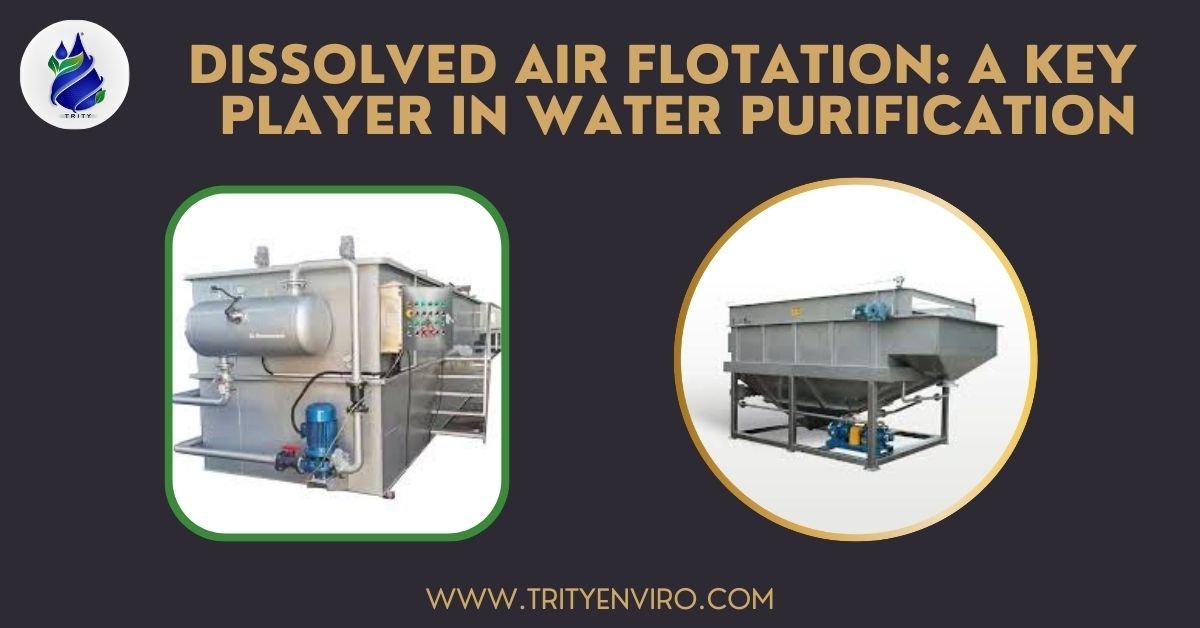
Dissolved Air Flotation (DAF) efficiently removes contaminants from water. Learn how DAF technology benefits water treatment with low energy, chemicals, and maintenance.
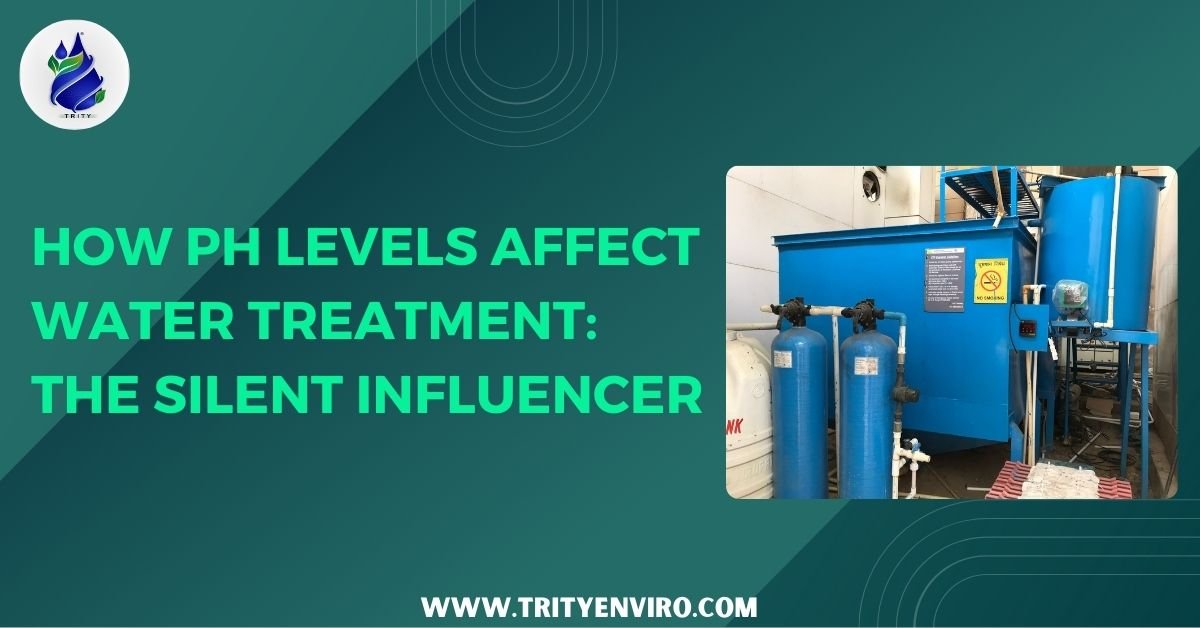
Learn how pH levels impact water treatment, filtration efficiency, corrosion, and disinfection, and why maintaining optimal pH balance is crucial for water quality.




Discuss your requirements with our engineering team and get practical guidance for your project.