
Role of Machine Learning in Optimizing STP Aeration Processes
Learn how machine learning optimizes aeration in sewage treatment plants, cutting energy use, improving compliance, and supporting sustainability

 ISO 9001:2015 & QCI Approved
A textile dyeing unit, a pharmaceutical plant, and a food processing facility can all discharge wastewater that looks superficially similar, yet each needs a genuinely different treatment approach. This guide covers exactly how ETP and STP design adapts by industry.

Effluent Treatment Plants (ETPs) treat industrial wastewater, while Sewage Treatment Plants (STPs) treat domestic and municipal sewage, but within each category, the specific design varies considerably depending on what the wastewater actually contains. A general-purpose treatment train built for one industry's effluent characteristics frequently underperforms when applied unchanged to another, which is exactly why understanding how ETP and STP design genuinely adapts across industries matters before finalizing any treatment plant specification.
Textile manufacturing generates wastewater heavily loaded with dyes, chemicals, and high Chemical Oxygen Demand, along with colour and salts that conventional treatment struggles to remove on its own. ETPs designed for this sector typically combine advanced coagulation and flocculation to strip colour and suspended solids, activated sludge or bio-reactor treatment for COD and BOD reduction, and membrane technologies like ultrafiltration and reverse osmosis where water reuse is a goal, a topic our textile industry wastewater treatment guide covers in further depth.
Pharmaceutical wastewater is notoriously variable, often containing complex chemicals, antibiotics, solvents, and high-strength organics that demand a more precise treatment approach than most industries require. ETPs built for this sector commonly incorporate steam stripping to remove volatile organics, advanced oxidation processes using agents like Fenton's reagent to break down complex drug compounds, and customized biological treatment tailored to the specific chemical profile involved, since a generic biological stage often cannot handle antibiotic-laden effluent without inhibiting the very microorganisms the treatment depends on.
Food and beverage manufacturing generates wastewater high in fats, oils, grease, and organic load, but generally free of the toxic industrial chemicals seen in textile or pharma effluent. Treatment systems here typically integrate dissolved air flotation (DAF) to separate fats and oils early, followed by biological treatment using aerators, tube settlers, or membrane bioreactors, and finishing with pressure sand and activated carbon filtration, an approach equally relevant to dairy, distillery, and canning operations that share similar high fat and organic characteristics.
The oil and gas sector faces genuinely distinct wastewater challenges: hydrocarbons in multiple forms, high salinity, and in some cases naturally occurring radioactive materials that most other industries never encounter. Our detailed guide on oil and gas wastewater treatment methods covers exactly how de-oiling, desalination, and specialized handling requirements shape ETP design for this sector specifically.
Electroplating, metal finishing, and automotive manufacturing generate rinse water loaded with dissolved heavy metals from painting, plating, and equipment cleaning processes. Treatment here relies heavily on chemical precipitation and ion exchange to remove metals before discharge, often paired with an oil water separator to address the oil and coolant residue common in automotive manufacturing lines.
STPs treating municipal or residential sewage focus primarily on organic load, suspended solids, and nutrient removal to prevent eutrophication downstream, generally using conventional or moving-bed biological treatment sized around occupancy and daily flow, since domestic sewage composition is relatively consistent compared to industrial effluent.
Hotels, hospitals, and educational campuses need STP design adapted less for unusual contaminants and more for sharp, predictable demand peaks, morning check-out, meal service hours, or shift changes, along with, in the case of healthcare facilities, an added disinfection stage to address the higher pathogen risk in hospital wastewater specifically.
Three factors consistently determine how much an ETP or STP design needs to deviate from a standard template: the specific contaminants present in the wastewater, since heavy metals, antibiotics, and dyes each demand a fundamentally different removal method; the discharge or reuse standard the facility must meet, since a plant discharging into a sensitive water body needs a more advanced treatment train than one connected to a robust municipal sewer; and the potential for resource recovery, since some industries can recover valuable materials, metals, oils, or reusable water, directly from their treatment process in a way that changes the economics of the entire system design.
| Industry | Primary Treatment Focus | Typical Technology |
|---|---|---|
| Textile and dyeing | Colour and COD removal | Coagulation-flocculation, biological treatment, UF/RO |
| Pharmaceutical | Complex chemical breakdown | Steam stripping, advanced oxidation, tailored biological treatment |
| Food and beverage | Fats, oils, grease, organic load | DAF, MBR/tube settlers, activated carbon |
| Oil and gas | Hydrocarbons, salinity, NORM | De-oiling stages, desalination, specialized handling |
| Metal finishing/automotive | Dissolved heavy metals | Chemical precipitation, ion exchange |
| Municipalities/societies | Organic load, nutrients | MBBR/SBR, conventional biological treatment |
Trity Environ Solutions is an experienced ETP and STP manufacturer in India, and our engineering team designs treatment systems around the actual contaminant profile of your industry, not a generic template repurposed across every project. As a trusted wastewater treatment plant manufacturer and supplier, we've delivered turnkey solutions for textile, pharmaceutical, food and beverage, chemical, and hospitality clients, each configured around what that specific effluent actually requires. Every installation is backed by pan-India Annual Maintenance Contract and operation and maintenance support. We are ISO 9001:2015 certified, QCI approved, and deliver CPCB-compliant engineering across every sector we serve.
No. A generic ETP design frequently underperforms when applied to a different industry's effluent, since contaminant type, concentration, and required discharge standard vary significantly, for example, textile wastewater needs colour removal while pharmaceutical effluent needs advanced oxidation for complex chemicals.
Pharmaceutical effluent often contains antibiotics, solvents, and complex chemicals that can inhibit standard biological treatment, requiring specialized processes like steam stripping and advanced oxidation using agents such as Fenton's reagent rather than a conventional treatment sequence.
Yes, primarily due to demand pattern and pathogen risk rather than contaminant type. Hotels and hospitals see sharp, predictable usage peaks and, for healthcare specifically, need an added disinfection stage to address higher pathogen risk in hospital wastewater.
Three factors matter most: the specific contaminants present, the discharge or reuse standard the facility must meet, and whether resource recovery, such as metals, oils, or reusable water, is a realistic goal for that particular wastewater stream.
Yes, hybrid ETP-cum-STP configurations are used where a facility generates both industrial effluent and domestic sewage, such as a manufacturing plant with on-site staff facilities, combining both treatment approaches within a single integrated system.
Learn how machine learning optimizes aeration in sewage treatment plants, cutting energy use, improving compliance, and supporting sustainability
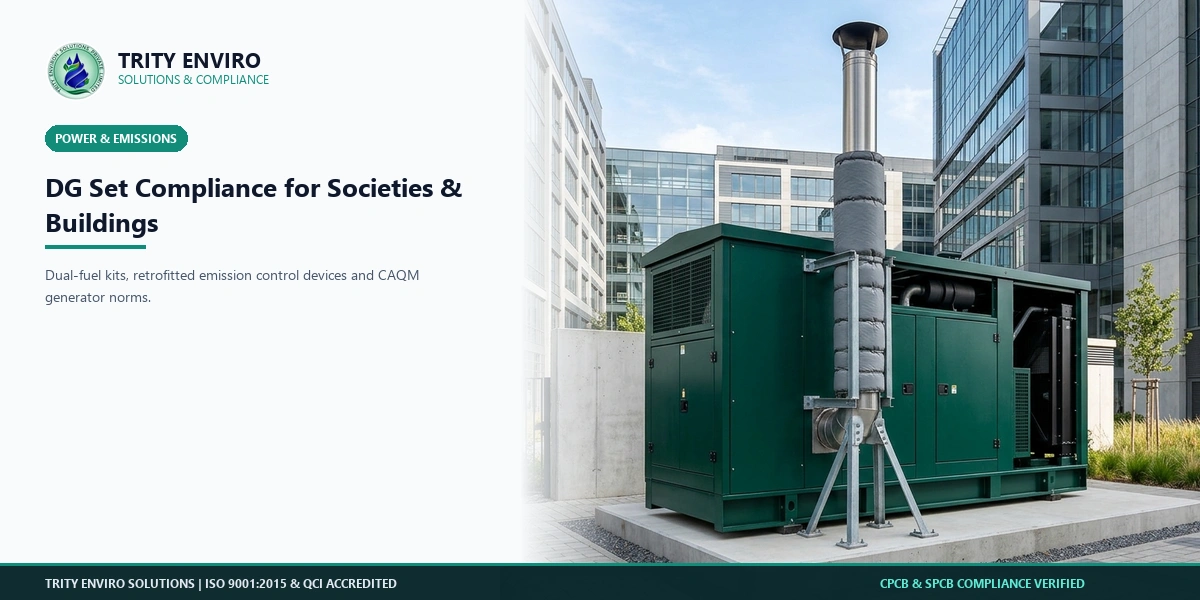
DG set rules for societies and commercial buildings: CAQM and DPCC directions, dual fuel and retrofit devices, stack height, noise limits and penalty exposure.
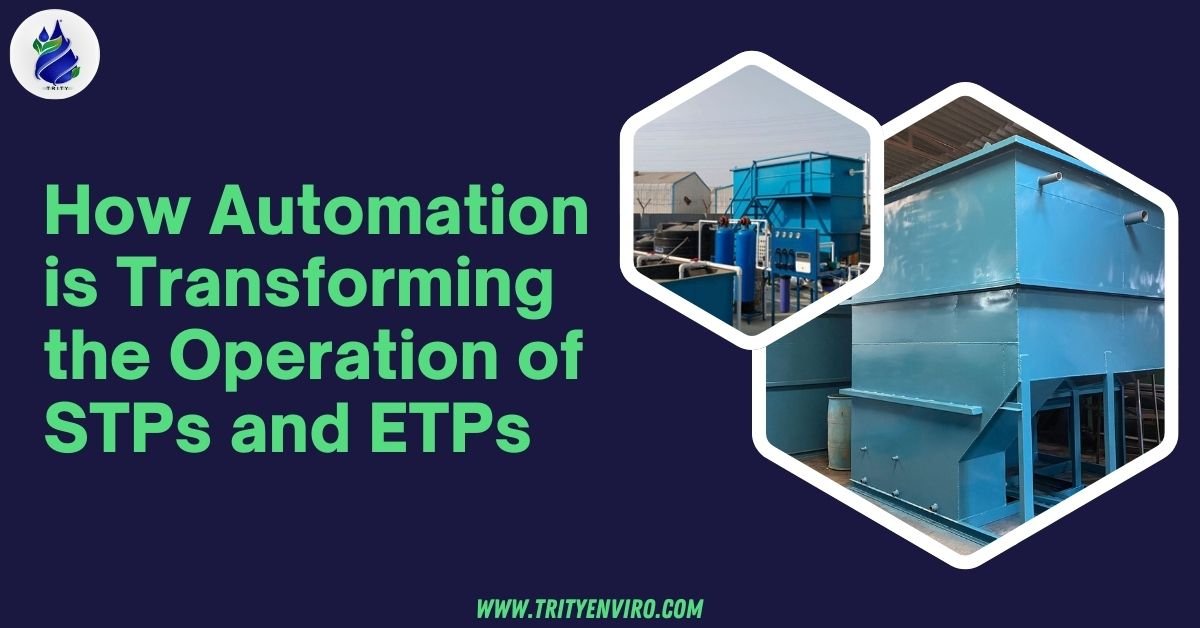
Discover how automation enhances the performance of STPs and ETPs with smart sensors, predictive maintenance, and machine learning for better wastewater management.











Discuss your requirements with our engineering team and get practical guidance for your project.

