Redefining Clean Water: How Wastewater Is Shaping the Future of Global Resources
Wastewater is no longer waste—it’s a valuable resource for global water sustainability. Advanced treatment technologies are reshaping water reuse, tackling scarcity.

 ISO 9001:2015 & QCI Approved
RO technology has come a long way from a simple pressurized membrane. In 2026, the innovations actually moving the needle are happening at the membrane material level, in system automation, and in how RO integrates with the broader treatment train.

Reverse osmosis has been a proven water purification technology for decades, using pressure to force water through a semi-permeable membrane that blocks dissolved solids and contaminants while allowing purified water to pass through. What has changed significantly in recent years is not the basic principle, but the materials, automation, and system design built around it. The innovations covered in this guide are the ones genuinely reshaping RO plant performance today, not marketing terms attached to incremental tweaks.
The membrane itself is where some of the most significant RO research is currently happening. Graphene oxide-based thin-film nanocomposite membranes, developed and tested in research including work at India's Bhabha Atomic Research Centre, have demonstrated over 30% higher water flux alongside a slight improvement in salt rejection, from 98.8% to 99.2%, compared to conventional membranes under equivalent test conditions. Other nanocomposite formulations incorporating graphene oxide into the membrane's active layer have shown water flux improvements of up to 40% alongside modest gains in salt rejection, largely by achieving a thinner, smoother, more hydrophilic active layer than conventional polyamide membranes allow. These are not distant lab curiosities; several of these formulations are moving from published research toward commercial-scale membrane development specifically because of the efficiency gains involved.
Closely related to membrane material innovation is the development of low and ultra-low-pressure RO (L/ULPRO) systems, which use nanocomposite membrane formulations capable of achieving strong salt rejection, in some documented cases above 99.99%, at operating pressures as low as 1-8 bar, dramatically lower than the pressures conventional RO or seawater desalination typically requires. Since pumping pressure is one of the largest drivers of RO's energy consumption, ultra-low-pressure membrane technology represents one of the more direct paths toward meaningfully reducing RO's overall energy footprint, particularly for brackish water applications.
Modern RO plants increasingly integrate IoT-connected sensors for continuous, real-time monitoring of pressure, flow, and water quality across the system. This connected infrastructure supports predictive maintenance, flagging early signs of membrane fouling, pump wear, or performance drift before they escalate into unplanned downtime, a meaningful shift from the periodic manual inspection older RO installations depended on.
Artificial intelligence is increasingly layered on top of this sensor data specifically for RO process optimization, using historical and real-time performance data to fine-tune dosing, flow rates, and cleaning cycles automatically. This reduces the reliance on manual operator adjustment and has been shown in industry research to improve both energy efficiency and consistency of output water quality over time.
Modern RO systems use high-pressure pumps paired with variable frequency drives (VFDs) that adjust motor speed to match actual demand rather than running at a fixed speed regardless of load. This single design choice reduces energy waste significantly during periods of lower flow demand, extending pump life while cutting operating cost.
For higher-pressure applications, particularly seawater desalination, energy recovery devices capture pressure energy from the reject brine stream as it exits the system and reuse it to help pressurize incoming feed water. This remains one of the most impactful energy efficiency innovations available for high-pressure RO applications, directly addressing the energy intensity that is otherwise RO's most legitimate sustainability critique.
Advanced pretreatment stages, particularly ultrafiltration (UF) and nanofiltration (NF) integrated ahead of the main RO membrane, are increasingly standard in modern system design. This layered pretreatment approach protects the primary RO membrane from fouling and scaling far more effectively than basic sediment filtration alone, extending membrane life significantly and reducing the frequency and cost of membrane replacement and cleaning-in-place cycles.
RO continues to serve as the primary concentration technology within modern Zero Liquid Discharge systems, and ongoing innovation in high-recovery membrane staging is steadily improving how much water RO-based ZLD systems can recover before the remaining concentrate moves to evaporation and crystallization. This trend directly supports facilities under CPCB and state ZLD mandates looking to minimize the energy and cost burden of the downstream evaporation stage by maximizing what RO alone can recover first.
Newer system architectures like closed-circuit RO and flow-reversal RO are specifically designed to achieve higher recovery rates from challenging, high-salinity, or scaling-prone feed water than conventional single-pass RO configurations allow, by cycling feed water through the membrane system in a more controlled, staged manner rather than a simple linear pass.
Combining RO with complementary membrane technologies, forward osmosis, nanofiltration, reverse electrodialysis, and membrane distillation, is an active area of system design aimed at improving overall resource recovery and reducing specific energy consumption compared to RO operating alone. Membrane distillation hybrids in particular show promise for integrating heat recovery mechanisms that further improve overall freshwater productivity per unit of energy input.
Newer RO installations are increasingly designed around eco-friendly membrane materials and reduced chemical usage in cleaning and pretreatment, lowering the overall environmental footprint of the system across its operating life, not just its water treatment performance. This trend aligns closely with the broader honest conversation around RO's sustainability trade-offs, where genuine design improvements, not just marketing language, are what actually move the needle.
| Innovation | Primary Benefit | Best Suited For |
|---|---|---|
| Graphene oxide nanocomposite membranes | Higher flux, marginal salt rejection gain | New membrane replacement cycles, high-throughput plants |
| Ultra-low-pressure RO | Significant energy reduction | Brackish water applications |
| AI-driven process optimization | Consistent output, reduced manual adjustment | Plants with variable feed water quality |
| Closed-circuit/flow-reversal RO | Higher recovery from difficult feed water | High-salinity or scaling-prone sources |
| Energy recovery devices | Reduced net energy demand | Seawater desalination, high-pressure systems |
Trity Environ Solutions is an experienced commercial RO plant manufacturer and industrial RO plant manufacturer in India, staying current with genuine membrane and system innovation rather than recycling the same design across every project. As a trusted RO manufacturer and supplier, our engineering team evaluates which innovations, whether improved pretreatment, energy recovery, or high-recovery configurations, actually apply to your specific feed water and use case, informed by our related guides on RO combating water pollution and RO desalination for coastal water security. Every installation is backed by pan-India Annual Maintenance Contract and operation and maintenance support. We are ISO 9001:2015 certified, QCI approved, and deliver CPCB-compliant engineering nationwide.
Graphene oxide-based nanocomposite membranes are among the most significant current innovations, with research including work at India's Bhabha Atomic Research Centre showing over 30% higher water flux alongside improved salt rejection compared to conventional membranes.
Ultra-low-pressure RO uses advanced nanocomposite membranes that achieve strong salt rejection at operating pressures as low as 1-8 bar, far below conventional RO pressure requirements, directly reducing the pumping energy that drives much of RO's operating cost.
AI layered on top of IoT sensor data is used for predictive maintenance, catching early signs of fouling or equipment wear, and for real-time process optimization, automatically adjusting dosing and flow parameters to maintain consistent output quality and energy efficiency.
These are newer RO system configurations designed to achieve higher water recovery from challenging, high-salinity, or scaling-prone feed water than conventional single-pass RO, by cycling feed water through the membrane in a more controlled, staged process.
Improved high-recovery membrane staging allows RO to recover more water before the remaining concentrate moves to the evaporation and crystallization stages of a ZLD system, reducing the energy and cost burden of those downstream stages.
Wastewater is no longer waste—it’s a valuable resource for global water sustainability. Advanced treatment technologies are reshaping water reuse, tackling scarcity.
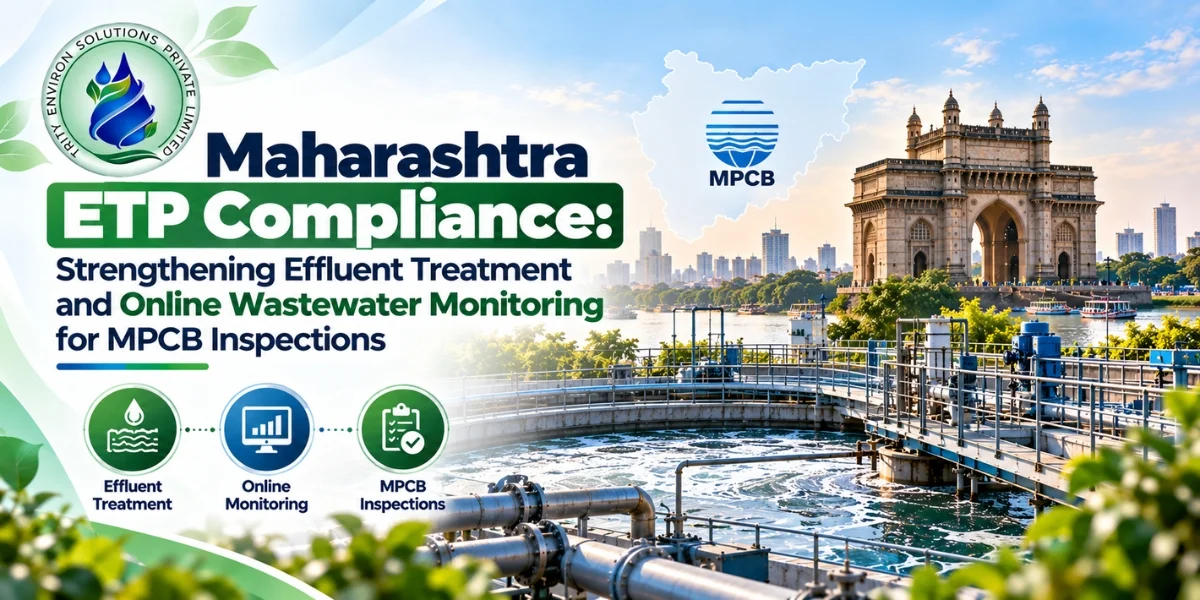
Get your Maharashtra ETP ready for MPCB inspections: discharge norms, online effluent monitoring, sampling records, common failures and upgrade options.
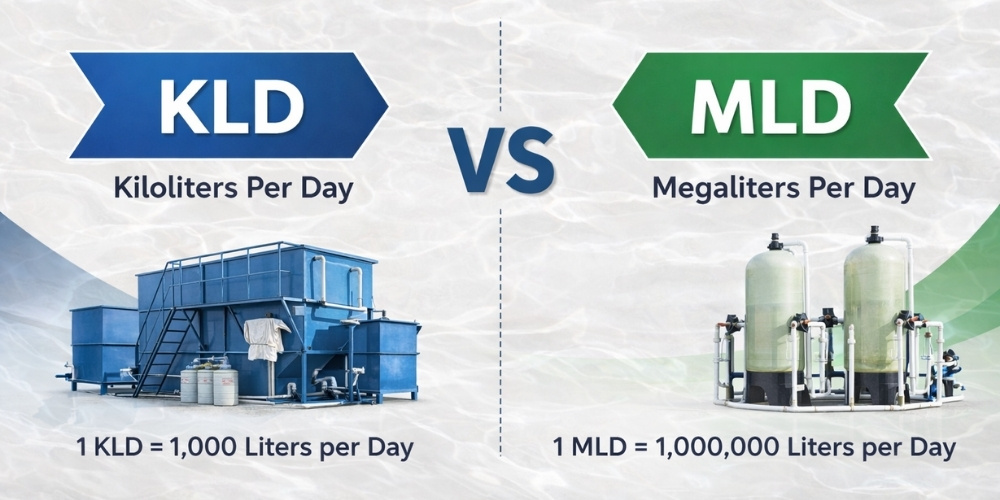
Confused about KLD and MLD in water treatment? Learn their full forms, key differences, conversion formula, and how they impact STP and ETP plant design in India.

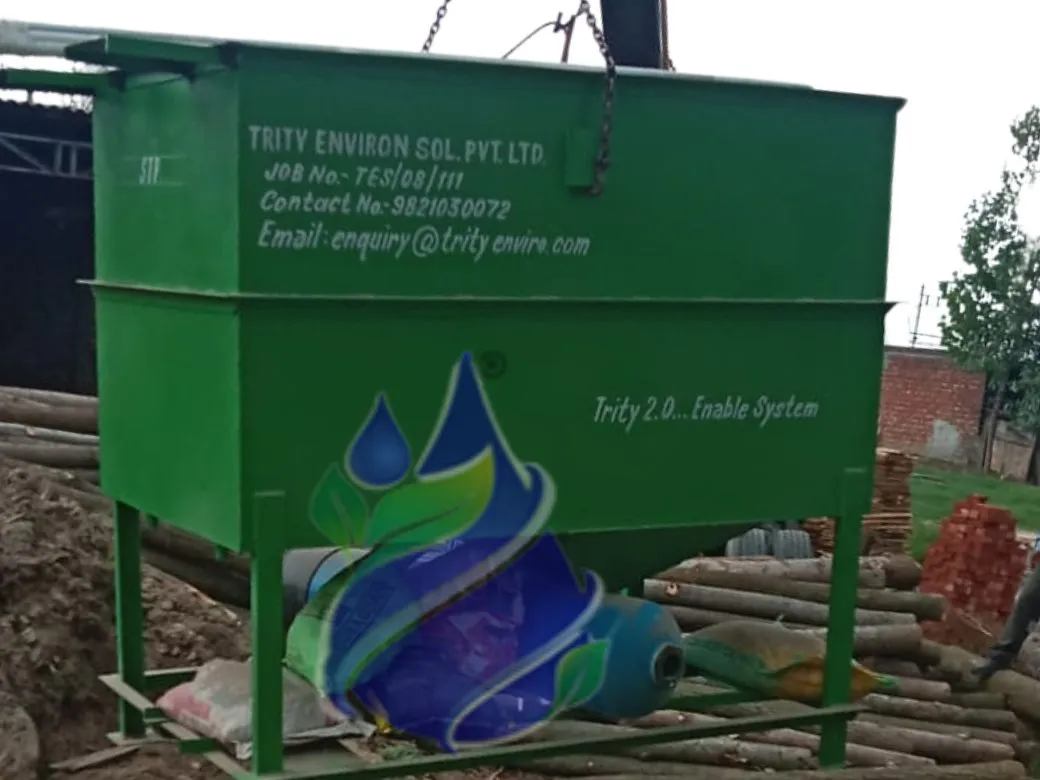
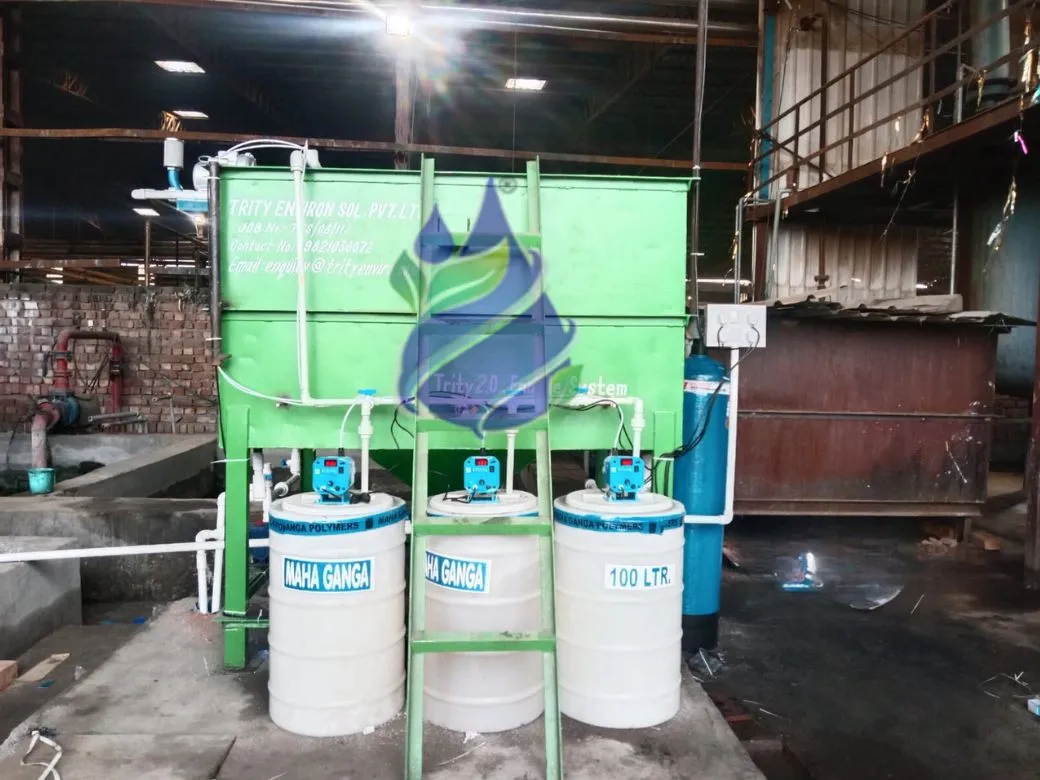



Discuss your requirements with our engineering team and get practical guidance for your project.