ISO 9001:2015 & QCI Approved
STP Plant Installation
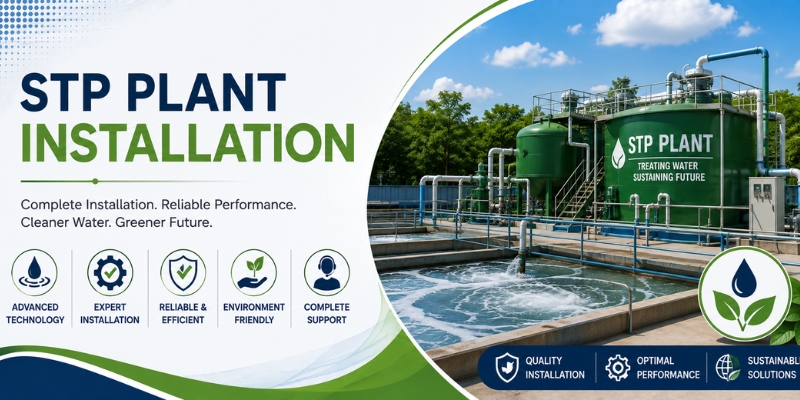
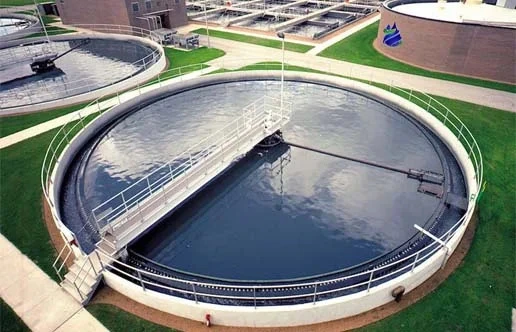
Trity Enviro provides complete Sewage Treatment Plant (STP) installation services, from site preparation and civil work to commissioning and operator training.
Installation Quality Decides Whether the Plant Actually Performs
A well-designed Sewage Treatment Plant (STP) can still underperform for years if the installation itself is done poorly, a foundation that isn't level, chambers cast to the wrong volume, or a biological system that gets switched on before it's properly seeded. Trity Environ Solution treats installation as its own discipline, not an afterthought to manufacturing, because the gap between a correctly and incorrectly installed plant shows up in ways that are expensive to fix retroactively, cracked civil work, chronic underperformance against BOD/COD targets, or a plant that technically runs but never reaches the treatment efficiency it was designed for.
Packaged vs Civil-Built STPs: Different Installation Timelines
The installation approach depends heavily on which type of system you're deploying. Packaged FRP-based STPs, typically MBBR or Anaerobic + MBBR technology, arrive largely pre-fabricated and can be installed on-site in as little as 3 to 14 days depending on capacity, since the biological chamber, blowers, and piping arrive ready to connect rather than being built from scratch on-site. Civil-built STPs, RCC or brick tanks constructed to your project's design, take considerably longer, often 3 to 6 months, since the civil work itself, excavation, tank construction, curing, and waterproofing, has to happen before mechanical and electrical installation can even begin. Neither approach is inherently better, the right choice depends on your capacity, footprint constraints, and timeline, but the installation risks are genuinely different between the two.
Our Installation Process
- Site assessment and preparation: confirming soil conditions, water table depth, access for equipment, and available footprint match what the design assumed
- Civil and foundation work: for packaged units, a level, correctly sized foundation is critical even though the biological chamber itself is pre-fabricated; for civil-built systems, this stage is the bulk of the installation timeline
- Mechanical and electrical installation: blowers, pumps, diffusers, piping, and control panel wiring, installed and pressure-tested before any biological startup begins
- Biological seeding and startup: introducing seed sludge or an equivalent bacterial culture to the system and allowing it to establish. This stage typically takes several weeks before the plant consistently produces CPCB-grade output, and rushing it is one of the most common reasons a newly installed plant underperforms in its first months
- Commissioning and performance testing: verifying actual output against design parameters (BOD, COD, TSS) under real operating load, not just confirming the equipment switches on
- Operator training and handover: training your facility team on day-to-day operation, routine checks, and early fault recognition, plus handover of operation and maintenance manuals and as-built drawings
Common Installation Mistakes We See in Inherited Plants
Trity Environ Solution regularly gets called in to fix plants installed by other contractors, and the failure patterns repeat often enough to be worth naming: foundations poured without confirming the actual equipment footprint, chambers cast to the wrong volume because civil and mechanical teams weren't coordinating from the same drawings, and biological systems switched into full operation before seed sludge had time to establish, which sets the plant up for chronic underperformance that looks like a design flaw but is actually a startup shortcut. Under NGT orders and various state regulations, STP installation is mandatory for residential complexes above a certain unit count or built-up area, and for hospitals, hotels, and industrial facilities above specified thresholds, so a plant that technically exists but never performs to standard leaves the project exposed exactly where the regulation was meant to provide cover.
Why Trity Environ Solution for STP Installation
We manufacture the STP systems we install, which means the same team responsible for the design is accountable for the build quality, closing the coordination gap that causes most of the mistakes above. Our installation teams handle site assessment, civil coordination, mechanical and electrical work, biological startup, and commissioning as one continuous process, and we back installations with Annual Maintenance Contract support so the plant keeps performing well after handover, not just on the day it's commissioned.
Frequently Asked Questions
How long does STP installation take?
A packaged MBBR or Anaerobic + MBBR unit can be installed in 3 to 14 days depending on capacity. A civil-built STP typically takes 3 to 6 months, since civil construction has to happen before mechanical and electrical installation begins.
Why does the plant take weeks to reach full performance even after installation is complete?
The biological system needs time to establish. Seed sludge or bacterial culture takes several weeks to build up to the point where it consistently handles the plant's design load, and switching straight to full operational load before that happens is one of the most common causes of early underperformance.
Can an existing, poorly performing STP be fixed without a full rebuild?
Often yes. Many of the issues we see in inherited plants, undersized foundations, wrong chamber volumes, or a rushed biological startup, can be corrected through targeted retrofit and proper re-commissioning rather than starting over completely, though the fix depends on how severe the underlying installation issue is.
Is STP installation legally mandatory for my project?
Under NGT orders and state regulations, STP installation is mandatory for residential complexes above a certain unit count or built-up area, and for hospitals, hotels, educational institutions, and industrial facilities above specified thresholds. Requirements vary by state, so it's worth confirming your specific project's threshold.
Do you handle both packaged and civil-built STP installations?
Yes. We work with clients on both, and help determine which approach fits their capacity, footprint, and timeline requirements before installation begins, not just after a technology has already been chosen.
Scope Highlights
Why Choose Trity Enviro Solutions?
Industry-certified environmental engineers delivering compliant, high-efficiency turnkey systems across India.
100% SPCB/CPCB Compliance
Complete regulatory clearance & legal liaison support.
Certified Engineers
Over a decade of industrial wastewater expertise.
Turnkey Execution
End-to-end design, fabrication, setup & commissioning.
Pan-India AMC & Service
24/7 technical hotline, scheduled visits & spare parts.
Frequently Asked Questions
Q1. What is a MBBR Media?
Moving bed biofilm reactor (MBBR) is a type of wastewater treatment process that was first invented by Prof. Hallvard Ødegaard at Norwegian University of Science and Technology in the late 1980s. For more detail call us on 8802624956
Q2. What is a digester tank?
The wet anaerobic digestion process is applied to liquid waste streams that are conveyable by liquid pumping. Sometimes wet systems are called Low Solids AD (LSAD). The Wet AD process can be done in reactors of two main configurations, continuously stirred tank reactors (CSTR) and plug flow reactors.
Q3. Which air pollutant is produced in anaerobic decomposition of organic matter?
Methane is the largest natural source of hydrocarbons. It's produced by the anaerobic decomposition of organic matter in bodies of water. -Trees and plants produce most of the remaining natural VOC's called terpenes. Volatile Organic Compounds - VOCs -Petroleum is the key source of man-made VOC pollution.
Q4. What is a sewage treatment plant?
The Sewage Treatment Plant process is similar to the way that a Septic Tank works but mechanical components provide a process to help break down solids to produce a cleaner, more environmentally friendly effluent.
Q5. What is the tertiary treatment of sewage?
Tertiary treatment is the final cleaning process that improves wastewater quality before it is reused, recycled or discharged to the environment. The treatment removes remaining inorganic compounds, and substances, such as the nitrogen and phosphorus.
Related Service Solutions
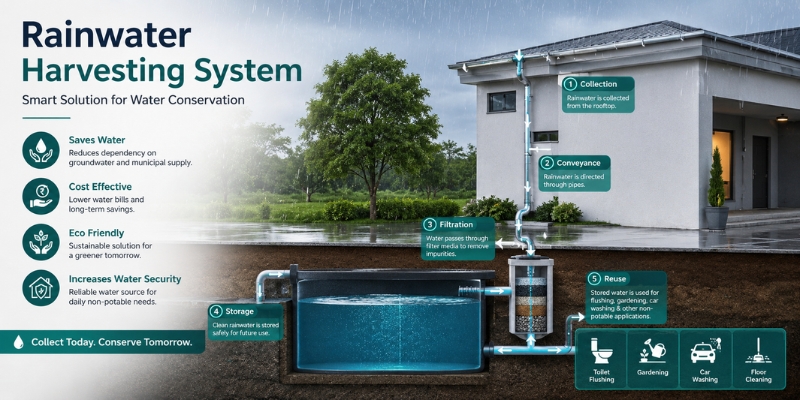
Rainwater Harvesting System

Technical Assistance on Web
Consent to Establishment
Related Industry Insights
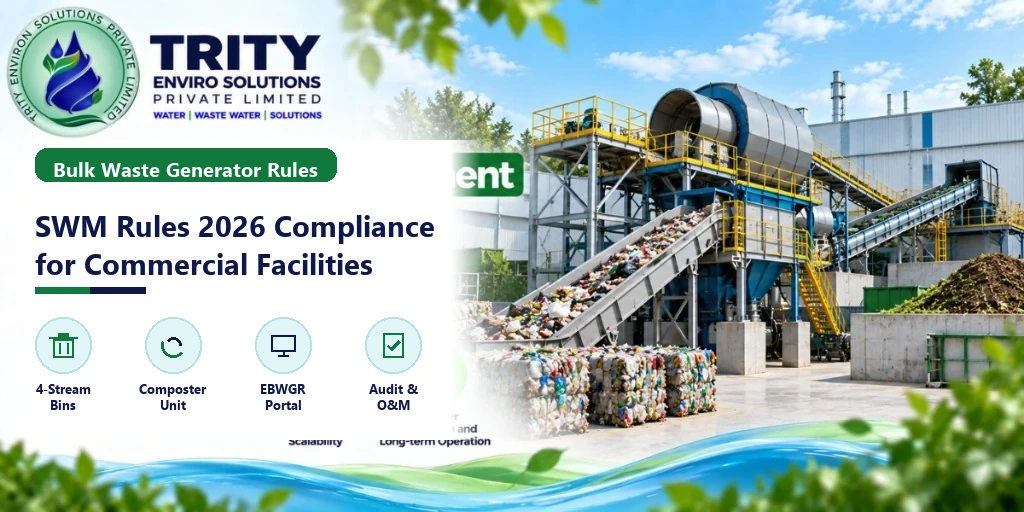
Bulk Waste Generator Compliance Under India's SWM Rules 2026: What Businesses Need to Set Up
A practical checklist for bulk waste generators under SWM Rules 2026: registration, four-stream segregation, on-site processing, EBWGR certificates and records.
Read Article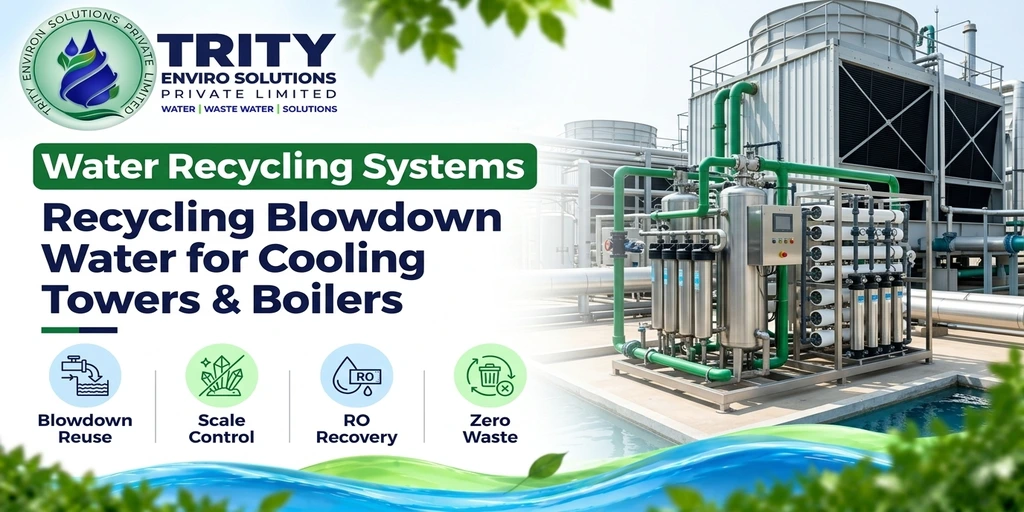
How to Design a Water Recycling System for Cooling Towers and Industrial Process Water
Design a water recycling system for cooling towers and process water: water balance, cycles of concentration, treatment train and payback, with an example.
Read Article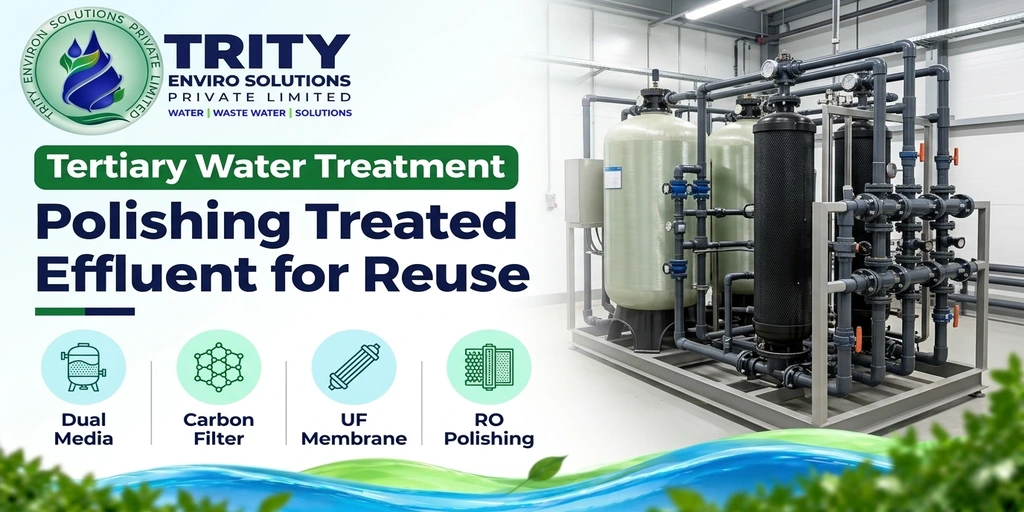
Tertiary Water Treatment for Industrial Reuse: When Filtration Alone Is Not Enough
Is filtration enough to reuse treated wastewater? Learn when you need UF, RO, softening or disinfection, and how to match tertiary treatment to each reuse.
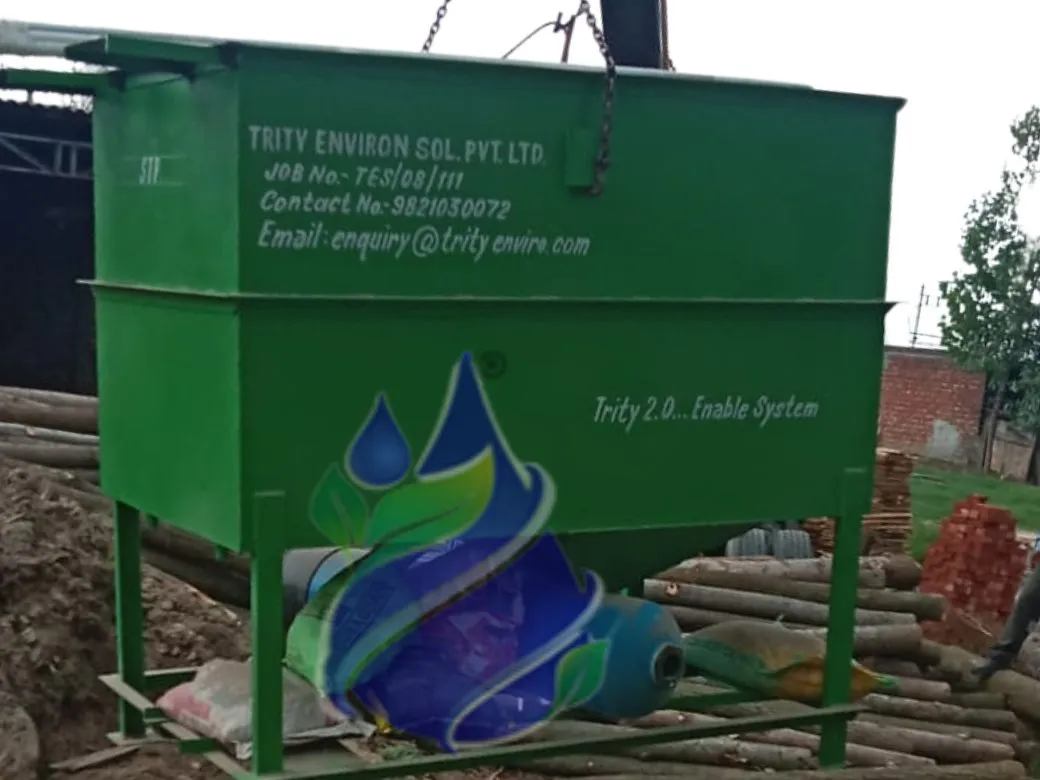
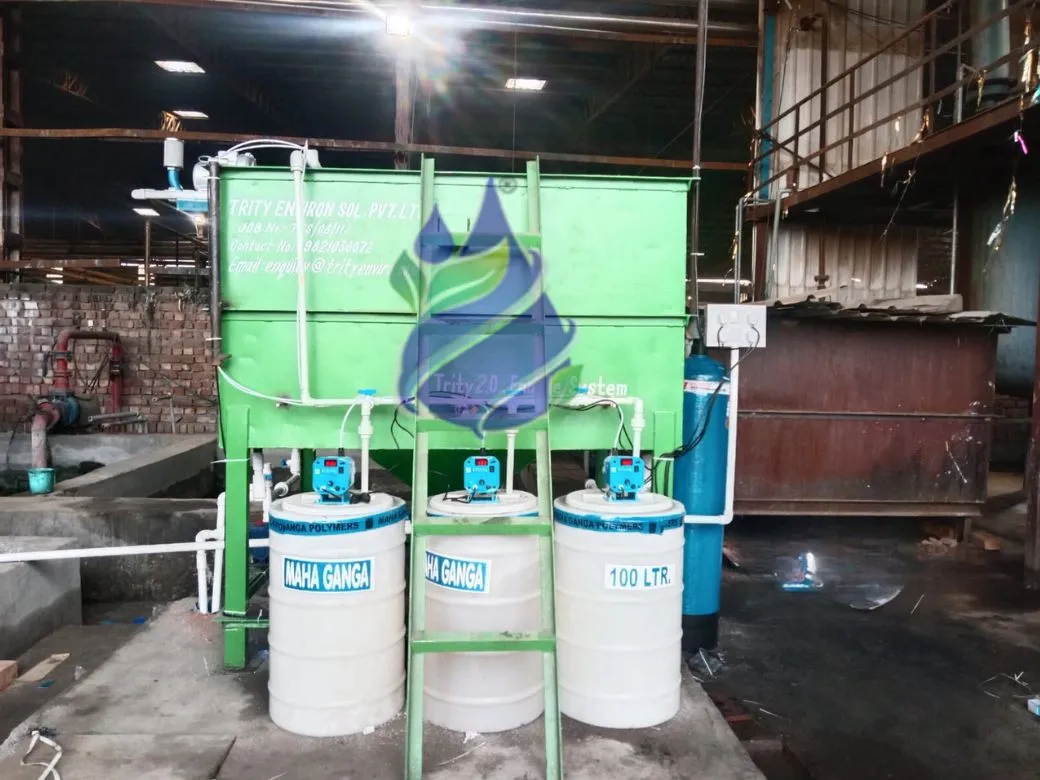
Read ArticleFeatured Turnkey Installations



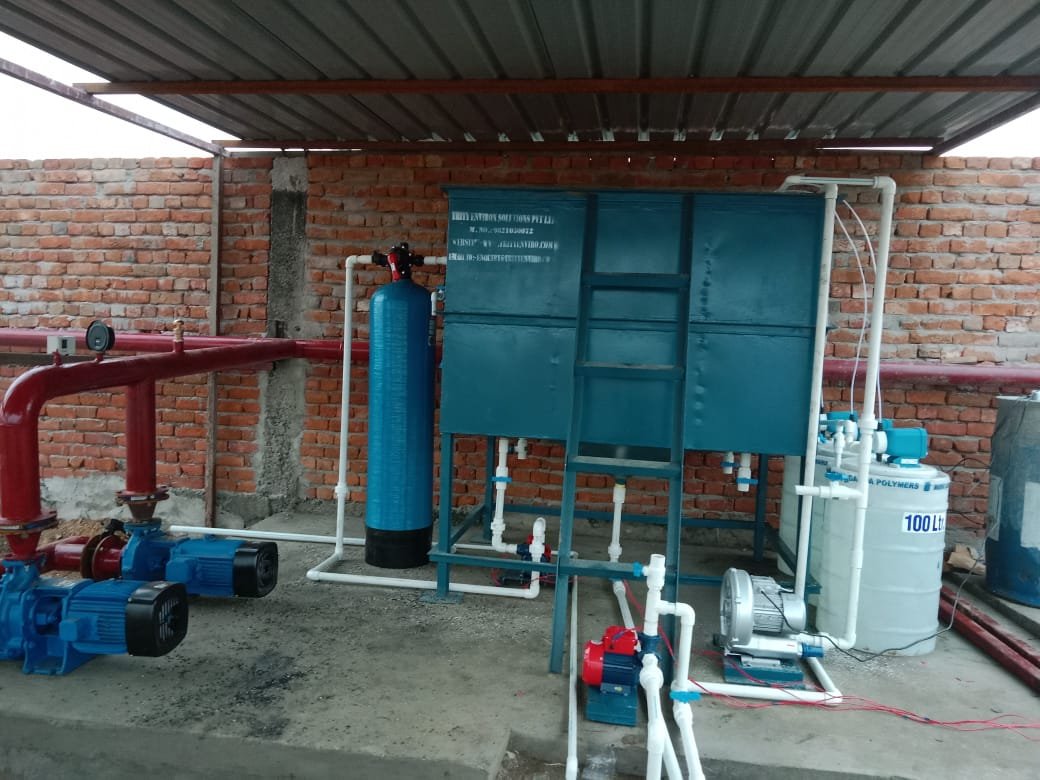
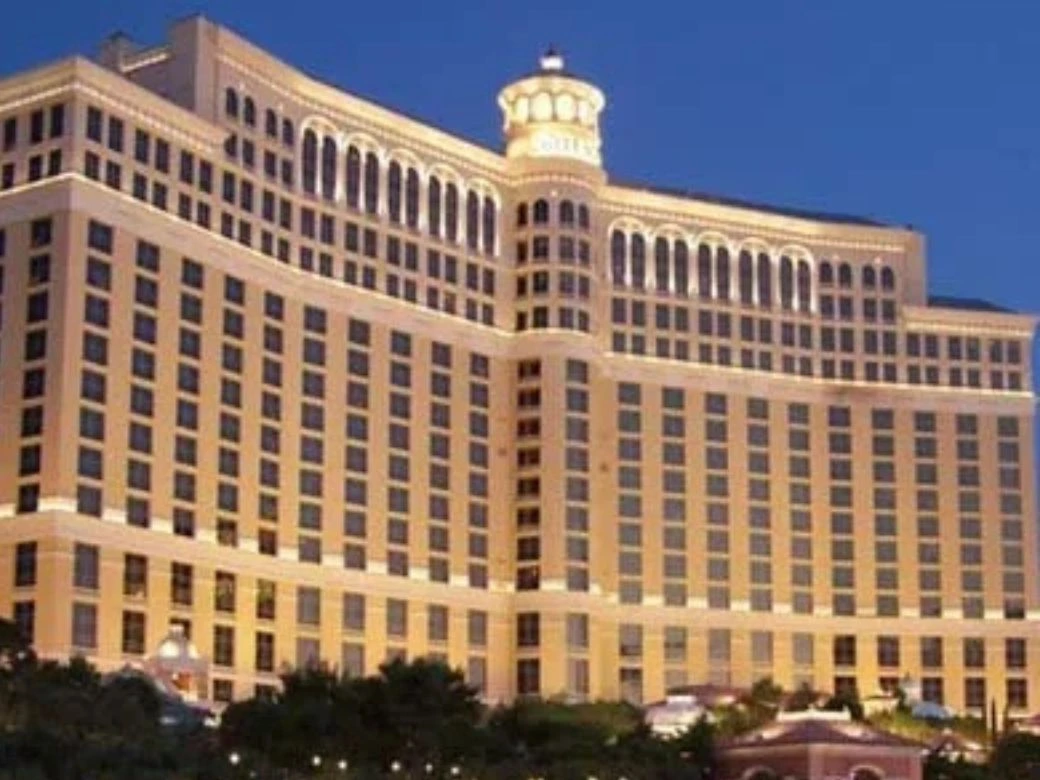
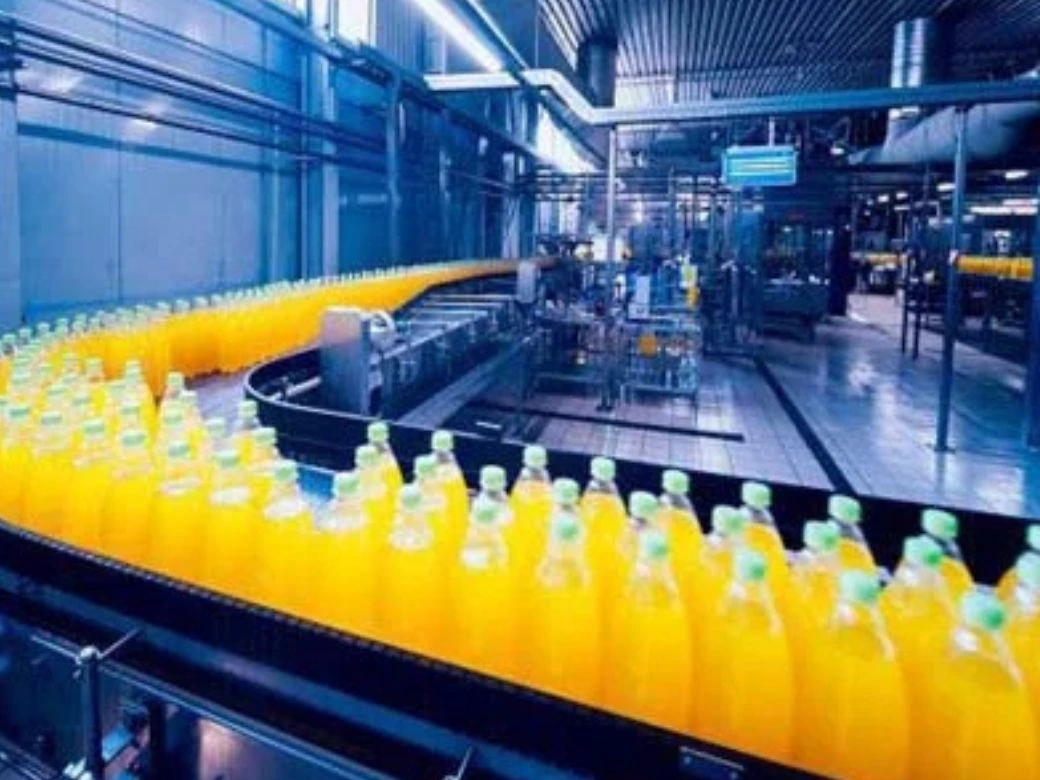
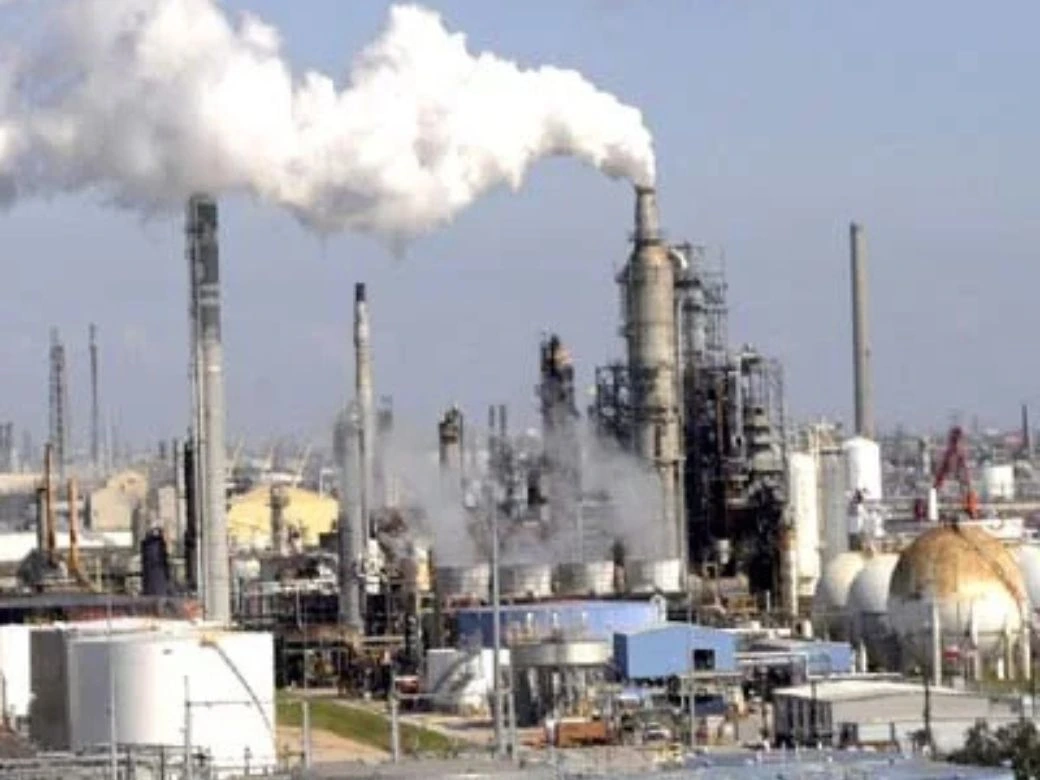
Need Expert Support for Your Water Treatment Project?
From regulatory compliance to turnkey engineering and O&M, our certified environmental engineers are ready to assist.