ISO 9001:2015 & QCI Approved
Technical Assistance on Web
Get remote technical support for STP, ETP, and RO plant issues from Trity Enviro's engineering team. Fast diagnosis, troubleshooting guidance, and on-site escalation when needed.
Fast, Reliable Online Support for Your Treatment Plant
Every wastewater treatment plant runs into operational issues sooner or later — a dosing pump acting up, an alarm that won't clear, a sudden drop in treated water quality. When that happens, the difference between a five-minute fix and a costly shutdown often comes down to how quickly you can reach someone who understands your system's actual data, not just a generic troubleshooting script. That's what our Technical Assistance on Web service is built for.
Trity Environ Solutions' service team provides prompt technical support directly over call, video, and remote data review, so most faults are diagnosed — and often corrected — without waiting for a site visit. Our engineers are trained specifically on STP, ETP, RO, and allied treatment systems, including plants running SCADA-based monitoring and control.
How Remote Diagnostics Actually Work
Most modern treatment plants — even mid-sized ones — run some form of SCADA (Supervisory Control and Data Acquisition) monitoring, collecting real-time data from sensors on flow rate, dissolved oxygen, pH, turbidity, and pump or blower status. This data is exactly what makes fast remote troubleshooting possible. When you raise a support request, here's what typically happens:
- Alarm and trend review — Our engineer reviews recent alarm logs and historical trend data (flow rates, dosing levels, DO levels) to spot whether the fault was sudden or building up over time. A gradual drift often points to sensor calibration drift; a sudden spike usually points to a mechanical or electrical fault.
- Sensor and setpoint check — Many false alarms trace back to sensor calibration errors or incorrect alarm setpoints rather than an actual process failure. We walk you through validating these remotely before assuming the worst.
- Remote correction where possible — Dosing miscalculations, control panel settings, and certain SCADA logic issues can often be corrected with guidance alone, cutting resolution time from days to minutes.
- Site dispatch when required — If the issue needs hands-on intervention — a physical blower fault, a mechanical seal failure, wiring damage — our engineers and technicians reach your site within a couple of hours of the assistance call.
- Documentation and pattern tracking — Every support call is logged against your plant's history. If the same fault recurs, that pattern gets flagged so we address the root cause instead of repeating the same fix.
Why Prompt Technical Support Matters for STP & ETP Plants
Wastewater treatment plants operate under strict discharge norms set by state pollution control boards. A malfunction left unresolved for even a day or two can push your treated water outside compliance limits — risking penalties, notices, or a forced shutdown. Fast technical assistance is part of keeping your Consent to Operate (CTO) valid and your operations uninterrupted, not just a convenience.
This is especially critical for industries running continuous processes — hotels, hospitals, food & beverage units, and manufacturing plants — where downtime in the treatment plant backs up into the main facility operations within hours.
What We Cover
Our Technical Assistance on Web service supports troubleshooting across:
- Aeration and dosing system irregularities, including DO and pH deviations
- Air blower faults and performance drops — see our dedicated Air Blower Repair Service
- SCADA, sensor, and control panel errors — including alarm logic and calibration issues
- Sludge handling and settling problems
- General performance troubleshooting for STP, ETP, and Commercial RO systems
How This Connects to Our Other Services
Technical Assistance on Web doesn't operate in isolation — it's the first line of support that feeds into our broader maintenance ecosystem:
- Clients under our Operation Maintenance program get priority access to remote diagnostics as part of their regular service package.
- Our Annual Maintenance Contract clients use this service between scheduled visits to catch drift and minor issues early, before they become major repairs.
- If your plant is still being installed or commissioned, our STP Plant Installation team can loop in Technical Assistance from day one, so support continuity is never broken between commissioning and live operation.
Frequently Asked Questions
Is Technical Assistance on Web included with an AMC or O&M contract?
Yes — clients under our Annual Maintenance Contract or Operation & Maintenance programs get priority access as part of their existing service agreement.
Do you support plants that Trity Enviro did not originally install?
Yes, our engineers regularly assist with third-party installed STP, ETP, and RO systems, including those with existing SCADA setups, though certain fixes may require a site visit if the original system documentation isn't available.
How fast can an engineer reach my site if remote support isn't enough?
Our engineers and technicians aim to reach your site within a couple of hours of the assistance call, subject to location.
What information should I have ready when I call for support?
Have your plant's recent performance readings (flow rate, DO/pH levels, dosing levels, any alarm codes or SCADA trend logs) and, if possible, photos or a short video of the issue — this lets our engineers narrow down the cause before they even connect.
Can a false alarm be diagnosed without a technician visiting?
Often, yes. A large share of alarms trace back to sensor calibration drift or incorrect setpoints, both of which our engineers can usually verify and correct remotely.
Scope Highlights
Why Choose Trity Enviro Solutions?
Industry-certified environmental engineers delivering compliant, high-efficiency turnkey systems across India.
100% SPCB/CPCB Compliance
Complete regulatory clearance & legal liaison support.
Certified Engineers
Over a decade of industrial wastewater expertise.
Turnkey Execution
End-to-end design, fabrication, setup & commissioning.
Pan-India AMC & Service
24/7 technical hotline, scheduled visits & spare parts.
Frequently Asked Questions
Q1. What is a MBBR Media?
Moving bed biofilm reactor (MBBR) is a type of wastewater treatment process that was first invented by Prof. Hallvard Ødegaard at Norwegian University of Science and Technology in the late 1980s. For more detail call us on 8802624956
Q2. What is a digester tank?
The wet anaerobic digestion process is applied to liquid waste streams that are conveyable by liquid pumping. Sometimes wet systems are called Low Solids AD (LSAD). The Wet AD process can be done in reactors of two main configurations, continuously stirred tank reactors (CSTR) and plug flow reactors.
Q3. Which air pollutant is produced in anaerobic decomposition of organic matter?
Methane is the largest natural source of hydrocarbons. It's produced by the anaerobic decomposition of organic matter in bodies of water. -Trees and plants produce most of the remaining natural VOC's called terpenes. Volatile Organic Compounds - VOCs -Petroleum is the key source of man-made VOC pollution.
Q4. What is a sewage treatment plant?
The Sewage Treatment Plant process is similar to the way that a Septic Tank works but mechanical components provide a process to help break down solids to produce a cleaner, more environmentally friendly effluent.
Q5. What is the tertiary treatment of sewage?
Tertiary treatment is the final cleaning process that improves wastewater quality before it is reused, recycled or discharged to the environment. The treatment removes remaining inorganic compounds, and substances, such as the nitrogen and phosphorus.
Related Service Solutions
Rainwater Harvesting System
Consent to Establishment
NOC from CGWA
Related Industry Insights
Bulk Waste Generator Compliance Under India's SWM Rules 2026: What Businesses Need to Set Up
A practical checklist for bulk waste generators under SWM Rules 2026: registration, four-stream segregation, on-site processing, EBWGR certificates and records.
Read Article
How to Design a Water Recycling System for Cooling Towers and Industrial Process Water
Design a water recycling system for cooling towers and process water: water balance, cycles of concentration, treatment train and payback, with an example.
Read Article
Tertiary Water Treatment for Industrial Reuse: When Filtration Alone Is Not Enough
Is filtration enough to reuse treated wastewater? Learn when you need UF, RO, softening or disinfection, and how to match tertiary treatment to each reuse.
Read ArticleFeatured Turnkey Installations

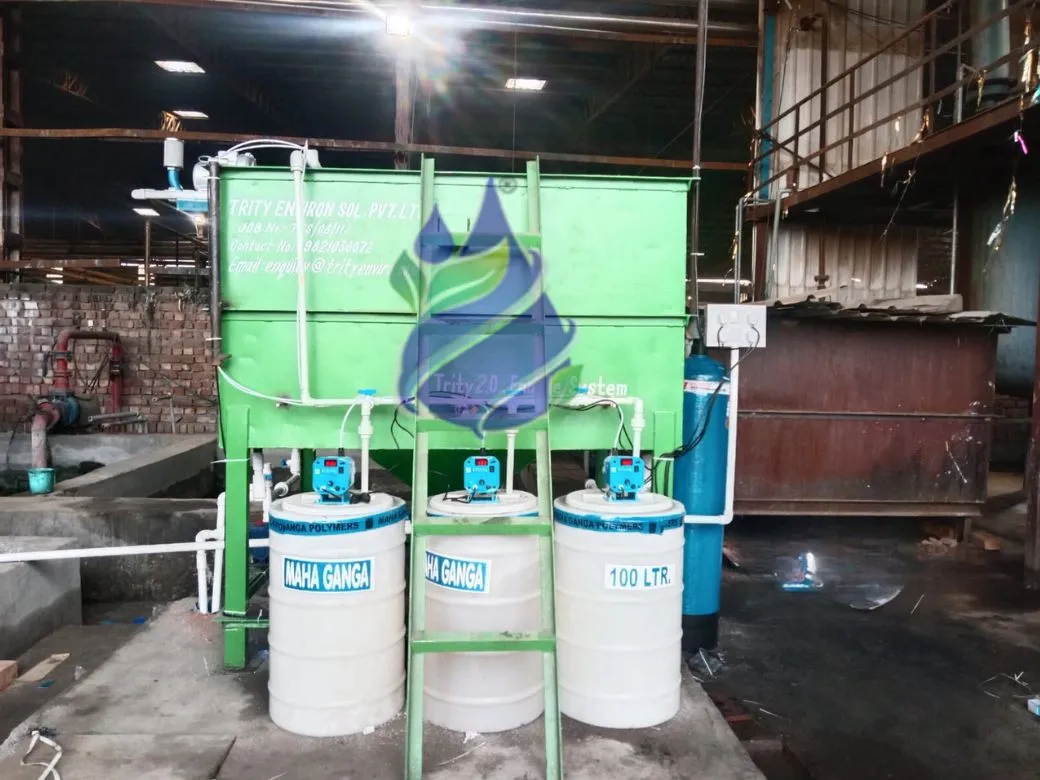


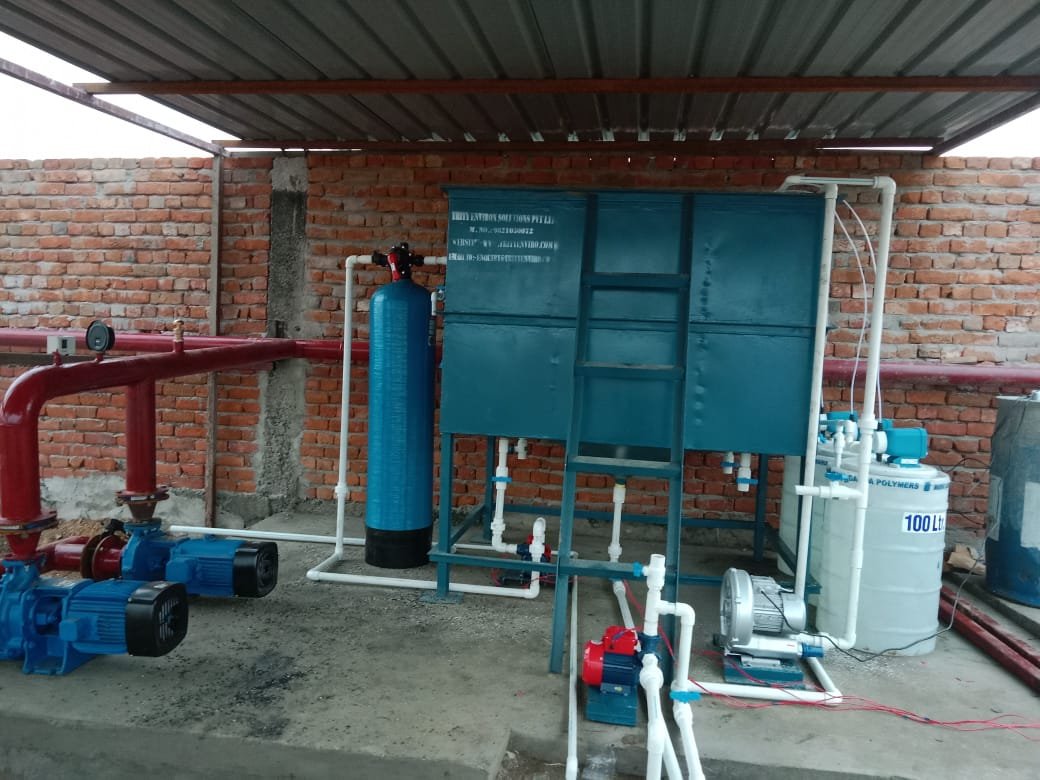
Need Expert Support for Your Water Treatment Project?
From regulatory compliance to turnkey engineering and O&M, our certified environmental engineers are ready to assist.