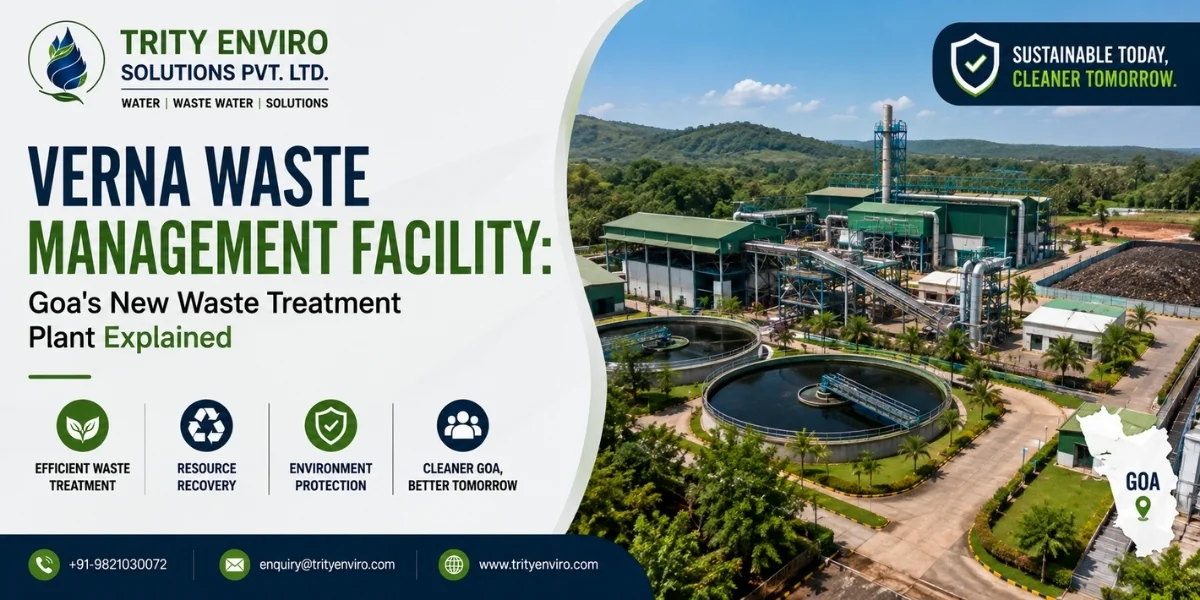
Verna Waste Management Facility at a Glance
| Detail | Information |
|---|---|
| Location | Plot U06, Verna Industrial Estate, Loutolim, Salcete Taluka, South Goa |
| Operator/Developer | Goa Waste Management Corporation (GWMC), Government of Goa |
| Capacity | 250 tonnes per day (TPD) of municipal solid waste |
| Site Area | Approximately 1 lakh square metres (1,00,000 sq m) |
| Area Served | Mormugao taluka and parts of Salcete taluka |
| Main Processes | Segregation, biomethanation, composting, material recovery, RDF production, sanitary landfilling of residual waste |
| Current Status | Environmental clearance process completed at project level; exact commissioning/inauguration status to be confirmed against the latest official source |
Why Goa Needed a New Waste Management Facility
Goa's waste generation has been rising for years, driven by population growth, urban expansion, and tourism. Areas around Verna, Vasco, and Margao, part of the Mormugao and Salcete talukas, did not have a dedicated large-scale treatment facility nearby.
Without local treatment capacity, waste from this belt had to be transported to other facilities or, in some cases, ended up in unscientific dumping grounds. The Verna facility was proposed to close this specific gap.
Where Is the Verna Waste Management Facility Located?
The facility is located on Plot No. U06 at Verna Industrial Estate, in Loutolim, Salcete Taluka, South Goa. GWMC holds approximately 1 lakh square metres of land at this site for the project.
The site's location on the Verna plateau, close to the Sal and Zuari river systems, has been a point of concern for residents of Loutolim and nearby villages since the project was first proposed in 2022.
How Much Waste Can the Facility Process?
The plant is designed to treat 250 TPD of municipal solid waste. Based on GWMC's planning documents, this is split roughly into 150 TPD of wet waste and 100 TPD of dry and intermediate waste.
It is intended to serve waste generated across the nine villages of Mormugao taluka and the villages of Salcete taluka, along with waste from the Mormugao Municipal area.
How the Verna Waste Management Facility Works
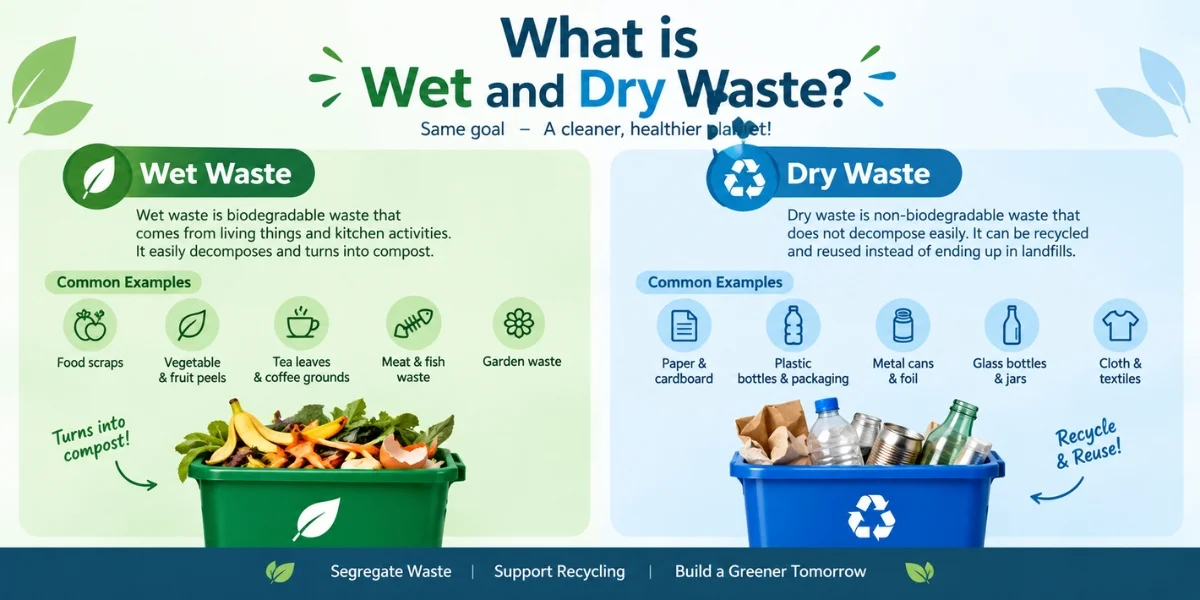
The facility uses an integrated treatment model that separates waste into wet and dry streams before applying a different process to each.
Wet Waste and Biomethanation
Wet, organic waste is treated through biomethanation. This process breaks down organic material in sealed anaerobic digesters, generating biogas.
The biogas produced is converted into electricity. The stabilised organic sludge left over from the process is further treated to produce soil conditioner and compost.
Dry Waste and Material Recovery
Dry, inorganic waste goes through a sorting process to separate different material types before further treatment.
GWMC already operates a Material Recovery Facility (MRF) and baling unit for dry waste at Verna, alongside similar units at Cacora and Bicholim, under an Extended Producer Responsibility (EPR) based model.
Recyclable Waste
Recyclable materials such as plastic, paper, metal, and cardboard are separated out during sorting. These materials are baled at the facility and sent onward for recycling.
Non-Recyclable Waste and RDF
Dry waste that cannot be recycled is cleaned and processed into Refuse Derived Fuel (RDF). GWMC's existing RDF, generated across its facilities in the state, is currently transported to cement factories in Karnataka for use as an alternative fuel.
A separate 250 TPD Waste to Energy facility has also been proposed for Verna, intended to convert RDF into energy and recover steam for use by industries in the Verna estate. This component was at the pre-feasibility stage, studied with support from the IVL Swedish Environmental Research Institute, and its current status should be confirmed separately.
Residual Waste and Scientific Disposal
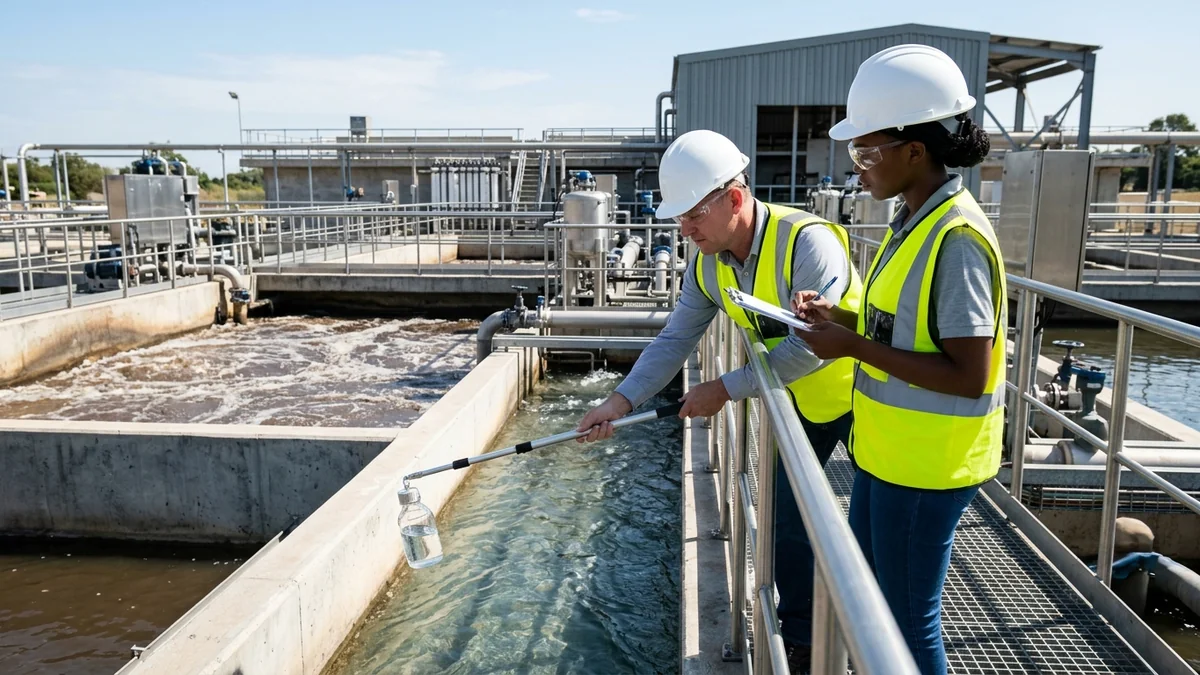
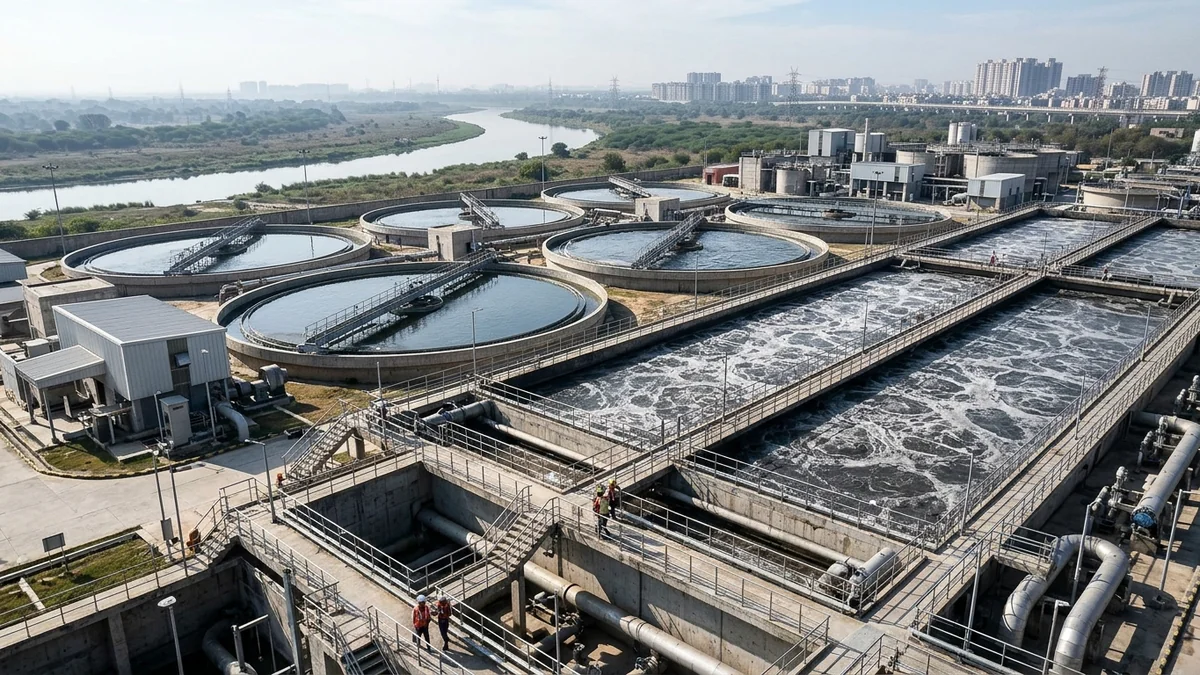
Only the residual and inert fraction that cannot be recovered through any of the above processes is sent to a Sanitary Landfill Facility (SLF) at the site, rather than being dumped in the open. Leachate generated at such landfills is itself a wastewater stream that requires proper wastewater treatment before it can be safely discharged or reused.
What This Means for Goa
A functioning facility at Verna adds treatment capacity in a part of the state that previously relied on transporting waste elsewhere. For the Mormugao and Salcete belt specifically, this is expected to bring:
- Reduced dependence on long-distance waste transport and informal dumping
- Better recovery of recyclable materials from the dry waste stream
- Electricity generation and compost production from the wet waste stream
- A local source of RDF for industrial use
- Reduced pressure on Goa's older or more distant treatment facilities
How Verna Fits Into Goa's Waste Management Network
Verna is one of four integrated facilities planned or operating under GWMC across the state.
The Saligao facility in North Goa has been operational since May 2016 and was later enhanced to a 250 TPD capacity, at an estimated cost of Rs 103.87 crore funded through NABARD. It uses a recycle and sorting line, organic extrusion, biomethanation, and solar drying, monitored through a PLC/SCADA system.
The Cacora facility in South Goa is a 100 TPD Integrated Solid Waste Management Plant, developed on a remediated former dumpsite at a cost of around Rs 173.98 crore under a public-private partnership model, with 75 percent state funding supported by a NABARD loan. It was inaugurated by Prime Minister Narendra Modi on February 6, 2024. The plant processes around 60 tonnes of wet, segregated waste daily through biomethanation, producing roughly 8,000 cubic metres of biogas a day. This powers an 800-kilowatt generator that produces about 17,000 units of electricity daily, with 40 percent used on-site and the remaining 60 percent supplied to the grid at Rs 5 per unit. Recyclables recovered here are sent to units in Karnataka and Mumbai, while non-recyclable waste goes to cement plants in Karnataka for co-processing at approximately Rs 1,500 per tonne.
A fourth facility is planned at Bainguinim in Tiswadi, with a proposed capacity of 100 TPD, intended to serve the Tiswadi and neighbouring taluka in Central Goa.
Environmental Benefits and Challenges
The facility's design, recovering recyclables, generating biogas and compost, and producing RDF, is intended to reduce the volume of waste that reaches landfill and to cut down on open dumping in the Mormugao and Salcete belt.
At the same time, the project's location on the Verna plateau, near the Sal and Zuari river systems, drew objections from residents of Loutolim and surrounding villages when it was first proposed. Their concerns centred on the site's ecological sensitivity and its proximity to agricultural and water resources, and they had called for a more decentralised approach to waste treatment instead of a single large facility.
Goa's environmental regulators apply similar scrutiny to liquid waste infrastructure in the state. For readers interested in that side of compliance, see this overview of GSPCB's STP guidelines for Goa.
What's Next for Waste Management in Goa?
Beyond Verna, GWMC's stated plans include the Bainguinim facility to extend coverage to Central Goa's Tiswadi and Ponda talukas. Once operational, this would give the state treatment capacity spread across its northern, central, and southern regions rather than concentrated in one or two locations.
Frequently Asked Questions
What is the Verna Waste Management Facility?
It is an integrated solid waste treatment facility developed by the Goa Waste Management Corporation at Verna Industrial Estate in South Goa, designed to treat 250 tonnes of municipal solid waste per day using segregation, biomethanation, and material recovery processes.
Where is the Verna Waste Management Facility located?
The facility is located on Plot No. U06 at Verna Industrial Estate, in Loutolim, Salcete Taluka, South Goa, on a site of approximately 1 lakh square metres.
How much waste can the Verna facility process?
The facility has a designed capacity of 250 tonnes per day, split into approximately 150 TPD of wet waste and 100 TPD of dry and intermediate waste, according to GWMC's project planning documents.
Who operates the Verna Waste Management Facility?
The facility has been developed and is operated by the Goa Waste Management Corporation (GWMC), a Government of Goa undertaking.
How does biomethanation work at the facility?
Wet, organic waste is broken down in sealed digesters, producing biogas that is converted into electricity. The remaining organic sludge is processed into soil conditioner and compost.
What happens to recyclable waste at the facility?
Recyclable materials such as plastic, paper, metal, and cardboard are separated during dry waste sorting, baled at the facility's Material Recovery Facility, and sent to recycling units.
What is RDF and how is it used?
RDF, or Refuse Derived Fuel, is produced from dry waste that cannot be recycled. It is used as an alternative fuel, with GWMC's RDF currently transported to cement factories in Karnataka for co-processing.
How does Verna fit into Goa's wider waste management system?
Verna is one of four integrated facilities under GWMC, alongside operational plants at Saligao and Cacora and a planned facility at Bainguinim, together forming the state's network for treating municipal solid waste.