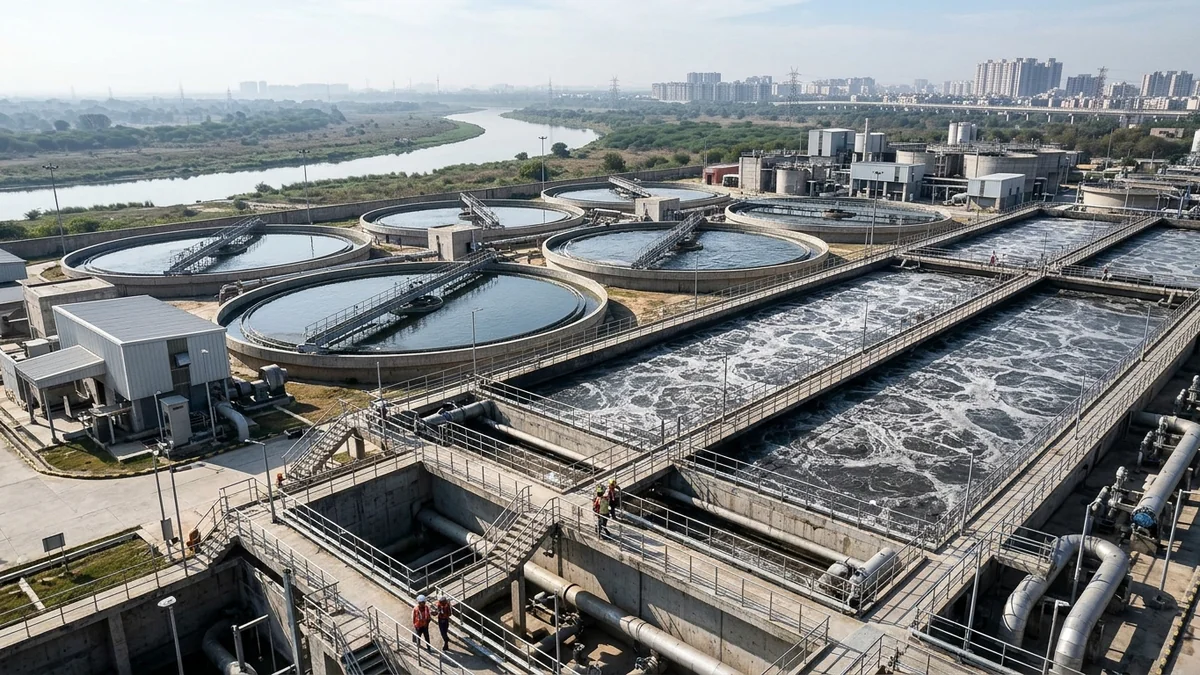
Union Home Minister Amit Shah inaugurated and laid foundation stones for 43 Delhi Jal Board (DJB) projects worth Rs 8,941.22 crore, with the stated aim that no untreated wastewater generated in Delhi reaches the Yamuna through drains.
Shah said the government would clean the river by May 2029. The Tribune reported the event on October 23, saying it took place "on Thursday", which makes it October 22.
The Package at a Glance
- Total value: Rs 8,941.22 crore across 43 projects
- Inaugurated: 10 projects worth Rs 2,827.11 crore
- Foundation stones laid: 33 projects worth Rs 6,114.11 crore
- Location: the report places the projects in the Najafgarh area of New Delhi
Project-Wise Breakdown
Sewage treatment
- Okhla: a new 124 MGD sewage treatment plant at Rs 1,161 crore
- Upgrades: eight existing STPs at Rs 1,041 crore, lifting their combined capacity from 78.2 MGD to 140.8 MGD and benefiting about 78.5 lakh people
- Decentralised plants: 29 decentralised STPs and sewage pumping stations at Rs 3,113.67 crore, covering 358 unauthorised colonies and 113 villages in outer Delhi and benefiting about 36.29 lakh residents
Network and drains
- Sewer lines: 1,034 km of new sewers at Rs 1,691 crore
- Mundka trunk drain: a 4.5 km drain at Rs 225.02 crore
Drinking water
- Chandrawal: a 477 MLD water treatment plant at Rs 298.3 crore, serving about 22 lakh people. It replaces facilities built in 1935 and 1955
What the upgrade numbers imply
The eight STP upgrades take combined capacity from 78.2 MGD to 140.8 MGD. That is an addition of 62.6 MGD, our own subtraction from the published figures. The new Okhla plant adds a further 124 MGD, so the two items together are about 186.6 MGD of new or upgraded capacity. The report does not say how much of this overlaps with the 28 DSTPs counted in DJB's July figures, so these numbers should not be added to the July capacity total.
A note on the arithmetic
The items listed above add up to about Rs 7,530 crore. The remaining Rs 1,411 crore of the Rs 8,941.22 crore total is not itemised in the report. This is our own sum from the published figures, not a number from the government.
Timelines Promised
- Works to be completed within two to two-and-a-half years
- Visible improvement expected in about one and a half years
- Clean-river target: May 2029
What the Government Said About Method
Verma said cleaning ghats alone cannot restore the river unless sewage is stopped. The stated approach is to "collect, treat and reuse every drop of sewage."
He also appealed to residents to:
- Dispose of household waste only at designated places
- Take legal sewer connections
- Conserve water
The Clean-Up Four Days Earlier
On Sunday, October 18, the Delhi government's "Chalo Yamuna" campaign saw more than 35,000 people clean 70 locations. The government reported removal of 76,755 kg of dry waste and 9,850 kg of green waste and water hyacinth.
Surface clean-ups make the river visible and cared for. They do not change what the drains carry, which is why the sewage package carries more weight.
Why Sewage Is the Core Problem
DJB figures reported in July 2026 give the scale.
- Delhi generates about 1,000 MGD of sewage daily
- Treatment capacity stood at 749 MGD when the present government took office and is now 814 MGD
- 28 DSTPs, 13 approved earlier and 15 newly awarded, were expected to add 227 MGD, taking total capacity to 1,041 MGD
- DJB approved projects worth Rs 4,500 crore in July, including 989 km of new sewer line across 244 colonies and 57 villages
What recent monitoring says
- Delhi Pollution Control Committee data for September 2026, reported on October 9, put BOD at ISBT Bridge at 30 mg/L, against a water quality criterion of 3 mg/L
- Faecal coliform rose at Wazirabad, Nizamuddin Bridge and Asgarpur between August and September
- A July 2025 Lok Sabha reply said about 641 MLD of sewage entered the Yamuna or its drainage network and that only 23 of DJB's 37 STPs met DPCC discharge standards. This is 2025 data on a different base, so it is context and not a direct comparison
What Must Go Right
New plants help only if three things hold.
Connections
- Sewers must carry household and drain flows to the plants
- Plants without connecting sewers sit idle, as audit reports elsewhere have documented
Outlet quality
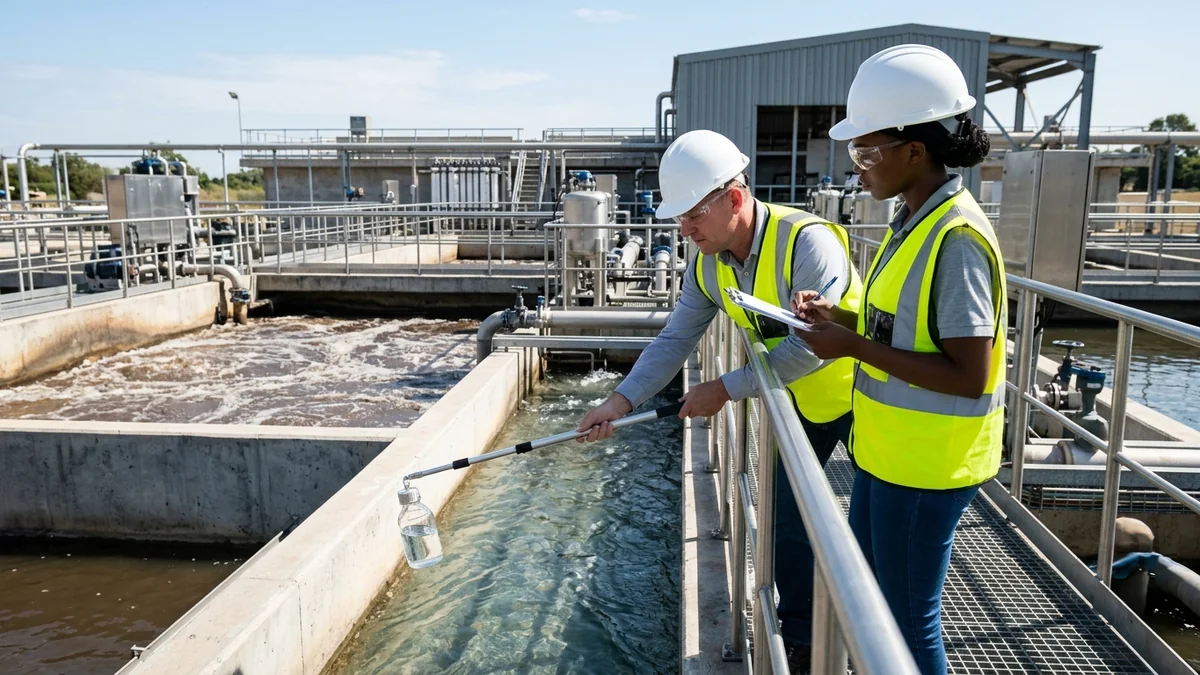
- Treated water must meet BOD, COD, suspended solids and faecal coliform limits
- Disinfection must work. DPCC has earlier linked high faecal coliform at some outlets to ineffective UV disinfection
Operation after inauguration
- Trained operators, spare parts and regular servicing decide whether a plant keeps meeting norms
- A structured operation and maintenance contract is often what separates a plant that performs for years from one that fails soon after launch
Decentralised Plants and Reuse
The 29 decentralised plants matter because colonies and villages far from trunk sewers can treat sewage locally. That cuts the load on the main network and makes nearby reuse practical.
Treated water can go to gardening, construction and flushing instead of drains. Large housing societies, campuses and commercial buildings face the same logic at smaller scale. A well-run sewage treatment plant keeps a building's own discharge off the river and cuts freshwater demand.
The Upstream Factor
The Yamuna enters Delhi at Palla and leaves at Jaitpur. DPCC's September 2026 data showed faecal coliform at Asgarpur, near the Haryana border, rising from 36,000 to 38,000 MPN/100 ml, the highest in its dataset. Delhi's plants must cope with the quality of water that arrives. Delhi's sewage package alone cannot fix what comes from upstream.
What to Watch Next
- Whether DSTP and sewer construction meet the two to two-and-a-half year schedule
- Whether DPCC outlet data at Wazirabad, ISBT and Nizamuddin shows BOD falling
- How fast the Okhla plant moves from foundation to operation
- Whether the planned riverfront keeps sewage interception ahead of landscaping